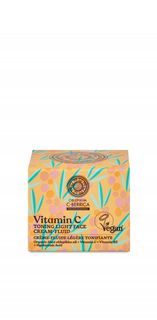
Natura Siberica Oblepikha C-Berrica Toning Light Face Cream-Fluid
Works for
2 of 2 advertised claims delivered
Anti-agingNiacinamide, Sodium ascorbyl phosphateStrong evidence
“Organic Altai oblepikha oil hydrates skin and promotes the formation of collagen, a structural protein essential for youthful skin.”
This product can help reduce and prevent fine lines and wrinkles, improve skin elasticity and firmness because it contains niacinamide.
Keep in mind that it typically takes at least 6 weeks to notice any results because the changes that are needed to improve fine lines and elasticity happen in the deeper layers of the skin. No topical anti-aging product can “erase” wrinkles or fully reverse signs of aging.
MoisturizingNiacinamide, Panthenol + 5 moreStrong evidence
“The super Siberian berry is the richest natural source of Vitamin C. Vitamin B5 is a natural hydrator; it soothes, softens and supports good-looking skin.”
This product can help improve hydration of the skin with the two types of ingredients.
The first type is called “humectants”:
these ingredients help attract water.
When humectants are on the surface of the skin, they “pull in” the moisture from the outside environment, or from
within deeper layers of the skin. The following ingredients in this product do the job:
glycerin, sodium hyaluronate.
This product also contains ingredients called “occlusives”. They help reduce the speed with which our skin loses moisture to the outside environment. These ingredients also help soften the upper layer of the skin, so it feels less tight and nicer to the touch. The following ingredients in this product do the job: caprylic/capric triglyceride, octyldodecanol.
The following ingredients in this product are especially good for supporting the skin barrier and helping with the hydration level: niacinamide, panthenol
Evens skin toneNot advertised by the brand · NiacinamideStrong evidence
This product can help reduce hypepigmentation and even out the skin tone because it contains the following effective ingredients: niacinamide
Keep in mind that you would need to apply any topical skincare targetted at hypigmentation consistently for a couple of months to get a result. No topical skincare product can help get rid of hyperpigmentation (including post-acne marks and age spots) instantly.
Anti-blemishNot advertised by the brand · Niacinamide, Sodium ascorbyl phosphateGood evidence
This product might be able to help reduce blemishes and clogged pores because it contains niacinamide.
The following ingredient (ingredients) in this product might be helpful, but there is no evidence to confirm that it actually works: sodium ascorbyl phosphate
Anti-oxidationNot advertised by the brand · Sodium ascorbyl phosphate, Sambucus nigra flower extract + 2 moreModerate evidence
This product contains antioxidants (sodium ascorbyl phosphate) that might be able to help neutralize free radicals in skin to lessen the damage it gets from the UV light (sun). There is not enough evidence to confirm their effectiveness in skin though.
Can it cause trouble?
Irritancy6 strong irritants: Rosa damascena extract, Parfum + 4 more — patch-test recommendedHigh risk
Comedogenic1 ingredient rated 2 or more on the 0–5 pore-clogging scale1 flagged


User reviews
Be the first — your take helps the next person decide.
Ingredients
Filter by role to see what each ingredient is doing.
Water~40–60%
Glycerin~4–6%
- Irritation risk
- Low
One of the best moisturizing ingredients. Naturally present in skin. It attracts water to the upper layer of the skin working as a humectant
More about GlycerinCaprylic/capric triglyceride~3.7–5.5%
- Irritation risk
- Medium
A good mix of fatty acids that forms a protective layer on the skin. Improves the shelf life of products. Derived from coconut and glycerin
More about Caprylic/capric triglycerideOctyldodecanol~2.7–4.1%
- Irritation risk
- Low
An emollient that helps to soften the skin and create a pleasant product texture and stabilize the formulation
More about OctyldodecanolCarrageenan~2.1–3.1%
- Irritation risk
- Medium
- Comedogenicity
- 3/5
Helps thicken the product formula and create a nice product formulation
More about CarrageenanPanthenol~1.6–2.4%
- Irritation risk
- Low
Helps attract water to the upper layer of the skin and can help improve skin barrier function
More about PanthenolNiacinamide~1.4–2.1%
- Irritation risk
- Low
Is proven to be effective in reducing blemishes, evening out skin tone and helping to improve lines and wrinkles. It helps the skin to repair sun damage, calm down inflammation and keep maintain good levels of moisture. The concentration of about 2% is effective for supporting the skin barrier and evening out the skin tone. Concentration of 4-6% is better for helping with acne and balancing the sebum production
More about NiacinamideSodium stearoyl glutamate~1.3–1.9%
- Irritation risk
- Medium
Helps oil and water mix together
More about Sodium stearoyl glutamateHippophae rhamnoides fruit oil~1–1.5%
- Irritation risk
- High
A plant oil that might somewhat help to neutralize free radicals. It could be irritating
More about Hippophae rhamnoides fruit oilSodium ascorbyl phosphate~0.8–1.25%
- Irritation risk
- Medium
A stable derivative of vitamin C. It is oil-soluble which means it is more likely to penetrate the skin compared to the pure form of vitamin C (which is water-soluble), but it is less bio-available and is way less effective in stimulating collagen and reducing wrinkles compared to the pure form of vitamin C (L-ascorbic acid) and its other derivatives (for example, magnesium ascorbyl phosphate). At the same time, this vitamin C derivative has been shown in studies to be effective in reducing acne, blemishes and clogged pores. It is less irritating then the pure form of vitamin C
More about Sodium ascorbyl phosphateHypericum perforatum extract~0.45–1%
- Irritation risk
- Low
Nuphar luteum root extract~0.4–0.95%
- Irritation risk
- Low
Sambucus nigra flower extract~0.15–0.6%
- Irritation risk
- High
A plant extract that might help neutralize free radicals in skin
More about Sambucus nigra flower extractRosa damascena extract~0.3–0.75%
- Irritation risk
- High
Oil of a very fragrant pink rose used as fragrance in cosmetics. Extensive research has shown it has mixed benefits. In the pro column, inhaling this flower’s scent seems to have relaxing properties and the plant’s petals contain skin-soothing and antioxidant compounds that can benefit skin. On the flipside, the numerous chemicals that create this rose’s distinctive fragrance pose a risk of causing skin aggravation.
More about Rosa damascena extractAchillea asiatica flower/leaf/stem extract~0.2–0.8%
- Irritation risk
- Low
Angelica archangelica root extract~0.2–0.75%
- Irritation risk
- Low
Sodium hyaluronate~0.2–0.8%
- Irritation risk
- Low
One of the best moisturizing ingredients. Attracts water into the upper layer of the skin
More about Sodium hyaluronateTocopheryl acetate~0.2–0.7%
- Irritation risk
- Medium
A more stable but less bio-available form of vitamin E compared to Tocopherol. Might help moisturize and protect the skin from free radicals, but mostly used in low concentrations to stabilize other ingredients.
More about Tocopheryl acetateCellulose gum~0.15–0.65%
- Irritation risk
- Low
Used to create thicker product consistency and stabilize emulsions
More about Cellulose gumCitric acid~0.15–0.55%
- Irritation risk
- Medium
Can work as an exfoliant but is typically used to adjust the product pH
More about Citric acidBenzyl alcohol~0.1–0.45%
- Irritation risk
- High
A preservative. Can be used to mask unpleasant smell. Can be irritating
More about Benzyl alcoholEthylhexylglycerin~0.1–0.45%
Sodium benzoate~0.1–0.4%
Potassium sorbate~0.1–0.35%
Parfum~0.1–0.3%
- Irritation risk
- High
An aromatic blend of unspecified and possibly irritating ingredients
More about ParfumCi 19140~0.1–0.35%
Citral~0.05–0.25%
Geraniol~0.05–0.2%
Limonene~0.05–0.15%
- Irritation risk
- High
A common frangrance that can easily irritate skin, especially if exposed to air, light or heat
More about LimoneneLinalool~0.05–0.1%
Ingredient list view
Water, Glycerin, Caprylic/capric triglyceride, Octyldodecanol, Carrageenan, Panthenol, Niacinamide, Sodium stearoyl glutamate, Hippophae rhamnoides fruit oil, Sodium ascorbyl phosphate, Hypericum perforatum extract, Nuphar luteum root extract, Sambucus nigra flower extract, Rosa damascena extract, Achillea asiatica flower/leaf/stem extract, Angelica archangelica root extract, Sodium hyaluronate, Tocopheryl acetate, Cellulose gum, Citric acid, Benzyl alcohol, Ethylhexylglycerin, Sodium benzoate, Potassium sorbate, Parfum, Ci 19140, Citral, Geraniol, Limonene, Linalool
Compare prices
Retailers ranked by price — lowest first.
Affiliate links · prices updated regularly · As an Amazon Associate, WIMJ earns from qualifying purchases.
Worth comparing, line by line.
Match % combines shared ingredients, the first five ingredients, shared actives and hero ingredients, irritancy (lower counts in the alternative's favour), texture and body area. Only products in the same routine step are compared.
| Natura SibericaOblepikha C-Berrica Toning Light Face Cream-FluidYOUR PRODUCT | OlayFace Moisturizer | Panthenol extranight cream | ISDINIsdinceutics Prevent Hyaluronic Moisture Sensitive Skin | |
|---|---|---|---|---|
| Match | — | 92% | 91% | 90% |
| Price | $22.68 | $24.29+$1.61 | $31.70+$9.02 | $38.93+$16.25 |
| Shared key ingredients | — | 0 of 7 | 5 of 7 | 5 of 7 |
| Key difference | — | Avobenzone | Adenosine Triphosphate | Urea |
| Irritancy | High | Low | Medium | Medium |
| SPF | — | SPF 30 | — | — |
| Drying alcohol | — | — | — | — |
| View product | Shop | Shop | Shop |


Product summary
"Natura Siberica - Oblepikha C-Berrica Toning Light Face Cream-Fluid" has a good moisturizing formula. The formulation is based on a combination of good humectants and emollients. Both are needed to increase the skin hydration level. Humectants in this product (panthenol, glycerin and sodium hyaluronate) help to increase the water content in the upper layer of the skin. (These ingredients do so by "capturing" water molecules from the outside air or from within the deeper layers of the skin). Emollients in this formulation (caprylic/capric triglyceride and octyldodecanol) help to reduce the moisture loss from the skin. They also soften the skin surface and relieve the feeling of dryness and tightness.
Ingredient callouts
- We love that this moisturizer contains a good concentration of niacinamide 1.40% - 2.10%. Niacinamide is a perfect active in a moistruizer because it helps calm down inflamation in skin and support the skin barrier. More than that, it is helpful for most common skin concerns: it helps regulat oil production, help reduce acne and clogged pores, improve skin tone and prevent pigmentation marks. It also helps fight photodamage.
- This formulation also includes panthenol (pro-vitamin B5) at about 1.60% - 2.40% concentration. In this concentration, panthenol works effectively to improve the skin barrier and reduce inflammation.
Irritation risk
This moisturizer contains a bunch of common irritants, including ingredients that do not provide any known benefit for the skin. It might not be the best choice if your skin is sensitive. We assess the overall irritancy of this moisturizer to be high. For a detailed overview of all potential irritants: click here
You can see the detailed formula review with the breakdown of all actives in the product and the full ingredient list with estimated concentrations in the tables below.
Sources cited in this review
Every concentration estimate and effectiveness label is anchored to one of these 18 studies and safety reviews.
- 1
- 2Skin moisturizing effects of panthenol-based formulationspdfs.semanticscholar.org
- 3
- 4
- 5
- 6

Affiliate links · As an Amazon Associate, WIMJ earns from qualifying purchases.