Works for
2 of 3 advertised claims delivered
Moisturizing13 ingredients credited for this claimGood support
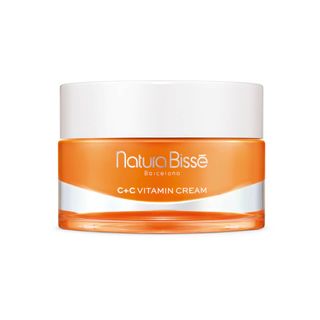
“Formulated with antioxidant vitamin C and vitamin E, this delicious, delicate citrus moisturizer hydrates your skin and minimizes the appearance of dark spots , while helping preserve a younger-looking complexion for longer.”
This product can help improve hydration of the skin with the two types of ingredients.
The first type is called “humectants”:
these ingredients help attract water.
When humectants are on the surface of the skin, they “pull in” the moisture from the outside environment, or from
within deeper layers of the skin. The following ingredients in this product do the job:
glycerin, hydrolyzed collagen.
This product also contains ingredients called “occlusives”. They help reduce the speed with which our skin loses moisture to the outside environment. These ingredients also help soften the upper layer of the skin, so it feels less tight and nicer to the touch. The following ingredients in this product do the job: butyrospermum parkii butter, dimethicone.
Evens skin tone2 ingredients credited for this claimModerate support
“Formulated with antioxidant vitamin C and vitamin E, this delicious, delicate citrus moisturizer hydrates your skin and minimizes the appearance of dark spots , while helping preserve a younger-looking complexion for longer.”
The following ingredient (ingredients) in this product might be helpful, but there is no evidence to confirm that it actually works: 3-o-ethyl ascorbic acid.
Anti-aging4 ingredients credited for this claimLimited support
“Formulated with antioxidant vitamin C and vitamin E, this delicious, delicate citrus moisturizer hydrates your skin and minimizes the appearance of dark spots , while helping preserve a younger-looking complexion for longer.”
This product does not contain ingredients that are able to reduce fine lines and wrinkles or help with skin elasticity, but it can improve the look of the skin temporarily through moisturization. Well-moisturized skin might also be able to repair the sun damage better.These ingredients - 3-o-ethyl ascorbic acid, butyrospermum parkii butter - could be helpful for preventing or repairing signs of aging in theory, but there is no evidence that it actually works.
This ingredient 3-o-ethyl ascorbic acid might be able to help neutralize free radicals in skin and help it fight off some of the sun damage.
Anti-oxidationNot advertised by the brand · 8 ingredients credited for this claimModerate support
This product contains antioxidants (3-o-ethyl ascorbic acid) that might be able to help neutralize free radicals in skin to lessen the damage it gets from the UV light (sun). There is not enough evidence to confirm their effectiveness in skin though.
Can it cause trouble?
Irritancy6 strong irritants: Citrus nobilis oil, Citrus aurantium dulcis oil + 4 more — patch-test recommendedHigh risk
Comedogenic2 ingredients rated 2 or more on the 0–5 pore-clogging scale2 flagged


User reviews
Be the first — your take helps the next person decide.
Ingredients
Filter by role to see what each ingredient is doing.
Water~45–55%
Octyldodecanol~4.5–5.4%
- Irritation risk
- Low
An emollient that helps to soften the skin and create a pleasant product texture and stabilize the formulation
More about OctyldodecanolCetearyl ethylhexanoate~4.3–5.2%
- Irritation risk
- Low
An emollient that helps soften the skin
More about Cetearyl ethylhexanoateVitis vinifera seed oil~3.2–3.9%
- Irritation risk
- Medium
A great emollient that can also have anti-oxidant properties
More about Vitis vinifera seed oilGlycerin~2.5–3.1%
- Irritation risk
- Low
One of the best moisturizing ingredients. Naturally present in skin. It attracts water to the upper layer of the skin working as a humectant
More about GlycerinGlyceryl stearate~2.1–2.5%
- Irritation risk
- Low
An emollient that softens the skin and forms a protective layer on its surface. Helps water and oil mix together
More about Glyceryl stearateButyrospermum parkii butter~1.7–2.1%
- Irritation risk
- Low
- Comedogenicity
- 3/5
A great moisturising ingredient that softens the skin and reduces water loss from its upper layer. It also can be helpful in protecting skin from free radicals
More about Butyrospermum parkii butterCetearyl alcohol~1.5–1.8%
- Irritation risk
- Low
- Comedogenicity
- 2/5
A non-drying alcohol. Works as an emollient. Helps water and oil mix together and creates a nice product texture
More about Cetearyl alcoholCetyl alcohol~1.3–1.5%
- Irritation risk
- Low
A non-drying alcohol that works to soften the skin and stabilize product formulations helping oil and water mix together
More about Cetyl alcohol3-o-ethyl ascorbic acid~0.9–1.15%
- Irritation risk
- High
A vitamin C derivative that is more stable but less potent than pure form of vitamin C. Can help neutralize free radicals and help reduce hyperpigmentation, but the required concentration is likely to be much higher than for the pure form of vitamin C, limiting the ingredient's effectiveness in products
More about 3-o-ethyl ascorbic acidPolyisobutene~0.75–1.15%
Ppg-3 myristyl ether~0.65–0.95%
Curcuma longa root extract~0.5–0.8%
- Irritation risk
- High
A plant extract that can contain an active compound curcumin, that may have some anti-inflammatory properties when applied to the skin, but solid research is lacking and the typical concentration used in skincare products is too low. Can be an irritant
More about Curcuma longa root extractRosa canina fruit oil~0.55–0.8%
- Irritation risk
- Medium
A great emollient. Contains vitamin E (tocopherol) which may give it some anti-oxidant properties. Can contain volatile compounds and can be irritating
More about Rosa canina fruit oilAnogeissus leiocarpa bark extract~0.45–0.7%
- Irritation risk
- Low
Hydrolyzed collagen~0.5–0.75%
- Irritation risk
- Low
A typically plant-derived compound that is supposed mimic human collagen. Cannot penetrate the skin barrier so is not particularly useful in skincare products beyond attracting water to the upper layer of the skin
More about Hydrolyzed collagenTocopheryl acetate~0.45–0.7%
- Irritation risk
- Medium
A more stable but less bio-available form of vitamin E compared to Tocopherol. Might help moisturize and protect the skin from free radicals, but mostly used in low concentrations to stabilize other ingredients.
More about Tocopheryl acetateCitrus nobilis oil~0.45–0.65%
- Irritation risk
- High
Citrus aurantium dulcis oil~0.4–0.6%
- Irritation risk
- High
Used as a fragrance. It can be irritating and cause photosensitivity
More about Citrus aurantium dulcis oil7-dehydrocholesterol~0.3–0.6%
- Irritation risk
- Medium
Pro-vitamin D. It is claimed to have anti-inflammatory effect in skin, but there is no research available confirming that this compound converts to vitamin D in skin or has any other benefits apart from softening the upper layer of the skin. This compound is different from the Vitamin D3 analogues used in medicine to treat psoriasis
More about 7-dehydrocholesterolHelianthus annuus seed oil~0.35–0.65%
- Irritation risk
- Low
A great emollient due to its high linoleic acid content. One of the most effective plant oils in helping skin hydration and repairing skin barrier function
More about Helianthus annuus seed oilDaucus carota sativa seed oil~0.35–0.65%
- Irritation risk
- Low
A plant oil that might help neutralize free radicals and have an anti-bacterial effect
More about Daucus carota sativa seed oilBeta-carotene~0.3–0.55%
Ascorbyl palmitate~0.3–0.55%
- Irritation risk
- Medium
Being a lipid soluble form of vitamin C, it is more stable and can penetrate the skin better than L-Ascorbic acid. It is effective in protecting the skin from free radicals, as well as evening the skin tone, but is less effective in stimulating collagen production compared to L-Ascorbic acid.
More about Ascorbyl palmitatePeg-75 stearate~0.3–0.6%
Sodium citrate~0.3–0.55%
- Irritation risk
- Medium
Helps to control the skin's pH level. Maintains the skin's natural film of amino-lactic acids and oils. Helps to preserve products
More about Sodium citratePropanediol~0.3–0.6%
- Irritation risk
- Low
Acts as a solvent for other ingredients. Speeds up the absorption of other ingredients into the skin
More about PropanediolCyclodextrin~0.3–0.55%
- Irritation risk
- Low
A type of sugar that is used to support delivery of active ingredients and can enhance their penetration into the skin without disrupting the skin's barrier
More about CyclodextrinAscorbic acid~0.3–0.55%
- Irritation risk
- High
The most well-researched antioxidant that works in skin. Helps neutralize free radicals supporting collagen production, helping to even out the skin tone and preventing early signs of aging
More about Ascorbic acidCitric acid~0.3–0.55%
- Irritation risk
- Medium
Can work as an exfoliant but is typically used to adjust the product pH
More about Citric acidCeteth-20~0.45–0.7%
Steareth-20~0.45–0.65%
Dimethicone~0.35–0.65%
- Irritation risk
- Low
A silicone that helps to reduce water loss from the surface of the skin. Can temporarily "fill in" lines and wrinkles, absorb oil, and create a nice product finish
More about DimethiconeCarbomer~0.3–0.55%
- Irritation risk
- Low
Helps create a thicker or gel-like product texture. It is not a surfactant but can be used in gentle cleansing formulations
More about CarbomerEthylhexylglycerin~0.3–0.55%
Disodium edta~0.3–0.5%
Sodium hydroxide~0.3–0.55%
Benzotriazolyl dodecyl p-cresol~0.25–0.5%
- Irritation risk
- Medium
Used to stabilize the product formulation protecting it from sun light
More about Benzotriazolyl dodecyl p-cresolOctadecyl di-t-butyl-4-hydroxyhydrocinnamate~0.25–0.5%
- Irritation risk
- Low
Phenoxyethanol~0.25–0.45%
- Irritation risk
- Low
A preservative. It helps prevent bacterial growth in cosmetic products
More about PhenoxyethanolParfum~0.2–0.35%
- Irritation risk
- High
An aromatic blend of unspecified and possibly irritating ingredients
More about ParfumLimonene~0.15–0.3%
- Irritation risk
- High
A common frangrance that can easily irritate skin, especially if exposed to air, light or heat
More about LimoneneLinalool~0.15–0.25%
Amyl cinnamal~0.15–0.3%
- Irritation risk
- High
Datem~0.15–0.3%
Ingredient list view
Water, Octyldodecanol, Cetearyl ethylhexanoate, Vitis vinifera seed oil, Glycerin, Glyceryl stearate, Butyrospermum parkii butter, Cetearyl alcohol, Cetyl alcohol, 3-o-ethyl ascorbic acid, Polyisobutene, Ppg-3 myristyl ether, Curcuma longa root extract, Rosa canina fruit oil, Anogeissus leiocarpa bark extract, Hydrolyzed collagen, Tocopheryl acetate, Citrus nobilis oil, Citrus aurantium dulcis oil, 7-dehydrocholesterol, Helianthus annuus seed oil, Daucus carota sativa seed oil, Beta-carotene, Ascorbyl palmitate, Peg-75 stearate, Sodium citrate, Propanediol, Cyclodextrin, Ascorbic acid, Citric acid, Ceteth-20, Steareth-20, Dimethicone, Carbomer, Ethylhexylglycerin, Disodium edta, Sodium hydroxide, Benzotriazolyl dodecyl p-cresol, Octadecyl di-t-butyl-4-hydroxyhydrocinnamate, Phenoxyethanol, Parfum, Limonene, Linalool, Amyl cinnamal, Datem
Compare prices
Retailers ranked by price — lowest first.

Worth comparing, line by line.
Match % combines shared ingredients, the first five ingredients, shared actives and hero ingredients, irritancy (lower counts in the alternative's favour), texture and body area. Only products in the same routine step are compared.
| Natura BisséC+C CreamYOUR PRODUCT | UltraceuticalsEven skin tone smoothing moisturiser | BABORDetox Vitamin Cream | CoverGirlClean Fresh Skincare Weightless Water Cream | |
|---|---|---|---|---|
| Match | — | 58% | 57% | 56% |
| Price | $119.23 | $95.00−$24.23 | $87.00−$32.23 | $14.99−$104.24 |
| Shared key ingredients | — | 4 of 9 | 6 of 9 | 2 of 9 |
| Key difference | — | Niacinamide | Panthenol | Octyldodecyl Neopentanoate |
| Irritancy | High | Medium | High | Medium |
| Drying alcohol | — | — | Contains drying alcohol | — |
| View product | Shop | Shop | Shop |
Sources cited in this review
Every concentration estimate and effectiveness label is anchored to one of these 18 studies and safety reviews.
- 1
- 2
- 3
- 4
- 5
- 6

Affiliate links · As an Amazon Associate, WIMJ earns from qualifying purchases.