Works for
1 of 1 advertised claim delivered
Moisturizing8 ingredients credited for this claimGood support
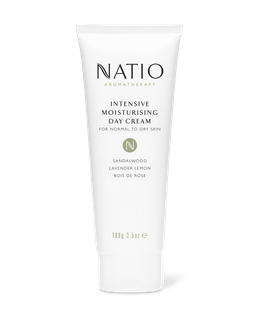
“Intensive Moisturising Day Cream”
This product can help improve hydration of the skin with the two types of ingredients.
The first type is called “humectants”:
these ingredients help attract water.
When humectants are on the surface of the skin, they “pull in” the moisture from the outside environment, or from
within deeper layers of the skin. The following ingredients in this product do the job:
sodium hyaluronate, propylene glycol.
This product also contains ingredients called “occlusives”. They help reduce the speed with which our skin loses moisture to the outside environment. These ingredients also help soften the upper layer of the skin, so it feels less tight and nicer to the touch. The following ingredients in this product do the job: butyrospermum parkii butter, caprylic/capric triglyceride.
Can it cause trouble?
Irritancy9 strong irritants: Parfum, Citrus limon peel oil + 7 more — patch-test recommendedHigh risk
Comedogenic1 ingredient rated 2 or more on the 0–5 pore-clogging scale1 flagged
User reviews
Be the first — your take helps the next person decide.
Ingredients
Filter by role to see what each ingredient is doing.
Water~40–60%
Propanediol~4.6–6.8%
- Irritation risk
- Low
Acts as a solvent for other ingredients. Speeds up the absorption of other ingredients into the skin
More about PropanediolPrunus armeniaca kernel oil~3.6–5.5%
- Irritation risk
- Medium
An emollient that helps soften the skin
More about Prunus armeniaca kernel oilDimethicone~2.8–4.2%
- Irritation risk
- Low
A silicone that helps to reduce water loss from the surface of the skin. Can temporarily "fill in" lines and wrinkles, absorb oil, and create a nice product finish
More about DimethiconeCaprylic/capric triglyceride~2.1–3.2%
- Irritation risk
- Medium
A good mix of fatty acids that forms a protective layer on the skin. Improves the shelf life of products. Derived from coconut and glycerin
More about Caprylic/capric triglycerideButyrospermum parkii butter~1.7–2.6%
- Irritation risk
- Low
- Comedogenicity
- 3/5
A great moisturising ingredient that softens the skin and reduces water loss from its upper layer. It also can be helpful in protecting skin from free radicals
More about Butyrospermum parkii butterNeopentyl glycol diheptanoate~1.4–2.1%
- Irritation risk
- Low
Helps soften the upper layer of the skin and create a nice product consistency
More about Neopentyl glycol diheptanoateHydrogenated coco-glycerides~1.3–1.9%
- Irritation risk
- Medium
Helps oil and water mix together while creating a nice finish on the skin
More about Hydrogenated coco-glyceridesTocopheryl acetate~1–1.45%
- Irritation risk
- Medium
A more stable but less bio-available form of vitamin E compared to Tocopherol. Might help moisturize and protect the skin from free radicals, but mostly used in low concentrations to stabilize other ingredients.
More about Tocopheryl acetatePhenyl trimethicone~0.85–1.3%
- Irritation risk
- Low
A type of silicone that can decrease loss of moisture from the skin surface. It helps create a nice product texture
More about Phenyl trimethiconeSodium hyaluronate~0.5–1.2%
- Irritation risk
- Low
One of the best moisturizing ingredients. Attracts water into the upper layer of the skin
More about Sodium hyaluronateSodium ascorbyl phosphate~0.45–1.05%
- Irritation risk
- Medium
A stable derivative of vitamin C. It is oil-soluble which means it is more likely to penetrate the skin compared to the pure form of vitamin C (which is water-soluble), but it is less bio-available and is way less effective in stimulating collagen and reducing wrinkles compared to the pure form of vitamin C (L-ascorbic acid) and its other derivatives (for example, magnesium ascorbyl phosphate). At the same time, this vitamin C derivative has been shown in studies to be effective in reducing acne, blemishes and clogged pores. It is less irritating then the pure form of vitamin C
More about Sodium ascorbyl phosphateSodium polyacrylate~0.45–1%
- Irritation risk
- Low
Used to create a gel-like product texture, as well as to stabilize emulsions
More about Sodium polyacrylateAmmonium acryloyldimethyltaurate/vp copolymer~0.35–0.85%
- Irritation risk
- Low
Increases thickness of a product. Texture enhancer for oil-in-water emulsions
More about Ammonium acryloyldimethyltaurate/vp copolymerSodium stearoyl glutamate~0.4–0.9%
- Irritation risk
- Medium
Helps oil and water mix together
More about Sodium stearoyl glutamatePhenoxyethanol~0.35–0.8%
- Irritation risk
- Low
A preservative. It helps prevent bacterial growth in cosmetic products
More about PhenoxyethanolBenzyl alcohol~0.3–0.7%
- Irritation risk
- High
A preservative. Can be used to mask unpleasant smell. Can be irritating
More about Benzyl alcoholDisodium edta~0.3–0.75%
Ethylhexylglycerin~0.2–0.8%
Propylene glycol~0.15–0.7%
- Irritation risk
- High
Helps oil and water mix together and can enhance the penetration of other ingredients into the skin. It can be irritating
More about Propylene glycolParfum~0.15–0.55%
- Irritation risk
- High
An aromatic blend of unspecified and possibly irritating ingredients
More about ParfumCitrus limon peel oil~0.15–0.55%
Alcohol~0.1–0.5%
- Irritation risk
- High
Can be drying and contribute to skin irritation. Used in formulars to dissolve other ingredients, create a thinner product consistency or for its antibacterial properties
More about AlcoholCananga odorata flower oil~0.1–0.35%
Citrus aurantium dulcis peel oil~0.1–0.35%
- Irritation risk
- High
An essentil oil from orange peel. Potential allergen and can be irritating
More about Citrus aurantium dulcis peel oilAniba rosaeodora wood oil~0.05–0.3%
- Irritation risk
- High
Lavandula angustifolia oil~0.1–0.3%
- Irritation risk
- High
An essential oil. Potential allergen and can be irritating. It has some anti-bacterial properties
More about Lavandula angustifolia oilSantalum album~0.05–0.3%
- Irritation risk
- High
Santalum album oil~0.05–0.15%
Ci 14700~0.05–0.1%
Ingredient list view
Water, Propanediol, Prunus armeniaca kernel oil, Dimethicone, Caprylic/capric triglyceride, Butyrospermum parkii butter, Neopentyl glycol diheptanoate, Hydrogenated coco-glycerides, Tocopheryl acetate, Phenyl trimethicone, Sodium hyaluronate, Sodium ascorbyl phosphate, Sodium polyacrylate, Ammonium acryloyldimethyltaurate/vp copolymer, Sodium stearoyl glutamate, Phenoxyethanol, Benzyl alcohol, Disodium edta, Ethylhexylglycerin, Propylene glycol, Parfum, Citrus limon peel oil, Alcohol, Cananga odorata flower oil, Citrus aurantium dulcis peel oil, Aniba rosaeodora wood oil, Lavandula angustifolia oil, Santalum album, Santalum album oil, Ci 14700
Compare prices
Retailers ranked by price — lowest first.
Affiliate links · prices updated regularly · As an Amazon Associate, WIMJ earns from qualifying purchases.
Sources cited in this review
Every concentration estimate and effectiveness label is anchored to one of these 14 studies and safety reviews.
- 1
- 2Final Report on the Safety Assessment of Dimethicone Copolyoljournals.sagepub.com
- 3Hyaluronic acid: A key molecule in skin agingncbi.nlm.nih.gov
- 4
- 5
- 6Sodium ascorbyl phosphate in topical microemulsionssciencedirect.com

Affiliate links · As an Amazon Associate, WIMJ earns from qualifying purchases.