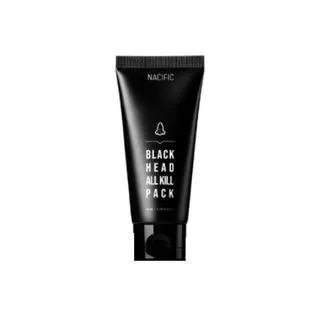
NACIFIC Black Head All Kill Pack

NACIFIC Black Head All Kill Pack

Efficacy0/100IrritancyHigh

Works for

Anti-blemish
Gluconolactone ~0.25–0.45%, below the ~1% it needs
Under-dosed
What the product description says
“Black Head All Kill Pack”
Source: Yesstyle

Effective ingredients missing or their concentration is too low.

Lauric acidEffect: LowHelps water and oil mix together. Has anti-bacterial properties that might be helpful in preventing blemishes~3.1–3.7%
Salix alba bark extractEffect: LowA plant extract that can help neutralize free radicals in skin. It contains a compound salicin that can theoretically be converted into salicylic acid that, in turn, helps reduce inflammation in skin, but the evidence of effectiveness in skin is lacking and the extract is usually not used in a concentration that would enable an exfoliating effect~0.2–0.4%
Camellia sinensis leaf extractEffect: Low, below effective doseCan contain potent anti-oxidant compounds (abbreviated ECG, GCG, EGC, and EGCG) that might help protect the skin from free radicals. Can help calm down inflammation and has some anti-bacterial properties. Unfortunately, these antioxidants are unstable and lose their effectiveness very quickly in products. The concentration of the antioxidant compounds in the extract also tends to be low to be effective in topical formulation~0.25–0.45%
GluconolactoneUnder-dosedA polyhydroxy acid (PHA) that helps shed the dead cells from the skin surface revealing smoother skin. Is believed to be genter than AHAs. It helps attract water to the upper layer of the skin and can stimulate production of skin's own hyaluronic acid resulting in improved hydration levels. It has been shown to be helpful against acne and clogged pores if used consistently (e.g over a period of 12 weeks) in high enough concentration. It can help reduce fine lines and wrinkles and improve skin tone with long-term application. Can help neutralize free radicals~0.25–0.45%
Moisturizing
Side benefit · Glycerin, Mannitol + 17 more
Works

This product contains good ingredients to attract water to the upper layer of the skin. These ingredients are called "humectants": glycerin, mannitol.

When humectants are on the surface of the skin, they “pull in” the moisture from the outside environment, or from within deeper layers of the skin. If the air is dry, humectants can speed up the moisture loss from the skin. This is why it is a good idea to use another product on top of this one to help "seal in" the moisture (look for ingredients like dimethicone, squalane, oils and butters).

GlycerinKey active· HumectantEffect: HighOne of the best moisturizing ingredients. Naturally present in skin. It attracts water to the upper layer of the skin working as a humectant~5.3–6.5%
MannitolKey active· HumectantEffect: HighHelps to attract water to the upper layer of the skin~0.25–0.4%
Glycine soja seed extractKey active· EmollientEffect: MediumAn emollient that helps soften the skin. Might be somewhat helpful in evening the skin tone.~0.25–0.45%
Sesamum indicum seed extractKey activeEffect: HighPlant oil that due to its high content of linoleic acid can help support skin's barrier function improving its hydration~0.2–0.35%
Lactobacillus/soybean ferment extractKey activeEffect: MediumA fermentation product created by bacteria Lactobacillus out of soybean. The fermented product helps to attract water to the upper layer of the skin and has anti-bacterial properties. It might be helpful in calming down inflammation and could be helpful in evening out skin tone, but studies are lacking~0.2–0.4%
Palmitic acid· EmollientEffect: LowAn emollient that is naturally present in skin and helps soften it~3.8–4.6%
Stearic acid· EmollientEffect: LowHelps oil and water mix together and works as an emollient~2.4–2.9%
Glyceryl stearate· EmollientEffect: LowAn emollient that softens the skin and forms a protective layer on its surface. Helps water and oil mix together~1.4–1.8%
Peg-32· HumectantEffect: LowHelps dissolve other ingredients and attract water to the upper layer of the skin~1.2–1.4%
Oleic acid· EmollientEffect: LowHelps soften the upper layer of the skin. At the same time, it can weaken the skin's barrier enhancing penetration of other ingredients and increasing the risk of skin dryness~0.3–0.55%
Butylene glycol· HumectantEffect: LowUsed to create a nice product texture and help delivery of other ingredients. Might be somewhat helpful in attracting water to the upper layer of the skin~0.25–0.45%
Portulaca oleracea extract· HumectantEffect: LowA plant extract that has some anti-oxidant activity, but solid research is lacking. Can help attract water to the upper layer of the skin~0.25–0.45%
Scutellaria baicalensis root extract· HumectantEffect: LowA plant extract that might contain a compound baicalin that could be helpful in neutralizing free radicals and reducing inflammation in skin. The baicalin concentration in skincare products is often too low for an effective action. Can be used for its fragrant properties~0.2–0.4%
Aloe barbadensis leaf extractEffect: Low, below effective doseTraditionally used to treat sunburns, dermatitis and inflammation, but evidence for its effectiveness is lacking. The extract can contain humectants that help attract water into the skin~0.3–0.55%
Camellia sinensis leaf extractEffect: Low, below effective doseCan contain potent anti-oxidant compounds (abbreviated ECG, GCG, EGC, and EGCG) that might help protect the skin from free radicals. Can help calm down inflammation and has some anti-bacterial properties. Unfortunately, these antioxidants are unstable and lose their effectiveness very quickly in products. The concentration of the antioxidant compounds in the extract also tends to be low to be effective in topical formulation~0.25–0.45%
LecithinEffect: Low, below effective doseUsed mostly for creating emulsions - helping oil and water mix together. Helps soften the upper layer of the skin~0.2–0.35%
Oryza sativa extractEffect: Low, below effective doseA grain extract that helps to create a thicker product consistency. It might have some anti-oxidant properties and help attract water to the upper layer of the skin~0.2–0.4%
GluconolactoneUnder-dosedA polyhydroxy acid (PHA) that helps shed the dead cells from the skin surface revealing smoother skin. Is believed to be genter than AHAs. It helps attract water to the upper layer of the skin and can stimulate production of skin's own hyaluronic acid resulting in improved hydration levels. It has been shown to be helpful against acne and clogged pores if used consistently (e.g over a period of 12 weeks) in high enough concentration. It can help reduce fine lines and wrinkles and improve skin tone with long-term application. Can help neutralize free radicals~0.25–0.45%
Pyrus malus fruit extractUnder-dosedCan have some moisturizing properties due to its sugar content~0.25–0.4%

Can it cause trouble?

Irritancy
9 strong irritants: Citrus aurantium bergamia fruit oil, Citrus nobilis peel oil + 7 more — patch-test recommended
High risk
We flagged 29 ingredients with irritancy potential. Severity depends on your sensitivity threshold; the table lists the worst offenders first.
IngredientFunctionIrritationEst. amount
Cocamidopropyl betaineHelps water and oil mix together. Used as a cleansing ingredient. Could be an allergenHigh~1.2–1.5%est.
Citrus aurantium bergamia fruit oilA plant oil with a high content of volatile compounds that can irritate the skin and lead to allergic reactions. Can lead to photosensitivityHigh~0.35–0.65%est.
Citrus nobilis peel oilA plant oil with high content of volatile compounds that, especially when exposed to air, can cause allergic reactions and irritate the skinHigh~0.35–0.6%est.
Citrus aurantium dulcis peel oilAn essentil oil from orange peel. Potential allergen and can be irritatingHigh~0.3–0.6%est.
Lavandula angustifolia oilAn essential oil. Potential allergen and can be irritating. It has some anti-bacterial propertiesHigh~0.25–0.45%est.
PapainAn enzyme extracted from papaya fruit. Can have an exfoliating effect on the skin. Can be irritatingHigh~0.25–0.4%est.
Origanum vulgare leaf extractA plant extract. Can have an anti-oxidant effect, but can also contain irritantsHigh~0.25–0.4%est.
Salix alba bark extractA plant extract that can help neutralize free radicals in skin. It contains a compound salicin that can theoretically be converted into salicylic acid that, in turn, helps reduce inflammation in skin, but the evidence of effectiveness in skin is lacking and the extract is usually not used in a concentration that would enable an exfoliating effectHigh~0.2–0.4%est.
Chamaecyparis obtusa leaf extractUsed as a fragranceHigh~0.25–0.4%est.
Scutellaria baicalensis root extractA plant extract that might contain a compound baicalin that could be helpful in neutralizing free radicals and reducing inflammation in skin. The baicalin concentration in skincare products is often too low for an effective action. Can be used for its fragrant propertiesHigh~0.2–0.4%est.
Cinnamomum cassia bark extractUsed as a fragrance. Can be irritatingHigh~0.25–0.5%est.
LimoneneA common frangrance that can easily irritate skin, especially if exposed to air, light or heatHigh~0.05–0.1%est.
LinaloolA fragrance. Can be irritatingHigh~0.05–0.1%est.
Lauric acidHelps water and oil mix together. Has anti-bacterial properties that might be helpful in preventing blemishesMedium~3.1–3.7%est.
Potassium hydroxideUsed to adjust the pH level of productsMedium~1.9–2.3%est.
Myristic acidHelps oil and water mix together. Could be comedogenicMedium~1.6–1.9%est.
EthylhexylglycerinA preservativeMedium~0.3–0.55%est.
Disodium edtaStabilizes the product formulationMedium~0.25–0.5%est.
Oleic acidHelps soften the upper layer of the skin. At the same time, it can weaken the skin's barrier enhancing penetration of other ingredients and increasing the risk of skin drynessMedium~0.3–0.55%est.
GluconolactoneA polyhydroxy acid (PHA) that helps shed the dead cells from the skin surface revealing smoother skin. Is believed to be genter than AHAs. It helps attract water to the upper layer of the skin and can stimulate production of skin's own hyaluronic acid resulting in improved hydration levels. It has been shown to be helpful against acne and clogged pores if used consistently (e.g over a period of 12 weeks) in high enough concentration. It can help reduce fine lines and wrinkles and improve skin tone with long-term application. Can help neutralize free radicalsMedium~0.25–0.45%est.
Citric acidCan work as an exfoliant but is typically used to adjust the product pHMedium~0.25–0.45%est.
Aloe barbadensis leaf extractTraditionally used to treat sunburns, dermatitis and inflammation, but evidence for its effectiveness is lacking. The extract can contain humectants that help attract water into the skinMedium~0.3–0.55%est.
1,2-hexanediolA preservativeMedium~0.25–0.45%est.
Pyrus malus fruit extractCan have some moisturizing properties due to its sugar contentMedium~0.25–0.4%est.
Portulaca oleracea extractA plant extract that has some anti-oxidant activity, but solid research is lacking. Can help attract water to the upper layer of the skinMedium~0.25–0.45%est.
Vaccinium angustifolium fruit extractA plant extract tha can have anti-oxidant properties, but evidence of effectiveness in skin is lackingMedium~0.2–0.35%est.
Glycine soja seed extractAn emollient that helps soften the skin. Might be somewhat helpful in evening the skin tone.Medium~0.25–0.45%est.
Rubus fruticosus fruit extractA plant extract that might help neutralize free radicals in skinMedium~0.2–0.35%est.
Juniperus communis fruit extractBerry extract that might have some anti-oxidant effectMedium~0.15–0.25%est.
Comedogenic
2 ingredients rated 2 or more on the 0–5 pore-clogging scale
2 flagged
These ingredients have a comedogenic rating of 2 or more on a 0–5 scale; the table shows each one's rating. In leave-on products they can clog pores in acne-prone skin.
IngredientFunctionRatingEst. amount
Lauric acidHelps water and oil mix together. Has anti-bacterial properties that might be helpful in preventing blemishes3/5~3.1–3.7%est.
Myristic acidHelps oil and water mix together. Could be comedogenic3/5~1.6–1.9%est.

User reviews

Would you recommend?
No community reviews yet.

Be the first — your take helps the next person decide.

Ingredients

Filter by role to see what each ingredient is doing.

Water~45–55%
Formula
Irritation risk
Low

Plain old water

More about Water
Glycerin~5.3–6.5%
Key active
Irritation risk
Low
Works for
Moisturizing

One of the best moisturizing ingredients. Naturally present in skin. It attracts water to the upper layer of the skin working as a humectant

More about Glycerin
Palmitic acid~3.8–4.6%
Formula
Irritation risk
Low
Works for
CleansingMoisturizing

An emollient that is naturally present in skin and helps soften it

More about Palmitic acid
Lauric acid~3.1–3.7%
Comedogenic 3/5Irritant · medium
Irritation risk
Medium
Comedogenicity
3/5
Works for
CleansingAntibacterialAnti-blemish

Helps water and oil mix together. Has anti-bacterial properties that might be helpful in preventing blemishes

More about Lauric acid
Stearic acid~2.4–2.9%
Formula
Irritation risk
Low
Works for
CleansingMoisturizing

Helps oil and water mix together and works as an emollient

More about Stearic acid
Potassium hydroxide~1.9–2.3%
Irritant · medium
Irritation risk
Medium

Used to adjust the pH level of products

More about Potassium hydroxide
Myristic acid~1.6–1.9%
Comedogenic 3/5Irritant · medium
Irritation risk
Medium
Comedogenicity
3/5
Works for
Cleansing

Helps oil and water mix together. Could be comedogenic

More about Myristic acid
Glyceryl stearate~1.4–1.8%
Formula
Irritation risk
Low
Works for
CleansingMoisturizing

An emollient that softens the skin and forms a protective layer on its surface. Helps water and oil mix together

More about Glyceryl stearate
Peg-32~1.2–1.4%
Formula
Irritation risk
Low
Works for
Moisturizing

Helps dissolve other ingredients and attract water to the upper layer of the skin

More about Peg-32
Charcoal powder~1.2–1.4%
Formula
Irritation risk
Low

Benefits for the skin are not clear

More about Charcoal powder
Propanediol~0.7–1%
Formula
Irritation risk
Low

Acts as a solvent for other ingredients. Speeds up the absorption of other ingredients into the skin

More about Propanediol
Cocamidopropyl betaine~1.2–1.5%
Irritant · high
Irritation risk
High
Works for
Cleansing

Helps water and oil mix together. Used as a cleansing ingredient. Could be an allergen

More about Cocamidopropyl betaine
Peg-100 stearate~0.6–0.9%
Formula
Irritation risk
Low
Works for
Cleansing

Helps oil and water mix togehter and creates a nice product texture

More about Peg-100 stearate
Sodium chloride~0.5–0.75%
Formula
Irritation risk
Low

Used to stabilize mixtures of oil and water, and create thicker, gel-like product textures

More about Sodium chloride
Phenoxyethanol~0.4–0.65%
Formula
Irritation risk
Low

A preservative. It helps prevent bacterial growth in cosmetic products

More about Phenoxyethanol
Citrus aurantium bergamia fruit oil~0.35–0.65%
Irritant · high
Irritation risk
High

A plant oil with a high content of volatile compounds that can irritate the skin and lead to allergic reactions. Can lead to photosensitivity

More about Citrus aurantium bergamia fruit oil
Citrus nobilis peel oil~0.35–0.6%
Irritant · high
Irritation risk
High

A plant oil with high content of volatile compounds that, especially when exposed to air, can cause allergic reactions and irritate the skin

More about Citrus nobilis peel oil
Citrus aurantium dulcis peel oil~0.3–0.6%
Irritant · high
Irritation risk
High

An essentil oil from orange peel. Potential allergen and can be irritating

More about Citrus aurantium dulcis peel oil
Ethylhexylglycerin~0.3–0.55%
Irritant · medium
Irritation risk
Medium

A preservative

More about Ethylhexylglycerin
Arachidic acid~0.45–0.65%
Formula
Irritation risk
Low
Works for
Cleansing
More about Arachidic acid
Disodium edta~0.25–0.5%
Irritant · medium
Irritation risk
Medium

Stabilizes the product formulation

More about Disodium edta
Lavandula angustifolia oil~0.25–0.45%
Irritant · high
Irritation risk
High

An essential oil. Potential allergen and can be irritating. It has some anti-bacterial properties

More about Lavandula angustifolia oil
Capric acid~0.3–0.55%
Formula
Irritation risk
Low
Works for
Cleansing
More about Capric acid
Oleic acid~0.3–0.55%
Irritant · medium
Irritation risk
Medium
Works for
CleansingMoisturizingAnti-inflammatory

Helps soften the upper layer of the skin. At the same time, it can weaken the skin's barrier enhancing penetration of other ingredients and increasing the risk of skin dryness

More about Oleic acid
Butylene glycol~0.25–0.45%
Formula
Irritation risk
Low
Works for
Moisturizing

Used to create a nice product texture and help delivery of other ingredients. Might be somewhat helpful in attracting water to the upper layer of the skin

More about Butylene glycol
Gluconolactone~0.25–0.45%
Under-dosedIrritant · medium
Irritation risk
Medium
Works for
ExfoliationMoisturizingAnti-agingEvens skin toneAnti-oxidationAnti-blemish

A polyhydroxy acid (PHA) that helps shed the dead cells from the skin surface revealing smoother skin. Is believed to be genter than AHAs. It helps attract water to the upper layer of the skin and can stimulate production of skin's own hyaluronic acid resulting in improved hydration levels. It has been shown to be helpful against acne and clogged pores if used consistently (e.g over a period of 12 weeks) in high enough concentration. It can help reduce fine lines and wrinkles and improve skin tone with long-term application. Can help neutralize free radicals

More about Gluconolactone
Citric acid~0.25–0.45%
Irritant · medium
Irritation risk
Medium

Can work as an exfoliant but is typically used to adjust the product pH

More about Citric acid
Camellia sinensis leaf extract~0.25–0.45%
Formula
Irritation risk
Low
Works for
AntibacterialAnti-oxidationAnti-agingMoisturizingEvens skin toneAnti-blemish

Can contain potent anti-oxidant compounds (abbreviated ECG, GCG, EGC, and EGCG) that might help protect the skin from free radicals. Can help calm down inflammation and has some anti-bacterial properties. Unfortunately, these antioxidants are unstable and lose their effectiveness very quickly in products. The concentration of the antioxidant compounds in the extract also tends to be low to be effective in topical formulation

More about Camellia sinensis leaf extract
Mannitol~0.25–0.4%
Key active
Irritation risk
Low
Works for
Moisturizing

Helps to attract water to the upper layer of the skin

More about Mannitol
Papain~0.25–0.4%
Irritant · high
Irritation risk
High
Works for
Exfoliation

An enzyme extracted from papaya fruit. Can have an exfoliating effect on the skin. Can be irritating

More about Papain
Aloe barbadensis leaf extract~0.3–0.55%
Irritant · medium
Irritation risk
Medium
Works for
Moisturizing

Traditionally used to treat sunburns, dermatitis and inflammation, but evidence for its effectiveness is lacking. The extract can contain humectants that help attract water into the skin

More about Aloe barbadensis leaf extract
1,2-hexanediol~0.25–0.45%
Irritant · medium
Irritation risk
Medium

A preservative

More about 1,2-hexanediol
Bromelain~0.25–0.4%
Formula
Irritation risk
Low
More about Bromelain
Origanum vulgare leaf extract~0.25–0.4%
Irritant · high
Irritation risk
High
Works for
Anti-oxidation

A plant extract. Can have an anti-oxidant effect, but can also contain irritants

More about Origanum vulgare leaf extract
Salix alba bark extract~0.2–0.4%
Irritant · high
Irritation risk
High
Works for
Anti-inflammatoryAnti-oxidationAnti-blemishExfoliation

A plant extract that can help neutralize free radicals in skin. It contains a compound salicin that can theoretically be converted into salicylic acid that, in turn, helps reduce inflammation in skin, but the evidence of effectiveness in skin is lacking and the extract is usually not used in a concentration that would enable an exfoliating effect

More about Salix alba bark extract
Pyrus malus fruit extract~0.25–0.4%
Under-dosedIrritant · medium
Irritation risk
Medium
Works for
MoisturizingAnti-oxidation

Can have some moisturizing properties due to its sugar content

More about Pyrus malus fruit extract
Chamaecyparis obtusa leaf extract~0.25–0.4%
Irritant · high
Irritation risk
High

Used as a fragrance

More about Chamaecyparis obtusa leaf extract
Scutellaria baicalensis root extract~0.2–0.4%
Irritant · high
Irritation risk
High
Works for
Anti-inflammatoryAnti-oxidationMoisturizingReduces irritationAntibacterial

A plant extract that might contain a compound baicalin that could be helpful in neutralizing free radicals and reducing inflammation in skin. The baicalin concentration in skincare products is often too low for an effective action. Can be used for its fragrant properties

More about Scutellaria baicalensis root extract
Portulaca oleracea extract~0.25–0.45%
Irritant · medium
Irritation risk
Medium
Works for
MoisturizingAnti-oxidation

A plant extract that has some anti-oxidant activity, but solid research is lacking. Can help attract water to the upper layer of the skin

More about Portulaca oleracea extract
Cinnamomum cassia bark extract~0.25–0.5%
Irritant · high
Irritation risk
High

Used as a fragrance. Can be irritating

More about Cinnamomum cassia bark extract
Lactobacillus/soybean ferment extract~0.2–0.4%
Key active
Irritation risk
Low
Works for
Moisturizing

A fermentation product created by bacteria Lactobacillus out of soybean. The fermented product helps to attract water to the upper layer of the skin and has anti-bacterial properties. It might be helpful in calming down inflammation and could be helpful in evening out skin tone, but studies are lacking

More about Lactobacillus/soybean ferment extract
Vaccinium angustifolium fruit extract~0.2–0.35%
Irritant · medium
Irritation risk
Medium
Works for
Anti-oxidation

A plant extract tha can have anti-oxidant properties, but evidence of effectiveness in skin is lacking

More about Vaccinium angustifolium fruit extract
Glycine soja seed extract~0.25–0.45%
Key activeIrritant · medium
Irritation risk
Medium
Works for
MoisturizingAnti-oxidationReduces rednessEvens skin toneAnti-aging

An emollient that helps soften the skin. Might be somewhat helpful in evening the skin tone.

More about Glycine soja seed extract
Sesamum indicum seed extract~0.2–0.35%
Key active
Irritation risk
Low
Works for
Moisturizing

Plant oil that due to its high content of linoleic acid can help support skin's barrier function improving its hydration

More about Sesamum indicum seed extract
Rubus fruticosus fruit extract~0.2–0.35%
Irritant · medium
Irritation risk
Medium
Works for
Anti-oxidation

A plant extract that might help neutralize free radicals in skin

More about Rubus fruticosus fruit extract
Oryza sativa extract~0.2–0.4%
Formula
Irritation risk
Low
Works for
MoisturizingAnti-oxidation

A grain extract that helps to create a thicker product consistency. It might have some anti-oxidant properties and help attract water to the upper layer of the skin

More about Oryza sativa extract
Allium sativum bulb extract~0.15–0.3%
Formula
Morus alba fruit extract~0.15–0.3%
Formula
Juniperus communis fruit extract~0.15–0.25%
Irritant · medium
Irritation risk
Medium
Works for
Anti-oxidation

Berry extract that might have some anti-oxidant effect

More about Juniperus communis fruit extract
Lecithin~0.2–0.35%
Formula
Irritation risk
Low
Works for
CleansingMoisturizing

Used mostly for creating emulsions - helping oil and water mix together. Helps soften the upper layer of the skin

More about Lecithin
Limonene~0.05–0.1%
Irritant · high
Irritation risk
High

A common frangrance that can easily irritate skin, especially if exposed to air, light or heat

More about Limonene
Linalool~0.05–0.1%
Irritant · high
Irritation risk
High

A fragrance. Can be irritating

More about Linalool
Ingredient list view

Water, Glycerin, Palmitic acid, Lauric acid, Stearic acid, Potassium hydroxide, Myristic acid, Glyceryl stearate, Peg-32, Charcoal powder, Propanediol, Cocamidopropyl betaine, Peg-100 stearate, Sodium chloride, Phenoxyethanol, Citrus aurantium bergamia fruit oil, Citrus nobilis peel oil, Citrus aurantium dulcis peel oil, Ethylhexylglycerin, Arachidic acid, Disodium edta, Lavandula angustifolia oil, Capric acid, Oleic acid, Butylene glycol, Gluconolactone, Citric acid, Camellia sinensis leaf extract, Mannitol, Papain, Aloe barbadensis leaf extract, 1,2-hexanediol, Bromelain, Origanum vulgare leaf extract, Salix alba bark extract, Pyrus malus fruit extract, Chamaecyparis obtusa leaf extract, Scutellaria baicalensis root extract, Portulaca oleracea extract, Cinnamomum cassia bark extract, Lactobacillus/soybean ferment extract, Vaccinium angustifolium fruit extract, Glycine soja seed extract, Sesamum indicum seed extract, Rubus fruticosus fruit extract, Oryza sativa extract, Allium sativum bulb extract, Morus alba fruit extract, Juniperus communis fruit extract, Lecithin, Limonene, Linalool

Compare prices

Retailers ranked by price — lowest first.

Yesstyle
$11.44 Out of stock
Check
Amazon US
Price unavailable Out of stock
Check

Affiliate links · As an Amazon Associate, WIMJ earns from qualifying purchases.

Worth comparing, line by line.

Match % combines shared ingredients, the first five ingredients, shared actives and hero ingredients, irritancy (lower counts in the alternative's favour), texture and body area. Only products in the same routine step are compared.

Side-by-side comparison of this product against its closest alternatives
NACIFICBlack Head All Kill PackYOUR PRODUCTTypologyCoffret Masque Pores Dilatés et Points Noirs — AHA 10 % + PHA 10 %VENN SkincareVENN Collagen Intensive Phyto-Retinol Resurfacing MaskGlowWatermelon Clay Mask
Match—59%57%56%
Price—$32.50$120.00—
Shared key ingredients—3 of 52 of 52 of 5
Key difference—Lactic AcidNiacinamideHydrated Silica
Irritancy High Low Medium Medium
Drying alcohol————
View product Shop Shop Shop

More alternatives: By BEAUTY BAY Skin Fixer Clay Mask with Clay Blend and PHAhellobubble Deep Dive Exfoliating Mask

Cheaper alternatives? See how this stacks up against similar formulas.
We compare ingredient profiles across our catalog — pick the closest match for your budget.
Open dupe finder

Product summary

"NACIFIC - Black Head All Kill Pack" could be helpful for: Moisturizing, but its actives are not the most effective or are not well-studied.

Ingredient callouts

  • Humectants (mannitol 0.25% - 0.40% and glycerin 5.30% - 6.50%). These ingredients help attract water to the upper layer of the skin and improve the skin hydration.

Price

The product retails from 11.44$ up to 49.90$ in the United States.

For a detailed price comparison: click here.

Sources cited in this review

Every concentration estimate and effectiveness label is anchored to one of these 32 studies and safety reviews.

  1. 1
  2. 2
  3. 3
  4. 4
  5. 5
  6. 6
NACIFIC Black Head All Kill Pack
NACIFICBlack Head All Kill Pack

Affiliate links · As an Amazon Associate, WIMJ earns from qualifying purchases.

As an Amazon Associate, WIMJ earns from qualifying purchases.