Works for
1 of 1 advertised claim delivered
Moisturizing13 ingredients credited for this claimStrong support
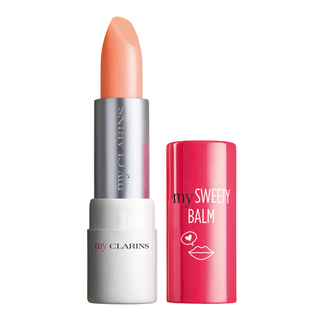
“What it does This nourishing lip balm, enriched with organic Cocoa Butter, will make your lips look smoother and fuller while keeping them hydrated.”
This product can help soften the skin and reduce its moisture loss with emollients and occlusives: helianthus annuus seed wax, theobroma cacao seed butter.
Keep in mind that this product does not contain effective ingredients to attract water to the upper layer of the skin. This is why an additional product with humectants like glycerin or hyaluronic acid can be helpful (apply it before this product for the best results).
The following ingredients in this product are especially good for supporting the skin barrier and helping with the hydration level: palmitoyl tripeptide-1
Anti-agingNot advertised by the brand · 5 ingredients credited for this claimModerate support
This product contains palmitoyl tripeptide-1. This ingredient might be able to help reduce and prevent fine lines and wrinkles, improve skin elasticity and firmness, but there is not enough evidence that it actually works.
Can it cause trouble?
Irritancy1 strong irritant: ParfumMedium risk
Comedogenic4 ingredients rated 2 or more on the 0–5 pore-clogging scale4 flagged
User reviews
Be the first — your take helps the next person decide.
Ingredients
Filter by role to see what each ingredient is doing.
Diisostearyl malate~22–33%
- Irritation risk
- Medium
Helps to soften the upper layer of the skin
More about Diisostearyl malatePentaerythrityl tetraisostearate~4.7–7%
- Irritation risk
- Medium
Used to create a thicker product consistency
More about Pentaerythrityl tetraisostearatePolyglyceryl-2 triisostearate~3.3–4.9%
- Irritation risk
- Low
Helps to soften the upper layer of the skin and create a nice product texture
More about Polyglyceryl-2 triisostearateOctyldodecanol~3.6–5.3%
- Irritation risk
- Low
An emollient that helps to soften the skin and create a pleasant product texture and stabilize the formulation
More about OctyldodecanolDilinoleic acid/butanediol copolymer~2.7–4%
- Irritation risk
- Low
Bis-behenyl/isostearyl/phytosteryl dimer dilinoleyl dimer dilinoleate~2.1–3.1%
- Irritation risk
- High
Helianthus annuus seed wax~1.6–2.4%
- Irritation risk
- Low
Helps soften the upper layer of the skin and support skin's barrier function while creating a thicker product consistency
More about Helianthus annuus seed waxPolyethylene~1.5–2.3%
Paraffin~1.2–1.8%
- Irritation risk
- Low
Prevents water loss from the skin surface and thickens the product consistency
More about ParaffinSynthetic wax~0.95–1.4%
- Irritation risk
- Low
Used to stabilize product formulations and thicken product consistency
More about Synthetic waxButyrospermum parkii butter~0.8–1.2%
- Irritation risk
- Low
- Comedogenicity
- 3/5
A great moisturising ingredient that softens the skin and reduces water loss from its upper layer. It also can be helpful in protecting skin from free radicals
More about Butyrospermum parkii butterTheobroma cacao seed butter~0.5–1.2%
- Irritation risk
- Low
- Comedogenicity
- 3/5
Helps soften the upper layer of the skin and can be helpful in restoring the skin barrier function. Might have some anti-oxidant effect
More about Theobroma cacao seed butterEthylhexyl palmitate~0.5–1.15%
- Irritation risk
- Low
- Comedogenicity
- 3/5
An emollient that helps soften the skin and create a nice product texture
More about Ethylhexyl palmitateParfum~0.4–0.9%
- Irritation risk
- High
An aromatic blend of unspecified and possibly irritating ingredients
More about ParfumTocopheryl acetate~0.4–0.9%
- Irritation risk
- Medium
A more stable but less bio-available form of vitamin E compared to Tocopherol. Might help moisturize and protect the skin from free radicals, but mostly used in low concentrations to stabilize other ingredients.
More about Tocopheryl acetateLactic acid~0.35–0.85%
- Irritation risk
- Medium
An exfoliating and moisturizing alpha-hydroxy acid (AHA). Typically causes less irritation than other AHAs, for example, glycolic acid. At high concentrations (about 15%), lactic acid can help reduce lines and wrinkles. Recent studies show that lactic acid can support the "good" bacteria living on skin's surface (healthy skin microbiome)
More about Lactic acidHydrogenated microcrystalline wax~0.35–0.85%
- Irritation risk
- Low
Ci 77891~0.4–0.9%
- Irritation risk
- Low
Titanium dioxide~0.4–0.95%
- Irritation risk
- Low
Works as a UV filter when used in high concentrations. It is photostable and is effective mostly against the UVB light, with some protection in the UVA range. In small concentrations, used for its ability to improve the color of cosmetic products. Is usually well tolerated by the skin
More about Titanium dioxideAmmonium glycyrrhizate~0.3–0.75%
- Irritation risk
- Low
Tribehenin~0.35–0.8%
- Irritation risk
- Low
Used to create a thicker product consistency and soften the upper layer of the skin
More about TribeheninCi 45380~0.2–0.75%
Ci 14700~0.15–0.7%
Sorbitan isostearate~0.15–0.65%
- Irritation risk
- Low
Helps oil and water mix together
More about Sorbitan isostearateCi 15985~0.15–0.55%
Ci 19140~0.1–0.5%
Ascorbyl palmitate~0.1–0.4%
- Irritation risk
- Medium
Being a lipid soluble form of vitamin C, it is more stable and can penetrate the skin better than L-Ascorbic acid. It is effective in protecting the skin from free radicals, as well as evening the skin tone, but is less effective in stimulating collagen production compared to L-Ascorbic acid.
More about Ascorbyl palmitateTocopherol~0.1–0.4%
- Irritation risk
- Low
Pure form of vitamin E. Can help moisturise and protect the skin from free radicals. Often used to help stabilise other ingredients or the formula itself
More about TocopherolWater~0.1–0.4%
Ci 15850~0.05–0.3%
Palmitoyl tripeptide-1~0.1–0.5%
- Irritation risk
- Low
A type of peptide. Peptides are excellent moisturizers and might be able support collagen production reducing fine lines and wrinkles
More about Palmitoyl tripeptide-1Ingredient list view
Diisostearyl malate, Pentaerythrityl tetraisostearate, Polyglyceryl-2 triisostearate, Octyldodecanol, Dilinoleic acid/butanediol copolymer, Bis-behenyl/isostearyl/phytosteryl dimer dilinoleyl dimer dilinoleate, Helianthus annuus seed wax, Polyethylene, Paraffin, Synthetic wax, Butyrospermum parkii butter, Theobroma cacao seed butter, Ethylhexyl palmitate, Parfum, Tocopheryl acetate, Lactic acid, Hydrogenated microcrystalline wax, Ci 77891, Titanium dioxide, Ammonium glycyrrhizate, Tribehenin, Ci 45380, Ci 14700, Unknown, Sorbitan isostearate, Ci 15985, Ci 19140, Ascorbyl palmitate, Tocopherol, Water, Ci 15850, Palmitoyl tripeptide-1
Compare prices
Retailers ranked by price — lowest first.
Product summary
Based on the ingredients included, "My Clarins - My Sweety Balm" works well for moisturizing the skin.
Ingredient callouts
- This moisturizer also contains Peptides (palmitoyl tripeptide-1 0.10% - 0.50%). Peptides are a very big group of ingredients. They all consist of a different combination of aminoacids. Our skin produces Peptides naturally. Some of them work as natural antibiotics, promote wound-healing and production of collagen. The scientists are still studying how effective the topical application of Peptides is, but it is very likely that they are helpful. Peptides might be able to support skin barrier restoration and even have an anti-aging benefit. At the very least, they certainly help attract water to the skin and support the hydration in this way.
Irritation risk
There are quite a few common irritants in this product, including ingredients without particular skin benefits. We would not recommend it for sensitive skin. We assess the overall irritancy of this moisturizer to be medium. For a detailed overview of all potential irritants: click here
You can see the detailed formula review with the breakdown of all actives in the product and the full ingredient list with estimated concentrations in the tables below.
Price
The product retails for 27.00A$ in Australia.
For a detailed price comparison: click here.
Sources cited in this review
Every concentration estimate and effectiveness label is anchored to one of these 9 studies and safety reviews.
- 1
- 2
- 3
- 4
- 5Epidermal and dermal effects of topical lactic acidncbi.nlm.nih.gov
- 6Dual Effects of Alpha-Hydroxy Acids on the Skinpdfs.semanticscholar.org

Affiliate links · As an Amazon Associate, WIMJ earns from qualifying purchases.