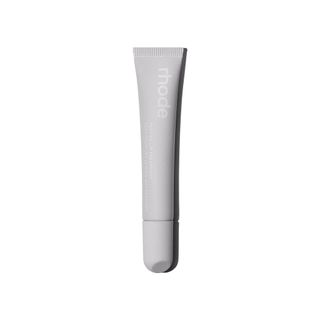
Works for
2 of 2 advertised claims delivered
MoisturizingPalmitoyl tripeptide-1, Theobroma grandiflorum seed butter + 13 moreStrong evidence
“nourishing formula that hydrates and replenishes lips”
This product can help soften the skin and reduce its moisture loss with emollients and occlusives: butyrospermum parkii butter, diisostearyl malate.
Keep in mind that this product does not contain effective ingredients to attract water to the upper layer of the skin. This is why an additional product with humectants like glycerin or hyaluronic acid can be helpful (apply it before this product for the best results).
The following ingredients in this product are especially good for supporting the skin barrier and helping with the hydration level: palmitoyl tripeptide-1
Anti-agingPalmitoyl tripeptide-1, Butyrospermum parkii butter + 3 moreModerate evidence
“Smooths fine lines on the lips and visibly plumps lips over time”
This product contains palmitoyl tripeptide-1. This ingredient might be able to help reduce and prevent fine lines and wrinkles, improve skin elasticity and firmness, but there is not enough evidence that it actually works.
Can it cause trouble?
Irritancy7 flagged ingredientsLow risk
Comedogenic2 ingredients rated 2 or more on the 0–5 pore-clogging scale2 flagged
User reviews
Be the first — your take helps the next person decide.
Ingredients
Filter by role to see what each ingredient is doing.
Hydrogenated polyisobutene~22–34%
- Irritation risk
- Low
Used to improve the product consistency and soften the upper layer of the skin
More about Hydrogenated polyisobuteneDiisostearyl malate~5.4–8.1%
- Irritation risk
- Medium
Helps to soften the upper layer of the skin
More about Diisostearyl malateButyrospermum parkii butter~5.1–7.6%
- Irritation risk
- Low
- Comedogenicity
- 3/5
A great moisturising ingredient that softens the skin and reduces water loss from its upper layer. It also can be helpful in protecting skin from free radicals
More about Butyrospermum parkii butterPolybutene~3.8–5.8%
Microcrystalline wax~2.9–4.4%
Synthetic beeswax~2.2–3.3%
- Irritation risk
- Low
Helps soften the upper layer of the skin
More about Synthetic beeswaxSynthetic wax~1.8–2.7%
- Irritation risk
- Low
Used to stabilize product formulations and thicken product consistency
More about Synthetic waxOctyldodecanol~1.4–2.2%
- Irritation risk
- Low
An emollient that helps to soften the skin and create a pleasant product texture and stabilize the formulation
More about OctyldodecanolHydrogenated poly(c6-14 olefin)~1.3–1.9%
- Irritation risk
- Low
Helps soften the upper layer of the skin and create a nice product texture
More about Hydrogenated poly(c6-14 olefin)Polyglyceryl-2 triisostearate~1–1.45%
- Irritation risk
- Low
Helps to soften the upper layer of the skin and create a nice product texture
More about Polyglyceryl-2 triisostearateDimer dilinoleyl dimer dilinoleate~0.9–1.35%
- Irritation risk
- Low
Helps create a nice product texture and soften the upper layer of the skin
More about Dimer dilinoleyl dimer dilinoleateGlyceryl behenate/eicosadioate~0.6–1.4%
Triethyl citrate~0.45–1.1%
Tocopherol~0.45–1.05%
- Irritation risk
- Low
Pure form of vitamin E. Can help moisturise and protect the skin from free radicals. Often used to help stabilise other ingredients or the formula itself
More about TocopherolTocopheryl acetate~0.4–0.95%
- Irritation risk
- Medium
A more stable but less bio-available form of vitamin E compared to Tocopherol. Might help moisturize and protect the skin from free radicals, but mostly used in low concentrations to stabilize other ingredients.
More about Tocopheryl acetateTetrahexyldecyl ascorbate~0.4–0.95%
- Irritation risk
- Medium
Being a lipid soluble form of vitamin C, it is more stable than ascorbic acid, but still degrades quickly and needs to be stabilized in a formulation with another ingredient. It is claimed to penetrate skin better than pure vitamin C and have the the similar benefits, but solid studies of its effectiveness are lacking. Is likely to require a higher concentration in a product than pure vitamin C to be effective. It might be able to help reduce pore clogging.
More about Tetrahexyldecyl ascorbatePalmitoyl tripeptide-1~0.45–1.05%
- Irritation risk
- Low
A type of peptide. Peptides are excellent moisturizers and might be able support collagen production reducing fine lines and wrinkles
More about Palmitoyl tripeptide-1Orbignya oleifera seed oil~0.4–0.95%
- Irritation risk
- Low
A plant oil that can help soften the upper layer of the skin. Might be helpful in calming down inflammation in skin
More about Orbignya oleifera seed oilTheobroma grandiflorum seed butter~0.3–0.75%
- Irritation risk
- Medium
Helps soften the upper layer of the skin and might as well help to attract moisture to its upper layer
More about Theobroma grandiflorum seed butterLactic acid~0.15–0.7%
- Irritation risk
- Medium
An exfoliating and moisturizing alpha-hydroxy acid (AHA). Typically causes less irritation than other AHAs, for example, glycolic acid. At high concentrations (about 15%), lactic acid can help reduce lines and wrinkles. Recent studies show that lactic acid can support the "good" bacteria living on skin's surface (healthy skin microbiome)
More about Lactic acidTribehenin~0.3–0.75%
- Irritation risk
- Low
Used to create a thicker product consistency and soften the upper layer of the skin
More about TribeheninStevioside~0.15–0.55%
- Irritation risk
- Low
Ethylhexyl palmitate~0.15–0.65%
- Irritation risk
- Low
- Comedogenicity
- 3/5
An emollient that helps soften the skin and create a nice product texture
More about Ethylhexyl palmitateSorbitan isostearate~0.1–0.45%
- Irritation risk
- Low
Helps oil and water mix together
More about Sorbitan isostearateSynthetic fluorphlogopite~0.1–0.4%
- Irritation risk
- Low
A mineral that is used as an optical filter (makes the skin looks nicer through light reflection) and to improve the texture of cosmetic products
More about Synthetic fluorphlogopiteDisteardimonium hectorite~0.1–0.35%
- Irritation risk
- Low
A type of clay that is used to thicken the product consistency
More about Disteardimonium hectoriteO-cymen-5-ol~0.05–0.1%
Ingredient list view
Hydrogenated polyisobutene, Diisostearyl malate, Butyrospermum parkii butter, Polybutene, Microcrystalline wax, Synthetic beeswax, Synthetic wax, Octyldodecanol, Hydrogenated poly(c6-14 olefin), Polyglyceryl-2 triisostearate, Dimer dilinoleyl dimer dilinoleate, Glyceryl behenate/eicosadioate, Triethyl citrate, Tocopherol, Tocopheryl acetate, Tetrahexyldecyl ascorbate, Palmitoyl tripeptide-1, Orbignya oleifera seed oil, Theobroma grandiflorum seed butter, Lactic acid, Tribehenin, Stevioside, Ethylhexyl palmitate, Sorbitan isostearate, Synthetic fluorphlogopite, Disteardimonium hectorite, O-cymen-5-ol
Compare prices
Retailers ranked by price — lowest first.
Affiliate links · prices updated regularly · As an Amazon Associate, WIMJ earns from qualifying purchases.
Worth comparing, line by line.
Match % combines shared ingredients, the first five ingredients, shared actives and hero ingredients, irritancy (lower counts in the alternative's favour), texture and body area. Only products in the same routine step are compared.
| RhodePeptide Lip Treatment UnscentedYOUR PRODUCT | Paula's choicePro-Collagen Peptide Plumping Gloss Balm Lip Treatment | The INKEY List CATripeptide Plumping Lip Balm | |
|---|---|---|---|
| Match | — | 58% | 55% |
| Price | — | $19.20 | $12.85 |
| Shared key ingredients | — | 3 of 6 | 4 of 6 |
| Key difference | — | Palmitoyl Tripeptide-38 | Palmitoyl Tripeptide-38 |
| Irritancy | Low | Low | Low |
| Drying alcohol | — | — | — |
| View product | Shop | Shop |

Product summary
"Rhode - Peptide Lip Treatment Unscented" is effective for: Moisturizing
It could be helpful for: Anti-aging, but its actives are not the most effective or are not well-studied.
Ingredient callouts
- We like that this moisturizer contains peptides (palmitoyl tripeptide-1 0.45% - 1.05%). There are many different kind of Peptides and they are naturally present in our skin. They all are a combination of aminoacids. Some of them work as natural antibiotics, promote wound-healing and production of collagen. The science is still not settled on how effective Peptides are in skincare, but it is very likely that they have a benefit. Peptides might help restore the skin barrier and fight the signs of aging. At the very least, Peptides work as humectants: they attract water to the upper layer of the skin and improve its hydration.
About the brand
According to Cruelty-Free Kitty "Rhode" is cruelty free and so is its parent company.
Sources cited in this review
Every concentration estimate and effectiveness label is anchored to one of these 14 studies and safety reviews.
- 1
- 2
- 3
- 4
- 5Vitamin E in dermatologyncbi.nlm.nih.gov
- 6Vitamin E and Skin Healthlpi.oregonstate.edu

Affiliate links · As an Amazon Associate, WIMJ earns from qualifying purchases.