Works for:
based on ingredients and %- Exfoliation
- Cleansing
Can it cause trouble?
- Irritation risk: medium
- Comedogenic risk ingredients: 2
Key actives
.png)


Works for
Cleansing
What does the product description say?
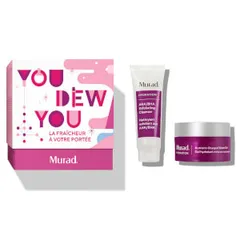
Cleanse, purify and protect your complexion with the You Dew You gift set from Murad’s holiday collection.
Source: Lookfantastic
This product works by removing dirt and oil from the surface of the skin. It uses a combination of mild cleansing agents (carbomer, cholesterol, cocamidopropyl betaine, decyl glucoside, glycol stearate, hexylene glycol, peg-7 trimethylolpropane coconut ether, sodium laureth sulfate, sodium lauroyl lactylate, xanthan gum) and should be able to cleanse the skin gently. Still keep in mind that any cleansing can disrupt the skin barrier, and most people do not need to cleanse their skin more than once per day.
Even though this formulation is mild, the following cleansing agents could trigger an irritation or allergy for some people: cocamidopropyl betaine, decyl glucoside, sodium laureth sulfate
Helps oil and water mix together
Helps create a more spreadable product texture
Used to create a thicker product consistency
Works as a foaming cleansing agent
Helps water and oil mix together
Helps create a thicker or gel-like product texture. It is not a surfactant but can be used in gentle cleansing formulations
An emollient that is naturally found in skin
Helps water and oil mix together. Used as a cleansing ingredient. Could be an allergen
Helps oil and water mix together. Can be irritating
Used mostly for creating emulsions - helping oil and water mix together. Helps soften the upper layer of the skin
Exfoliation
What does the product description say?
This gentle but efficient exfoliator works in two ways by dissolving dead skin cells and renewing the skin's texture.
Source: Lookfantastic
This product can help exfoliate the skin. In other words, it helps break down the bonds between dead cells on the surface of the skin and speed up the skin turnover. Skin often appears softer and brighter after exfoliation, but overdoing it can result in disrupted skin barrier. The following ingredient is doing the exfoliating job in this product: glycolic acid, hydroxyethyl urea.
A derivative of urea, a compound that is naturally present in skin. Attracts water to the upper layer of the skin. Can enhance penetration of other ingredients
An alpha-hydroxy acid (AHA) that helps to remove the dead skin cells on the surface of the skin reveling a more even, smoother complexation. It is also able to stimulate collagen production with long-term use. Could help to reduce pore congestion. It can be irritating to the skin. Apply sunscreen daily if using products with glycolic acid
Naturally present in skin (urea makes up about 7% of natural moisturizing factors in skin). Attracts water to the upper layer of the skin. Also has a positive effect on the skin barrier beyond the humectant action. Can enhance penetration of other ingredients. Is an exfoliating ingredient when used in high concentrations
An exfoliating and moisturizing alpha-hydroxy acid (AHA). Typically causes less irritation than other AHAs, for example, glycolic acid. At high concentrations (about 15%), lactic acid can help reduce lines and wrinkles. Recent studies show that lactic acid can support the "good" bacteria living on skin's surface (healthy skin microbiome)
Used for skin exfoliation. It has an anti-inflammatory and anti-bacterial effect, helps to unclog pores, prevent blemishes and speed up healing of the existing ones. Sometimes referred to as a BHA (beta-hydroxy acid)
How honest is this product?
| Promise | Can it deliver? |
|---|---|
| Cleansing | |
| Exfoliation |
Total Promises Fulfilled score: 100/100.
We receive a small commission for purchases made through these links at no cost for you. Thank you for your support! Learn more
Potential irritants
Comedogenic ingredients
User reviews (0)
Averages from community submissions.
No reviews yet for this product.
Be the first to share your experience!
Tried this product?
Help capture what the ingredient list can't—texture, finish, pilling, scent, and more. Answer what you can, skip the rest.
Takes ~30 seconds.
Reviews are shown in aggregate. No personal details.
| Product | Similarity | Price | Irritancy |
|---|---|---|---|
 Murad You Dew You Skin Duo | Current | $14.74 | |
 Community Sixty-Six Detoxifying AHA/BHA Gel Cleanser | 77% | - | |
 Skinfix USA Acne+ 2% BHA Cleanser | 75% | $35.00 | |
CeraVe Acne Control Cleanser | 72% | $10.00 | |
Kmart 2 in 1 Deep Gel Cleanser and Makeup Eraser - Salicylic Acid & Vitamin B3 | 65% | - | |
 The Perfect V VV Beauty Sheets | 64% | $24.00 |
Key Actives
Is proven to be effective in reducing blemishes, evening out skin tone and helping to improve lines and wrinkles. It helps the skin to repair sun damage, calm down inflammation and keep maintain good levels of moisture. The concentration of about 2% is effective for supporting the skin barrier and evening out the skin tone. Concentration of 4-6% is better for helping with acne and balancing the sebum production
Used for skin exfoliation. It has an anti-inflammatory and anti-bacterial effect, helps to unclog pores, prevent blemishes and speed up healing of the existing ones. Sometimes referred to as a BHA (beta-hydroxy acid)
An alpha-hydroxy acid (AHA) that helps to remove the dead skin cells on the surface of the skin reveling a more even, smoother complexation. It is also able to stimulate collagen production with long-term use. Could help to reduce pore congestion. It can be irritating to the skin. Apply sunscreen daily if using products with glycolic acid
A type of lipid similar to ceramides naturally present in skin. Helps to soften the upper layer of the skin and supports the skin barrier function to keep it hydrated. Can help to prevent inflammation in skin
A type of lipid similar to ceramides naturally present in skin. Helps to soften the upper layer of the skin and supports the skin barrier function to keep it hydrated. Can help to prevent inflammation in skin
A type of lipid similar to ceramides naturally present in skin. Helps to soften the upper layer of the skin and supports the skin barrier function to keep it hydrated. Can help to prevent inflammation in skin
A type of lipid that is naturally present in skin. It might help in repairing skin barrier function and has anti-bacterial effect
A salt derived from licorice. Works as an emollient to soften the upper layer of the skin and can help calm down inflammation. Might be helpful for skin lightening
A silicone that helps to reduce water loss from the surface of the skin. Can temporarily "fill in" lines and wrinkles, absorb oil, and create a nice product finish
A derivative of urea, a compound that is naturally present in skin. Attracts water to the upper layer of the skin. Can enhance penetration of other ingredients
A type of peptide. Peptides are excellent moisturizers and might be able support collagen production reducing fine lines and wrinkles
A type of peptide. Peptides are excellent moisturizers and might be able support collagen production reducing fine lines and wrinkles
An amino-acid that helps to attract water to the upper layer of the skin. In combination with other amino-acids, might help to reduce fine lines and wrinkles
Helps support skin barrier function improving skin hydration and reducing sensitivity
Naturally present in skin (urea makes up about 7% of natural moisturizing factors in skin). Attracts water to the upper layer of the skin. Also has a positive effect on the skin barrier beyond the humectant action. Can enhance penetration of other ingredients. Is an exfoliating ingredient when used in high concentrations
An emollient that is naturally found in skin
Used mostly for creating emulsions - helping oil and water mix together. Helps soften the upper layer of the skin
A silicone that forms a light film on the skin surface helping to bind water and temporarily absorb oils creating a matt and powdery feel
One of the best moisturizing ingredients. Naturally present in skin. It attracts water to the upper layer of the skin working as a humectant
Helps attract water to the upper layer of the skin
Yeast extract that contains zinc. Can help to attract water to the upper layer of the skin. Evidence of effectiveness for other benefits is missing
Yeast extract that contains copper. Can help to attract water to the upper layer of the skin and can help in skin wound healing
Yeast extract that contains magnesium. Can help to attract water to the upper layer of the skin. Evidence of effectiveness for other benefits is missing
Yeast extract that contains iron. Can help to attract water to the upper layer of the skin. Evidence of effectiveness for other benefits is missing
Yeast extract that contains silicon. Can help to attract water to the upper layer of the skin. Evidence of effectiveness for other benefits is missing
A sugar that attracts water to the upper layer of the skin
Helps attract water to the upper layer of the skin and improves the product texture
One of the best moisturizing ingredients. Attracts water into the upper layer of the skin
Can help attract water to the upper layer of the skin. In crystal form, it can work as a gentle exfoliant, gentler than the salt scrub. Helps stabilize the emulsion
Creates a thin drying film on the skin resulting in a short-term tightening effect
Helps oil and water mix together. Can be irritating
Helps create a more spreadable product texture
Helps create a thicker or gel-like product texture. It is not a surfactant but can be used in gentle cleansing formulations
Used to create a thicker product consistency
Helps water and oil mix together
Works as a foaming cleansing agent
Helps water and oil mix together. Used as a cleansing ingredient. Could be an allergen
An emollient made of jojoba oil. Helps soften the skin and support its barrier function
Naturally present in skin and helps to attract water to its upper layer
Potential irritants
Creates a thin drying film on the skin resulting in a short-term tightening effect
An aromatic blend of unspecified and possibly irritating ingredients
Works as a foaming cleansing agent
Helps water and oil mix together. Used as a cleansing ingredient. Could be an allergen
An alpha-hydroxy acid (AHA) that helps to remove the dead skin cells on the surface of the skin reveling a more even, smoother complexation. It is also able to stimulate collagen production with long-term use. Could help to reduce pore congestion. It can be irritating to the skin. Apply sunscreen daily if using products with glycolic acid
Used for skin exfoliation. It has an anti-inflammatory and anti-bacterial effect, helps to unclog pores, prevent blemishes and speed up healing of the existing ones. Sometimes referred to as a BHA (beta-hydroxy acid)
A gelling agent that thickens the product consistency and leaves the skin with a velvety finish
A preservative that comes from radishes fermented by a bacteria. New research suggests that the preservation properties in the ingredient come from an ammonium salt that is not present naturally in radish root but used in its cultivation. Is problematic because the exact amount of the preservative agents is difficult to determine
Could be helpful in reducing inflammation in skin, evening out the skin tone and neutralizing free radicals, but more research is needed to confirm its effectiveness
A more stable but less bio-available form of vitamin E compared to Tocopherol. Might help moisturize and protect the skin from free radicals, but mostly used in low concentrations to stabilize other ingredients.
A stable derivative of vitamin C. It is oil-soluble which means it is more likely to penetrate the skin compared to the pure form of vitamin C (which is water-soluble), but it is less bio-available and is way less effective in stimulating collagen and reducing wrinkles compared to the pure form of vitamin C (L-ascorbic acid) and its other derivatives (for example, magnesium ascorbyl phosphate). At the same time, this vitamin C derivative has been shown in studies to be effective in reducing acne, blemishes and clogged pores. It is less irritating then the pure form of vitamin C
Used to preserve products, dissolve other ingredients and create a nice product texture
Helps preserve products and creates a nice product texture
Used to improve stability of the formulation
An emollient made of jojoba oil. Helps soften the skin and support its barrier function
Used to stabilize product formulation, help create an even product layer over skin (for example, in sunscreen) and create a thicker product consistency
A stable derivative of vitamin C. It is oil-soluble which means it is more likely to penetrate the skin compared to the pure form of vitamin C (which is water-soluble), but it is less bio-available and is way less effective in stimulating collagen and reducing wrinkles compared to the pure form of vitamin C (L-ascorbic acid) and its other derivatives (for example, magnesium ascorbyl phosphate). At the same time, this vitamin C derivative has been shown in studies to be effective in reducing acne, blemishes and clogged pores. It is less irritating then the pure form of vitamin C
An exfoliating and moisturizing alpha-hydroxy acid (AHA). Typically causes less irritation than other AHAs, for example, glycolic acid. At high concentrations (about 15%), lactic acid can help reduce lines and wrinkles. Recent studies show that lactic acid can support the "good" bacteria living on skin's surface (healthy skin microbiome)
Can work as an exfoliant but is typically used to adjust the product pH
Comedogenic ingredients
Used to thicken product formulation. Can help attract water to the upper layer of the skin
Works as a foaming cleansing agent
All ingredients
A silicone that helps to reduce water loss from the surface of the skin. Can temporarily "fill in" lines and wrinkles, absorb oil, and create a nice product finish
One of the best moisturizing ingredients. Naturally present in skin. It attracts water to the upper layer of the skin working as a humectant
Acts as a solvent for other ingredients. Speeds up the absorption of other ingredients into the skin
A type of silicone that helps add a "soft focus" effect on the surface of the skin and create a nice product texture
A gelling agent that thickens the product consistency and leaves the skin with a velvety finish
Forms a protective film on the surface of the skin to prevent moisture loss. Gives a velvety feel to products while reducing tackiness
A derivative of urea, a compound that is naturally present in skin. Attracts water to the upper layer of the skin. Can enhance penetration of other ingredients
A type of lipid similar to ceramides naturally present in skin. Helps to soften the upper layer of the skin and supports the skin barrier function to keep it hydrated. Can help to prevent inflammation in skin
A type of lipid similar to ceramides naturally present in skin. Helps to soften the upper layer of the skin and supports the skin barrier function to keep it hydrated. Can help to prevent inflammation in skin
A type of lipid similar to ceramides naturally present in skin. Helps to soften the upper layer of the skin and supports the skin barrier function to keep it hydrated. Can help to prevent inflammation in skin
A type of peptide. Peptides are excellent moisturizers and might be able support collagen production reducing fine lines and wrinkles
A type of peptide. Peptides are excellent moisturizers and might be able support collagen production reducing fine lines and wrinkles
Yeast extract that contains zinc. Can help to attract water to the upper layer of the skin. Evidence of effectiveness for other benefits is missing
Yeast extract that contains copper. Can help to attract water to the upper layer of the skin and can help in skin wound healing
Yeast extract that contains magnesium. Can help to attract water to the upper layer of the skin. Evidence of effectiveness for other benefits is missing
Yeast extract that contains iron. Can help to attract water to the upper layer of the skin. Evidence of effectiveness for other benefits is missing
Yeast extract that contains silicon. Can help to attract water to the upper layer of the skin. Evidence of effectiveness for other benefits is missing
A preservative that comes from radishes fermented by a bacteria. New research suggests that the preservation properties in the ingredient come from an ammonium salt that is not present naturally in radish root but used in its cultivation. Is problematic because the exact amount of the preservative agents is difficult to determine
Could be helpful in reducing inflammation in skin, evening out the skin tone and neutralizing free radicals, but more research is needed to confirm its effectiveness
An amino-acid that helps to attract water to the upper layer of the skin. In combination with other amino-acids, might help to reduce fine lines and wrinkles
A more stable but less bio-available form of vitamin E compared to Tocopherol. Might help moisturize and protect the skin from free radicals, but mostly used in low concentrations to stabilize other ingredients.
Helps support skin barrier function improving skin hydration and reducing sensitivity
Is proven to be effective in reducing blemishes, evening out skin tone and helping to improve lines and wrinkles. It helps the skin to repair sun damage, calm down inflammation and keep maintain good levels of moisture. The concentration of about 2% is effective for supporting the skin barrier and evening out the skin tone. Concentration of 4-6% is better for helping with acne and balancing the sebum production
Naturally present in skin (urea makes up about 7% of natural moisturizing factors in skin). Attracts water to the upper layer of the skin. Also has a positive effect on the skin barrier beyond the humectant action. Can enhance penetration of other ingredients. Is an exfoliating ingredient when used in high concentrations
A type of lipid that is naturally present in skin. It might help in repairing skin barrier function and has anti-bacterial effect
Helps attract water to the upper layer of the skin and improves the product texture
Used mostly for creating emulsions - helping oil and water mix together. Helps soften the upper layer of the skin
A stable derivative of vitamin C. It is oil-soluble which means it is more likely to penetrate the skin compared to the pure form of vitamin C (which is water-soluble), but it is less bio-available and is way less effective in stimulating collagen and reducing wrinkles compared to the pure form of vitamin C (L-ascorbic acid) and its other derivatives (for example, magnesium ascorbyl phosphate). At the same time, this vitamin C derivative has been shown in studies to be effective in reducing acne, blemishes and clogged pores. It is less irritating then the pure form of vitamin C
One of the best moisturizing ingredients. Attracts water into the upper layer of the skin
Can help attract water to the upper layer of the skin. In crystal form, it can work as a gentle exfoliant, gentler than the salt scrub. Helps stabilize the emulsion
Used to thicken product formulation. Can help attract water to the upper layer of the skin
Creates a thin drying film on the skin resulting in a short-term tightening effect
Used to stabilize the product formulation and can help absorb oil
A silicone that forms a light film on the skin surface helping to bind water and temporarily absorb oils creating a matt and powdery feel
Helps to create a nice product texture and spread the product more easily on the skin
Used to preserve products, dissolve other ingredients and create a nice product texture
Helps preserve products and creates a nice product texture
Used to create a nice product texture and help delivery of other ingredients. Might be somewhat helpful in attracting water to the upper layer of the skin
Helps soften the upper layer of the skin and improve the product consistency
Used to improve stability of the formulation
Helps adjust the product pH and stabilize the formulation
Helps create a thicker or gel-like product texture. It is not a surfactant but can be used in gentle cleansing formulations
A preservative. It helps prevent bacterial growth in cosmetic products
An aromatic blend of unspecified and possibly irritating ingredients
Works as a foaming cleansing agent
Helps water and oil mix together. Used as a cleansing ingredient. Could be an allergen
An emollient made of jojoba oil. Helps soften the skin and support its barrier function
Used to stabilize product formulation, help create an even product layer over skin (for example, in sunscreen) and create a thicker product consistency
Used to create a nice product texture and help delivery of other ingredients. Might be somewhat helpful in attracting water to the upper layer of the skin
Naturally present in skin and helps to attract water to its upper layer
A salt derived from licorice. Works as an emollient to soften the upper layer of the skin and can help calm down inflammation. Might be helpful for skin lightening
A stable derivative of vitamin C. It is oil-soluble which means it is more likely to penetrate the skin compared to the pure form of vitamin C (which is water-soluble), but it is less bio-available and is way less effective in stimulating collagen and reducing wrinkles compared to the pure form of vitamin C (L-ascorbic acid) and its other derivatives (for example, magnesium ascorbyl phosphate). At the same time, this vitamin C derivative has been shown in studies to be effective in reducing acne, blemishes and clogged pores. It is less irritating then the pure form of vitamin C
An alpha-hydroxy acid (AHA) that helps to remove the dead skin cells on the surface of the skin reveling a more even, smoother complexation. It is also able to stimulate collagen production with long-term use. Could help to reduce pore congestion. It can be irritating to the skin. Apply sunscreen daily if using products with glycolic acid
An exfoliating and moisturizing alpha-hydroxy acid (AHA). Typically causes less irritation than other AHAs, for example, glycolic acid. At high concentrations (about 15%), lactic acid can help reduce lines and wrinkles. Recent studies show that lactic acid can support the "good" bacteria living on skin's surface (healthy skin microbiome)
Used for skin exfoliation. It has an anti-inflammatory and anti-bacterial effect, helps to unclog pores, prevent blemishes and speed up healing of the existing ones. Sometimes referred to as a BHA (beta-hydroxy acid)
Used to stabilize mixtures of oil and water, and create thicker, gel-like product textures
Can work as an exfoliant but is typically used to adjust the product pH
A preservative. It helps prevent bacterial growth in cosmetic products
Ingredient list view
Water, Dimethicone, Glycerin, Propanediol, Polymethylsilsesquioxane/silica crosspolymer, Hydroxyethyl acrylate/sodium acryloyldimethyl taurate copolymer, Isononyl isononanoate, Saccharide isomerate, Hydroxyethyl urea, Ceramide np, Ceramide ap, Ceramide eop, Sh-oligopeptide-1, Sh-polypeptide-7 sh-polypeptide-94 sh-polypeptide-95, Sh-polypeptide-11, Saccharomyces/zinc ferment, Saccharomyces/copper ferment, Saccharomyces/magnesium ferment, Saccharomyces/iron ferment, Saccharomyces/silicon ferment, Leuconostoc/radish root ferment filtrate, Bacillus/folic acid ferment extract, Trehalose, Taurine, Serine, Tocopheryl acetate, Calcium pantothenate, Niacinamide, Phytantriol, Acetyl glutamine, Urea, Cholesterol, Yeast amino acids, Phytosphingosine, Inositol, Betaine, Lecithin, Sodium ascorbyl phosphate, Sodium hyaluronate, Pyridoxine hcl, Sucrose, Algin, Pullulan, Maltodextrin, Polysilicone-11, Glyceryl polyacrylate, Decyl glucoside, Pentylene glycol, Hexylene glycol, Caprylyl glycol, Butylene glycol, Ethylhexyl isononanoate, Polyisobutene, Silica, Sodium starch octenylsuccinate, Peg-7 trimethylolpropane coconut ether, Trisodium ethylenediamine disuccinate, Disodium phosphate, Potassium phosphate, Carbomer, Xanthan gum, Sodium lauroyl lactylate, 1,2-hexanediol, Phenoxyethanol, Ethylhexylglycerin, Parfum, Ci 17200, Ci 14700, Water, Sodium laureth sulfate, Cocamidopropyl betaine, Jojoba esters, Acrylates copolymer, Glycol stearate, Butylene glycol, Sodium pca, Dipotassium glycyrrhizate, Sodium ascorbyl phosphate, Glycolic acid, Lactic acid, Salicylic acid, Polyquaternium-4, Sodium hydroxide, Sodium chloride, Citric acid, Disodium edta, Phenoxyethanol, Methylparaben, Propylparaben
- Dimethicone as a protective ingredient in topical medications
- Final Report on the Safety Assessment of Dimethicone Copolyol
- Glycerol and the skin: holistic approach to its origin and functions
- Safety Assessment of Polysilsesquioxanes as Used in Cosmetics
- Safety Assessment of Hydroxyethyl Urea As Used in Cosmetics
- Skin hydration is significantly increased by a cream formulated to mimic the skin’s own natural moisturizing systems
- Topically Applied Ceramides Interact with the Stratum Corneum Lipid Matrix in Compromised Ex Vivo Skin
- Topical emulsions containing ceramides: Effects on the skin barrier function and anti‐inflammatory properties
- Cosmeceuttical Critigue: Taurine
- Topical palmitoyl pentapeptide provides improvement in photoaged human facial skin
- Calcium pantothenate modulates gene expression in proliferating human dermal fibroblasts
- Dexpanthenol Modulates Gene Expression in Skin Wound Healing in vivo
- Dexapanthenol enhances skin barrier repair and reduces inflammation after sodium lauryl sulphate-induced irritation
- Niacinamide - mechanisms of action and its topical use in dermatology
- Gehring, W. (2004). Nicotinic acid/niacinamide and the skin. Journal of Cosmetic Dermatology, 3(2), 88–93. doi:10.1111/j.1473-2130.2004.00115.x
- Topical urea in skincare: A review
- Sodium ascorbyl phosphate shows in vitro and in vivo efficacy in the prevention and treatment of acne vulgaris
- Sodium ascorbyl phosphate in topical microemulsions
- Final report of the safety assessment of L-Ascorbic Acid, Calcium Ascorbate, Magnesium Ascorbate, Magnesium Ascorbyl Phosphate, Sodium Ascorbate, and Sodium Ascorbyl Phosphate as used in cosmetics
- Regulation of collagen synthesis in human dermal fibroblasts by the sodium and magnesium salts of ascorbyl-2-phosphate
- Comparison of clinical efficacies of sodium ascorbyl phosphate, retinol and their combination in acne treatment
- Application of l-ascorbic acid and its derivatives (sodium ascorbyl phosphate and magnesium ascorbyl phosphate) in topical cosmetic formulations: stability studies
- Sodium L-ascorbyl-2-phosphate 5% lotion for the treatment of acne vulgaris: a randomized, double-blind, controlled trial
- Hyaluronic acid: A key molecule in skin aging
- Hyaluronan (Hyaluronic Acid): a natural moisturizer for skin care
- Ecofriendly surfactant is allergen of the year
- Amended Safety Assessment of Alkyl Esters as Used in Cosmetics
- Final report of the cosmetic ingredient review expert panel on the safety assessment of Polyisobutene and Hydrogenated Polyisobutene as used in cosmetics
- The influence of alkane chain length on the skin irritation potential of 1,2-alkanediols
- Surfactants and experimental irritant contact dermatitis
- Final Report on the Safety Assessment of Acrylates Copolymer and 33 Related Cosmetic Ingredients
- Amended Safety Assessment of Acrylates Copolymers as Used in Cosmetics
- Ameliorating effect of dipotassium glycyrrhizinate on an IL-4- and IL-13-induced atopic dermatitis-like skin-equivalent model
- Final report on the safety assessment of Glycyrrhetinic Acid, Potassium Glycyrrhetinate, Disodium Succinoyl Glycyrrhetinate, Glyceryl Glycyrrhetinate, Glycyrrhetinyl Stearate, Stearyl Glycyrrhetinate, Glycyrrhizic Acid, Ammonium Glycyrrhizate, Dipotassium Glycyrrhizate, Disodium Glycyrrhizate, Trisodium Glycyrrhizate, Methyl Glycyrrhizate, and Potassium Glycyrrhizinate.
- Photoprotective and antiinflammatory effects of topical glycolic acid
- Glycolic acid peel therapy – a current review
- Dual Effects of Alpha-Hydroxy Acids on the Skin
- Epidermal and dermal effects of topical lactic acid
- Dual Effects of Alpha-Hydroxy Acids on the Skin
- Salicylic acid as a peeling agent: a comprehensive review
- Beta Hydroxy Acids
- A review of toxicity from topical salicylic acid preparations
- Glycolic Acid Peels Versus Salicylic–Mandelic Acid Peels in Active Acne Vulgaris and Post‐Acne Scarring and Hyperpigmentation: A Comparative Study