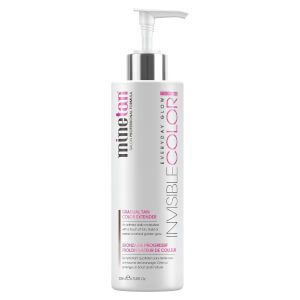
Works for
1 of 1 advertised claim delivered
Moisturizing11 ingredients credited for this claimGood support
“With a combination of naturally derived tanning agents, multivitamins and Aloe Vera, the self-tan works with all skin types and tones to envelop the complexion in moisture, extending the life of your colour and soothing dry skin.”
This product contains good ingredients to attract water to the upper layer of the skin. These ingredients are called "humectants": glycerin, sodium pca.
When humectants are on the surface of the skin, they “pull in” the moisture from the outside environment, or from within deeper layers of the skin. If the air is dry, humectants can speed up the moisture loss from the skin. This is why it is a good idea to use another product on top of this one to help "seal in" the moisture (look for ingredients like dimethicone, squalane, oils and butters).
ExfoliationNot advertised by the brand · 2 ingredients credited for this claimStrong support
This product can help exfoliate the skin. In other words, it helps break down the bonds between dead cells on the surface of the skin and speed up the skin turnover. Skin often appears softer and brighter after exfoliation, but overdoing it can result in disrupted skin barrier. The following ingredient is doing the exfoliating job in this product: salicylic acid.
Anti-blemishNot advertised by the brand · 3 ingredients credited for this claimStrong support
This product can help reduce breakouts and clogged pores because it contains the following ingredient: salicylic acid. This ingredient is used for treating acne and can have a noticeable effect.
Can it cause trouble?
Irritancy3 strong irritants: Retinyl palmitate, Rosa damascena extract + 1 more — patch-test recommendedHigh risk
Comedogenic1 ingredient rated 2 or more on the 0–5 pore-clogging scale1 flagged

User reviews
Be the first — your take helps the next person decide.
Ingredients
Filter by role to see what each ingredient is doing.
Aloe barbadensis leaf juice~23–34%
- Irritation risk
- Medium
Traditionally used to treat sunburns, dermatitis and inflammation, but evidence for its effectiveness is lacking. The extract can contain humectants that help attract water into the skin
More about Aloe barbadensis leaf juiceWater~11–17%
Glycerin~4.5–6.7%
- Irritation risk
- Low
One of the best moisturizing ingredients. Naturally present in skin. It attracts water to the upper layer of the skin working as a humectant
More about GlycerinCetyl alcohol~2.9–4.3%
- Irritation risk
- Low
A non-drying alcohol that works to soften the skin and stabilize product formulations helping oil and water mix together
More about Cetyl alcoholSodium acrylate/sodium acryloyldimethyl taurate copolymer~2.4–3.6%
- Irritation risk
- Low
Used to create a thicker product consistency
More about Sodium acrylate/sodium acryloyldimethyl taurate copolymerDihydroxyacetone~1.6–2.4%
Glyceryl stearate~1.3–1.9%
- Irritation risk
- Low
An emollient that softens the skin and forms a protective layer on its surface. Helps water and oil mix together
More about Glyceryl stearateIsopropyl palmitate~1.1–1.7%
- Irritation risk
- Medium
- Comedogenicity
- 3/5
Helps soften the upper layer of the skin and create a thicker product consistency
More about Isopropyl palmitateMusa sapientum fruit extract~1–1.6%
- Irritation risk
- Low
Salicylic acid~0.6–1.35%
- Irritation risk
- High
Used for skin exfoliation. It has an anti-inflammatory and anti-bacterial effect, helps to unclog pores, prevent blemishes and speed up healing of the existing ones. Sometimes referred to as a BHA (beta-hydroxy acid)
More about Salicylic acidVaccinium macrocarpon fruit extract~0.55–1.3%
- Irritation risk
- High
A berry extract. Might have some anti-oxidant properties
More about Vaccinium macrocarpon fruit extractPpg-12/smdi copolymer~0.55–1.35%
Hydrolyzed beta-glucan~0.45–1%
- Irritation risk
- Low
Hydrolyzed corn starch~0.4–0.9%
- Irritation risk
- Low
Helps improve the product texture
More about Hydrolyzed corn starchBeta vulgaris root extract~0.4–0.9%
- Irritation risk
- Medium
A plant extract that might have some antioxidant properties, but mostly used in cosmetics for its color
More about Beta vulgaris root extractRetinyl palmitate~0.35–0.8%
- Irritation risk
- High
Three steps removed from the active form of vitamin A - retinoic acid. To have an effect in the skin, it first needs to be converted twice to become the retinoic acid. This means it is less potent than retinol, but could also be less irritating. Once converted to the retinoic acid in the skin, it helps against all signs of aging, improves skin cell turnover and helps fight blemishes and clogged pores. However, in many cosmetic formulations, it is used in a concentration that is too low to have the full effect
More about Retinyl palmitateAscorbic acid~0.4–0.95%
- Irritation risk
- High
The most well-researched antioxidant that works in skin. Helps neutralize free radicals supporting collagen production, helping to even out the skin tone and preventing early signs of aging
More about Ascorbic acidTocopherol~0.4–0.9%
- Irritation risk
- Low
Pure form of vitamin E. Can help moisturise and protect the skin from free radicals. Often used to help stabilise other ingredients or the formula itself
More about TocopherolRosa damascena extract~0.2–0.75%
- Irritation risk
- High
Oil of a very fragrant pink rose used as fragrance in cosmetics. Extensive research has shown it has mixed benefits. In the pro column, inhaling this flower’s scent seems to have relaxing properties and the plant’s petals contain skin-soothing and antioxidant compounds that can benefit skin. On the flipside, the numerous chemicals that create this rose’s distinctive fragrance pose a risk of causing skin aggravation.
More about Rosa damascena extractPanthenol~0.15–0.7%
- Irritation risk
- Low
Helps attract water to the upper layer of the skin and can help improve skin barrier function
More about PanthenolSodium pca~0.2–0.75%
- Irritation risk
- Low
Naturally present in skin and helps to attract water to its upper layer
More about Sodium pcaCitric acid~0.2–0.75%
- Irritation risk
- Medium
Can work as an exfoliant but is typically used to adjust the product pH
More about Citric acidParfum~0.15–0.6%
- Irritation risk
- High
An aromatic blend of unspecified and possibly irritating ingredients
More about ParfumCaprylic/capric triglyceride~0.2–0.8%
- Irritation risk
- Medium
A good mix of fatty acids that forms a protective layer on the skin. Improves the shelf life of products. Derived from coconut and glycerin
More about Caprylic/capric triglyceridePhenoxyethanol~0.15–0.5%
- Irritation risk
- Low
A preservative. It helps prevent bacterial growth in cosmetic products
More about PhenoxyethanolCaprylyl glycol~0.15–0.5%
- Irritation risk
- Medium
Helps preserve products and creates a nice product texture
More about Caprylyl glycolPotassium sorbate~0.1–0.3%
Hexylene glycol~0.1–0.3%
- Irritation risk
- Medium
Helps create a more spreadable product texture
More about Hexylene glycolCaffeine~0.05–0.2%
- Irritation risk
- Medium
Might be helpful in neutralizing free radicals. Can have a dehydration effect that might somewhat decrease the look of puffy eyes
More about CaffeineParfum~0.05–0.2%
- Irritation risk
- High
An aromatic blend of unspecified and possibly irritating ingredients
More about ParfumIngredient list view
Aloe barbadensis leaf juice, Water, Glycerin, Cetyl alcohol, Sodium acrylate/sodium acryloyldimethyl taurate copolymer, Dihydroxyacetone, Glyceryl stearate, Isopropyl palmitate, Musa sapientum fruit extract, Unknown, Salicylic acid, Vaccinium macrocarpon fruit extract, Ppg-12/smdi copolymer, Hydrolyzed beta-glucan, Hydrolyzed corn starch, Beta vulgaris root extract, Retinyl palmitate, Ascorbic acid, Tocopherol, Rosa damascena extract, Panthenol, Unknown, Sodium pca, Citric acid, Parfum, Caprylic/capric triglyceride, Phenoxyethanol, Caprylyl glycol, Potassium sorbate, Hexylene glycol, Caffeine, Unknown, Parfum
Compare prices
Retailers ranked by price — lowest first.

Affiliate links · prices updated regularly
Worth comparing, line by line.
Match % combines shared ingredients, the first five ingredients, shared actives and hero ingredients, irritancy (lower counts in the alternative's favour), texture and body area. Only products in the same routine step are compared.
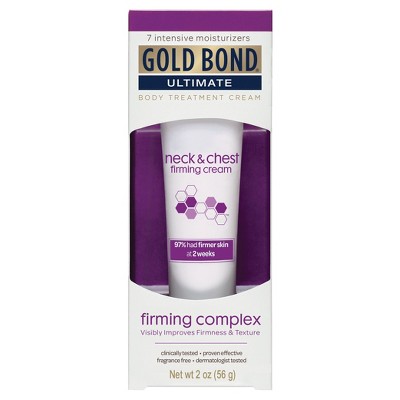
| MineTan3-in-1 Gradual Tan LotionYOUR PRODUCT | Gold BondUnscented Gold Bond Firming Neck And Chest Hand And Body Lotions | Vita LiberataFabulous Self Tanning Gradual Lotion | Paula's choiceHYDRALIGHT Moisture Infusing Lotion | |
|---|---|---|---|---|
| Match | — | 91% | 87% | 77% |
| Price | $17.99 | $12.39−$5.60 | $9.89−$8.10 | $33.00+$15.01 |
| Shared key ingredients | — | 4 of 9 | 4 of 9 | 4 of 9 |
| Key difference | — | Petrolatum | Ginkgo Biloba Leaf Extract | Phytosphingosine |
| Irritancy | High | Medium | Low | Medium |
| Drying alcohol | — | — | — | — |
| View product | Shop | Shop | Shop |


Sources cited in this review
Every concentration estimate and effectiveness label is anchored to one of these 10 studies and safety reviews.
- 1
- 2Final Report on the Safety Assessment of Isopropyl Isostearatejournals.sagepub.com
- 3Salicylic acid as a peeling agent: a comprehensive reviewncbi.nlm.nih.gov
- 4Beta Hydroxy Acidsfda.gov
- 5A review of toxicity from topical salicylic acid preparationssciencedirect.com
- 6

Affiliate links · As an Amazon Associate, WIMJ earns from qualifying purchases.