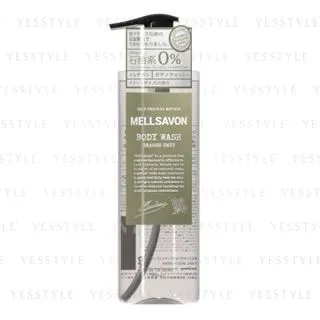
Works for
CleansingLauric acid, Myristic acid + 5 moreCleanses gently
“Body Wash Grasse Days”
This product works by removing dirt and oil from the surface of the skin. It uses a combination of mild cleansing agents (cocamide methyl mea, hydroxypropyl methylcellulose, lauric acid, lauryl glucoside, myristic acid, oleic acid, palmitic acid) and should be able to cleanse the skin gently. Still keep in mind that any cleansing can disrupt the skin barrier, and most people do not need to cleanse their skin more than once per day.
Can it cause trouble?
Irritancy3 strong irritants: Rosa damascena flower extract, Alcohol + 1 more — patch-test recommendedHigh risk
Comedogenic2 ingredients rated 2 or more on the 0–5 pore-clogging scale2 flagged
User reviews
Be the first — your take helps the next person decide.
Ingredients
Filter by role to see what each ingredient is doing.
Water~45–55%
Lauric acid~7.8–9.5%
- Irritation risk
- Medium
- Comedogenicity
- 3/5
Helps water and oil mix together. Has anti-bacterial properties that might be helpful in preventing blemishes
More about Lauric acidMyristic acid~4.3–5.2%
- Irritation risk
- Medium
- Comedogenicity
- 3/5
Helps oil and water mix together. Could be comedogenic
More about Myristic acidPotassium hydroxide~3.1–3.7%
Propylene glycol~2.3–2.8%
- Irritation risk
- High
Helps oil and water mix together and can enhance the penetration of other ingredients into the skin. It can be irritating
More about Propylene glycolGlycerin~2–2.4%
- Irritation risk
- Low
One of the best moisturizing ingredients. Naturally present in skin. It attracts water to the upper layer of the skin working as a humectant
More about GlycerinPalmitic acid~1.6–2%
- Irritation risk
- Low
An emollient that is naturally present in skin and helps soften it
More about Palmitic acidLauryl glucoside~1.5–1.8%
Glucose~1.1–1.4%
- Irritation risk
- Low
Helps attract water to the upper layer of the skin. Could be helpful in restoring the skin barrier function
More about GlucoseOleic acid~0.95–1.15%
- Irritation risk
- Medium
Helps soften the upper layer of the skin. At the same time, it can weaken the skin's barrier enhancing penetration of other ingredients and increasing the risk of skin dryness
More about Oleic acidSea salt~0.65–0.95%
- Irritation risk
- Medium
Used to thicken the product formulation and might help to add minerals to the surface of the skin. It is used in scrubs as a physical exfoliant. Can increase sensitivity to other ingredients if left on the skin or used in high concentration
More about Sea saltPropolis extract~0.55–0.8%
- Irritation risk
- High
A complex substance produced by honey bees. Can have anti-bacterial and some anti-oxidant effect. Is an allergen and can be irritating
More about Propolis extractDaucus carota sativa root extract~0.45–0.7%
- Irritation risk
- Low
Carrot extract. Might have anti-oxidant properties and be used to add orange color
More about Daucus carota sativa root extractSesamum indicum seed extract~0.35–0.65%
- Irritation risk
- Low
Plant oil that due to its high content of linoleic acid can help support skin's barrier function improving its hydration
More about Sesamum indicum seed extractRosa damascena flower extract~0.4–0.6%
Hydrolyzed soy extract~0.4–0.65%
- Irritation risk
- Low
Cocamide methyl mea~0.35–0.65%
Mineral salts~0.3–0.55%
- Irritation risk
- Low
Used to thicked product formulations. Might help to add minerals to the surface of the skin
More about Mineral saltsHydroxypropyl methylcellulose~0.3–0.55%
- Irritation risk
- Medium
Used to create a thicker product consistency and stabilize the formulation
More about Hydroxypropyl methylcelluloseSodium chloride~0.25–0.5%
- Irritation risk
- Low
Used to stabilize mixtures of oil and water, and create thicker, gel-like product textures
More about Sodium chlorideDisodium edta~0.2–0.4%
Cyclodextrin~0.2–0.35%
- Irritation risk
- Low
A type of sugar that is used to support delivery of active ingredients and can enhance their penetration into the skin without disrupting the skin's barrier
More about CyclodextrinOleic acid~0.25–0.45%
- Irritation risk
- Medium
Helps soften the upper layer of the skin. At the same time, it can weaken the skin's barrier enhancing penetration of other ingredients and increasing the risk of skin dryness
More about Oleic acidCitric acid~0.1–0.2%
- Irritation risk
- Medium
Can work as an exfoliant but is typically used to adjust the product pH
More about Citric acidButylene glycol~0.1–0.2%
- Irritation risk
- Low
Used to create a nice product texture and help delivery of other ingredients. Might be somewhat helpful in attracting water to the upper layer of the skin
More about Butylene glycolAlcohol~0.1–0.15%
- Irritation risk
- High
Can be drying and contribute to skin irritation. Used in formulars to dissolve other ingredients, create a thinner product consistency or for its antibacterial properties
More about AlcoholPhenoxyethanol~0.1–0.15%
- Irritation risk
- Low
A preservative. It helps prevent bacterial growth in cosmetic products
More about PhenoxyethanolParfum~0.05%
- Irritation risk
- High
An aromatic blend of unspecified and possibly irritating ingredients
More about ParfumIngredient list view
Water, Lauric acid, Myristic acid, Potassium hydroxide, Propylene glycol, Glycerin, Palmitic acid, Lauryl glucoside, Glucose, Oleic acid, Unknown, Sea salt, Propolis extract, Daucus carota sativa root extract, Sesamum indicum seed extract, Unknown, Rosa damascena flower extract, Unknown, Hydrolyzed soy extract, Unknown, Cocamide methyl mea, Mineral salts, Hydroxypropyl methylcellulose, Sodium chloride, Disodium edta, Cyclodextrin, Unknown, Oleic acid, Citric acid, Butylene glycol, Alcohol, Phenoxyethanol, Parfum
Compare prices
Retailers ranked by price — lowest first.

Affiliate links
Worth comparing, line by line.
Match % combines shared ingredients, the first five ingredients, shared actives and hero ingredients, irritancy (lower counts in the alternative's favour), texture and body area. Only products in the same routine step are compared.
| MellsavonBody Wash Grasse DaysYOUR PRODUCT | NatureLabDiane Be True Body Soap Relax | SQUEEZEHorse Oil Body Soap | AYURAAromatic Wash a | |
|---|---|---|---|---|
| Match | — | 40% | 38% | 38% |
| Price | $31.10 | $30.00−$1.10 | $26.70−$4.40 | $44.96+$13.86 |
| Shared key ingredients | — | 5 of 9 | 4 of 9 | 3 of 9 |
| Key difference | — | Glucosyl Ceramide | Hydrolyzed Collagen | Decyl Glucoside |
| Irritancy | High | Medium | Medium | Medium |
| Drying alcohol | Contains drying alcohol | — | — | — |
| View product | Shop | Shop | Shop |



More alternatives: Kracie Naive Body Wash Peach LeafNivea Japan Cream Care Body Wash Italian Premium Honey
Sources cited in this review
Every concentration estimate and effectiveness label is anchored to one of these 11 studies and safety reviews.
- 1
- 2Surfactants and experimental irritant contact dermatitisncbi.nlm.nih.gov
- 3Propylene Glycolpubmed.ncbi.nlm.nih.gov
- 4Skin-sensitizing and irritant properties of propylene glycolonlinelibrary.wiley.com
- 5
- 6

Affiliate links · As an Amazon Associate, WIMJ earns from qualifying purchases.