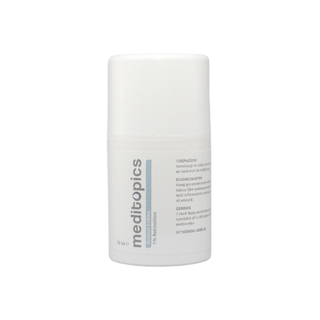
Works for
1 of 1 advertised claim delivered
Anti-agingRetinol, Carnosine + 4 moreStrong evidence
“De combinatie van 0,5% retinol en 0,5% retinylpalmitaat bevordert de aanmaak van collageen en verfijnt de huidstructuur, waardoor de huid gladder en egaler oogt.”
This product can help reduce and prevent fine lines and wrinkles, improve skin elasticity and firmness because it contains retinol.
These ingredients in the product can also be helpful, even though there is less evidence for their effectiveness: carnosine, hexanoyl dipeptide-3 norleucine acetate, retinyl palmitate.
Keep in mind that it typically takes at least 6 weeks to notice any results because the changes that are needed to improve fine lines and elasticity happen in the deeper layers of the skin. No topical anti-aging product can “erase” wrinkles or fully reverse signs of aging.
Anti-oxidationNot advertised by the brand · Carnosine, Retinol + 3 moreStrong evidence
This product contains antioxidants (carnosine, retinol) that can help neutralize free radicals in skin. By doing so, they can lessen the damage the skin gets from the UV light (sun).
Can it cause trouble?
Irritancy5 strong irritants: Sodium anisate, Calendula officinalis flower oil + 3 more — patch-test recommendedHigh risk
Comedogenic1 ingredient rated 2 or more on the 0–5 pore-clogging scale1 flagged


User reviews
Be the first — your take helps the next person decide.
Ingredients
Filter by role to see what each ingredient is doing.
Water~45–55%
Glyceryl stearate citrate~5.4–6.6%
- Irritation risk
- Low
Helps oil and water mix together while softening the upper layer of the skin
More about Glyceryl stearate citrateGlyceryl caprylate~3.5–4.3%
- Irritation risk
- Low
An emollient that can also help water and oil mix together, as well as prevent bacteria growth in products
More about Glyceryl caprylateCaprylic/capric triglyceride~3.2–3.9%
- Irritation risk
- Medium
A good mix of fatty acids that forms a protective layer on the skin. Improves the shelf life of products. Derived from coconut and glycerin
More about Caprylic/capric triglycerideGlycerin~2.4–3%
- Irritation risk
- Low
One of the best moisturizing ingredients. Naturally present in skin. It attracts water to the upper layer of the skin working as a humectant
More about GlycerinSodium levulinate~1.9–2.3%
Sodium anisate~1.6–2%
Glycerin~1.5–1.9%
- Irritation risk
- Low
One of the best moisturizing ingredients. Naturally present in skin. It attracts water to the upper layer of the skin working as a humectant
More about GlycerinVitis vinifera seed oil~1.2–1.5%
- Irritation risk
- Medium
A great emollient that can also have anti-oxidant properties
More about Vitis vinifera seed oilBrassica napus seed oil~1–1.2%
- Irritation risk
- Low
Calendula officinalis flower oil~0.65–1%
- Irritation risk
- High
A plant oil that might have an antibacterial and some antioxidant effect. Is a common allergen and irritant
More about Calendula officinalis flower oilRetinol~0.55–0.85%
- Irritation risk
- High
Two steps removed from the active form of vitamin A - retinoic acid. Once converted to the retinoic acid in the skin, retinol is proven to be effective against all signs of aging. It improves skin cell turnover, helps fight blemishes and clogged pores, can regulate excess oil production and even skin tone. It can, however, be quite irritating
More about RetinolRetinyl palmitate~0.5–0.75%
- Irritation risk
- High
Three steps removed from the active form of vitamin A - retinoic acid. To have an effect in the skin, it first needs to be converted twice to become the retinoic acid. This means it is less potent than retinol, but could also be less irritating. Once converted to the retinoic acid in the skin, it helps against all signs of aging, improves skin cell turnover and helps fight blemishes and clogged pores. However, in many cosmetic formulations, it is used in a concentration that is too low to have the full effect
More about Retinyl palmitateCetearyl alcohol~0.55–0.85%
- Irritation risk
- Low
- Comedogenicity
- 2/5
A non-drying alcohol. Works as an emollient. Helps water and oil mix together and creates a nice product texture
More about Cetearyl alcoholSodium stearoyl lactylate~0.45–0.7%
- Irritation risk
- Medium
Helps oil and water mix together
More about Sodium stearoyl lactylateCetyl alcohol~0.5–0.75%
- Irritation risk
- Low
A non-drying alcohol that works to soften the skin and stabilize product formulations helping oil and water mix together
More about Cetyl alcoholVegetable oil~0.45–0.7%
- Irritation risk
- Low
An oil from a mixture of different vegetables. Helps soften the upper layer of the skin
More about Vegetable oilTocopheryl acetate~0.35–0.65%
- Irritation risk
- Medium
A more stable but less bio-available form of vitamin E compared to Tocopherol. Might help moisturize and protect the skin from free radicals, but mostly used in low concentrations to stabilize other ingredients.
More about Tocopheryl acetateGlycine soja sterols~0.4–0.6%
- Irritation risk
- Low
An emollient that helps soften the skin
More about Glycine soja sterolsSodium carboxymethyl betaglucan~0.3–0.55%
- Irritation risk
- Low
Sodium lactate~0.3–0.5%
- Irritation risk
- Medium
Helps attract water to the upper layer of the skin. Is often used to adjust the pH level of the product
More about Sodium lactateCarnosine~0.25–0.5%
- Irritation risk
- Low
A type of peptide. It attracts water to the upper layer of the skin. It can help neutralize free radicals in skin combatting the sun damage
More about CarnosineLactic acid~0.25–0.45%
- Irritation risk
- Medium
An exfoliating and moisturizing alpha-hydroxy acid (AHA). Typically causes less irritation than other AHAs, for example, glycolic acid. At high concentrations (about 15%), lactic acid can help reduce lines and wrinkles. Recent studies show that lactic acid can support the "good" bacteria living on skin's surface (healthy skin microbiome)
More about Lactic acidHexanoyl dipeptide-3 norleucine acetate~0.25–0.45%
- Irritation risk
- Low
A type of peptide. Peptides are excellent moisturizers and might be able support collagen production reducing fine lines and wrinkles
More about Hexanoyl dipeptide-3 norleucine acetateLecithin~0.3–0.5%
- Irritation risk
- Low
Used mostly for creating emulsions - helping oil and water mix together. Helps soften the upper layer of the skin
More about LecithinButylene glycol~0.25–0.45%
- Irritation risk
- Low
Used to create a nice product texture and help delivery of other ingredients. Might be somewhat helpful in attracting water to the upper layer of the skin
More about Butylene glycolPanthenol~0.25–0.45%
- Irritation risk
- Low
Helps attract water to the upper layer of the skin and can help improve skin barrier function
More about PanthenolCalcium pantothenate~0.2–0.4%
- Irritation risk
- Low
Helps support skin barrier function improving skin hydration and reducing sensitivity
More about Calcium pantothenateNiacinamide~0.2–0.4%
- Irritation risk
- Low
Is proven to be effective in reducing blemishes, evening out skin tone and helping to improve lines and wrinkles. It helps the skin to repair sun damage, calm down inflammation and keep maintain good levels of moisture. The concentration of about 2% is effective for supporting the skin barrier and evening out the skin tone. Concentration of 4-6% is better for helping with acne and balancing the sebum production
More about NiacinamideInositol~0.2–0.4%
Phenoxyethanol~0.2–0.35%
- Irritation risk
- Low
A preservative. It helps prevent bacterial growth in cosmetic products
More about PhenoxyethanolEthylhexylglycerin~0.15–0.3%
Glyceryl caprylate~0.2–0.35%
- Irritation risk
- Low
An emollient that can also help water and oil mix together, as well as prevent bacteria growth in products
More about Glyceryl caprylateXanthan gum~0.15–0.25%
- Irritation risk
- Low
Used to create a thicker product consistency
More about Xanthan gumSodium phytate~0.1–0.2%
Alcohol denat.~0.1–0.15%
- Irritation risk
- High
Produces temporary toning effect. Can help dissolve other ingredients or preserve products
More about Alcohol denat.Citric acid~0.05–0.1%
- Irritation risk
- Medium
Can work as an exfoliant but is typically used to adjust the product pH
More about Citric acidIngredient list view
Water, Glyceryl stearate citrate, Glyceryl caprylate, Caprylic/capric triglyceride, Glycerin, Sodium levulinate, Sodium anisate, Glycerin, Vitis vinifera seed oil, Brassica napus seed oil, Calendula officinalis flower oil, Retinol, Retinyl palmitate, Cetearyl alcohol, Sodium stearoyl lactylate, Cetyl alcohol, Vegetable oil, Tocopheryl acetate, Glycine soja sterols, Sodium carboxymethyl betaglucan, Sodium lactate, Carnosine, Lactic acid, Hexanoyl dipeptide-3 norleucine acetate, Lecithin, Butylene glycol, Panthenol, Calcium pantothenate, Niacinamide, Inositol, Phenoxyethanol, Ethylhexylglycerin, Glyceryl caprylate, Xanthan gum, Sodium phytate, Alcohol denat., Citric acid
Compare prices
Retailers ranked by price — lowest first.

Affiliate links · prices updated regularly
Worth comparing, line by line.
Match % combines shared ingredients, the first five ingredients, shared actives and hero ingredients, irritancy (lower counts in the alternative's favour), texture and body area. Only products in the same routine step are compared.
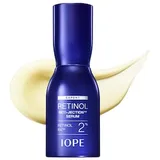
| MeditopicsRetinol Crème 1%YOUR PRODUCT | innisfreeRetinol Cica Barrier Defense Cream | No7Pure Retinol 1% Night Concentrate | IOPEExpert Retinol RX™ 2% Reti-Jection Serum for Wrinkles | |
|---|---|---|---|---|
| Match | — | 81% | 81% | 77% |
| Price | $43.04 | $4.88−$38.16 | $42.99 | $55.02+$11.98 |
| Shared key ingredients | — | 5 of 14 | 5 of 14 | 5 of 14 |
| Key difference | — | Madecassoside | Acetyl Dipeptide-1 Cetyl Ester | Hydroxypinacolone Retinoate |
| Irritancy | High | Medium | Medium | Medium |
| Drying alcohol | Contains drying alcohol | — | — | — |
| View product | Shop | Shop | Shop |

Product summary
Sources cited in this review
Every concentration estimate and effectiveness label is anchored to one of these 14 studies and safety reviews.
- 1
- 2
- 3Improvement of naturally aged skin with vitamin A (retinol)ncbi.nlm.nih.gov
- 4
- 5
- 6Epidermal and dermal effects of topical lactic acidncbi.nlm.nih.gov

Affiliate links · As an Amazon Associate, WIMJ earns from qualifying purchases.