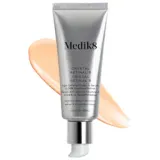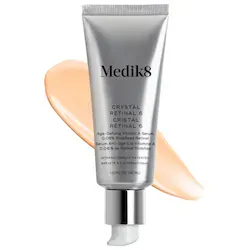
Medik8 Crystal Retinal Age-Defying Vitamin A Night Serum for Wrinkles

Medik8 Crystal Retinal Age-Defying Vitamin A Night Serum for Wrinkles

Efficacy91/100IrritancyHigh

Works for

Anti-aging
Retinal, 3-o-ethyl ascorbic acid + 1 more
Works well
What the product description says
“Crystal Retinal Age-Defying Vitamin A Night Serum for Wrinkles”
Source: Sephora

This product can help reduce and prevent fine lines and wrinkles, improve skin elasticity and firmness because it contains retinal.

Keep in mind that it typically takes at least 6 weeks to notice any results because the changes that are needed to improve fine lines and elasticity happen in the deeper layers of the skin. No topical anti-aging product can “erase” wrinkles or fully reverse signs of aging.

RetinalHeroEffect: HighOne step removed from the biologically active in skin form of vitamin A. Once converted to the retinoic acid in the skin, retinal is proven to be effective against all signs of aging. It improves skin cell turnover, helps fight blemishes and clogged pores, can regulate excess oil production and even skin tone. Concentrations of 0.05% and 0.1% are shown to be effective. It can, however, be irritating~0.2–0.35%
3-o-ethyl ascorbic acidEffect: LowA vitamin C derivative that is more stable but less potent than pure form of vitamin C. Can help neutralize free radicals and help reduce hyperpigmentation, but the required concentration is likely to be much higher than for the pure form of vitamin C, limiting the ingredient's effectiveness in products~0.3–0.55%
Tetrahexyldecyl ascorbateUnder-dosedBeing a lipid soluble form of vitamin C, it is more stable than ascorbic acid, but still degrades quickly and needs to be stabilized in a formulation with another ingredient. It is claimed to penetrate skin better than pure vitamin C and have the the similar benefits, but solid studies of its effectiveness are lacking. Is likely to require a higher concentration in a product than pure vitamin C to be effective. It might be able to help reduce pore clogging.~0.25–0.45%
Evens skin tone
Retinal, 3-o-ethyl ascorbic acid + 1 more
Works well
What the product description says
“What it is: A vitamin A night serum clinically shown to visibly smooth wrinkles, brighten dark spots, and firm your skin in just one tube without irritation.*”
Source: Sephora

This product can help reduce hypepigmentation and even out the skin tone because it contains the following effective ingredients: retinal.

The following ingredient (ingredients) in this product might be helpful, but there is no evidence to confirm that it actually can help even out the skin tone: 3-o-ethyl ascorbic acid.

Keep in mind that you would need to apply any topical skincare targetted at hypigmentation consistently for a couple of months to get a result. No topical skincare product can help get rid of hyperpigmentation (including post-acne marks and age spots) instantly.

RetinalHeroEffect: HighOne step removed from the biologically active in skin form of vitamin A. Once converted to the retinoic acid in the skin, retinal is proven to be effective against all signs of aging. It improves skin cell turnover, helps fight blemishes and clogged pores, can regulate excess oil production and even skin tone. Concentrations of 0.05% and 0.1% are shown to be effective. It can, however, be irritating~0.2–0.35%
3-o-ethyl ascorbic acidKey activeEffect: MediumA vitamin C derivative that is more stable but less potent than pure form of vitamin C. Can help neutralize free radicals and help reduce hyperpigmentation, but the required concentration is likely to be much higher than for the pure form of vitamin C, limiting the ingredient's effectiveness in products~0.3–0.55%
Tetrahexyldecyl ascorbateUnder-dosedBeing a lipid soluble form of vitamin C, it is more stable than ascorbic acid, but still degrades quickly and needs to be stabilized in a formulation with another ingredient. It is claimed to penetrate skin better than pure vitamin C and have the the similar benefits, but solid studies of its effectiveness are lacking. Is likely to require a higher concentration in a product than pure vitamin C to be effective. It might be able to help reduce pore clogging.~0.25–0.45%
Moisturizing
Caprylic/capric triglyceride, Glycerin + 8 more
Works
What the product description says
“- Hyaluronic Acid: Draws moisture into the skin, leaving it visibly nourished and supple.”
Source: Sephora

This product can help improve hydration of the skin with the two types of ingredients.

The first type is called “humectants”:
these ingredients help attract water. When humectants are on the surface of the skin, they “pull in” the moisture from the outside environment, or from within deeper layers of the skin. The following ingredients in this product do the job: glycerin, sodium hyaluronate.

This product also contains ingredients called “occlusives”. They help reduce the speed with which our skin loses moisture to the outside environment. These ingredients also help soften the upper layer of the skin, so it feels less tight and nicer to the touch. The following ingredients in this product do the job: caprylic/capric triglyceride, squalane.

Caprylic/capric triglycerideKey active· Emollient, OcclusiveEffect: HighA good mix of fatty acids that forms a protective layer on the skin. Improves the shelf life of products. Derived from coconut and glycerin~5.9–7.2%
GlycerinKey active· HumectantEffect: HighOne of the best moisturizing ingredients. Naturally present in skin. It attracts water to the upper layer of the skin working as a humectant~4.1–5%
IsododecaneKey active· Emollient, OcclusiveEffect: MediumAn emollient that helps soften the skin and can decrease moisture loss. Helps create a nice product texture~3.2–3.9%
Cetearyl alcoholKey active· EmollientEffect: MediumA non-drying alcohol. Works as an emollient. Helps water and oil mix together and creates a nice product texture~1.7–2.1%
SqualaneKey active· Emollient, OcclusiveEffect: HighAn oil naturally present in skin. Works as an emollient to soften the skin and form a protective layer on its surface without a greasy feeling.~0.55–0.85%
Sodium hyaluronateKey active· HumectantEffect: HighOne of the best moisturizing ingredients. Attracts water into the upper layer of the skin~0.25–0.5%
Sodium polyaspartateKey active· HumectantEffect: MediumHelps attract water to the upper layer of the skin and can help stabilize the product formulation~0.1–0.2%
Pentylene glycol· EmollientEffect: LowUsed to preserve products, dissolve other ingredients and create a nice product texture~0.25–0.45%
Stearic acidEffect: Low, below effective doseHelps oil and water mix together and works as an emollient~0.35–0.6%
LecithinEffect: Low, below effective doseUsed mostly for creating emulsions - helping oil and water mix together. Helps soften the upper layer of the skin~0.25–0.5%
Anti-blemish
Side benefit · Retinal
Works well

This product can help reduce breakouts and clogged pores because it contains the following ingredient: retinal. This ingredient is used for treating acne and can have a noticeable effect.

RetinalHeroEffect: HighOne step removed from the biologically active in skin form of vitamin A. Once converted to the retinoic acid in the skin, retinal is proven to be effective against all signs of aging. It improves skin cell turnover, helps fight blemishes and clogged pores, can regulate excess oil production and even skin tone. Concentrations of 0.05% and 0.1% are shown to be effective. It can, however, be irritating~0.2–0.35%
Anti-oxidation
Side benefit · 3-o-ethyl ascorbic acid, Tocopheryl acetate + 5 more
May help

This product contains antioxidants (3-o-ethyl ascorbic acid) that can help neutralize free radicals in skin to lessen the damage it gets from the UV light (sun). There is some human evidence for this effect in skin, though it is smaller or less consistent than the evidence for the best antioxidants.

3-o-ethyl ascorbic acidKey activeEffect: MediumA vitamin C derivative that is more stable but less potent than pure form of vitamin C. Can help neutralize free radicals and help reduce hyperpigmentation, but the required concentration is likely to be much higher than for the pure form of vitamin C, limiting the ingredient's effectiveness in products~0.3–0.55%
Tocopheryl acetateEffect: LowA more stable but less bio-available form of vitamin E compared to Tocopherol. Might help moisturize and protect the skin from free radicals, but mostly used in low concentrations to stabilize other ingredients.~0.95–1.15%
Daucus carota sativa seed oilEffect: LowA plant oil that might help neutralize free radicals and have an anti-bacterial effect~0.2–0.35%
Rubus chamaemorus seed oilEffect: LowA berry extract that can have some anti-oxidant properties. It helps to preserve product formulations and improve their smell. It can be irritating~0.2–0.4%
Lonicera caprifolium flower extractEffect: LowA plant extract that might help neutralize free radicals in skin. Can contain volalite oils and be irritating~0.15–0.25%
Lonicera japonica flower extractEffect: LowA plant extract that might help neutralize free radicals in skin. Can contain volalite oils and be irritating~0.15–0.3%
Tetrahexyldecyl ascorbateUnder-dosedBeing a lipid soluble form of vitamin C, it is more stable than ascorbic acid, but still degrades quickly and needs to be stabilized in a formulation with another ingredient. It is claimed to penetrate skin better than pure vitamin C and have the the similar benefits, but solid studies of its effectiveness are lacking. Is likely to require a higher concentration in a product than pure vitamin C to be effective. It might be able to help reduce pore clogging.~0.25–0.45%

Can it cause trouble?

Irritancy
3 strong irritants: Coumarin, Retinal + 1 more — patch-test recommended
High risk
We flagged 23 ingredients with irritancy potential. Severity depends on your sensitivity threshold; the table lists the worst offenders first.
IngredientFunctionIrritationEst. amount
3-o-ethyl ascorbic acidA vitamin C derivative that is more stable but less potent than pure form of vitamin C. Can help neutralize free radicals and help reduce hyperpigmentation, but the required concentration is likely to be much higher than for the pure form of vitamin C, limiting the ingredient's effectiveness in productsHigh~0.3–0.55%est.
CoumarinA fragrance. Is a likely skin allergen and can be irritatingHigh~0.2–0.4%est.
Rubus chamaemorus seed oilA berry extract that can have some anti-oxidant properties. It helps to preserve product formulations and improve their smell. It can be irritatingHigh~0.2–0.4%est.
RetinalOne step removed from the biologically active in skin form of vitamin A. Once converted to the retinoic acid in the skin, retinal is proven to be effective against all signs of aging. It improves skin cell turnover, helps fight blemishes and clogged pores, can regulate excess oil production and even skin tone. Concentrations of 0.05% and 0.1% are shown to be effective. It can, however, be irritatingHigh~0.2–0.35%est.
Vanilla planifolia fruit extractA plant extract used as a fragrance. Can be irritatingHigh~0.2–0.35%est.
Lonicera japonica flower extractA plant extract that might help neutralize free radicals in skin. Can contain volalite oils and be irritatingHigh~0.15–0.3%est.
Lonicera caprifolium flower extractA plant extract that might help neutralize free radicals in skin. Can contain volalite oils and be irritatingHigh~0.15–0.25%est.
Caprylic/capric triglycerideA good mix of fatty acids that forms a protective layer on the skin. Improves the shelf life of products. Derived from coconut and glycerinMedium~5.9–7.2%est.
Tocopheryl acetateA more stable but less bio-available form of vitamin E compared to Tocopherol. Might help moisturize and protect the skin from free radicals, but mostly used in low concentrations to stabilize other ingredients.Medium~0.95–1.15%est.
Hydroxyethyl acrylate/sodium acryloyldimethyl taurate copolymerA gelling agent that thickens the product consistency and leaves the skin with a velvety finishMedium~0.45–0.7%est.
Disodium edtaStabilizes the product formulationMedium~0.45–0.65%est.
HydroxyacetophenoneUsed to increase effectiveness of preservativesMedium~0.45–0.65%est.
EthylhexylglycerinA preservativeMedium~0.35–0.6%est.
Hydroxypropyl methylcelluloseUsed to create a thicker product consistency and stabilize the formulationMedium~0.3–0.55%est.
Tetrahexyldecyl ascorbateBeing a lipid soluble form of vitamin C, it is more stable than ascorbic acid, but still degrades quickly and needs to be stabilized in a formulation with another ingredient. It is claimed to penetrate skin better than pure vitamin C and have the the similar benefits, but solid studies of its effectiveness are lacking. Is likely to require a higher concentration in a product than pure vitamin C to be effective. It might be able to help reduce pore clogging.Medium~0.25–0.45%est.
BhtA preservativeMedium~0.25–0.45%est.
Polyglyceryl-3 polyricinoleateHelps oil and water mix togetherMedium~0.25–0.5%est.
Polyhydroxystearic acidUsed to create a thicker product consistency and stabilize the formulationMedium~0.25–0.5%est.
Citric acidCan work as an exfoliant but is typically used to adjust the product pHMedium~0.2–0.4%est.
Polysorbate 60Helps oil and water mix togetherMedium~0.25–0.45%est.
Pentylene glycolUsed to preserve products, dissolve other ingredients and create a nice product textureMedium~0.25–0.45%est.
Sodium polyaspartateHelps attract water to the upper layer of the skin and can help stabilize the product formulationMedium~0.1–0.2%est.
Ci 14700A colorantMedium~0.1–0.15%est.
Comedogenic
1 ingredient rated 2 or more on the 0–5 pore-clogging scale
1 flagged
These ingredients have a comedogenic rating of 2 or more on a 0–5 scale; the table shows each one's rating. In leave-on products they can clog pores in acne-prone skin.
IngredientFunctionRatingEst. amount
Cetearyl alcoholA non-drying alcohol. Works as an emollient. Helps water and oil mix together and creates a nice product texture2/5~1.7–2.1%est.
Did this help you decide?

User reviews

Would you recommend?
No community reviews yet.

Be the first — your take helps the next person decide.

Ingredients

Filter by role to see what each ingredient is doing.

Water~45–55%
Formula
Irritation risk
Low

Plain old water

More about Water
Caprylic/capric triglyceride~5.9–7.2%
Key activeIrritant · medium
Irritation risk
Medium
Works for
Moisturizing

A good mix of fatty acids that forms a protective layer on the skin. Improves the shelf life of products. Derived from coconut and glycerin

More about Caprylic/capric triglyceride
Glycerin~4.1–5%
Key active
Irritation risk
Low
Works for
Moisturizing

One of the best moisturizing ingredients. Naturally present in skin. It attracts water to the upper layer of the skin working as a humectant

More about Glycerin
Isododecane~3.2–3.9%
Key active
Irritation risk
Low
Works for
Moisturizing

An emollient that helps soften the skin and can decrease moisture loss. Helps create a nice product texture

More about Isododecane
Cetearyl olivate~2.4–2.9%
Formula
Irritation risk
Low
Works for
Cleansing

Helps oil and water mix together

More about Cetearyl olivate
Sodium acrylate/sodium acryloyldimethyl taurate copolymer~1.9–2.3%
Formula
Irritation risk
Low

Used to create a thicker product consistency

More about Sodium acrylate/sodium acryloyldimethyl taurate copolymer
Cetearyl alcohol~1.7–2.1%
Key activeComedogenic 2/5
Irritation risk
Low
Comedogenicity
2/5
Works for
CleansingMoisturizing

A non-drying alcohol. Works as an emollient. Helps water and oil mix together and creates a nice product texture

More about Cetearyl alcohol
Ppg-12/smdi copolymer~1.5–1.9%
Formula
Irritation risk
Low

Used to create a nice product finish

More about Ppg-12/smdi copolymer
Sorbitan olivate~1.2–1.4%
Formula
Irritation risk
Low
Works for
Cleansing

Helps oil and water mix together

More about Sorbitan olivate
Tocopheryl acetate~0.95–1.15%
Irritant · medium
Irritation risk
Medium
Works for
Anti-oxidation

A more stable but less bio-available form of vitamin E compared to Tocopherol. Might help moisturize and protect the skin from free radicals, but mostly used in low concentrations to stabilize other ingredients.

More about Tocopheryl acetate
Phenoxyethanol~0.65–1%
Formula
Irritation risk
Low

A preservative. It helps prevent bacterial growth in cosmetic products

More about Phenoxyethanol
Titanium dioxide~0.8–1.2%
Formula
Irritation risk
Low
Works for
Sun protection

Works as a UV filter when used in high concentrations. It is photostable and is effective mostly against the UVB light, with some protection in the UVA range. In small concentrations, used for its ability to improve the color of cosmetic products. Is usually well tolerated by the skin

More about Titanium dioxide
Squalane~0.55–0.85%
Key active
Irritation risk
Low
Works for
Moisturizing

An oil naturally present in skin. Works as an emollient to soften the skin and form a protective layer on its surface without a greasy feeling.

More about Squalane
Hydroxyethyl acrylate/sodium acryloyldimethyl taurate copolymer~0.45–0.7%
Irritant · medium
Irritation risk
Medium

A gelling agent that thickens the product consistency and leaves the skin with a velvety finish

More about Hydroxyethyl acrylate/sodium acryloyldimethyl taurate copolymer
Disodium edta~0.45–0.65%
Irritant · medium
Irritation risk
Medium

Stabilizes the product formulation

More about Disodium edta
Hydroxyacetophenone~0.45–0.65%
Irritant · medium
Irritation risk
Medium

Used to increase effectiveness of preservatives

More about Hydroxyacetophenone
Cyclodextrin~0.4–0.6%
Formula
Irritation risk
Low

A type of sugar that is used to support delivery of active ingredients and can enhance their penetration into the skin without disrupting the skin's barrier

More about Cyclodextrin
Ethylhexylglycerin~0.35–0.6%
Irritant · medium
Irritation risk
Medium

A preservative

More about Ethylhexylglycerin
3-o-ethyl ascorbic acid~0.3–0.55%
Key activeIrritant · high
Irritation risk
High
Works for
Evens skin toneAnti-oxidationAnti-aging

A vitamin C derivative that is more stable but less potent than pure form of vitamin C. Can help neutralize free radicals and help reduce hyperpigmentation, but the required concentration is likely to be much higher than for the pure form of vitamin C, limiting the ingredient's effectiveness in products

More about 3-o-ethyl ascorbic acid
Dipteryx odorata bean extract~0.25–0.5%
Formula
Hydroxypropyl methylcellulose~0.3–0.55%
Irritant · medium
Irritation risk
Medium
Works for
Cleansing

Used to create a thicker product consistency and stabilize the formulation

More about Hydroxypropyl methylcellulose
Sodium hyaluronate~0.25–0.5%
Key active
Irritation risk
Low
Works for
Moisturizing

One of the best moisturizing ingredients. Attracts water into the upper layer of the skin

More about Sodium hyaluronate
Tetrahexyldecyl ascorbate~0.25–0.45%
Under-dosedIrritant · medium
Irritation risk
Medium
Works for
Anti-agingAnti-oxidationEvens skin tone

Being a lipid soluble form of vitamin C, it is more stable than ascorbic acid, but still degrades quickly and needs to be stabilized in a formulation with another ingredient. It is claimed to penetrate skin better than pure vitamin C and have the the similar benefits, but solid studies of its effectiveness are lacking. Is likely to require a higher concentration in a product than pure vitamin C to be effective. It might be able to help reduce pore clogging.

More about Tetrahexyldecyl ascorbate
Coumarin~0.2–0.4%
Irritant · high
Irritation risk
High

A fragrance. Is a likely skin allergen and can be irritating

More about Coumarin
Bht~0.25–0.45%
Irritant · medium
Irritation risk
Medium

A preservative

More about Bht
Alumina~0.35–0.6%
Formula
Irritation risk
Low

The same compound that is used safely in dental implants and bone cements. In cosmetics, it is used to improve the consistency of products

More about Alumina
Isostearic acid~0.3–0.6%
Formula
Irritation risk
Low
Works for
Cleansing

Used to create a nice product texture

More about Isostearic acid
Lecithin~0.25–0.5%
Formula
Irritation risk
Low
Works for
CleansingMoisturizing

Used mostly for creating emulsions - helping oil and water mix together. Helps soften the upper layer of the skin

More about Lecithin
Polyglyceryl-3 polyricinoleate~0.25–0.5%
Irritant · medium
Irritation risk
Medium
Works for
Cleansing

Helps oil and water mix together

More about Polyglyceryl-3 polyricinoleate
Polyhydroxystearic acid~0.25–0.5%
Irritant · medium
Irritation risk
Medium
Works for
Cleansing

Used to create a thicker product consistency and stabilize the formulation

More about Polyhydroxystearic acid
Stearic acid~0.35–0.6%
Formula
Irritation risk
Low
Works for
CleansingMoisturizing

Helps oil and water mix together and works as an emollient

More about Stearic acid
Citric acid~0.2–0.4%
Irritant · medium
Irritation risk
Medium

Can work as an exfoliant but is typically used to adjust the product pH

More about Citric acid
Rubus chamaemorus seed oil~0.2–0.4%
Irritant · high
Irritation risk
High
Works for
Anti-oxidation

A berry extract that can have some anti-oxidant properties. It helps to preserve product formulations and improve their smell. It can be irritating

More about Rubus chamaemorus seed oil
Polysorbate 60~0.25–0.45%
Irritant · medium
Irritation risk
Medium
Works for
Cleansing

Helps oil and water mix together

More about Polysorbate 60
Sorbitan isostearate~0.2–0.4%
Formula
Irritation risk
Low
Works for
Cleansing

Helps oil and water mix together

More about Sorbitan isostearate
Pentylene glycol~0.25–0.45%
Irritant · medium
Irritation risk
Medium
Works for
Moisturizing

Used to preserve products, dissolve other ingredients and create a nice product texture

More about Pentylene glycol
Retinal~0.2–0.35%
Hero · Anti-aging, Evens skin tone, Anti-blemishIrritant · high
Irritation risk
High
Works for
Evens skin toneAnti-agingAnti-blemish

One step removed from the biologically active in skin form of vitamin A. Once converted to the retinoic acid in the skin, retinal is proven to be effective against all signs of aging. It improves skin cell turnover, helps fight blemishes and clogged pores, can regulate excess oil production and even skin tone. Concentrations of 0.05% and 0.1% are shown to be effective. It can, however, be irritating

More about Retinal
Vanilla planifolia fruit extract~0.2–0.35%
Irritant · high
Irritation risk
High

A plant extract used as a fragrance. Can be irritating

More about Vanilla planifolia fruit extract
Daucus carota sativa seed oil~0.2–0.35%
Formula
Irritation risk
Low
Works for
Anti-oxidationAntibacterial

A plant oil that might help neutralize free radicals and have an anti-bacterial effect

More about Daucus carota sativa seed oil
Lonicera japonica flower extract~0.15–0.3%
Irritant · high
Irritation risk
High
Works for
Anti-oxidation

A plant extract that might help neutralize free radicals in skin. Can contain volalite oils and be irritating

More about Lonicera japonica flower extract
Lonicera caprifolium flower extract~0.15–0.25%
Irritant · high
Irritation risk
High
Works for
Anti-oxidation

A plant extract that might help neutralize free radicals in skin. Can contain volalite oils and be irritating

More about Lonicera caprifolium flower extract
Sodium polyaspartate~0.1–0.2%
Key activeIrritant · medium
Irritation risk
Medium
Works for
Moisturizing

Helps attract water to the upper layer of the skin and can help stabilize the product formulation

More about Sodium polyaspartate
Ci 14700~0.1–0.15%
Irritant · medium
Irritation risk
Medium

A colorant

More about Ci 14700
Ingredient list view

Water, Caprylic/capric triglyceride, Glycerin, Isododecane, Cetearyl olivate, Sodium acrylate/sodium acryloyldimethyl taurate copolymer, Cetearyl alcohol, Ppg-12/smdi copolymer, Sorbitan olivate, Tocopheryl acetate, Phenoxyethanol, Titanium dioxide, Squalane, Hydroxyethyl acrylate/sodium acryloyldimethyl taurate copolymer, Disodium edta, Hydroxyacetophenone, Cyclodextrin, Ethylhexylglycerin, 3-o-ethyl ascorbic acid, Dipteryx odorata bean extract, Hydroxypropyl methylcellulose, Sodium hyaluronate, Tetrahexyldecyl ascorbate, Coumarin, Bht, Alumina, Isostearic acid, Lecithin, Polyglyceryl-3 polyricinoleate, Polyhydroxystearic acid, Stearic acid, Citric acid, Rubus chamaemorus seed oil, Polysorbate 60, Sorbitan isostearate, Pentylene glycol, Retinal, Vanilla planifolia fruit extract, Daucus carota sativa seed oil, Lonicera japonica flower extract, Lonicera caprifolium flower extract, Sodium polyaspartate, Ci 14700

Compare prices

Retailers ranked by price — lowest first.

Sephora
$137.00
Buy

Affiliate links

Worth comparing, line by line.

Match % combines shared ingredients, the first five ingredients, shared actives and hero ingredients, irritancy (lower counts in the alternative's favour), texture and body area. Only products in the same routine step are compared.

Side-by-side comparison of this product against its closest alternatives
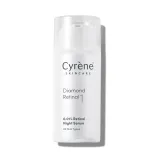
Medik8Crystal Retinal Age-Defying Vitamin A Night Serum for WrinklesYOUR PRODUCTCyrène SkincareDiamond Retinal 1skinmadeTranexamic acid + Retinal serumREMEDY SCIENCEREMEDY for healthy aging
Match—96%82%82%
Price$137.00$18.79−$118.21$27.46−$109.54$35.00−$102.00
Shared key ingredients—6 of 75 of 75 of 7
Key difference—MadecassosideBakuchiolRetinol
Irritancy High Medium Medium Medium
Drying alcohol————
View product Shop Shop Shop

More alternatives: Ursa Major Lunar Bloom Retinal SerumMeditherapy Retinal Skin Booster Serum

Cheaper alternatives? See how this stacks up against similar formulas.
We compare ingredient profiles across our catalog — pick the closest match for your budget.
Open dupe finder
Medik8 Crystal Retinal Age-Defying Vitamin A Night Serum for Wrinkles
Medik8Crystal Retinal Age-Defying Vitamin A Night Serum for Wrinkles

Affiliate links · As an Amazon Associate, WIMJ earns from qualifying purchases.

As an Amazon Associate, WIMJ earns from qualifying purchases.