Works for
3 of 3 advertised claims delivered
Evens skin tone3 ingredients credited for this claimStrong support
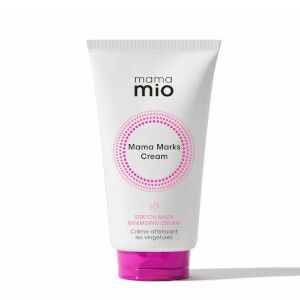
“Formulated for mamas with fresh stretch marks, this highly effective blend of peptides, fruit enzymes and oils is clinically proven to reduce the appearance, colour and texture of existing stretch marks.”
This product can help reduce hypepigmentation and even out the skin tone because it contains the following effective ingredients: lactic acid
Keep in mind that you would need to apply any topical skincare targetted at hypigmentation consistently for a couple of months to get a result. No topical skincare product can help get rid of hyperpigmentation (including post-acne marks and age spots) instantly.
Exfoliation1 ingredient credited for this claimStrong support
“Waterlily Extract works to improve the appearance of tone, while Algae Extract strives to repair skin, revealing a healthier looking surface.”
This product can help exfoliate the skin. In other words, it helps break down the bonds between dead cells on the surface of the skin and speed up the skin turnover. Skin often appears softer and brighter after exfoliation, but overdoing it can result in disrupted skin barrier. The following ingredient is doing the exfoliating job in this product: lactic acid.
Moisturizing17 ingredients credited for this claimStrong support
“Exciting your senses with an incredibly sweet and 100% natural blend of orange, bergamot, may chang, mandarin and lime, we’d understand if you became as obsessed with this hydrating cream as much as we are. . .”
This product can help improve hydration of the skin with the two types of ingredients.
The first type is called “humectants”:
these ingredients help attract water.
When humectants are on the surface of the skin, they “pull in” the moisture from the outside environment, or from
within deeper layers of the skin. The following ingredients in this product do the job:
glycerin, lactic acid.
This product also contains ingredients called “occlusives”. They help reduce the speed with which our skin loses moisture to the outside environment. These ingredients also help soften the upper layer of the skin, so it feels less tight and nicer to the touch. The following ingredients in this product do the job: butyrospermum parkii butter, plukenetia volubilis seed oil.
The following ingredients in this product are especially good for supporting the skin barrier and helping with the hydration level: palmitoyl tetrapeptide-7, palmitoyl tripeptide-1
Anti-oxidationNot advertised by the brand · 9 ingredients credited for this claimStrong support
This product contains antioxidants (tocopherol) that can help neutralize free radicals in skin. By doing so, they can lessen the damage the skin gets from the UV light (sun).
The following ingredients - camellia sinensis extract also can have an antioxidant effect, but there is less evidence to confirm their effectiveness in skin.
Anti-agingNot advertised by the brand · 7 ingredients credited for this claimModerate support
This product contains lactic acid, palmitoyl tetrapeptide-7, palmitoyl tripeptide-1. These ingredients might be able to help reduce and prevent fine lines and wrinkles, improve skin elasticity and firmness, but there is not enough evidence that it actually works.
Can it cause trouble?
Irritancy6 strong irritants: Parfum, Limonene + 4 more — patch-test recommendedHigh risk
Comedogenic3 ingredients rated 2 or more on the 0–5 pore-clogging scale3 flagged
User reviews
Be the first — your take helps the next person decide.
Ingredients
Filter by role to see what each ingredient is doing.
Aloe barbadensis extract~23–34%
- Irritation risk
- Medium
Traditionally used to treat sunburns, dermatitis and inflammation, but evidence for its effectiveness is lacking. The extract can contain humectants that help attract water into the skin
More about Aloe barbadensis extractCamellia sinensis extract~4.9–7.4%
- Irritation risk
- Low
Tea extract. Might be helpful in neutralizing free radicals in skin
More about Camellia sinensis extractLactic acid~4.9–7.4%
- Irritation risk
- Medium
An exfoliating and moisturizing alpha-hydroxy acid (AHA). Typically causes less irritation than other AHAs, for example, glycolic acid. At high concentrations (about 15%), lactic acid can help reduce lines and wrinkles. Recent studies show that lactic acid can support the "good" bacteria living on skin's surface (healthy skin microbiome)
More about Lactic acidButyrospermum parkii butter~4.2–6.3%
- Irritation risk
- Low
- Comedogenicity
- 3/5
A great moisturising ingredient that softens the skin and reduces water loss from its upper layer. It also can be helpful in protecting skin from free radicals
More about Butyrospermum parkii butterUnspecified form of vitamin c~3.2–4.9%
- Irritation risk
- Low
Tocopherol~2.2–3.3%
- Irritation risk
- Low
Pure form of vitamin E. Can help moisturise and protect the skin from free radicals. Often used to help stabilise other ingredients or the formula itself
More about TocopherolAloe barbadensis leaf juice powder~1.8–2.7%
- Irritation risk
- Medium
Traditionally used to treat sunburns, dermatitis and inflammation, but evidence for its effectiveness is lacking. The extract can contain humectants that help attract water into the skin
More about Aloe barbadensis leaf juice powderWater~1.5–2.3%
Glycerin~1.5–2.2%
- Irritation risk
- Low
One of the best moisturizing ingredients. Naturally present in skin. It attracts water to the upper layer of the skin working as a humectant
More about GlycerinMethyl glucose sesquistearate~1.4–2.1%
- Irritation risk
- Medium
Helps water and oil mix together
More about Methyl glucose sesquistearateCoconut alkanes~0.95–1.4%
- Irritation risk
- Medium
- Comedogenicity
- 2/5
An emollient that helps soften the skin
More about Coconut alkanesMethylsilanol mannuronate~0.55–1.3%
- Irritation risk
- Low
Cetearyl alcohol~0.55–1.35%
- Irritation risk
- Low
- Comedogenicity
- 2/5
A non-drying alcohol. Works as an emollient. Helps water and oil mix together and creates a nice product texture
More about Cetearyl alcoholCetyl alcohol~0.55–1.25%
- Irritation risk
- Low
A non-drying alcohol that works to soften the skin and stabilize product formulations helping oil and water mix together
More about Cetyl alcoholParfum~0.4–0.9%
- Irritation risk
- High
An aromatic blend of unspecified and possibly irritating ingredients
More about ParfumButylene glycol~0.4–0.9%
- Irritation risk
- Low
Used to create a nice product texture and help delivery of other ingredients. Might be somewhat helpful in attracting water to the upper layer of the skin
More about Butylene glycolSodium stearoyl glutamate~0.45–1%
- Irritation risk
- Medium
Helps oil and water mix together
More about Sodium stearoyl glutamatePhenoxyethanol~0.35–0.85%
- Irritation risk
- Low
A preservative. It helps prevent bacterial growth in cosmetic products
More about PhenoxyethanolHydroxyethyl acrylate/sodium acryloyldimethyl taurate copolymer~0.35–0.8%
- Irritation risk
- Medium
A gelling agent that thickens the product consistency and leaves the skin with a velvety finish
More about Hydroxyethyl acrylate/sodium acryloyldimethyl taurate copolymerLimonene~0.2–0.8%
- Irritation risk
- High
A common frangrance that can easily irritate skin, especially if exposed to air, light or heat
More about LimoneneCoco-caprylate/caprate~0.35–0.85%
- Irritation risk
- Low
Helps to soften the upper layer of the skin without creating a greasy texture
More about Coco-caprylate/caprateDipropylene glycol~0.2–0.75%
- Irritation risk
- Low
Helps to dissolve other ingredients in a formulation. Slows down the rate of product drying
More about Dipropylene glycolArgania spinosa kernel oil~0.35–0.8%
- Irritation risk
- Medium
An emollient that helps soften the upper layer of the skin. Might have some weak anti-oxidant properties
More about Argania spinosa kernel oilPersea gratissima oil~0.35–0.8%
- Irritation risk
- Medium
An emollient that helps soften the skin and could be helpful in repairing its barrier function
More about Persea gratissima oilTocopheryl acetate~0.2–0.8%
- Irritation risk
- Medium
A more stable but less bio-available form of vitamin E compared to Tocopherol. Might help moisturize and protect the skin from free radicals, but mostly used in low concentrations to stabilize other ingredients.
More about Tocopheryl acetatePlukenetia volubilis seed oil~0.35–0.8%
- Irritation risk
- Low
A plant oil that works as a good moisturizer by softening the upper layer of the skin. Might be helpful in reducing inflammation in skin and reducing blemishes due to the large content of linoleic acid
More about Plukenetia volubilis seed oilSodium lactate~0.2–0.75%
- Irritation risk
- Medium
Helps attract water to the upper layer of the skin. Is often used to adjust the pH level of the product
More about Sodium lactateSodium palmitoyl proline~0.2–0.75%
- Irritation risk
- Low
Lactic acid~0.2–0.75%
- Irritation risk
- Medium
An exfoliating and moisturizing alpha-hydroxy acid (AHA). Typically causes less irritation than other AHAs, for example, glycolic acid. At high concentrations (about 15%), lactic acid can help reduce lines and wrinkles. Recent studies show that lactic acid can support the "good" bacteria living on skin's surface (healthy skin microbiome)
More about Lactic acidAscorbyl glucoside~0.2–0.75%
- Irritation risk
- Medium
A vitamin C derivative that is more stable but less potent than pure form of vitamin C. Has a potential to boost collagen production, nutralise free radicals and reduce hyperpigmentation, but the required concentration is likely to be much higher than for the pure form of vitamin C, limiting the ingredient's effectiveness in products
More about Ascorbyl glucosideEthylhexylglycerin~0.2–0.75%
Polysorbate 60~0.3–0.7%
Sorbitan isostearate~0.2–0.8%
- Irritation risk
- Low
Helps oil and water mix together
More about Sorbitan isostearateCarbomer~0.2–0.75%
- Irritation risk
- Low
Helps create a thicker or gel-like product texture. It is not a surfactant but can be used in gentle cleansing formulations
More about CarbomerCitral~0.2–0.75%
Linalool~0.2–0.75%
Polysorbate 20~0.3–0.75%
Sorbic acid~0.3–0.6%
Phyllanthus emblica fruit extract~0.3–0.7%
- Irritation risk
- Medium
A plant extract that might be helpful in neutralizing free radicals and have a skin lightening effect if used in high enough concentrations
More about Phyllanthus emblica fruit extractCetyl hydroxyethylcellulose~0.35–0.85%
- Irritation risk
- Low
Used to create a thicker product consistency and stabilize formulations
More about Cetyl hydroxyethylcelluloseNymphaea alba flower extract~0.2–0.8%
- Irritation risk
- Low
Citronellol~0.15–0.7%
Rutin~0.3–0.7%
- Irritation risk
- Low
An antioxidant that might help neutralize free radicals in skin
More about RutinGeraniol~0.15–0.6%
Dipotassium phosphate~0.15–0.65%
Tocopherol~0.2–0.7%
- Irritation risk
- Low
Pure form of vitamin E. Can help moisturise and protect the skin from free radicals. Often used to help stabilise other ingredients or the formula itself
More about TocopherolPalmitoyl tripeptide-1~0.35–0.75%
- Irritation risk
- Low
A type of peptide. Peptides are excellent moisturizers and might be able support collagen production reducing fine lines and wrinkles
More about Palmitoyl tripeptide-1Palmitoyl tetrapeptide-7~0.2–0.8%
- Irritation risk
- Low
A type of peptide. Peptides are excellent moisturizers and might be able support collagen production reducing fine lines and wrinkles
More about Palmitoyl tetrapeptide-7Phaseolus lunatus seed extract~0.3–0.75%
- Irritation risk
- Low
Bean seed extract. It might have some anti-oxidant properties
More about Phaseolus lunatus seed extractIngredient list view
Aloe barbadensis extract, Camellia sinensis extract, Lactic acid, Butyrospermum parkii butter, Unspecified form of vitamin c, Tocopherol, Aloe barbadensis leaf juice powder, Water, Glycerin, Methyl glucose sesquistearate, Coconut alkanes, Methylsilanol mannuronate, Cetearyl alcohol, Cetyl alcohol, Parfum, Butylene glycol, Sodium stearoyl glutamate, Phenoxyethanol, Hydroxyethyl acrylate/sodium acryloyldimethyl taurate copolymer, Limonene, Coco-caprylate/caprate, Dipropylene glycol, Argania spinosa kernel oil, Persea gratissima oil, Tocopheryl acetate, Plukenetia volubilis seed oil, Sodium lactate, Sodium palmitoyl proline, Lactic acid, Ascorbyl glucoside, Ethylhexylglycerin, Polysorbate 60, Sorbitan isostearate, Carbomer, Citral, Linalool, Polysorbate 20, Sorbic acid, Phyllanthus emblica fruit extract, Cetyl hydroxyethylcellulose, Nymphaea alba flower extract, Citronellol, Rutin, Geraniol, Dipotassium phosphate, Tocopherol, Palmitoyl tripeptide-1, Palmitoyl tetrapeptide-7, Phaseolus lunatus seed extract
Compare prices
Retailers ranked by price — lowest first.


Product summary
"Mama Mio - Mama Marks Cream" is effective for: Evens skin tone, Exfoliation and Moisturizing
This moisturizer could be helpful for: Anti-aging, but its actives are not the most effective or are not well-studied.
Ingredient callouts
- Exfoliating acids (lactic acid 0.20% - 0.75% and lactic acid 4.90% - 7.40%). In this concentration, they will have a noticeable exfoliating effect. They can also have an anti-aging effect and stimulate collagen production in a long-run. Lactic Acid can also help to attract water to the upper layer (works as a humectant).
- This moisturizer also contains Peptides (palmitoyl tetrapeptide-7 0.20% - 0.80% and palmitoyl tripeptide-1 0.35% - 0.75%). Peptides are a very big group of ingredients. They all consist of a different combination of aminoacids. Our skin produces Peptides naturally. Some of them work as natural antibiotics, promote wound-healing and production of collagen. The scientists are still studying how effective the topical application of Peptides is, but it is very likely that they are helpful. Peptides might be able to support skin barrier restoration and even have an anti-aging benefit. At the very least, they certainly help attract water to the skin and support the hydration in this way.
Price
The product retails from 30.03$ up to 53.00$ in the United States, from 49.50CA$ up to 66.00CA$ in Canada, from 21.33£ up to 38.00£ in the United Kingdom and for 50.40A$ in Australia.
For a detailed price comparison: click here.
Sources cited in this review
Every concentration estimate and effectiveness label is anchored to one of these 14 studies and safety reviews.
- 1Epidermal and dermal effects of topical lactic acidncbi.nlm.nih.gov
- 2Dual Effects of Alpha-Hydroxy Acids on the Skinpdfs.semanticscholar.org
- 3Vitamin E in dermatologyncbi.nlm.nih.gov
- 4Vitamin E and Skin Healthlpi.oregonstate.edu
- 5
- 6Safety Assessment of Alkyl Esters as Used in Cosmeticscir-safety.org

Affiliate links · As an Amazon Associate, WIMJ earns from qualifying purchases.