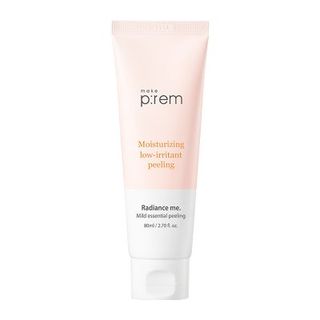
Make P:rem Radiance Me Mild Essential Peeling Gel
Works for
2 of 2 advertised claims delivered
Exfoliation1 ingredient credited for this claimStrong support
“A gentle daily exfoliator designed to get skin glowing, the Make P. rem Radiance Me.”
This product can help exfoliate the skin. In other words, it helps break down the bonds between dead cells on the surface of the skin and speed up the skin turnover. Skin often appears softer and brighter after exfoliation, but overdoing it can result in disrupted skin barrier. The following ingredient is doing the exfoliating job in this product: hydroxyethyl urea.
Moisturizing17 ingredients credited for this claimGood support
“Formulated with kind-to-skin ingredients including Wintergreen leaf extract, a botanic that naturally contains Salicylic Acid to exfoliate skin, and squalene, to hydrate without heaviness, the lightweight peel soothes, softens and hydrates to leave skin looking luminous without irritating sensitive skin or causing dryness and discomfort.”
This product can help improve hydration of the skin with the two types of ingredients.
The first type is called “humectants”:
these ingredients help attract water.
When humectants are on the surface of the skin, they “pull in” the moisture from the outside environment, or from
within deeper layers of the skin. The following ingredients in this product do the job:
glycerin, hydroxyethyl urea.
This product also contains ingredients called “occlusives”. They help reduce the speed with which our skin loses moisture to the outside environment. These ingredients also help soften the upper layer of the skin, so it feels less tight and nicer to the touch. The following ingredients in this product do the job: helianthus annuus seed oil, squalane.
Anti-oxidationNot advertised by the brand · 5 ingredients credited for this claimModerate support
This product contains antioxidants (pyridoxine) that might be able to help neutralize free radicals in skin to lessen the damage it gets from the UV light (sun). There is not enough evidence to confirm their effectiveness in skin though.
Anti-agingNot advertised by the brand · 4 ingredients credited for this claimModerate support
This product contains folic acid. This ingredient might be able to help reduce and prevent fine lines and wrinkles, improve skin elasticity and firmness, but there is not enough evidence that it actually works.
Can it cause trouble?
Irritancy5 strong irritants: Citrus aurantium bergamia fruit oil, Citrus aurantium dulcis peel oil + 3 more — patch-test recommendedHigh risk
ComedogenicClean of flagged comedogenic ingredientsNone flagged


User reviews
Be the first — your take helps the next person decide.
Ingredients
Filter by role to see what each ingredient is doing.
Water~45–55%
Glycerin~4.4–5.4%
- Irritation risk
- Low
One of the best moisturizing ingredients. Naturally present in skin. It attracts water to the upper layer of the skin working as a humectant
More about GlycerinCaprylic/capric/succinic triglyceride~3.5–4.3%
Hydrogenated poly(c6-14 olefin)~3.1–3.8%
- Irritation risk
- Low
Helps soften the upper layer of the skin and create a nice product texture
More about Hydrogenated poly(c6-14 olefin)Cetrimonium methosulfate~2.3–2.8%
Isopropyl alcohol~1.8–2.2%
- Irritation risk
- High
A drying alcohol. Can increase skin's sensitivity and cause dryness and irritation
More about Isopropyl alcoholAcrylates/c10-30 alkyl acrylate crosspolymer~1.7–2.1%
- Irritation risk
- Medium
Maintains the texture of skincare products. Allows the product to spread evenly. Helps oil and water mix together
More about Acrylates/c10-30 alkyl acrylate crosspolymerCarbomer~1.5–1.8%
- Irritation risk
- Low
Helps create a thicker or gel-like product texture. It is not a surfactant but can be used in gentle cleansing formulations
More about CarbomerMaltodextrin~1.2–1.5%
- Irritation risk
- Low
Used to stabilize the product formulation and can help absorb oil
More about MaltodextrinCitrus aurantium bergamia fruit oil~0.95–1.15%
- Irritation risk
- High
A plant oil with a high content of volatile compounds that can irritate the skin and lead to allergic reactions. Can lead to photosensitivity
More about Citrus aurantium bergamia fruit oilCitrus aurantium dulcis peel oil~0.7–1.05%
- Irritation risk
- High
An essentil oil from orange peel. Potential allergen and can be irritating
More about Citrus aurantium dulcis peel oilLavandula angustifolia oil~0.55–0.85%
- Irritation risk
- High
An essential oil. Potential allergen and can be irritating. It has some anti-bacterial properties
More about Lavandula angustifolia oilEucalyptus globulus leaf oil~0.5–0.75%
- Irritation risk
- High
An essential oil that can be very irritating. Has some anti-bacterial properties
More about Eucalyptus globulus leaf oilSqualane~0.55–0.8%
- Irritation risk
- Low
An oil naturally present in skin. Works as an emollient to soften the skin and form a protective layer on its surface without a greasy feeling.
More about SqualaneMoringa oleifera seed oil~0.45–0.7%
- Irritation risk
- Medium
A plant oil that helps soften the upper layer of the skin. Is unlikely to be helpful in restoring skin barrier function due to the low content of linoleic acid
More about Moringa oleifera seed oilDisodium edta~0.45–0.65%
Sodium citrate~0.4–0.65%
- Irritation risk
- Medium
Helps to control the skin's pH level. Maintains the skin's natural film of amino-lactic acids and oils. Helps to preserve products
More about Sodium citrateOctyldodecanol~0.4–0.6%
- Irritation risk
- Low
An emollient that helps to soften the skin and create a pleasant product texture and stabilize the formulation
More about OctyldodecanolHydroxyethyl urea~0.3–0.6%
- Irritation risk
- Low
A derivative of urea, a compound that is naturally present in skin. Attracts water to the upper layer of the skin. Can enhance penetration of other ingredients
More about Hydroxyethyl ureaCitric acid~0.3–0.55%
- Irritation risk
- Medium
Can work as an exfoliant but is typically used to adjust the product pH
More about Citric acidHydrogenated lecithin~0.3–0.55%
- Irritation risk
- Low
Helps to retain moisture by creating a protective barrier on the skin. Rich in fatty acids. Improves product texture and helps with the penetration of other ingredients.
More about Hydrogenated lecithinPolyglyceryl-10 stearate~0.25–0.5%
- Irritation risk
- Medium
Helps water and oil mix together and softens the upper layer of the skin
More about Polyglyceryl-10 stearatePanthenol~0.25–0.45%
- Irritation risk
- Low
Helps attract water to the upper layer of the skin and can help improve skin barrier function
More about PanthenolEchium plantagineum seed oil~0.25–0.45%
- Irritation risk
- Medium
A plant oil that because of its high content of alpha-linolenic acid help support skin barrier function and moisturize the skin
More about Echium plantagineum seed oilHelianthus annuus seed oil~0.25–0.5%
- Irritation risk
- Low
A great emollient due to its high linoleic acid content. One of the most effective plant oils in helping skin hydration and repairing skin barrier function
More about Helianthus annuus seed oilSodium ascorbyl phosphate~0.25–0.45%
- Irritation risk
- Medium
A stable derivative of vitamin C. It is oil-soluble which means it is more likely to penetrate the skin compared to the pure form of vitamin C (which is water-soluble), but it is less bio-available and is way less effective in stimulating collagen and reducing wrinkles compared to the pure form of vitamin C (L-ascorbic acid) and its other derivatives (for example, magnesium ascorbyl phosphate). At the same time, this vitamin C derivative has been shown in studies to be effective in reducing acne, blemishes and clogged pores. It is less irritating then the pure form of vitamin C
More about Sodium ascorbyl phosphateCyanocobalamin~0.25–0.45%
- Irritation risk
- Low
Can support skin barrier function and reduce inflammation in skin
More about CyanocobalaminNiacinamide~0.25–0.45%
- Irritation risk
- Low
Is proven to be effective in reducing blemishes, evening out skin tone and helping to improve lines and wrinkles. It helps the skin to repair sun damage, calm down inflammation and keep maintain good levels of moisture. The concentration of about 2% is effective for supporting the skin barrier and evening out the skin tone. Concentration of 4-6% is better for helping with acne and balancing the sebum production
More about NiacinamideHippophae rhamnoides oil~0.25–0.5%
- Irritation risk
- High
A good emollient. Contains various ingredients including vitamins and fatty acids that could work in the skin to neutralize free radicals and minimize moisture loss - if enough of these compounds is able to penetrate the skin in an active form.
More about Hippophae rhamnoides oilGaultheria procumbens leaf extract~0.2–0.35%
- Irritation risk
- High
Cardiospermum halicacabum flower/leaf/vine extract~0.2–0.4%
- Irritation risk
- High
A plant extract that might have some anti-inflammatory and anti-oxidant properties but evidence is missing
More about Cardiospermum halicacabum flower/leaf/vine extractPyridoxine~0.2–0.4%
- Irritation risk
- High
Might help neutralize free radicals in skin, but evidence of effectiveness in skin is lacking. It might be irritating
More about PyridoxineFolic acid~0.2–0.4%
- Irritation risk
- Low
Can help stimulate collagen production in skin. While available studies are promising, more research is needed to confirm the efficacy in skin
More about Folic acidBiotin~0.2–0.35%
- Irritation risk
- Low
Might have some moisturising properties. Is not effective when applied topically beyond some moisturizing effect
More about BiotinTocopherol~0.2–0.35%
- Irritation risk
- Low
Pure form of vitamin E. Can help moisturise and protect the skin from free radicals. Often used to help stabilise other ingredients or the formula itself
More about TocopherolThiamine hcl~0.15–0.3%
- Irritation risk
- Medium
Can help attract water to the upper layer of the skin. Is studied as a mosquito repellent
More about Thiamine hclRiboflavin~0.15–0.25%
- Irritation risk
- Low
Linoleic acid~0.25–0.45%
- Irritation risk
- Low
An excellent emollient. Helps soften the skin, restore its barrier function, and can help to calm down inflammation. It can be helpful to prevent blemishes and clogged pores
More about Linoleic acidBeta-carotene~0.1–0.15%
Inositol~0.05–0.15%
Ingredient list view
Water, Glycerin, Caprylic/capric/succinic triglyceride, Hydrogenated poly(c6-14 olefin), Cetrimonium methosulfate, Isopropyl alcohol, Acrylates/c10-30 alkyl acrylate crosspolymer, Carbomer, Maltodextrin, Citrus aurantium bergamia fruit oil, Citrus aurantium dulcis peel oil, Lavandula angustifolia oil, Eucalyptus globulus leaf oil, Squalane, Moringa oleifera seed oil, Disodium edta, Sodium citrate, Octyldodecanol, Hydroxyethyl urea, Citric acid, Hydrogenated lecithin, Polyglyceryl-10 stearate, Panthenol, Echium plantagineum seed oil, Helianthus annuus seed oil, Unknown, Sodium ascorbyl phosphate, Cyanocobalamin, Niacinamide, Hippophae rhamnoides oil, Gaultheria procumbens leaf extract, Cardiospermum halicacabum flower/leaf/vine extract, Pyridoxine, Folic acid, Biotin, Tocopherol, Thiamine hcl, Riboflavin, Linoleic acid, Beta-carotene, Inositol
Compare prices
Retailers ranked by price — lowest first.
Worth comparing, line by line.
Match % combines shared ingredients, the first five ingredients, shared actives and hero ingredients, irritancy (lower counts in the alternative's favour), texture and body area. Only products in the same routine step are compared.
| Make P:remRadiance Me Mild Essential Peeling GelYOUR PRODUCT | P.CALMLight Active Cream | Dermarche LabsSMARTSYNC Probiotic Science Balancing Gel-Cream | LumeneNordic | |
|---|---|---|---|---|
| Match | — | 80% | 79% | 77% |
| Price | $31.73 | $22.40−$9.33 | $21.99−$9.74 | $12.99−$18.74 |
| Shared key ingredients | — | 8 of 14 | 4 of 14 | 8 of 14 |
| Key difference | — | Adenosine | Anhydroxylitol | Adenosine |
| Irritancy | High | Medium | Medium | High |
| Drying alcohol | Contains drying alcohol | — | — | — |
| View product | Shop | Shop | Shop |


Sources cited in this review
Every concentration estimate and effectiveness label is anchored to one of these 33 studies and safety reviews.
- 1
- 2
- 3
- 4Air oxidation increases skin irritation from fragrance terpenesonlinelibrary.wiley.com
- 5
- 6

Affiliate links · As an Amazon Associate, WIMJ earns from qualifying purchases.