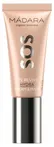
Madara Cosmetics SOS Hydra Eye Revive Hydra Cream & Mask

Madara Cosmetics SOS Hydra Eye Revive Hydra Cream & Mask

Efficacy62/100IrritancyHigh

Works for

Moisturizing
Simmondsia chinensis seed oil, Glycerin + 22 more
Works
What the product description says
“Mádara SOS Hydra Eye Revive Hydra Cream & Mask 20ml is a 2-in-1 care that soothes and nourishes the dry, stressed or tight eye contours.”
Source: Cocoon Center

This product can help improve hydration of the skin with the two types of ingredients.

The first type is called “humectants”:
these ingredients help attract water. When humectants are on the surface of the skin, they “pull in” the moisture from the outside environment, or from within deeper layers of the skin. The following ingredients in this product do the job: glycerin, hydrolyzed glycosaminoglycans.

This product also contains ingredients called “occlusives”. They help reduce the speed with which our skin loses moisture to the outside environment. These ingredients also help soften the upper layer of the skin, so it feels less tight and nicer to the touch. The following ingredients in this product do the job: ricinus communis seed oil, simmondsia chinensis seed oil.

Simmondsia chinensis seed oilKey active· Emollient, OcclusiveEffect: HighSoftens the upper layer of skin and helps restore the healthy skin barrier. Has shown to help calm down inflammation in skin. It is a stable oil, meaning that it retains its properties even when exposed to air.~4.8–5.9%
GlycerinKey active· HumectantEffect: HighOne of the best moisturizing ingredients. Naturally present in skin. It attracts water to the upper layer of the skin working as a humectant~3.8–4.7%
Cetearyl alcoholKey active· EmollientEffect: MediumA non-drying alcohol. Works as an emollient. Helps water and oil mix together and creates a nice product texture~2.5–3%
Coconut alkanesKey active· EmollientEffect: MediumAn emollient that helps soften the skin~2.4–2.9%
Oenothera biennis oilKey active· EmollientEffect: HighHelps soften the upper layer of the skin and can support skin barrier function~1.5–1.8%
Ricinus communis seed oilKey active· Emollient, OcclusiveEffect: HighA plant oil that can help soften the skin. It might be helpful in calming down inflammation, but solid research is lacking. Is often used in lip products to create the needed product consistency~1.3–1.6%
Sodium pcaKey active· HumectantEffect: HighNaturally present in skin and helps to attract water to its upper layer~0.6–0.9%
Hydrolyzed glycosaminoglycansKey active· HumectantEffect: HighLong sugars that help attract water to the upper layer of the skin~0.45–0.65%
GlycosphingolipidsKey active· EmollientEffect: HighA type of lipids naturally present in skin. They can be converted to ceramides in skin~0.35–0.6%
Sodium hyaluronateKey active· HumectantEffect: HighOne of the best moisturizing ingredients. Attracts water into the upper layer of the skin~0.3–0.55%
Hydrolyzed hyaluronic acidKey active· HumectantEffect: HighOne of the best moisturizing ingredients. Attracts water into the upper layer of the skin. A version of it is naturally present in skin~0.3–0.55%
Copernicia cerifera ceraKey active· EmollientEffect: MediumBrazilian palm wax. Helps soften the upper layer of the skin~0.3–0.55%
Rosa damascena flower water· HumectantEffect: LowUsed to add a nice rose smell to the product. Might help attract water to the upper layer of the skin and have some anti-oxidant effect. Can be irritating~1.9–2.3%
Arachidyl alcohol· EmollientEffect: LowUsed to soften the upper layer of the skin and create a thicker product consistency~1.7–2.1%
Behenyl alcohol· Emollient, OcclusiveEffect: LowNon-drying alcohol that helps water and oil mix together. Also serves as an emollient~1.1–1.3%
Palmitic acid· EmollientEffect: LowAn emollient that is naturally present in skin and helps soften it~0.55–0.8%
Glyceryl caprylate· EmollientEffect: LowAn emollient that can also help water and oil mix together, as well as prevent bacteria growth in products~0.4–0.6%
Camellia sinensis leaf extractEffect: LowCan contain potent anti-oxidant compounds (abbreviated ECG, GCG, EGC, and EGCG) that might help protect the skin from free radicals. Can help calm down inflammation and has some anti-bacterial properties. Unfortunately, these antioxidants are unstable and lose their effectiveness very quickly in products. The concentration of the antioxidant compounds in the extract also tends to be low to be effective in topical formulation~0.4–0.6%
Myristyl alcohol· EmollientEffect: LowHelps to stabilize the product formulation while softening the upper layer of the skin. Can be irritating~0.35–0.6%
Stearic acidEffect: Low, below effective doseHelps oil and water mix together and works as an emollient~0.6–0.9%
TocopherolEffect: Low, below effective dosePure form of vitamin E. Can help moisturise and protect the skin from free radicals. Often used to help stabilise other ingredients or the formula itself~0.3–0.6%
Butyrospermum parkii butterUnder-dosedA great moisturising ingredient that softens the skin and reduces water loss from its upper layer. It also can be helpful in protecting skin from free radicals~0.45–0.7%
Caprylic/capric triglycerideUnder-dosedA good mix of fatty acids that forms a protective layer on the skin. Improves the shelf life of products. Derived from coconut and glycerin~0.4–0.6%
Lactic acidUnder-dosedAn exfoliating and moisturizing alpha-hydroxy acid (AHA). Typically causes less irritation than other AHAs, for example, glycolic acid. At high concentrations (about 15%), lactic acid can help reduce lines and wrinkles. Recent studies show that lactic acid can support the "good" bacteria living on skin's surface (healthy skin microbiome)~0.3–0.55%
Anti-aging
Camellia sinensis leaf extract, Butyrospermum parkii butter + 3 more
Not delivered
What the product description says
“Its polyvalent formula recovers the skin of a protective layer and helps to catch water, ensuring thus instantaneous comfort and helping to prevent the appearance of ageing signs.”
Source: Cocoon Center

This product does not contain ingredients that are able to reduce fine lines and wrinkles or help with skin elasticity, but it can improve the look of the skin temporarily through moisturization. Well-moisturized skin might also be able to repair the sun damage better.This ingredient - camellia sinensis leaf extract - could be helpful for preventing or repairing signs of aging in theory, but there is no evidence that it actually works.

This ingredient camellia sinensis leaf extract might be able to help neutralize free radicals in skin and help it fight off some of the sun damage.

Camellia sinensis leaf extractEffect: LowCan contain potent anti-oxidant compounds (abbreviated ECG, GCG, EGC, and EGCG) that might help protect the skin from free radicals. Can help calm down inflammation and has some anti-bacterial properties. Unfortunately, these antioxidants are unstable and lose their effectiveness very quickly in products. The concentration of the antioxidant compounds in the extract also tends to be low to be effective in topical formulation~0.4–0.6%
Butyrospermum parkii butterEffect: Low, below effective doseA great moisturising ingredient that softens the skin and reduces water loss from its upper layer. It also can be helpful in protecting skin from free radicals~0.45–0.7%
TocopherolEffect: Low, below effective dosePure form of vitamin E. Can help moisturise and protect the skin from free radicals. Often used to help stabilise other ingredients or the formula itself~0.3–0.6%
Ascorbyl palmitateEffect: Low, below effective doseBeing a lipid soluble form of vitamin C, it is more stable and can penetrate the skin better than L-Ascorbic acid. It is effective in protecting the skin from free radicals, as well as evening the skin tone, but is less effective in stimulating collagen production compared to L-Ascorbic acid.~0.3–0.55%
Lactic acidUnder-dosedAn exfoliating and moisturizing alpha-hydroxy acid (AHA). Typically causes less irritation than other AHAs, for example, glycolic acid. At high concentrations (about 15%), lactic acid can help reduce lines and wrinkles. Recent studies show that lactic acid can support the "good" bacteria living on skin's surface (healthy skin microbiome)~0.3–0.55%
Anti-oxidation
Side benefit · Camellia sinensis leaf extract, Ginkgo biloba leaf extract + 7 more
May help

This product contains antioxidants (camellia sinensis leaf extract, ginkgo biloba leaf extract) that might be able to help neutralize free radicals in skin to lessen the damage it gets from the UV light (sun). There is not enough evidence to confirm their effectiveness in skin though.

Camellia sinensis leaf extractKey activeEffect: MediumCan contain potent anti-oxidant compounds (abbreviated ECG, GCG, EGC, and EGCG) that might help protect the skin from free radicals. Can help calm down inflammation and has some anti-bacterial properties. Unfortunately, these antioxidants are unstable and lose their effectiveness very quickly in products. The concentration of the antioxidant compounds in the extract also tends to be low to be effective in topical formulation~0.4–0.6%
Ginkgo biloba leaf extractKey activeEffect: MediumA plant extract that might help neutralize free radicals and reduce inflammation in skin. It can be irritating~0.3–0.55%
Rosa damascena flower waterEffect: LowUsed to add a nice rose smell to the product. Might help attract water to the upper layer of the skin and have some anti-oxidant effect. Can be irritating~1.9–2.3%
Oenothera biennis oilEffect: LowHelps soften the upper layer of the skin and can support skin barrier function~1.5–1.8%
Trifolium pratense flower extractEffect: LowRed clover flower extract. Can contain anti-oxidants but also potential irritant compounds~0.3–0.55%
Aesculus hippocastanum seed extractEffect: LowPlant extract. Might have some anti-oxidant properties. Can be irritating~0.3–0.55%
Butyrospermum parkii butterEffect: Low, below effective doseA great moisturising ingredient that softens the skin and reduces water loss from its upper layer. It also can be helpful in protecting skin from free radicals~0.45–0.7%
Ascorbyl palmitateEffect: Low, below effective doseBeing a lipid soluble form of vitamin C, it is more stable and can penetrate the skin better than L-Ascorbic acid. It is effective in protecting the skin from free radicals, as well as evening the skin tone, but is less effective in stimulating collagen production compared to L-Ascorbic acid.~0.3–0.55%
TocopherolUnder-dosedPure form of vitamin E. Can help moisturise and protect the skin from free radicals. Often used to help stabilise other ingredients or the formula itself~0.3–0.6%

Can it cause trouble?

Irritancy
8 strong irritants: Rosa damascena flower water, Aroma + 6 more — patch-test recommended
High risk
We flagged 23 ingredients with irritancy potential. Severity depends on your sensitivity threshold; the table lists the worst offenders first.
IngredientFunctionIrritationEst. amount
Rosa damascena flower waterUsed to add a nice rose smell to the product. Might help attract water to the upper layer of the skin and have some anti-oxidant effect. Can be irritatingHigh~1.9–2.3%est.
AromaAn unspecified blend of fragrant irritating ingredientsHigh~0.3–0.6%est.
Sodium anisateUsed as a fragranceHigh~0.3–0.55%est.
Aesculus hippocastanum seed extractPlant extract. Might have some anti-oxidant properties. Can be irritatingHigh~0.3–0.55%est.
Coco-glucosideUsed as a cleansing agent (surfactant) in cleansers. Helps water and oil mix together in lotions. Can be irritatingHigh~0.4–0.6%est.
Trifolium pratense flower extractRed clover flower extract. Can contain anti-oxidants but also potential irritant compoundsHigh~0.3–0.55%est.
Myristyl alcoholHelps to stabilize the product formulation while softening the upper layer of the skin. Can be irritatingHigh~0.35–0.6%est.
Ginkgo biloba leaf extractA plant extract that might help neutralize free radicals and reduce inflammation in skin. It can be irritatingHigh~0.3–0.55%est.
Benzyl alcoholA preservative. Can be used to mask unpleasant smell. Can be irritatingHigh~0.2–0.4%est.
CitronellolA fragrance. Can be irritatingHigh~0.15–0.3%est.
GeraniolA fragrance. Can be irritatingHigh~0.15–0.25%est.
Benzyl salicylateA fragrance. Is a likely irritantHigh~0.1–0.2%est.
EugenolA fragrance. Is a likely irritantHigh~0.15–0.25%est.
Simmondsia chinensis seed oilSoftens the upper layer of skin and helps restore the healthy skin barrier. Has shown to help calm down inflammation in skin. It is a stable oil, meaning that it retains its properties even when exposed to air.Medium~4.8–5.9%est.
Coconut alkanesAn emollient that helps soften the skinMedium~2.4–2.9%est.
Oenothera biennis oilHelps soften the upper layer of the skin and can support skin barrier functionMedium~1.5–1.8%est.
Ricinus communis seed oilA plant oil that can help soften the skin. It might be helpful in calming down inflammation, but solid research is lacking. Is often used in lip products to create the needed product consistencyMedium~1.3–1.6%est.
Sodium levulinateA preservativeMedium~0.5–0.75%est.
Ascorbyl palmitateBeing a lipid soluble form of vitamin C, it is more stable and can penetrate the skin better than L-Ascorbic acid. It is effective in protecting the skin from free radicals, as well as evening the skin tone, but is less effective in stimulating collagen production compared to L-Ascorbic acid.Medium~0.3–0.55%est.
Lactic acidAn exfoliating and moisturizing alpha-hydroxy acid (AHA). Typically causes less irritation than other AHAs, for example, glycolic acid. At high concentrations (about 15%), lactic acid can help reduce lines and wrinkles. Recent studies show that lactic acid can support the "good" bacteria living on skin's surface (healthy skin microbiome)Medium~0.3–0.55%est.
Caprylic/capric triglycerideA good mix of fatty acids that forms a protective layer on the skin. Improves the shelf life of products. Derived from coconut and glycerinMedium~0.4–0.6%est.
Citric acidCan work as an exfoliant but is typically used to adjust the product pHMedium~0.25–0.5%est.
Potassium sorbateA preservativeMedium~0.2–0.4%est.
Comedogenic
3 ingredients rated 2 or more on the 0–5 pore-clogging scale
3 flagged
These ingredients have a comedogenic rating of 2 or more on a 0–5 scale; the table shows each one's rating. In leave-on products they can clog pores in acne-prone skin.
IngredientFunctionRatingEst. amount
Butyrospermum parkii butterA great moisturising ingredient that softens the skin and reduces water loss from its upper layer. It also can be helpful in protecting skin from free radicals3/5~0.45–0.7%est.
Cetearyl alcoholA non-drying alcohol. Works as an emollient. Helps water and oil mix together and creates a nice product texture2/5~2.5–3%est.
Coconut alkanesAn emollient that helps soften the skin2/5~2.4–2.9%est.

User reviews

Would you recommend?
No community reviews yet.

Be the first — your take helps the next person decide.

Ingredients

Filter by role to see what each ingredient is doing.

Water~45–55%
Formula
Irritation risk
Low

Plain old water

More about Water
Simmondsia chinensis seed oil~4.8–5.9%
Key activeIrritant · medium
Irritation risk
Medium
Works for
Moisturizing

Softens the upper layer of skin and helps restore the healthy skin barrier. Has shown to help calm down inflammation in skin. It is a stable oil, meaning that it retains its properties even when exposed to air.

More about Simmondsia chinensis seed oil
Glycerin~3.8–4.7%
Key active
Irritation risk
Low
Works for
Moisturizing

One of the best moisturizing ingredients. Naturally present in skin. It attracts water to the upper layer of the skin working as a humectant

More about Glycerin
Cetearyl alcohol~2.5–3%
Key activeComedogenic 2/5
Irritation risk
Low
Comedogenicity
2/5
Works for
CleansingMoisturizing

A non-drying alcohol. Works as an emollient. Helps water and oil mix together and creates a nice product texture

More about Cetearyl alcohol
Coconut alkanes~2.4–2.9%
Key activeComedogenic 2/5Irritant · medium
Irritation risk
Medium
Comedogenicity
2/5
Works for
Moisturizing

An emollient that helps soften the skin

More about Coconut alkanes
Rosa damascena flower water~1.9–2.3%
Irritant · high
Irritation risk
High
Works for
MoisturizingAnti-oxidation

Used to add a nice rose smell to the product. Might help attract water to the upper layer of the skin and have some anti-oxidant effect. Can be irritating

More about Rosa damascena flower water
Arachidyl alcohol~1.7–2.1%
Formula
Irritation risk
Low
Works for
Moisturizing

Used to soften the upper layer of the skin and create a thicker product consistency

More about Arachidyl alcohol
Oenothera biennis oil~1.5–1.8%
Key activeIrritant · medium
Irritation risk
Medium
Works for
MoisturizingAnti-oxidationAnti-blemishAnti-inflammatory

Helps soften the upper layer of the skin and can support skin barrier function

More about Oenothera biennis oil
Ricinus communis seed oil~1.3–1.6%
Key activeIrritant · medium
Irritation risk
Medium
Works for
MoisturizingAnti-inflammatory

A plant oil that can help soften the skin. It might be helpful in calming down inflammation, but solid research is lacking. Is often used in lip products to create the needed product consistency

More about Ricinus communis seed oil
Behenyl alcohol~1.1–1.3%
Formula
Irritation risk
Low
Works for
Moisturizing

Non-drying alcohol that helps water and oil mix together. Also serves as an emollient

More about Behenyl alcohol
Euphrasia officinalis extract~0.65–0.95%
Formula
Sodium pca~0.6–0.9%
Key active
Irritation risk
Low
Works for
Moisturizing

Naturally present in skin and helps to attract water to its upper layer

More about Sodium pca
Rhus verniciflua peel cera~0.6–0.9%
Formula
Sodium levulinate~0.5–0.75%
Irritant · medium
Irritation risk
Medium

A preservative

More about Sodium levulinate
Palmitic acid~0.55–0.8%
Formula
Irritation risk
Low
Works for
CleansingMoisturizing

An emollient that is naturally present in skin and helps soften it

More about Palmitic acid
Stearic acid~0.6–0.9%
Formula
Irritation risk
Low
Works for
CleansingMoisturizing

Helps oil and water mix together and works as an emollient

More about Stearic acid
Arachidyl glucoside~0.5–0.75%
Formula
Irritation risk
Low
Works for
Cleansing

Helps oil and water mix together

More about Arachidyl glucoside
Hydrolyzed glycosaminoglycans~0.45–0.65%
Key active
Irritation risk
Low
Works for
Moisturizing

Long sugars that help attract water to the upper layer of the skin

More about Hydrolyzed glycosaminoglycans
Butyrospermum parkii butter~0.45–0.7%
Under-dosedComedogenic 3/5
Irritation risk
Low
Comedogenicity
3/5
Works for
MoisturizingAnti-oxidationAnti-aging

A great moisturising ingredient that softens the skin and reduces water loss from its upper layer. It also can be helpful in protecting skin from free radicals

More about Butyrospermum parkii butter
Camellia sinensis leaf extract~0.4–0.6%
Key active
Irritation risk
Low
Works for
AntibacterialAnti-oxidationAnti-agingAnti-blemishEvens skin toneMoisturizing

Can contain potent anti-oxidant compounds (abbreviated ECG, GCG, EGC, and EGCG) that might help protect the skin from free radicals. Can help calm down inflammation and has some anti-bacterial properties. Unfortunately, these antioxidants are unstable and lose their effectiveness very quickly in products. The concentration of the antioxidant compounds in the extract also tends to be low to be effective in topical formulation

More about Camellia sinensis leaf extract
Usnea barbata extract~0.35–0.6%
Formula
Aroma~0.3–0.6%
Irritant · high
Irritation risk
High

An unspecified blend of fragrant irritating ingredients

More about Aroma
Glyceryl caprylate~0.4–0.6%
Formula
Irritation risk
Low
Works for
CleansingMoisturizing

An emollient that can also help water and oil mix together, as well as prevent bacteria growth in products

More about Glyceryl caprylate
Sodium anisate~0.3–0.55%
Irritant · high
Irritation risk
High

Used as a fragrance

More about Sodium anisate
Aesculus hippocastanum seed extract~0.3–0.55%
Irritant · high
Irritation risk
High
Works for
Anti-oxidation

Plant extract. Might have some anti-oxidant properties. Can be irritating

More about Aesculus hippocastanum seed extract
Coco-glucoside~0.4–0.6%
Irritant · high
Irritation risk
High
Works for
Cleansing

Used as a cleansing agent (surfactant) in cleansers. Helps water and oil mix together in lotions. Can be irritating

More about Coco-glucoside
Xanthan gum~0.3–0.6%
Formula
Irritation risk
Low
Works for
Cleansing

Used to create a thicker product consistency

More about Xanthan gum
Ci 77891~0.3–0.55%
Formula
Irritation risk
Low
More about Ci 77891
Tocopherol~0.3–0.6%
Under-dosed
Irritation risk
Low
Works for
Anti-oxidationAnti-agingMoisturizingAnti-inflammatory

Pure form of vitamin E. Can help moisturise and protect the skin from free radicals. Often used to help stabilise other ingredients or the formula itself

More about Tocopherol
Trifolium pratense flower extract~0.3–0.55%
Irritant · high
Irritation risk
High
Works for
Anti-oxidation

Red clover flower extract. Can contain anti-oxidants but also potential irritant compounds

More about Trifolium pratense flower extract
Ascorbyl palmitate~0.3–0.55%
Irritant · medium
Irritation risk
Medium
Works for
Anti-oxidationAnti-aging

Being a lipid soluble form of vitamin C, it is more stable and can penetrate the skin better than L-Ascorbic acid. It is effective in protecting the skin from free radicals, as well as evening the skin tone, but is less effective in stimulating collagen production compared to L-Ascorbic acid.

More about Ascorbyl palmitate
Mica~0.35–0.65%
Formula
Irritation risk
Low

Creates an illusion of smoother and more radiant skin tone. Adds shimmer to the skin by reflecting light

More about Mica
Glycosphingolipids~0.35–0.6%
Key active
Irritation risk
Low
Works for
Moisturizing

A type of lipids naturally present in skin. They can be converted to ceramides in skin

More about Glycosphingolipids
Hydrolyzed hyaluronic acid~0.3–0.55%
Key active
Irritation risk
Low
Works for
Moisturizing

One of the best moisturizing ingredients. Attracts water into the upper layer of the skin. A version of it is naturally present in skin

More about Hydrolyzed hyaluronic acid
Myristyl alcohol~0.35–0.6%
Irritant · high
Irritation risk
High
Works for
Moisturizing

Helps to stabilize the product formulation while softening the upper layer of the skin. Can be irritating

More about Myristyl alcohol
Sodium hyaluronate~0.3–0.55%
Key active
Irritation risk
Low
Works for
Moisturizing

One of the best moisturizing ingredients. Attracts water into the upper layer of the skin

More about Sodium hyaluronate
Glycolipids~0.3–0.55%
Formula
Irritation risk
Low
More about Glycolipids
Lactic acid~0.3–0.55%
Under-dosedIrritant · medium
Irritation risk
Medium
Works for
ExfoliationEvens skin toneMoisturizingAnti-aging

An exfoliating and moisturizing alpha-hydroxy acid (AHA). Typically causes less irritation than other AHAs, for example, glycolic acid. At high concentrations (about 15%), lactic acid can help reduce lines and wrinkles. Recent studies show that lactic acid can support the "good" bacteria living on skin's surface (healthy skin microbiome)

More about Lactic acid
Caprylic/capric triglyceride~0.4–0.6%
Under-dosedIrritant · medium
Irritation risk
Medium
Works for
Moisturizing

A good mix of fatty acids that forms a protective layer on the skin. Improves the shelf life of products. Derived from coconut and glycerin

More about Caprylic/capric triglyceride
Sodium phytate~0.3–0.55%
Formula
Irritation risk
Low

Used to stabilize product formulations

More about Sodium phytate
Ginkgo biloba leaf extract~0.3–0.55%
Key activeIrritant · high
Irritation risk
High
Works for
Anti-oxidationAnti-blemishAntibacterialAnti-inflammatory

A plant extract that might help neutralize free radicals and reduce inflammation in skin. It can be irritating

More about Ginkgo biloba leaf extract
Ci 77491~0.3–0.55%
Formula
Irritation risk
Low

A red colorant made of iron oxide. Typically is not irritating

More about Ci 77491
Ci 77492~0.3–0.5%
Formula
Irritation risk
Low

A colorant. Usually well-tolerated

More about Ci 77492
Citric acid~0.25–0.5%
Irritant · medium
Irritation risk
Medium

Can work as an exfoliant but is typically used to adjust the product pH

More about Citric acid
Copernicia cerifera cera~0.3–0.55%
Key active
Irritation risk
Low
Works for
Moisturizing

Brazilian palm wax. Helps soften the upper layer of the skin

More about Copernicia cerifera cera
Benzyl alcohol~0.2–0.4%
Irritant · high
Irritation risk
High

A preservative. Can be used to mask unpleasant smell. Can be irritating

More about Benzyl alcohol
Sodium benzoate~0.2–0.4%
Formula
Irritation risk
Low

A preservative

More about Sodium benzoate
Potassium sorbate~0.2–0.4%
Irritant · medium
Irritation risk
Medium

A preservative

More about Potassium sorbate
Citronellol~0.15–0.3%
Irritant · high
Irritation risk
High

A fragrance. Can be irritating

More about Citronellol
Geraniol~0.15–0.25%
Irritant · high
Irritation risk
High

A fragrance. Can be irritating

More about Geraniol
Benzyl salicylate~0.1–0.2%
Irritant · high
Irritation risk
High

A fragrance. Is a likely irritant

More about Benzyl salicylate
Eugenol~0.15–0.25%
Irritant · high
Irritation risk
High

A fragrance. Is a likely irritant

More about Eugenol
Ingredient list view

Water, Simmondsia chinensis seed oil, Glycerin, Cetearyl alcohol, Coconut alkanes, Rosa damascena flower water, Arachidyl alcohol, Oenothera biennis oil, Ricinus communis seed oil, Behenyl alcohol, Euphrasia officinalis extract, Sodium pca, Rhus verniciflua peel cera, Sodium levulinate, Palmitic acid, Stearic acid, Arachidyl glucoside, Hydrolyzed glycosaminoglycans, Butyrospermum parkii butter, Camellia sinensis leaf extract, Usnea barbata extract, Aroma, Glyceryl caprylate, Sodium anisate, Aesculus hippocastanum seed extract, Coco-glucoside, Xanthan gum, Ci 77891, Tocopherol, Trifolium pratense flower extract, Ascorbyl palmitate, Mica, Glycosphingolipids, Hydrolyzed hyaluronic acid, Myristyl alcohol, Sodium hyaluronate, Glycolipids, Lactic acid, Caprylic/capric triglyceride, Sodium phytate, Ginkgo biloba leaf extract, Ci 77491, Ci 77492, Citric acid, Copernicia cerifera cera, Benzyl alcohol, Sodium benzoate, Potassium sorbate, Citronellol, Geraniol, Benzyl salicylate, Eugenol

Compare prices

Retailers ranked by price — lowest first.

Amazon US
Price unavailable Out of stock
Check

Affiliate links · As an Amazon Associate, WIMJ earns from qualifying purchases.

Worth comparing, line by line.

Match % combines shared ingredients, the first five ingredients, shared actives and hero ingredients, irritancy (lower counts in the alternative's favour), texture and body area. Only products in the same routine step are compared.

Side-by-side comparison of this product against its closest alternatives
Madara CosmeticsSOS Hydra Eye Revive Hydra Cream & MaskYOUR PRODUCTBIHAKU JOSHIWhite MaskADVANCED CLINICALSDark Spot Face CreamMaria ÅkerbergFace Cream Sensitive
Match—48%47%46%
Price—$12.70$12.99$30.32
Shared key ingredients—2 of 157 of 152 of 15
Key difference—Ascorbyl GlucosideTetrahexyldecyl AscorbateBeeswax
Irritancy High Medium Medium Medium
Drying alcohol————
View product Shop Shop Shop

More alternatives: January Labs Retexturizing Night CreamQV Dermcare Eczema Daily Cream With Ceramides

Cheaper alternatives? See how this stacks up against similar formulas.
We compare ingredient profiles across our catalog — pick the closest match for your budget.
Open dupe finder

Product summary

"MADARA - SOS Hydra Eye Revive Hydra Cream & Mask" could be helpful for: Moisturizing, but its actives are not the most effective or are not well-studied.

Ingredient callouts

  • Humectants (sodium hyaluronate 0.30% - 0.55%, hydrolyzed hyaluronic acid 0.30% - 0.55%, hydrolyzed glycosaminoglycans 0.40% - 0.60%, sodium pca 0.60% - 0.90% and glycerin 3.80% - 4.70%). These ingredients help attract water to the upper layer of the skin and improve the skin hydration.

Price

The product retails for 28.30£ in the United Kingdom.

For a detailed price comparison: click here.

Sources cited in this review

Every concentration estimate and effectiveness label is anchored to one of these 21 studies and safety reviews.

  1. 1
  2. 2
  3. 3
  4. 4
  5. 5
  6. 6
Madara Cosmetics SOS Hydra Eye Revive Hydra Cream & Mask
Madara CosmeticsSOS Hydra Eye Revive Hydra Cream & Mask

Affiliate links · As an Amazon Associate, WIMJ earns from qualifying purchases.

As an Amazon Associate, WIMJ earns from qualifying purchases.