Works for:
based on ingredients and %- Moisturizing
- Anti-oxidation
Doesn't work for:
based on ingredients and %- Evens skin tone
Can it cause trouble?
- Irritation risk: high
- Comedogenic risk ingredients: 8
Key actives


Product Summary
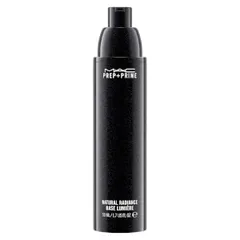
"MAC - Prep + Prime Natural Radiance" is effective for: Anti-inflammatory and Moisturizing
This product could be helpful for: Anti-oxidation, but its actives are not the most effective or are not well-studied.
Ingredient callouts
- Humectants (urea 0.30% - 0.55%, trehalose 0.30% - 0.55%, betaine 0.30% - 0.55%, sodium pca 0.30% - 0.55%, sodium hyaluronate 0.30% - 0.50%, glycerin 0.30% - 0.60%, urea 0.30% - 0.50%, trehalose 0.30% - 0.55%, sodium pca 0.30% - 0.55%, sodium hyaluronate 1.50% - 1.90%, glycerin 25.00% - 31.00% and betaine 0.30% - 0.50%). These ingredients help attract water to the upper layer of the skin and improve the skin hydration.
Price
The product retails from 53.00CA$ up to 68.94CA$ in Canada, for 199.24A$ in Australia, for 33.00$ in the United States and for 30.00£ in the United Kingdom.
For a detailed price comparison: click here.
Moisturizing
What does the product description say?
The formula controls shine, provides long-term hydration, and improves radiance while smoothing and softening the look of skin.
Source: Sephora CA
This product can help improve hydration of the skin with the two types of ingredients.
The first type is called “humectants”:
these ingredients help attract water.
When humectants are on the surface of the skin, they “pull in” the moisture from the outside environment, or from
within deeper layers of the skin. The following ingredients in this product do the job:
betaine, glycerin.
This product also contains ingredients called “occlusives”. They help reduce the speed with which our skin loses moisture to the outside environment. These ingredients also help soften the upper layer of the skin, so it feels less tight and nicer to the touch. The following ingredients in this product do the job: caprylic/capric triglyceride, squalane.
The following ingredients in this product are especially good for supporting the skin barrier and helping with the hydration level: urea
Naturally present in skin (urea makes up about 7% of natural moisturizing factors in skin). Attracts water to the upper layer of the skin. Also has a positive effect on the skin barrier beyond the humectant action. Can enhance penetration of other ingredients. Is an exfoliating ingredient when used in high concentrations
Helps attract water to the upper layer of the skin and improves the product texture
A good mix of fatty acids that forms a protective layer on the skin. Improves the shelf life of products. Derived from coconut and glycerin
An emollient that is naturally found in skin
One of the best moisturizing ingredients. Naturally present in skin. It attracts water to the upper layer of the skin working as a humectant
A mix of amino acids and plant-based lipids. Helps to soften the upper layer of the skin and reduce water loss over time
One of the best moisturizing ingredients. Attracts water into the upper layer of the skin
Naturally present in skin and helps to attract water to its upper layer
An oil naturally present in skin. Works as an emollient to soften the skin and form a protective layer on its surface without a greasy feeling.
A sugar that attracts water to the upper layer of the skin
Helps attract water to the upper layer of the skin and soften it
A plant extract that helps attract water to the upper layer of the skin and can help neutralize free radicals
A non-drying alcohol. Works as an emollient. Helps water and oil mix together and creates a nice product texture
Used to create a thicker product consistency and soften the upper layer of the skin
An emollient that helps create a nice silky finish on the skin
Used mostly for creating emulsions - helping oil and water mix together. Helps soften the upper layer of the skin
Used to create a nice product texture and help delivery of other ingredients. Might be somewhat helpful in attracting water to the upper layer of the skin
An emollient that softens the skin and forms a protective layer on its surface. Helps water and oil mix together
Used to improve the product consistency and soften the upper layer of the skin
A great moisturising ingredient that softens the skin and reduces water loss from its upper layer. It also can be helpful in protecting skin from free radicals
A seaweed extract that contains sugars and can be helpful in attracting water to the upper layers of the skin if used in high enough concentrations
Plant extract that might have moisturizing properties. Avoid if you suffer from wheat or gluten intolerance
Anti-oxidation
This product contains antioxidants (castanea sativa seed extract) that might be able to help neutralize free radicals in skin to lessen the damage it gets from the UV light (sun). There is not enough evidence to confirm their effectiveness in skin though.
A plant extract that helps attract water to the upper layer of the skin and can help neutralize free radicals
A more stable but less bio-available form of vitamin E compared to Tocopherol. Might help moisturize and protect the skin from free radicals, but mostly used in low concentrations to stabilize other ingredients.
A plant extract that can help neutralize free radicals in skin. It contains a compound salicin that can theoretically be converted into salicylic acid that, in turn, helps reduce inflammation in skin, but the evidence of effectiveness in skin is lacking and the extract is usually not used in a concentration that would enable an exfoliating effect
Might be helpful in neutralizing free radicals. Can have a dehydration effect that might somewhat decrease the look of puffy eyes
A mix of amino acids and plant-based lipids. Helps to soften the upper layer of the skin and reduce water loss over time
A likely irritant. Might have some anti-oxidant activity, but is mostly used as a fragrance in cosmetic products
Being a lipid soluble form of vitamin C, it is more stable than ascorbic acid, but still degrades quickly and needs to be stabilized in a formulation with another ingredient. It is claimed to penetrate skin better than pure vitamin C and have the the similar benefits, but solid studies of its effectiveness are lacking. Is likely to require a higher concentration in a product than pure vitamin C to be effective. It might be able to help reduce pore clogging.
Can help neutralize free radicals in skin. Preliminary studies show that it can be more effective than coenzyme Q10 but studies on effective concentration for topical applications are lacking
A plant extract that might have some anti-oxidant properties. Avoid if you are sensitive to gluten
Can be helpful in reducing inflammation in skin, including inflamed acne. It can be irritating
A great moisturising ingredient that softens the skin and reduces water loss from its upper layer. It also can be helpful in protecting skin from free radicals
Plant extract that might have moisturizing properties. Avoid if you suffer from wheat or gluten intolerance
Evens skin tone
What does the product description say?
Its blend of Chestnut extract, White Willow Bark extract and Salicylic Acid help resurface the skin, promoting more even skin texture with continued use.
Source: Lookfantastic
Effective ingredients missing or their concentration is too low
Being a lipid soluble form of vitamin C, it is more stable than ascorbic acid, but still degrades quickly and needs to be stabilized in a formulation with another ingredient. It is claimed to penetrate skin better than pure vitamin C and have the the similar benefits, but solid studies of its effectiveness are lacking. Is likely to require a higher concentration in a product than pure vitamin C to be effective. It might be able to help reduce pore clogging.
Used for skin exfoliation. It has an anti-inflammatory and anti-bacterial effect, helps to unclog pores, prevent blemishes and speed up healing of the existing ones. Sometimes referred to as a BHA (beta-hydroxy acid)
How honest is this product?
| Promise | Can it deliver? |
|---|---|
| Moisturizing | |
| Evens skin tone |
Total Promises Fulfilled score: 50/100.
We receive a small commission for purchases made through these links at no cost for you. Thank you for your support! Learn more
Potential irritants
Comedogenic ingredients
User reviews (0)
Averages from community submissions.
No reviews yet for this product.
Be the first to share your experience!
Tried this product?
Help capture what the ingredient list can't—texture, finish, pilling, scent, and more. Answer what you can, skip the rest.
Takes ~30 seconds.
Reviews are shown in aggregate. No personal details.
| Product | Similarity | Price | Irritancy |
|---|---|---|---|
 MAC Prep + Prime Natural Radiance | Current | ≈ $37.16 | |
 Murad Exfoliators Vita-C Triple Exfoliating Facial | 81% | ≈ $68.61 | |
 GLAMGLOW Superserum by Glamglow | 81% | ≈ $50.71 | |
 Ultraceuticals Ultra B2 Hydrating Serum | 79% | - | |
 BAD NORWEGIAN Revitalize Face | 79% | ≈ $91.13 | |
 Peter Thomas Roth Acne System | 78% | ≈ $31.55 |
Key Actives
Used for skin exfoliation. It has an anti-inflammatory and anti-bacterial effect, helps to unclog pores, prevent blemishes and speed up healing of the existing ones. Sometimes referred to as a BHA (beta-hydroxy acid)
Used for skin exfoliation. It has an anti-inflammatory and anti-bacterial effect, helps to unclog pores, prevent blemishes and speed up healing of the existing ones. Sometimes referred to as a BHA (beta-hydroxy acid)
Can be helpful in reducing inflammation in skin, including inflamed acne. It can be irritating
A great moisturising ingredient that softens the skin and reduces water loss from its upper layer. It also can be helpful in protecting skin from free radicals
Can be helpful in reducing inflammation in skin, including inflamed acne. It can be irritating
A great moisturising ingredient that softens the skin and reduces water loss from its upper layer. It also can be helpful in protecting skin from free radicals
A seaweed extract that contains sugars and can be helpful in attracting water to the upper layers of the skin if used in high enough concentrations
A plant extract that helps attract water to the upper layer of the skin and can help neutralize free radicals
Might be helpful in neutralizing free radicals. Can have a dehydration effect that might somewhat decrease the look of puffy eyes
An emollient that is naturally found in skin
A mix of amino acids and plant-based lipids. Helps to soften the upper layer of the skin and reduce water loss over time
Naturally present in skin (urea makes up about 7% of natural moisturizing factors in skin). Attracts water to the upper layer of the skin. Also has a positive effect on the skin barrier beyond the humectant action. Can enhance penetration of other ingredients. Is an exfoliating ingredient when used in high concentrations
A seaweed extract that contains sugars and can be helpful in attracting water to the upper layers of the skin if used in high enough concentrations
A plant extract that helps attract water to the upper layer of the skin and can help neutralize free radicals
Might be helpful in neutralizing free radicals. Can have a dehydration effect that might somewhat decrease the look of puffy eyes
An emollient that is naturally found in skin
A mix of amino acids and plant-based lipids. Helps to soften the upper layer of the skin and reduce water loss over time
Naturally present in skin (urea makes up about 7% of natural moisturizing factors in skin). Attracts water to the upper layer of the skin. Also has a positive effect on the skin barrier beyond the humectant action. Can enhance penetration of other ingredients. Is an exfoliating ingredient when used in high concentrations
One of the best moisturizing ingredients. Naturally present in skin. It attracts water to the upper layer of the skin working as a humectant
A good mix of fatty acids that forms a protective layer on the skin. Improves the shelf life of products. Derived from coconut and glycerin
One of the best moisturizing ingredients. Attracts water into the upper layer of the skin
An oil naturally present in skin. Works as an emollient to soften the skin and form a protective layer on its surface without a greasy feeling.
Naturally present in skin and helps to attract water to its upper layer
Helps attract water to the upper layer of the skin and improves the product texture
A sugar that attracts water to the upper layer of the skin
Can help neutralize free radicals in skin. Preliminary studies show that it can be more effective than coenzyme Q10 but studies on effective concentration for topical applications are lacking
Works as a UV filter when used in high concentrations. It is photostable and is effective mostly against the UVB light, with some protection in the UVA range. In small concentrations, used for its ability to improve the color of cosmetic products. Is usually well tolerated by the skin
One of the best moisturizing ingredients. Naturally present in skin. It attracts water to the upper layer of the skin working as a humectant
A good mix of fatty acids that forms a protective layer on the skin. Improves the shelf life of products. Derived from coconut and glycerin
One of the best moisturizing ingredients. Attracts water into the upper layer of the skin
An oil naturally present in skin. Works as an emollient to soften the skin and form a protective layer on its surface without a greasy feeling.
Naturally present in skin and helps to attract water to its upper layer
Helps attract water to the upper layer of the skin and improves the product texture
A sugar that attracts water to the upper layer of the skin
Can help neutralize free radicals in skin. Preliminary studies show that it can be more effective than coenzyme Q10 but studies on effective concentration for topical applications are lacking
Works as a UV filter when used in high concentrations. It is photostable and is effective mostly against the UVB light, with some protection in the UVA range. In small concentrations, used for its ability to improve the color of cosmetic products. Is usually well tolerated by the skin
Potential irritants
Can be helpful in reducing inflammation in skin, including inflamed acne. It can be irritating
A plant extract that can help neutralize free radicals in skin. It contains a compound salicin that can theoretically be converted into salicylic acid that, in turn, helps reduce inflammation in skin, but the evidence of effectiveness in skin is lacking and the extract is usually not used in a concentration that would enable an exfoliating effect
A likely irritant. Might have some anti-oxidant activity, but is mostly used as a fragrance in cosmetic products
Used for skin exfoliation. It has an anti-inflammatory and anti-bacterial effect, helps to unclog pores, prevent blemishes and speed up healing of the existing ones. Sometimes referred to as a BHA (beta-hydroxy acid)
Can be drying and contribute to skin irritation. Used in formulars to dissolve other ingredients, create a thinner product consistency or for its antibacterial properties
A good mix of fatty acids that forms a protective layer on the skin. Improves the shelf life of products. Derived from coconut and glycerin
Used to create a thicker product consistency and soften the upper layer of the skin
A more stable but less bio-available form of vitamin E compared to Tocopherol. Might help moisturize and protect the skin from free radicals, but mostly used in low concentrations to stabilize other ingredients.
A plant extract that might have some anti-oxidant properties. Avoid if you are sensitive to gluten
A plant extract that helps attract water to the upper layer of the skin and can help neutralize free radicals
A plant extract that might have an anti-inflammatory effect
Plant extract that might have moisturizing properties. Avoid if you suffer from wheat or gluten intolerance
Might be helpful in neutralizing free radicals. Can have a dehydration effect that might somewhat decrease the look of puffy eyes
Helps water and oil in the product mix well together and improves product texture
Maintains the texture of skincare products. Allows the product to spread evenly. Helps oil and water mix together
Helps mask the small of other ingredients and improve the product texture
Being a lipid soluble form of vitamin C, it is more stable than ascorbic acid, but still degrades quickly and needs to be stabilized in a formulation with another ingredient. It is claimed to penetrate skin better than pure vitamin C and have the the similar benefits, but solid studies of its effectiveness are lacking. Is likely to require a higher concentration in a product than pure vitamin C to be effective. It might be able to help reduce pore clogging.
Comedogenic ingredients
A non-drying alcohol. Works as an emollient. Helps water and oil mix together and creates a nice product texture
A seaweed extract that contains sugars and can be helpful in attracting water to the upper layers of the skin if used in high enough concentrations
Plant extract that might have moisturizing properties. Avoid if you suffer from wheat or gluten intolerance
A great moisturising ingredient that softens the skin and reduces water loss from its upper layer. It also can be helpful in protecting skin from free radicals
A non-drying alcohol. Works as an emollient. Helps water and oil mix together and creates a nice product texture
A seaweed extract that contains sugars and can be helpful in attracting water to the upper layers of the skin if used in high enough concentrations
Plant extract that might have moisturizing properties. Avoid if you suffer from wheat or gluten intolerance
A great moisturising ingredient that softens the skin and reduces water loss from its upper layer. It also can be helpful in protecting skin from free radicals
All ingredients
One of the best moisturizing ingredients. Naturally present in skin. It attracts water to the upper layer of the skin working as a humectant
A good mix of fatty acids that forms a protective layer on the skin. Improves the shelf life of products. Derived from coconut and glycerin
Used to improve the product consistency and soften the upper layer of the skin
Acts as a solvent for other ingredients. Speeds up the absorption of other ingredients into the skin
Used to create a thicker product consistency and soften the upper layer of the skin
A non-drying alcohol. Works as an emollient. Helps water and oil mix together and creates a nice product texture
A more stable but less bio-available form of vitamin E compared to Tocopherol. Might help moisturize and protect the skin from free radicals, but mostly used in low concentrations to stabilize other ingredients.
One of the best moisturizing ingredients. Attracts water into the upper layer of the skin
Used mostly for creating emulsions - helping oil and water mix together. Helps soften the upper layer of the skin
An oil naturally present in skin. Works as an emollient to soften the skin and form a protective layer on its surface without a greasy feeling.
A seaweed extract that contains sugars and can be helpful in attracting water to the upper layers of the skin if used in high enough concentrations
Can be helpful in reducing inflammation in skin, including inflamed acne. It can be irritating
A plant extract that might have some anti-oxidant properties. Avoid if you are sensitive to gluten
A plant extract that helps attract water to the upper layer of the skin and can help neutralize free radicals
A plant extract that might have an anti-inflammatory effect
A plant extract that can help neutralize free radicals in skin. It contains a compound salicin that can theoretically be converted into salicylic acid that, in turn, helps reduce inflammation in skin, but the evidence of effectiveness in skin is lacking and the extract is usually not used in a concentration that would enable an exfoliating effect
Plant extract that might have moisturizing properties. Avoid if you suffer from wheat or gluten intolerance
A likely irritant. Might have some anti-oxidant activity, but is mostly used as a fragrance in cosmetic products
A great moisturising ingredient that softens the skin and reduces water loss from its upper layer. It also can be helpful in protecting skin from free radicals
Might be helpful in neutralizing free radicals. Can have a dehydration effect that might somewhat decrease the look of puffy eyes
Naturally present in skin and helps to attract water to its upper layer
Helps attract water to the upper layer of the skin and improves the product texture
A mix of amino acids and plant-based lipids. Helps to soften the upper layer of the skin and reduce water loss over time
Helps attract water to the upper layer of the skin and soften it
Can help neutralize free radicals in skin. Preliminary studies show that it can be more effective than coenzyme Q10 but studies on effective concentration for topical applications are lacking
Helps water and oil in the product mix well together and improves product texture
Maintains the texture of skincare products. Allows the product to spread evenly. Helps oil and water mix together
An emollient that helps create a nice silky finish on the skin
Helps mask the small of other ingredients and improve the product texture
Increases thickness of a product. Texture enhancer for oil-in-water emulsions
Naturally present in skin (urea makes up about 7% of natural moisturizing factors in skin). Attracts water to the upper layer of the skin. Also has a positive effect on the skin barrier beyond the humectant action. Can enhance penetration of other ingredients. Is an exfoliating ingredient when used in high concentrations
Used to create a nice product texture and help delivery of other ingredients. Might be somewhat helpful in attracting water to the upper layer of the skin
An emollient that softens the skin and forms a protective layer on its surface. Helps water and oil mix together
Used for skin exfoliation. It has an anti-inflammatory and anti-bacterial effect, helps to unclog pores, prevent blemishes and speed up healing of the existing ones. Sometimes referred to as a BHA (beta-hydroxy acid)
Can be drying and contribute to skin irritation. Used in formulars to dissolve other ingredients, create a thinner product consistency or for its antibacterial properties
Being a lipid soluble form of vitamin C, it is more stable than ascorbic acid, but still degrades quickly and needs to be stabilized in a formulation with another ingredient. It is claimed to penetrate skin better than pure vitamin C and have the the similar benefits, but solid studies of its effectiveness are lacking. Is likely to require a higher concentration in a product than pure vitamin C to be effective. It might be able to help reduce pore clogging.
A preservative. It helps prevent bacterial growth in cosmetic products
Works as a UV filter when used in high concentrations. It is photostable and is effective mostly against the UVB light, with some protection in the UVA range. In small concentrations, used for its ability to improve the color of cosmetic products. Is usually well tolerated by the skin
One of the best moisturizing ingredients. Naturally present in skin. It attracts water to the upper layer of the skin working as a humectant
A good mix of fatty acids that forms a protective layer on the skin. Improves the shelf life of products. Derived from coconut and glycerin
Used to improve the product consistency and soften the upper layer of the skin
Acts as a solvent for other ingredients. Speeds up the absorption of other ingredients into the skin
Used to create a thicker product consistency and soften the upper layer of the skin
A non-drying alcohol. Works as an emollient. Helps water and oil mix together and creates a nice product texture
A more stable but less bio-available form of vitamin E compared to Tocopherol. Might help moisturize and protect the skin from free radicals, but mostly used in low concentrations to stabilize other ingredients.
One of the best moisturizing ingredients. Attracts water into the upper layer of the skin
Used mostly for creating emulsions - helping oil and water mix together. Helps soften the upper layer of the skin
An oil naturally present in skin. Works as an emollient to soften the skin and form a protective layer on its surface without a greasy feeling.
A seaweed extract that contains sugars and can be helpful in attracting water to the upper layers of the skin if used in high enough concentrations
Can be helpful in reducing inflammation in skin, including inflamed acne. It can be irritating
A plant extract that might have some anti-oxidant properties. Avoid if you are sensitive to gluten
A plant extract that helps attract water to the upper layer of the skin and can help neutralize free radicals
A plant extract that might have an anti-inflammatory effect
A plant extract that can help neutralize free radicals in skin. It contains a compound salicin that can theoretically be converted into salicylic acid that, in turn, helps reduce inflammation in skin, but the evidence of effectiveness in skin is lacking and the extract is usually not used in a concentration that would enable an exfoliating effect
Plant extract that might have moisturizing properties. Avoid if you suffer from wheat or gluten intolerance
A likely irritant. Might have some anti-oxidant activity, but is mostly used as a fragrance in cosmetic products
A great moisturising ingredient that softens the skin and reduces water loss from its upper layer. It also can be helpful in protecting skin from free radicals
Might be helpful in neutralizing free radicals. Can have a dehydration effect that might somewhat decrease the look of puffy eyes
Naturally present in skin and helps to attract water to its upper layer
Helps attract water to the upper layer of the skin and improves the product texture
A mix of amino acids and plant-based lipids. Helps to soften the upper layer of the skin and reduce water loss over time
Helps attract water to the upper layer of the skin and soften it
Can help neutralize free radicals in skin. Preliminary studies show that it can be more effective than coenzyme Q10 but studies on effective concentration for topical applications are lacking
Helps water and oil in the product mix well together and improves product texture
Maintains the texture of skincare products. Allows the product to spread evenly. Helps oil and water mix together
Helps mask the small of other ingredients and improve the product texture
An emollient that helps create a nice silky finish on the skin
Increases thickness of a product. Texture enhancer for oil-in-water emulsions
Naturally present in skin (urea makes up about 7% of natural moisturizing factors in skin). Attracts water to the upper layer of the skin. Also has a positive effect on the skin barrier beyond the humectant action. Can enhance penetration of other ingredients. Is an exfoliating ingredient when used in high concentrations
Used to create a nice product texture and help delivery of other ingredients. Might be somewhat helpful in attracting water to the upper layer of the skin
An emollient that softens the skin and forms a protective layer on its surface. Helps water and oil mix together
Used for skin exfoliation. It has an anti-inflammatory and anti-bacterial effect, helps to unclog pores, prevent blemishes and speed up healing of the existing ones. Sometimes referred to as a BHA (beta-hydroxy acid)
Can be drying and contribute to skin irritation. Used in formulars to dissolve other ingredients, create a thinner product consistency or for its antibacterial properties
Being a lipid soluble form of vitamin C, it is more stable than ascorbic acid, but still degrades quickly and needs to be stabilized in a formulation with another ingredient. It is claimed to penetrate skin better than pure vitamin C and have the the similar benefits, but solid studies of its effectiveness are lacking. Is likely to require a higher concentration in a product than pure vitamin C to be effective. It might be able to help reduce pore clogging.
A preservative. It helps prevent bacterial growth in cosmetic products
Creates an illusion of smoother and more radiant skin tone. Adds shimmer to the skin by reflecting light
Works as a UV filter when used in high concentrations. It is photostable and is effective mostly against the UVB light, with some protection in the UVA range. In small concentrations, used for its ability to improve the color of cosmetic products. Is usually well tolerated by the skin
Ingredient list view
Unknown, Glycerin, Caprylic/capric triglyceride, Hydrogenated polyisobutene, Propanediol, Tridecyl trimellitate, Cetearyl alcohol, Tocopheryl acetate, Sodium hyaluronate, Lecithin, Squalane, Laminaria saccharina extract, Rosmarinus officinalis leaf extract, Hordeum distichon extract, Hordeum vulgare extract, Castanea sativa seed extract, Phellodendron amurense bark extract, Salix alba bark extract, Triticum vulgare germ extract, Citrus reticulata peel extract, Butyrospermum parkii butter, Ethylhexylglycerin, Caffeine, Cholesterol, Sodium pca, Betaine, Trehalose, Phytosteryl/octyldodecyl lauroyl glutamate, Methyl gluceth-20, Neopentyl glycol diethylhexanoate, Butyl avocadate, Potassium palmitoyl hydrolyzed wheat protein, Ergothioneine, Cetearyl glucoside, Acrylates/c10-30 alkyl acrylate crosspolymer, Silica, Polyquaternium-51, Acacia senegal gum, Potassium hydroxide, Ammonium acryloyldimethyltaurate/vp copolymer, Hdi/ppg/polycaprolactone crosspolymer, Urea, Calcium aluminum borosilicate, Butylene glycol, Glyceryl stearate, Salicylic acid, Alcohol, Disodium edta, Tetrahexyldecyl ascorbate, Phenoxyethanol, Potassium sorbate, Titanium dioxide, Ci 77891, Ci 14700, Ci 15985, Ci 19140, Glycerin, Caprylic/capric triglyceride, Hydrogenated polyisobutene, Propanediol, Tridecyl trimellitate, Cetearyl alcohol, Tocopheryl acetate, Sodium hyaluronate, Lecithin, Squalane, Laminaria saccharina extract, Rosmarinus officinalis leaf extract, Hordeum distichon extract, Hordeum vulgare extract, Castanea sativa seed extract, Phellodendron amurense bark extract, Salix alba bark extract, Triticum vulgare germ extract, Citrus reticulata peel extract, Butyrospermum parkii butter, Ethylhexylglycerin, Caffeine, Cholesterol, Sodium pca, Betaine, Trehalose, Phytosteryl/octyldodecyl lauroyl glutamate, Methyl gluceth-20, Neopentyl glycol diethylhexanoate, Butyl avocadate, Potassium palmitoyl hydrolyzed wheat protein, Ergothioneine, Cetearyl glucoside, Acrylates/c10-30 alkyl acrylate crosspolymer, Silica, Acacia senegal gum, Polyquaternium-51, Potassium hydroxide, Ammonium acryloyldimethyltaurate/vp copolymer, Hdi/ppg/polycaprolactone crosspolymer, Urea, Butylene glycol, Glyceryl stearate, Salicylic acid, Alcohol, Disodium edta, Tetrahexyldecyl ascorbate, Phenoxyethanol, Potassium sorbate, Mica, Titanium dioxide, Ci 77891, Ci 19140, Ci 15985
- Glycerol and the skin: holistic approach to its origin and functions
- Final report of the cosmetic ingredient review expert panel on the safety assessment of Polyisobutene and Hydrogenated Polyisobutene as used in cosmetics
- Hyaluronic acid: A key molecule in skin aging
- Hyaluronan (Hyaluronic Acid): a natural moisturizer for skin care
- Safety Assessment of Brown Algae-Derived Ingredients as Used in Cosmetics
- The effect of laminaria saccharina extract on suppressing pigmentation in in-vitro system
- Allergic contact dermatitis induced by rosemary leaf extract in a cleansing gel
- Safety Assessment of Rosmarinus officinalis (Rosemary)-Derived Ingredients as Used in Cosmetics
- Rosmarinus officinalis Extract Suppresses Propionibacterium acnes–Induced Inflammatory Responses
- Celiac Disease & Skin Care Products
- Preventive and Therapeutic Role of Functional Ingredients of Barley Grass for Chronic Diseases in Human Beings
- Chestnut extract
- Phellodendron amurense Bark Extract
- Synergistic topical application of salt-processed Phellodendron amurense and Sanguisorba officinalis Linne alleviates atopic dermatitis symptoms by reducing levels of immunoglobulin E and pro-inflammatory cytokines in NC/Nga mice
- Efficacy and Safety of White Willow Bark (Salix alba) Extract
- An evaluation of the effect of a topical product containing salicin on the visible signs of human skin aging
- Wheat in skin care
- A comparison of the relative antioxidant potency of L‐ergothioneine and idebenone
- l-Ergothioneine Protects Skin Cells against UV-Induced Damage—A Preliminary Study
- Topical urea in skincare: A review
- Safety Assessment of Borosilicate Glasses as Used in Cosmetics
- Salicylic acid as a peeling agent: a comprehensive review
- Beta Hydroxy Acids
- A review of toxicity from topical salicylic acid preparations
- Glycolic Acid Peels Versus Salicylic–Mandelic Acid Peels in Active Acne Vulgaris and Post‐Acne Scarring and Hyperpigmentation: A Comparative Study
- Double-blind, half-face study comparing topical vitamin C and vehicle for rejuvenation of photodamage
- Application of tetra-isopalmitoyl ascorbic acid in cosmetic formulations: Stability studies and in vivo efficacy
- Analysis of Dyes in Cosmetics: Challenges and Recent Developments