Works for:
based on ingredients and %- Moisturizing
- Anti-oxidation
- Evens skin tone
- Anti-aging
Can it cause trouble?
- Irritation risk: high
- Comedogenic risk ingredients: 7
Key actives
Anti-aging
This product can help reduce and prevent fine lines and wrinkles, improve skin elasticity and firmness because it contains acetyl glucosamine.
These ingredients in the product can also be helpful, even though there is less evidence for their effectiveness: vitis vinifera seed extract.
Keep in mind that it typically takes at least 6 weeks to notice any results because the changes that are needed to improve fine lines and elasticity happen in the deeper layers of the skin. No topical anti-aging product can “erase” wrinkles or fully reverse signs of aging.
An effective moisturizing ingredient that also has been shown to be effective in evening out the skin tone and reducing hyperpigmentation. It can help somewhat reduce wrinkles in skin
A plant extract that contains resveratrol and other anti-oxidant compounds that can help neutralize free radicals, reduce inflammation in skin and even out its tone. Can be also used to stabilize the product formulation
Plant extract that helps the skin to attract water and make it more smooth for touch. Also shows promise of anti-aging properties, but research is not extensive yet
Anti-oxidation
This product contains antioxidants (ethylbisiminomethylguaiacol manganese chloride, vitis vinifera seed extract) that can help neutralize free radicals in skin. By doing so, they can lessen the damage the skin gets from the UV light (sun).
A plant extract that contains resveratrol and other anti-oxidant compounds that can help neutralize free radicals, reduce inflammation in skin and even out its tone. Can be also used to stabilize the product formulation
A potent anti-oxidant that can help neutralize free radicals in skin and protect from harmful effects of sun exposure, even though more studies are needed to confirm its effectiveness in topical applications
Red seaweed extract. Can help attract water to the upper layer of the skin and might have some antioxidant effect
A more stable but less bio-available form of vitamin E compared to Tocopherol. Might help moisturize and protect the skin from free radicals, but mostly used in low concentrations to stabilize other ingredients.
Brown seaweed extract. Can help attract water to the upper layer of the skin and might have some antioxidant effect
An algae extract that can help attract water to the upper layer of the skin and have some anti-oxidant properties
A likely irritant. Might have some anti-oxidant activity, but is mostly used as a fragrance in cosmetic products
Helps attract water to the upper layer of the skin and might have some anti-oxidant and skin lightening properties. It can help calm down inflammation in skin
A plant extract that can contain resveratrol, an antioxidant that can help neutralize free radicals in skin. The effectiveness depends on the extract quality and concentration in the product
A plant extract that might have some anti-oxidant properties. Avoid if you are sensitive to gluten
Plant extract that might have moisturizing properties. Avoid if you suffer from wheat or gluten intolerance
Evens skin tone
What does the product description say?
The ultra-creamy formula envelopes skin with a delicate blend of Kukui Seed Oil and Algae extracts, which work in tandem to deeply moisturise and nourish while helping to alleviate the look of redness and blotchiness caused by broken capillaries for a more even and uniform tone.
Source: Lookfantastic
This product can help reduce hypepigmentation and even out the skin tone because it contains the following effective ingredients: acetyl glucosamine
Keep in mind that you would need to apply any topical skincare targetted at hypigmentation consistently for a couple of months to get a result. No topical skincare product can help get rid of hyperpigmentation (including post-acne marks and age spots) instantly.
An effective moisturizing ingredient that also has been shown to be effective in evening out the skin tone and reducing hyperpigmentation. It can help somewhat reduce wrinkles in skin
Helps attract water to the upper layer of the skin and might have some anti-oxidant and skin lightening properties. It can help calm down inflammation in skin
Moisturizing
What does the product description say?
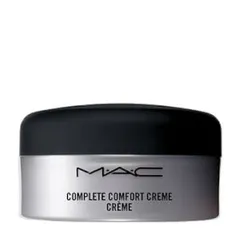
The MAC Complete Comfort Crème is a sumptuous, plant-based moisturiser that seeks to instantly soothe irritated skin and provide ongoing relief from redness and discomfort.
Source: Lookfantastic
This product can help improve hydration of the skin with the two types of ingredients.
The first type is called “humectants”:
these ingredients help attract water.
When humectants are on the surface of the skin, they “pull in” the moisture from the outside environment, or from
within deeper layers of the skin. The following ingredients in this product do the job:
algae extract, glycine.
This product also contains ingredients called “occlusives”. They help reduce the speed with which our skin loses moisture to the outside environment. These ingredients also help soften the upper layer of the skin, so it feels less tight and nicer to the touch. The following ingredients in this product do the job: dimethicone, myristyl myristate.
The following ingredients in this product are especially good for supporting the skin barrier and helping with the hydration level: acetyl glucosamine, phytosphingosine
Helps to attract water to the upper layer of the skin and can help restore the skin barrier function
An algae extract that can help attract water to the upper layer of the skin and have some anti-oxidant properties
An oil naturally present in skin. Works as an emollient to soften the skin and form a protective layer on its surface without a greasy feeling.
An effective moisturizing ingredient that also has been shown to be effective in evening out the skin tone and reducing hyperpigmentation. It can help somewhat reduce wrinkles in skin
Helps soften the upper layer of the skin
Plant extract that helps the skin to attract water and make it more smooth for touch. Also shows promise of anti-aging properties, but research is not extensive yet
Brown seaweed extract. Can help attract water to the upper layer of the skin and might have some antioxidant effect
Red seaweed extract. Can help attract water to the upper layer of the skin and might have some antioxidant effect
Helps soften the upper layer of the skin. Could be comedogenic due to the myrisic acid content
One of the best moisturizing ingredients. Attracts water into the upper layer of the skin
A type of lipid that is naturally present in skin. It might help in repairing skin barrier function and has anti-bacterial effect
A silicone that works to soften the upper layer of the skin and reduce its water loss
An emollient. Is not recommended for acne-prone skin as it can be comedogenic
Can help attract water to the upper layer of the skin. In crystal form, it can work as a gentle exfoliant, gentler than the salt scrub. Helps stabilize the emulsion
A silicone that helps to reduce water loss from the surface of the skin. Can temporarily "fill in" lines and wrinkles, absorb oil, and create a nice product finish
An emollient that helps soften the skin and calm down inflammation
An emollient that helps soften the skin and create a nice product texture
Helps soften upper layer of the skin and can enhance penetration of other ingredients into the upper layer of the skin
Can help attract water to the upper layer of the skin. Avoid if sensitive to gluten
Might help to attract water to the upper layer of the skin
Helps attract water to the upper layer of the skin and improves the product texture
Used to create a nice product texture and help delivery of other ingredients. Might be somewhat helpful in attracting water to the upper layer of the skin
Non-drying alcohol that helps water and oil mix together. Also serves as an emollient
An emollient that softens the skin and forms a protective layer on its surface. Helps water and oil mix together
Forms a protective film on the surface of the skin to prevent moisture loss. Gives a velvety feel to products while reducing tackiness
Used mostly for creating emulsions - helping oil and water mix together. Helps soften the upper layer of the skin
Helps soften the upper layer of the skin and improve the product consistency
Helps preserve products and creates a nice product texture
Helps to soften the upper layer of the skin
Helps to stabilize the product formulation while softening the upper layer of the skin. Can be irritating
Helps attract water to the upper layer of the skin and might have some anti-oxidant and skin lightening properties. It can help calm down inflammation in skin
Plant extract that might have moisturizing properties. Avoid if you suffer from wheat or gluten intolerance
How honest is this product?
| Promise | Can it deliver? |
|---|---|
| Moisturizing |
Total Promises Fulfilled score: 100/100.
We receive a small commission for purchases made through these links at no cost for you. Thank you for your support! Learn more
Affiliate link · supports WIMJ at no cost to you
Potential irritants
Comedogenic ingredients
User reviews (0)
Averages from community submissions.
No reviews yet for this product.
Be the first to share your experience!
Tried this product?
Help capture what the ingredient list can't—texture, finish, pilling, scent, and more. Answer what you can, skip the rest.
Takes ~30 seconds.
Reviews are shown in aggregate. No personal details.
| Product | Similarity | Price | Irritancy |
|---|---|---|---|
 MAC Complete Comfort Crème | Current | ≈ $34.84 | |
 AHC Brilliant Gold Cream | 56% | - | |
 Darphin Moisturisers Stimulskin Plus Absolute Renewal Cream | 52% | - | |
 Bobbi Brown Hydrating Face Cream | 52% | ≈ $24.92 | |
 Lab Series Skincare for Men Age Rescue+ Water-Charged Gel Cream | 51% | - | |
 Lab Series For Men Age Rescue Water-Charged Gel Cream | 51% | - |
Key Actives
Helps attract water to the upper layer of the skin and might have some anti-oxidant and skin lightening properties. It can help calm down inflammation in skin
A plant extract that contains resveratrol and other anti-oxidant compounds that can help neutralize free radicals, reduce inflammation in skin and even out its tone. Can be also used to stabilize the product formulation
An effective moisturizing ingredient that also has been shown to be effective in evening out the skin tone and reducing hyperpigmentation. It can help somewhat reduce wrinkles in skin
An emollient that helps soften the skin and calm down inflammation
A type of lipid that is naturally present in skin. It might help in repairing skin barrier function and has anti-bacterial effect
A silicone that helps to reduce water loss from the surface of the skin. Can temporarily "fill in" lines and wrinkles, absorb oil, and create a nice product finish
An algae extract that can help attract water to the upper layer of the skin and have some anti-oxidant properties
Plant extract that helps the skin to attract water and make it more smooth for touch. Also shows promise of anti-aging properties, but research is not extensive yet
Red seaweed extract. Can help attract water to the upper layer of the skin and might have some antioxidant effect
Brown seaweed extract. Can help attract water to the upper layer of the skin and might have some antioxidant effect
An emollient. Is not recommended for acne-prone skin as it can be comedogenic
Helps soften the upper layer of the skin
One of the best moisturizing ingredients. Attracts water into the upper layer of the skin
An oil naturally present in skin. Works as an emollient to soften the skin and form a protective layer on its surface without a greasy feeling.
Helps soften the upper layer of the skin. Could be comedogenic due to the myrisic acid content
A silicone that works to soften the upper layer of the skin and reduce its water loss
Helps to attract water to the upper layer of the skin and can help restore the skin barrier function
Can help attract water to the upper layer of the skin. In crystal form, it can work as a gentle exfoliant, gentler than the salt scrub. Helps stabilize the emulsion
A potent anti-oxidant that can help neutralize free radicals in skin and protect from harmful effects of sun exposure, even though more studies are needed to confirm its effectiveness in topical applications
Potential irritants
An algae extract that can help attract water to the upper layer of the skin and have some anti-oxidant properties
Hops extract. Can contain common irritants and allergens geraniol, limonene, linalool
A plant extract that can contain an active compound curcumin, that may have some anti-inflammatory properties when applied to the skin, but solid research is lacking and the typical concentration used in skincare products is too low. Can be an irritant
A likely irritant. Might have some anti-oxidant activity, but is mostly used as a fragrance in cosmetic products
Helps to stabilize the product formulation while softening the upper layer of the skin. Can be irritating
An aromatic blend of unspecified and possibly irritating ingredients
An emollient. Is not recommended for acne-prone skin as it can be comedogenic
A more stable but less bio-available form of vitamin E compared to Tocopherol. Might help moisturize and protect the skin from free radicals, but mostly used in low concentrations to stabilize other ingredients.
Helps soften the upper layer of the skin. Could be comedogenic due to the myrisic acid content
A plant extract that might have some anti-oxidant properties. Avoid if you are sensitive to gluten
A plant extract that can contain resveratrol, an antioxidant that can help neutralize free radicals in skin. The effectiveness depends on the extract quality and concentration in the product
Plant extract that might have moisturizing properties. Avoid if you suffer from wheat or gluten intolerance
Can help attract water to the upper layer of the skin. Avoid if sensitive to gluten
Helps preserve products and creates a nice product texture
An emollient that helps soften the skin and calm down inflammation
Used to stabilize the formula of product formulation. Might be helpful in neutralizing free radicals in skin
A potent anti-oxidant that can help neutralize free radicals in skin and protect from harmful effects of sun exposure, even though more studies are needed to confirm its effectiveness in topical applications
Comedogenic ingredients
An emollient that helps soften the skin and create a nice product texture
An emollient. Is not recommended for acne-prone skin as it can be comedogenic
Might help to attract water to the upper layer of the skin
Plant extract that helps the skin to attract water and make it more smooth for touch. Also shows promise of anti-aging properties, but research is not extensive yet
Plant extract that might have moisturizing properties. Avoid if you suffer from wheat or gluten intolerance
All ingredients
Used to create a nice product texture and help delivery of other ingredients. Might be somewhat helpful in attracting water to the upper layer of the skin
A silicone that helps to reduce water loss from the surface of the skin. Can temporarily "fill in" lines and wrinkles, absorb oil, and create a nice product finish
Helps soften upper layer of the skin and can enhance penetration of other ingredients into the upper layer of the skin
Helps to soften the upper layer of the skin
An emollient that helps soften the skin and create a nice product texture
An emollient. Is not recommended for acne-prone skin as it can be comedogenic
Forms a protective film on the surface of the skin to prevent moisture loss. Gives a velvety feel to products while reducing tackiness
A more stable but less bio-available form of vitamin E compared to Tocopherol. Might help moisturize and protect the skin from free radicals, but mostly used in low concentrations to stabilize other ingredients.
One of the best moisturizing ingredients. Attracts water into the upper layer of the skin
Used mostly for creating emulsions - helping oil and water mix together. Helps soften the upper layer of the skin
An oil naturally present in skin. Works as an emollient to soften the skin and form a protective layer on its surface without a greasy feeling.
Might help to attract water to the upper layer of the skin
An algae extract that can help attract water to the upper layer of the skin and have some anti-oxidant properties
Plant extract that helps the skin to attract water and make it more smooth for touch. Also shows promise of anti-aging properties, but research is not extensive yet
Helps soften the upper layer of the skin. Could be comedogenic due to the myrisic acid content
A plant extract that contains resveratrol and other anti-oxidant compounds that can help neutralize free radicals, reduce inflammation in skin and even out its tone. Can be also used to stabilize the product formulation
A plant extract that might have some anti-oxidant properties. Avoid if you are sensitive to gluten
A plant extract that can contain resveratrol, an antioxidant that can help neutralize free radicals in skin. The effectiveness depends on the extract quality and concentration in the product
Hops extract. Can contain common irritants and allergens geraniol, limonene, linalool
Plant extract that might have moisturizing properties. Avoid if you suffer from wheat or gluten intolerance
A plant extract that can contain an active compound curcumin, that may have some anti-inflammatory properties when applied to the skin, but solid research is lacking and the typical concentration used in skincare products is too low. Can be an irritant
A likely irritant. Might have some anti-oxidant activity, but is mostly used as a fragrance in cosmetic products
Red seaweed extract. Can help attract water to the upper layer of the skin and might have some antioxidant effect
Helps attract water to the upper layer of the skin and might have some anti-oxidant and skin lightening properties. It can help calm down inflammation in skin
Brown seaweed extract. Can help attract water to the upper layer of the skin and might have some antioxidant effect
Can help attract water to the upper layer of the skin. Avoid if sensitive to gluten
An effective moisturizing ingredient that also has been shown to be effective in evening out the skin tone and reducing hyperpigmentation. It can help somewhat reduce wrinkles in skin
Helps soften the upper layer of the skin and improve the product consistency
A silicone that works to soften the upper layer of the skin and reduce its water loss
Helps attract water to the upper layer of the skin and improves the product texture
A type of lipid that is naturally present in skin. It might help in repairing skin barrier function and has anti-bacterial effect
Helps preserve products and creates a nice product texture
Helps to attract water to the upper layer of the skin and can help restore the skin barrier function
Can help attract water to the upper layer of the skin. In crystal form, it can work as a gentle exfoliant, gentler than the salt scrub. Helps stabilize the emulsion
A type of sugar that is used to support delivery of active ingredients and can enhance their penetration into the skin without disrupting the skin's barrier
Helps create a thicker or gel-like product texture. It is not a surfactant but can be used in gentle cleansing formulations
An emollient that helps soften the skin and calm down inflammation
Used to stabilize the formula of product formulation. Might be helpful in neutralizing free radicals in skin
An emollient that softens the skin and forms a protective layer on its surface. Helps water and oil mix together
Helps oil and water mix togehter and creates a nice product texture
Non-drying alcohol that helps water and oil mix together. Also serves as an emollient
Helps to stabilize the product formulation while softening the upper layer of the skin. Can be irritating
An aromatic blend of unspecified and possibly irritating ingredients
A potent anti-oxidant that can help neutralize free radicals in skin and protect from harmful effects of sun exposure, even though more studies are needed to confirm its effectiveness in topical applications
A preservative. It helps prevent bacterial growth in cosmetic products
An umbrella term for the following three colorants: CI 77491, CI 77492, CI 77499. They might be able to offer some protection against visible light, but the degree of the protection is not clear
Ingredient list view
Butylene glycol, Dimethicone, Cetyl esters, Caprylic/capric/myristic/stearic triglyceride, Ethylhexyl palmitate, Myristyl myristate, Aleurites moluccanus seed oil, Polyperfluoromethylisopropyl ether, Isononyl isononanoate, Tocopheryl acetate, Sodium hyaluronate, Lecithin, Squalane, Hypnea musciformis extract, Gelidiella acerosa extract, Algae extract, Cola nitida seed extract, Astrocaryum murumuru seed butter, Vitis vinifera seed extract, Rosmarinus officinalis extract, Selaginella tamariscina extract, Hordeum vulgare extract, Polygonum cuspidatum root extract, Humulus lupulus extract, Macrocystis pyrifera extract, Triticum vulgare germ extract, Curcuma longa root extract, Citrus reticulata peel extract, Punica granatum juice extract, Asparagopsis armata extract, Yeast extract, Ascophyllum nodosum extract, Hydrolyzed wheat protein, Acetyl glucosamine, Myristyl laurate, Ethylhexyl isononanoate, Peg-10 dimethicone, Sorbitol, Propylene glycol laurate, Phytosphingosine, Caprylyl glycol, Hexylene glycol, Glycine, Sucrose, Cyclodextrin, Carbomer, Acrylamides copolymer, Sodium stearoyl lactylate, Polysorbate 20, Sorbitan laurate, Linolenic acid, Nordihydroguaiaretic acid, Polyglyceryl-10 pentastearate, Glyceryl stearate, Peg-100 stearate, Behenyl alcohol, Propylene glycol stearate, Sodium hydroxide, Myristyl alcohol, Parfum, Ethylbisiminomethylguaiacol manganese chloride, Disodium edta, Phenoxyethanol, Iron oxides
- Dimethicone as a protective ingredient in topical medications
- Final Report on the Safety Assessment of Dimethicone Copolyol
- Comparison of skin calming effects of cosmetic products containing 4-t-butylcyclohexanol or acetyl dipeptide-1 cetyl ester on capsaicin-induced facial stinging in volunteers with sensitive skin
- Amended Safety Assessment of Alkyl Esters as Used in Cosmetics
- Amended Safety Assessment of Triglycerides as Used in Cosmeti
- Hyaluronic acid: A key molecule in skin aging
- Hyaluronan (Hyaluronic Acid): a natural moisturizer for skin care
- Marine Bioactive Compounds and Their Health Benefits: A Review
- Antioxidant Capacity and Lipophilic Content of Seaweeds Collected from the Qingdao Coastline
- AMAZON RAINFOREST COSMETICS: CHEMICAL APPROACH FOR QUALITY CONTROL
- Safety Assessment of Vitis Vinifera (Grape)-Derived Ingredients as Used in Cosmetics
- The Topical Effect of Grape Seed Extract 2% Cream on Surgery Wound Healing
- Review of the Pharmacological Effects of Vitis vinifera (Grape) and its Bioactive Constituents: An Update
- Celiac Disease & Skin Care Products
- Preventive and Therapeutic Role of Functional Ingredients of Barley Grass for Chronic Diseases in Human Beings
- Nuclear Factor Kappa B Inhibition as a Therapeutic Target of Nutraceuticals in Arthritis, Osteoarthritis, and Related Inflammation
- Resveratrol as an active ingredient for cosmetic and dermatological applications: a review
- Wheat in skin care
- Vaughn, A. R., Branum, A., & Sivamani, R. K. (2016). Effects of Turmeric (Curcuma longa) on Skin Health: A Systematic Review of the Clinical Evidence. Phytotherapy Research, 30(8), 1243–1264. doi:10.1002/ptr.5640
- The natural yeast extract isolated by ethanol precipitation inhibits melanin synthesis by modulating tyrosinase activity and downregulating melanosome transfer
- Evaluation of dermatological effects of cosmetic formulations containing Saccharomyces cerevisiae extract and vitamins
- The effect of N-acetyl-glucosamine on stratum corneum desquamation and water content in human skin
- Glucosamine: an ingredient with skin and other benefits
- Genomic expression changes induced by topical N-acetyl glucosamine in skin equivalent cultures in vitro
- Incorporation of D-(^H)glucosamine into normal and psoriatic epidermal glycoconjugates
- Reduction in the appearance of facial hyperpigmentation by topical N-acetyl glucosamine
- Amended Safety Assessment of Alkyl Esters as Used in Cosmetics
- Effect of Topical Application of Glycine and Proline on Recalcitrant Leg Ulcers of Prolidase Deficiency
- Functional glycine receptor in cultured human keratinocytes
- Cyclodextrins: new drug delivery systems in dermatology
- Nordihydroguaiaretic acid, an inhibitor of lipoxygenase, also inhibits cytochrome P-450-mediated monooxygenase activity in rat epidermal and hepatic microsomes.
- Antimutagenic and antitumorigenic activities of nordihydroguaiaretic acid
- Estrogenic activity of an antioxidant, nordihydroguaiaretic acid (NDGA)
- Molecular mechanisms and clinical applications of nordihydroguaiaretic acid (NDGA) and its derivatives: An update
- Cosmetic allergy from myristyl alcohol
- Contact Sensitization to Emulsifying Agents: An Underrated Issue?
- Patch testing with myristyl alcohol
- A Synthetic Superoxide Dismutase/Catalase Mimetic (EUK-134) Inhibits Membrane-Damage-Induced Activation of Mitogen-Activated Protein Kinase Pathways and Reduces p53 Accumulation in Ultraviolet B-Exposed Primary Human Keratinocytes
- Use of the synthetic superoxide dismutase/catalase mimetic EUK-134 to compensate for seasonal antioxidant deficiency by reducing pre-existing lipid peroxides at the human skin surface
- A synthetic superoxide dismutase/catalase mimetic EUK-207 mitigates radiation dermatitis and promotes wound healing in irradiated rat skin