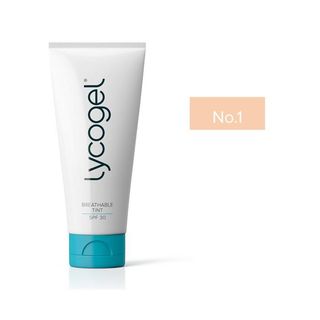
Lycogel Breathable Tint SPF 30 No.1
Works for
1 of 1 advertised claim delivered
Sun protectionSPF 30 · 2 UV filtersBroad spectrum
This product offers a good level of protection against both UVB and UVA rays.
It is a mineral sunscreen. In other words, it contains non-organic UV filters. It will probably not sting your eyes but might leave a white cast.
This product can be considered "reef safe" because it does not contain the UV filters (oxybenzone and octinoxate) that can be harmful to coral reefs when present in the water in high concentrations.
MoisturizingNot advertised by the brand · 19 ingredients credited for this claimStrong support
This product can help improve hydration of the skin with the two types of ingredients.
The first type is called “humectants”:
these ingredients help attract water.
When humectants are on the surface of the skin, they “pull in” the moisture from the outside environment, or from
within deeper layers of the skin. The following ingredients in this product do the job:
algae extract, glycerin.
This product also contains ingredients called “occlusives”. They help reduce the speed with which our skin loses moisture to the outside environment. These ingredients also help soften the upper layer of the skin, so it feels less tight and nicer to the touch. The following ingredients in this product do the job: dimethicone, squalane.
The following ingredients in this product are especially good for supporting the skin barrier and helping with the hydration level: acetyl tetrapeptide-15
Evens skin toneNot advertised by the brand · 1 ingredient credited for this claimStrong support
This product offers broad spectrum sun protection. It means that it can prevent hyperpigmentation and help keep the skin tone even (sun damage is the main factor causing age spots, darkening of post-acne marks and other discolorations).
Anti-agingNot advertised by the brand · 7 ingredients credited for this claimStrong support
This product can help prevent early signs of skin aging because it offers a good level of broad spectrum sun protection. Sun damage is the main cause of premature skin aging, and protecting your skin from the sun is the best anti-aging strategy.
These ingredients in the product might also be helpful for reducing and preventing fine lines, wrinkles, and skin elasticity, even though there is no conclusive evidence for their effectiveness: acetyl tetrapeptide-15, centella asiatica extract, retinyl palmitate.
Anti-oxidationNot advertised by the brand · 7 ingredients credited for this claimModerate support
This product contains antioxidants (centella asiatica extract) that might be able to help neutralize free radicals in skin to lessen the damage it gets from the UV light (sun). There is not enough evidence to confirm their effectiveness in skin though.
Can it cause trouble?
Irritancy3 strong irritants: Santalum album extract, Artemisia vulgaris extract + 1 more — patch-test recommendedHigh risk
Comedogenic1 ingredient rated 2 or more on the 0–5 pore-clogging scale1 flagged
User reviews
Be the first — your take helps the next person decide.
Ingredients
Filter by role to see what each ingredient is doing.
Zinc oxide8.6%
- Irritation risk
- Low
A broad spectrum sunblock (protects from both UVA and UVB rays). Is suitable for most sensitive skins. In small concentrations, can be used as a colorant
More about Zinc oxideCyclopentasiloxane~24–35%
- Irritation risk
- Low
A silicone that helps improve the product texture and spreadability. Can absorb oil creating a short-term mattifying effect on the skin
More about CyclopentasiloxaneWater~7.6–11.4%
Dimethicone~4.2–6.2%
- Irritation risk
- Low
A silicone that helps to reduce water loss from the surface of the skin. Can temporarily "fill in" lines and wrinkles, absorb oil, and create a nice product finish
More about DimethiconePolyglyceryl-3 polydimethylsiloxyethyl dimethicone~3–4.5%
- Irritation risk
- Low
Dimethicone/peg-10/15 crosspolymer~2.2–3.3%
Ci 77163~1.9–2.8%
Hydroxypropylcocoate peg-8 dimethicone~1.6–2.4%
Polyglyceryl-2 diisostearate~1.3–1.9%
Hydrated silica~1.4–2%
Stearic acid~1–1.5%
- Irritation risk
- Low
Helps oil and water mix together and works as an emollient
More about Stearic acidAluminum hydroxide~0.85–1.3%
- Irritation risk
- Low
Is used to add opaque (non-transparent) appearance to formulations. Can be used to coat other ingredients for even dispersion. This is a different ingredient compared to the ones used in antipersperants (aluminium chloride and aluminium chlorohydrate)
More about Aluminum hydroxideMica~0.8–1.2%
- Irritation risk
- Low
Creates an illusion of smoother and more radiant skin tone. Adds shimmer to the skin by reflecting light
More about MicaDimethicone/vinyl dimethicone crosspolymer~0.5–1.15%
- Irritation risk
- Low
Used to stabilize product formulations and create a nice product texture
More about Dimethicone/vinyl dimethicone crosspolymerGlycerin~0.5–1.15%
- Irritation risk
- Low
One of the best moisturizing ingredients. Naturally present in skin. It attracts water to the upper layer of the skin working as a humectant
More about GlycerinSaccharomyces lysate extract~0.45–1.05%
- Irritation risk
- Low
Helps attract water to the upper layer of the skin. Can have some anti-inflammatory effect
More about Saccharomyces lysate extractCyclotetrasiloxane~0.45–1.1%
- Irritation risk
- Low
Cyclohexasiloxane~0.45–1.05%
- Irritation risk
- Low
A silicone that serves as an emollient. Helps create a nice non-greasy feels
More about CyclohexasiloxaneSodium hyaluronate~0.4–0.9%
- Irritation risk
- Low
One of the best moisturizing ingredients. Attracts water into the upper layer of the skin
More about Sodium hyaluronateSantalum album extract~0.35–0.85%
Algae extract~0.4–0.9%
- Irritation risk
- Low
- Comedogenicity
- 3/5
Plant extract that helps the skin to attract water and make it more smooth for touch. Also shows promise of anti-aging properties, but research is not extensive yet
More about Algae extractCentella asiatica extract~0.35–0.85%
- Irritation risk
- Medium
A plant extract that has been shown to be able to reduce inflammation in skin, support restoration of skin barrier function, as well as support collagen production. Contains active compounds called centelloids: asiaticoside, madecasosside, asiatic acid and madecassic acid. Might be helpful in preventing stretch marks. It can be itself be irritating though.
More about Centella asiatica extractArtemisia vulgaris extract~0.3–0.75%
- Irritation risk
- High
A plant extract that might have some anti-inflammatory and anti-oxidant properties. It can be irritating
More about Artemisia vulgaris extractIsohexadecane~0.4–0.9%
- Irritation risk
- Low
Improves the texture of the product and helps soften the skin. Helps oil and water mix together and can be used as a cleansing agent
More about IsohexadecaneMalus domestica fruit cell culture extract~0.3–0.7%
- Irritation risk
- Low
Hordeum distichon extract~0.3–0.75%
- Irritation risk
- Low
Lonicera japonica flower extract~0.3–0.7%
- Irritation risk
- High
A plant extract that might help neutralize free radicals in skin. Can contain volalite oils and be irritating
More about Lonicera japonica flower extractPeg/ppg-18/18 dimethicone~0.35–0.75%
- Irritation risk
- Low
A silicone that mixes with water creating nice light-weight product texture
More about Peg/ppg-18/18 dimethiconeXanthan gum~0.3–0.75%
- Irritation risk
- Low
Used to create a thicker product consistency
More about Xanthan gumLecithin~0.35–0.8%
- Irritation risk
- Low
Used mostly for creating emulsions - helping oil and water mix together. Helps soften the upper layer of the skin
More about LecithinTriethoxysilylethyl polydimethylsiloxyethyl hexyl dimethicone~0.2–0.8%
- Irritation risk
- Low
Cyperus rotundus root extract~0.2–0.8%
- Irritation risk
- Low
Xanthium sibiricum fruit extract~0.2–0.8%
- Irritation risk
- Low
Phospholipids~0.2–0.8%
- Irritation risk
- Low
Emollients that are naturaly present in skin. In addition, they help water and oil mix together in the product
More about PhospholipidsOlea europaea leaf extract~0.2–0.7%
- Irritation risk
- Medium
A plant extract that might have some anti-oxidant and anti-inflammatory properties but evidence for effectiveness in skin is missing
More about Olea europaea leaf extractMannitol~0.2–0.75%
- Irritation risk
- Low
Helps to attract water to the upper layer of the skin
More about MannitolSodium benzoate~0.25–0.5%
Ascorbyl palmitate~0.2–0.7%
- Irritation risk
- Medium
Being a lipid soluble form of vitamin C, it is more stable and can penetrate the skin better than L-Ascorbic acid. It is effective in protecting the skin from free radicals, as well as evening the skin tone, but is less effective in stimulating collagen production compared to L-Ascorbic acid.
More about Ascorbyl palmitateRetinyl palmitate~0.15–0.55%
- Irritation risk
- High
Three steps removed from the active form of vitamin A - retinoic acid. To have an effect in the skin, it first needs to be converted twice to become the retinoic acid. This means it is less potent than retinol, but could also be less irritating. Once converted to the retinoic acid in the skin, it helps against all signs of aging, improves skin cell turnover and helps fight blemishes and clogged pores. However, in many cosmetic formulations, it is used in a concentration that is too low to have the full effect
More about Retinyl palmitateSqualane~0.2–0.7%
- Irritation risk
- Low
An oil naturally present in skin. Works as an emollient to soften the skin and form a protective layer on its surface without a greasy feeling.
More about SqualaneZinc pca~0.15–0.6%
- Irritation risk
- Low
A compound that combines zinc with a hydrating ingredient PCA. Might to be helpful against acne and clogged pores. Can help calm down inflammation in skin. Could be helpful in reducing the formation of free radicals in skin. Might help to reduce fine lines in wrinkles, but solid evidence is missing
More about Zinc pcaSodium citrate~0.15–0.55%
- Irritation risk
- Medium
Helps to control the skin's pH level. Maintains the skin's natural film of amino-lactic acids and oils. Helps to preserve products
More about Sodium citrateAcetyl tetrapeptide-15~0.15–0.55%
- Irritation risk
- Low
A type of peptide. Peptides are excellent moisturizers and might be able support collagen production reducing fine lines and wrinkles
More about Acetyl tetrapeptide-15Tocopherol~0.15–0.55%
- Irritation risk
- Low
Pure form of vitamin E. Can help moisturise and protect the skin from free radicals. Often used to help stabilise other ingredients or the formula itself
More about TocopherolTriethoxycaprylylsilane~0.1–0.45%
- Irritation risk
- Low
A type of silicone that helps oil and water mix well together. Helps to disperse other ingredients, e.g. pigments, evenly in a formulation
More about TriethoxycaprylylsilanePhellodendron amurense bark extract~0.1–0.45%
- Irritation risk
- Medium
A plant extract that might have an anti-inflammatory effect
More about Phellodendron amurense bark extractBeta-carotene~0.1–0.45%
Phenoxyethanol~0.1–0.35%
- Irritation risk
- Low
A preservative. It helps prevent bacterial growth in cosmetic products
More about PhenoxyethanolEthylhexylglycerin~0.05–0.3%
Hexylene glycol~0.05–0.25%
- Irritation risk
- Medium
Helps create a more spreadable product texture
More about Hexylene glycolCaprylyl glycol~0.1–0.35%
- Irritation risk
- Medium
Helps preserve products and creates a nice product texture
More about Caprylyl glycolIron oxides~0.05–0.15%
- Irritation risk
- Low
An umbrella term for the following three colorants: CI 77491, CI 77492, CI 77499. They might be able to offer some protection against visible light, but the degree of the protection is not clear
More about Iron oxidesTitanium dioxide6.5%
- Irritation risk
- Low
Works as a UV filter when used in high concentrations. It is photostable and is effective mostly against the UVB light, with some protection in the UVA range. In small concentrations, used for its ability to improve the color of cosmetic products. Is usually well tolerated by the skin
More about Titanium dioxideIngredient list view
Zinc oxide, Cyclopentasiloxane, Water, Dimethicone, Polyglyceryl-3 polydimethylsiloxyethyl dimethicone, Dimethicone/peg-10/15 crosspolymer, Ci 77163, Hydroxypropylcocoate peg-8 dimethicone, Polyglyceryl-2 diisostearate, Hydrated silica, Stearic acid, Aluminum hydroxide, Mica, Dimethicone/vinyl dimethicone crosspolymer, Glycerin, Saccharomyces lysate extract, Cyclotetrasiloxane, Cyclohexasiloxane, Sodium hyaluronate, Santalum album extract, Algae extract, Centella asiatica extract, Artemisia vulgaris extract, Isohexadecane, Malus domestica fruit cell culture extract, Hordeum distichon extract, Lonicera japonica flower extract, Peg/ppg-18/18 dimethicone, Xanthan gum, Lecithin, Triethoxysilylethyl polydimethylsiloxyethyl hexyl dimethicone, Cyperus rotundus root extract, Xanthium sibiricum fruit extract, Phospholipids, Olea europaea leaf extract, Mannitol, Sodium benzoate, Ascorbyl palmitate, Retinyl palmitate, Squalane, Zinc pca, Sodium citrate, Acetyl tetrapeptide-15, Tocopherol, Triethoxycaprylylsilane, Phellodendron amurense bark extract, Beta-carotene, Phenoxyethanol, Ethylhexylglycerin, Hexylene glycol, Caprylyl glycol, Iron oxides, Titanium dioxide
Compare prices
Retailers ranked by price — lowest first.
Product summary
We believe that "Lycogel - Breathable Tint SPF 30 No. 1" can provide reliable sun protection based on the ingredients listed. We love that it can protect from both UVA and UVB rays (not all sunscreens with SPF ratings give UVA protection. UVA rays do not cause sunburn, but still damage our skin and lead to early aging).
This product should also be hydrating enough to use without an additional moisturizer during the day. Like all broad-spectrum sunscreens, this product has an anti-aging benefit.
Sunscreen filters
This product is a mineral sunscreen. It uses titanium dioxide and zinc oxide for sun protection. Both titanium dioxide and zinc oxide almost never irritate even the most sensitive skin and eyes, but can leave a white cast.
Irritation risk
There are some common irritants in this product, including ingredients that do not have benefits for the skin. We assess the overall irritancy of this product to be high. For a detailed overview of all potential irritants: click here
You can see the detailed formula review with the breakdown of all actives in the product and the full ingredient list with estimated concentrations in the tables below.
Price
The product retails for 47.95£ in the United Kingdom.
For a detailed price comparison: click here.
Sources cited in this review
Every concentration estimate and effectiveness label is anchored to one of these 28 studies and safety reviews.
- 1A review of inorganic UV filters zinc oxide and titanium dioxideonlinelibrary.wiley.com
- 2
- 3
- 4
- 5
- 6

Affiliate links · As an Amazon Associate, WIMJ earns from qualifying purchases.