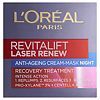
L'Oréal Paris Paris Revitalift Laser Anti Ageing Night Cream
Works for
1 of 1 advertised claim delivered
Anti-agingAcetyl dipeptide-1 cetyl ester, Tocopherol + 3 moreModerate evidence
“Paris Revitalift Laser Anti Ageing Night Cream”
This product contains acetyl dipeptide-1 cetyl ester. This ingredient might be able to help reduce and prevent fine lines and wrinkles, improve skin elasticity and firmness, but there is not enough evidence that it actually works.
ExfoliationNot advertised by the brand · Capryloyl salicylic acid, Retinyl palmitateStrong evidence
This product can help exfoliate the skin. In other words, it helps break down the bonds between dead cells on the surface of the skin and speed up the skin turnover. Skin often appears softer and brighter after exfoliation, but overdoing it can result in disrupted skin barrier. The following ingredient is doing the exfoliating job in this product: capryloyl salicylic acid.
MoisturizingNot advertised by the brand · Acetyl dipeptide-1 cetyl ester, Glycerin + 12 moreStrong evidence
This product can help improve hydration of the skin with the two types of ingredients.
The first type is called “humectants”:
these ingredients help attract water.
When humectants are on the surface of the skin, they “pull in” the moisture from the outside environment, or from
within deeper layers of the skin. The following ingredients in this product do the job:
glycerin, sodium hyaluronate.
This product also contains ingredients called “occlusives”. They help reduce the speed with which our skin loses moisture to the outside environment. These ingredients also help soften the upper layer of the skin, so it feels less tight and nicer to the touch. The following ingredients in this product do the job: dimethicone, simmondsia chinensis seed oil.
The following ingredients in this product are especially good for supporting the skin barrier and helping with the hydration level: acetyl dipeptide-1 cetyl ester
Evens skin toneNot advertised by the brand · Capryloyl salicylic acid, Ascorbyl glucoside + 1 moreModerate evidence
The following ingredient (ingredients) in this product might be helpful, but there is no evidence to confirm that it actually works: capryloyl salicylic acid.
Can it cause trouble?
Irritancy7 strong irritants: Alcohol denat., Retinyl palmitate + 5 more — patch-test recommendedHigh risk
ComedogenicClean of flagged comedogenic ingredientsNone flagged


User reviews
Be the first — your take helps the next person decide.
Ingredients
Filter by role to see what each ingredient is doing.
Water~40–60%
Dimethicone~4.6–6.9%
- Irritation risk
- Low
A silicone that helps to reduce water loss from the surface of the skin. Can temporarily "fill in" lines and wrinkles, absorb oil, and create a nice product finish
More about DimethiconeSimmondsia chinensis seed oil~3.7–5.6%
- Irritation risk
- Medium
Softens the upper layer of skin and helps restore the healthy skin barrier. Has shown to help calm down inflammation in skin. It is a stable oil, meaning that it retains its properties even when exposed to air.
More about Simmondsia chinensis seed oilHydrogenated castor oil dimer dilinoleate~2.7–4%
- Irritation risk
- Low
Alcohol denat.~2–3.1%
- Irritation risk
- High
Produces temporary toning effect. Can help dissolve other ingredients or preserve products
More about Alcohol denat.Hydroxypropyl tetrahydropyrantriol~1.7–2.5%
- Irritation risk
- High
A sugar-derived compound that helps to attract water to the upper layer of the skin and might be able to stimulate synthesis of skin's own moisturizing factors, but solid research is lacking. It could be irritating
More about Hydroxypropyl tetrahydropyrantriolGlycerin~1.5–2.2%
- Irritation risk
- Low
One of the best moisturizing ingredients. Naturally present in skin. It attracts water to the upper layer of the skin working as a humectant
More about GlycerinIsononyl isononanoate~1.3–2%
- Irritation risk
- Low
Forms a protective film on the surface of the skin to prevent moisture loss. Gives a velvety feel to products while reducing tackiness
More about Isononyl isononanoatePropanediol~1–1.6%
- Irritation risk
- Low
Acts as a solvent for other ingredients. Speeds up the absorption of other ingredients into the skin
More about PropanediolPropylene glycol~0.55–1.35%
- Irritation risk
- High
Helps oil and water mix together and can enhance the penetration of other ingredients into the skin. It can be irritating
More about Propylene glycolCetyl alcohol~0.5–1.2%
- Irritation risk
- Low
A non-drying alcohol that works to soften the skin and stabilize product formulations helping oil and water mix together
More about Cetyl alcoholCetyl hydroxyethylcellulose~0.35–0.85%
- Irritation risk
- Low
Used to create a thicker product consistency and stabilize formulations
More about Cetyl hydroxyethylcelluloseCentella asiatica extract~0.1–0.45%
- Irritation risk
- Medium
A plant extract that has been shown to be able to reduce inflammation in skin, support restoration of skin barrier function, as well as support collagen production. Contains active compounds called centelloids: asiaticoside, madecasosside, asiatic acid and madecassic acid. Might be helpful in preventing stretch marks. It can be itself be irritating though.
More about Centella asiatica extractHydrolyzed rice protein~0.15–0.5%
- Irritation risk
- Low
Helps attract water to the upper layer of the skin. Might have some anti-oxidant properties
More about Hydrolyzed rice proteinAcetyl dipeptide-1 cetyl ester~0.15–0.55%
- Irritation risk
- Low
A type of peptide. Peptides are excellent moisturizers and might be able support collagen production reducing fine lines and wrinkles
More about Acetyl dipeptide-1 cetyl esterCapryloyl salicylic acid~0.15–0.5%
- Irritation risk
- High
Sodium citrate~0.15–0.55%
- Irritation risk
- Medium
Helps to control the skin's pH level. Maintains the skin's natural film of amino-lactic acids and oils. Helps to preserve products
More about Sodium citrateSodium hyaluronate~0.15–0.55%
- Irritation risk
- Low
One of the best moisturizing ingredients. Attracts water into the upper layer of the skin
More about Sodium hyaluronateSodium hydroxide~0.15–0.55%
Ascorbyl glucoside~0.1–0.45%
- Irritation risk
- Medium
A vitamin C derivative that is more stable but less potent than pure form of vitamin C. Has a potential to boost collagen production, nutralise free radicals and reduce hyperpigmentation, but the required concentration is likely to be much higher than for the pure form of vitamin C, limiting the ingredient's effectiveness in products
More about Ascorbyl glucosideRetinyl palmitate~0.1–0.35%
- Irritation risk
- High
Three steps removed from the active form of vitamin A - retinoic acid. To have an effect in the skin, it first needs to be converted twice to become the retinoic acid. This means it is less potent than retinol, but could also be less irritating. Once converted to the retinoic acid in the skin, it helps against all signs of aging, improves skin cell turnover and helps fight blemishes and clogged pores. However, in many cosmetic formulations, it is used in a concentration that is too low to have the full effect
More about Retinyl palmitateSilica~0.15–0.6%
Butylene glycol~0.1–0.35%
- Irritation risk
- Low
Used to create a nice product texture and help delivery of other ingredients. Might be somewhat helpful in attracting water to the upper layer of the skin
More about Butylene glycolCaprylyl glycol~0.1–0.4%
- Irritation risk
- Medium
Helps preserve products and creates a nice product texture
More about Caprylyl glycolHydrated silica~0.15–0.55%
Hydroxyethylcellulose~0.1–0.4%
- Irritation risk
- Low
Used to thicken product formulations and create gel-like textures
More about HydroxyethylcellulosePentylene glycol~0.1–0.45%
- Irritation risk
- Medium
Used to preserve products, dissolve other ingredients and create a nice product texture
More about Pentylene glycolPolysorbate 60~0.1–0.4%
Silica dimethyl silylate~0.1–0.4%
Sorbitan laurate~0.1–0.35%
Tocopherol~0.1–0.35%
- Irritation risk
- Low
Pure form of vitamin E. Can help moisturise and protect the skin from free radicals. Often used to help stabilise other ingredients or the formula itself
More about TocopherolXanthan gum~0.1–0.4%
- Irritation risk
- Low
Used to create a thicker product consistency
More about Xanthan gumBenzyl alcohol~0.05–0.25%
- Irritation risk
- High
A preservative. Can be used to mask unpleasant smell. Can be irritating
More about Benzyl alcoholCitronellol~0.1–0.3%
Isoeugenol~0.05–0.3%
- Irritation risk
- High
Limonene~0.05–0.3%
- Irritation risk
- High
A common frangrance that can easily irritate skin, especially if exposed to air, light or heat
More about LimoneneLinalool~0.05–0.25%
Phenoxyethanol~0.05–0.3%
- Irritation risk
- Low
A preservative. It helps prevent bacterial growth in cosmetic products
More about PhenoxyethanolParfum~0.05–0.15%
- Irritation risk
- High
An aromatic blend of unspecified and possibly irritating ingredients
More about ParfumIngredient list view
Water, Dimethicone, Simmondsia chinensis seed oil, Hydrogenated castor oil dimer dilinoleate, Alcohol denat., Hydroxypropyl tetrahydropyrantriol, Glycerin, Isononyl isononanoate, Propanediol, Propylene glycol, Cetyl alcohol, Cetyl hydroxyethylcellulose, Centella asiatica extract, Hydrolyzed rice protein, Acetyl dipeptide-1 cetyl ester, Capryloyl salicylic acid, Sodium citrate, Sodium hyaluronate, Sodium hydroxide, Ascorbyl glucoside, Retinyl palmitate, Silica, Butylene glycol, Caprylyl glycol, Hydrated silica, Hydroxyethylcellulose, Pentylene glycol, Polysorbate 60, Silica dimethyl silylate, Sorbitan laurate, Tocopherol, Xanthan gum, Benzyl alcohol, Citronellol, Isoeugenol, Limonene, Linalool, Phenoxyethanol, Parfum, Unknown
Compare prices
Retailers ranked by price — lowest first.

Worth comparing, line by line.
Match % combines shared ingredients, the first five ingredients, shared actives and hero ingredients, irritancy (lower counts in the alternative's favour), texture and body area. Only products in the same routine step are compared.
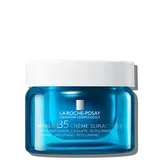
| L'Oréal ParisParis Revitalift Laser Anti Ageing Night CreamYOUR PRODUCT | VichyNeovadiol Post-Menopause Firming Lipid-Replenishing Night Cream | La Roche-PosayHYALU B5 SURACTIVATED CREAM | MEDI-PEELPeptide 9 Volume Tox Cream Pro | |
|---|---|---|---|---|
| Match | — | 51% | 50% | 50% |
| Price | $18.70 | $43.29+$24.59 | $27.99+$9.29 | $26.33+$7.63 |
| Shared key ingredients | — | 4 of 10 | 4 of 10 | 4 of 10 |
| Key difference | — | Niacinamide | Adenosine | Acetyl Octapeptide-3 |
| Irritancy | High | Medium | Medium | Medium |
| Drying alcohol | Contains drying alcohol | Contains drying alcohol | Contains drying alcohol | — |
| View product | Shop | Shop | Shop |

Product summary
"L'Oréal Paris - Paris Revitalift Laser Anti Ageing Night Cream" is a well-rounded moisturizing product. The formulation is based on a combination of good humectants and emollients. Both are needed to increase the skin hydration level. Glycerin, sodium hyaluronate, hydrolyzed rice protein, butylene glycol and caprylyl glycol in this product (humectants) attract water molecules to the upper layer of the skin (the water comes from the outside air or from the deeper layers of the skin if the air is dry). Emollients in this formulation (dimethicone, simmondsia chinensis seed oil, cetyl alcohol, caprylyl glycol and pentylene glycol) help to reduce the moisture loss from the skin. They also soften the skin surface and relieve the feeling of dryness and tightness.
Ingredient callouts
- this moisturizer includes a form of retinoids (vitamin A) - retinyl palmitate 0.10% - 0.35%, but this type of vitamin A is not very effective. It could in theory help with fine lines and wrinkles, but the effect is most likely minimal.
- This moistruizer also contains peptides (acetyl dipeptide-1 cetyl ester 0.15% - 0.55%). Peptides is a very big group of ingredients. They all consist of a different combination of amino-acids. Our skin produces peptides naturally. Some of them work as natural anti-biotics, promote wound-healing and production of collagen. The scientists are still studying how effective the topical application of peptides is, but it is very likely that peptides in skincare are helpful. They might be able to support skin barrier restoration and even have an anti-aging benefit. At the very least, they certainly help attract water to the skin and support the hydration in this way.
Irritation risk
This moisturizer contains a bunch of common irritants, including ingredients that do not provide any known benefit for the skin. It might not be the best choice if your skin is sensitive. We assess the overall irritancy of this moisturizer to be high. For a detailed overview of all potential irritants: click here
You can see the detailed formula review with the breakdown of all actives in the product and the full ingredient list with estimated concentrations in the tables below.
Price
The product retails for 24.97A$ in Australia, for 69.00$ in the United States and from 13.99£ up to 20.82£ in the United Kingdom.
For a detailed price comparison: click here.
Sources cited in this review
Every concentration estimate and effectiveness label is anchored to one of these 24 studies and safety reviews.
- 1
- 2Final Report on the Safety Assessment of Dimethicone Copolyoljournals.sagepub.com
- 3
- 4
- 5
- 6

Affiliate links · As an Amazon Associate, WIMJ earns from qualifying purchases.