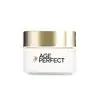
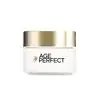
LOreal Paris Age Perfect Collagen Hydrating Eye Cream
Works for
1 of 3 advertised claims delivered
Moisturizing20 ingredients credited for this claimStrong support
“Collagen Hydrating Eye Cream”
This product can help improve hydration of the skin with the two types of ingredients.
The first type is called “humectants”:
these ingredients help attract water.
When humectants are on the surface of the skin, they “pull in” the moisture from the outside environment, or from
within deeper layers of the skin. The following ingredients in this product do the job:
glycerin, glyceryl acrylate/acrylic acid copolymer.
This product also contains ingredients called “occlusives”. They help reduce the speed with which our skin loses moisture to the outside environment. These ingredients also help soften the upper layer of the skin, so it feels less tight and nicer to the touch. The following ingredients in this product do the job: dimethicone, dimethiconol.
The following ingredients in this product are especially good for supporting the skin barrier and helping with the hydration level: hydroxypalmitoyl sphinganine
Anti-aging2 ingredients credited for this claimLimited support
“Collagen Hydrating Eye Cream”
This product does not contain ingredients that are able to reduce fine lines and wrinkles or help with skin elasticity, but it can improve the look of the skin temporarily through moisturization. Well-moisturized skin might also be able to repair the sun damage better.This ingredient - glycine soja protein - could be helpful for preventing or repairing signs of aging in theory, but there is no evidence that it actually works.
Evens skin tone2 ingredients credited for this claimLimited support
“Targets sagging and age spots .”
This product contains ingredients (glycine soja protein) that could help reduce hyperpigmentation (for example, post-acne marks or age spots) in theory, but there is not enough evidence that they actually work.
Can it cause trouble?
Irritancy1 strong irritant: Jasminum officinale extractMedium risk
Comedogenic2 ingredients rated 2 or more on the 0–5 pore-clogging scale2 flagged
User reviews
Be the first — your take helps the next person decide.
Ingredients
Filter by role to see what each ingredient is doing.
Water~45–55%
Glycerin~4.4–5.4%
- Irritation risk
- Low
One of the best moisturizing ingredients. Naturally present in skin. It attracts water to the upper layer of the skin working as a humectant
More about GlycerinCyclohexasiloxane~4.1–5%
- Irritation risk
- Low
A silicone that serves as an emollient. Helps create a nice non-greasy feels
More about CyclohexasiloxaneHydrogenated polyisobutene~3.1–3.8%
- Irritation risk
- Low
Used to improve the product consistency and soften the upper layer of the skin
More about Hydrogenated polyisobutenePentaerythrityl tetraethylhexanoate~2.4–2.9%
- Irritation risk
- Low
Used to create a nice product consistency while softening the upper layer of the skin
More about Pentaerythrityl tetraethylhexanoateSilica~2–2.5%
Propylene glycol~1.6–1.9%
- Irritation risk
- High
Helps oil and water mix together and can enhance the penetration of other ingredients into the skin. It can be irritating
More about Propylene glycolPropylene glycol dicaprylate/dicaprate~1.5–1.8%
- Irritation risk
- Low
Stearoxytrimethylsilane~1.2–1.5%
Stearyl alcohol~1.1–1.3%
- Irritation risk
- Low
An emollient that helps soften the skin
More about Stearyl alcoholMyristyl myristate~0.8–1.2%
- Irritation risk
- Medium
- Comedogenicity
- 3/5
An emollient. Is not recommended for acne-prone skin as it can be comedogenic
More about Myristyl myristateHydrogenated jojoba oil~0.7–1.05%
- Irritation risk
- Low
Helps soften the upper layer of the skin
More about Hydrogenated jojoba oilJasminum officinale extract~0.5–0.7%
Jasminum sambac flower extract~0.45–0.7%
- Irritation risk
- Low
Peg-40 stearate~0.5–0.7%
Stearalkonium hectorite~0.45–0.65%
Potassium cetyl phosphate~0.45–0.7%
- Irritation risk
- Medium
Helps oil and water mix together
More about Potassium cetyl phosphateSorbitan tristearate~0.4–0.6%
- Irritation risk
- Medium
Helps oil and water mix together
More about Sorbitan tristearateGlyceryl acrylate/acrylic acid copolymer~0.3–0.55%
- Irritation risk
- Medium
Helps attract water to the upper layer of the skin and provide a longer-lasting hydration. Can create a thicker product consistency
More about Glyceryl acrylate/acrylic acid copolymerGlyceryl stearate~0.35–0.6%
- Irritation risk
- Low
An emollient that softens the skin and forms a protective layer on its surface. Helps water and oil mix together
More about Glyceryl stearateGlycine soja protein~0.3–0.55%
- Irritation risk
- Low
A plant extract that helps to attract water to the upper layer of the skin and soften it. It might be helpful in neutralizing free radicals. It might be somewhat helpful for evening out the skin tone. It might be able to support elastin production but solid research is lacking
More about Glycine soja proteinTriethanolamine~0.25–0.5%
- Irritation risk
- Medium
Used to adjust pH of the product and can help improve the product's smell
More about TriethanolamineDimethicone~0.3–0.55%
- Irritation risk
- Low
A silicone that helps to reduce water loss from the surface of the skin. Can temporarily "fill in" lines and wrinkles, absorb oil, and create a nice product finish
More about DimethiconeDimethiconol~0.3–0.5%
- Irritation risk
- Low
A silicone that makes products more spreadable and keeps skin smooth. Helps to add gloss to skin and may visually fill in fine lines/wrinkles for short time
More about DimethiconolSodium cocoyl glutamate~0.3–0.6%
- Irritation risk
- Medium
Helps oil and water mix together
More about Sodium cocoyl glutamateMyristyl alcohol~0.25–0.5%
- Irritation risk
- High
Helps to stabilize the product formulation while softening the upper layer of the skin. Can be irritating
More about Myristyl alcoholPropylene carbonate~0.25–0.5%
- Irritation risk
- Low
Is used to dissolve other ingredients and create nice product texture
More about Propylene carbonateHydrolyzed soy protein~0.25–0.45%
- Irritation risk
- Low
Helps attract water to the upper layer of the skin. Might have some anti-aging, anti-oxidant, and skin lightening properties, but solid evidence is missing
More about Hydrolyzed soy proteinHydroxypalmitoyl sphinganine~0.2–0.4%
- Irritation risk
- Low
A type of lipid similar to ceramides naturally present in skin. Helps to soften the upper layer of the skin and supports the skin barrier function to keep it hydrated. Can help to prevent inflammation in skin
More about Hydroxypalmitoyl sphinganineCaprylyl glycol~0.25–0.5%
- Irritation risk
- Medium
Helps preserve products and creates a nice product texture
More about Caprylyl glycolTetrasodium edta~0.25–0.4%
Pentylene glycol~0.3–0.5%
- Irritation risk
- Medium
Used to preserve products, dissolve other ingredients and create a nice product texture
More about Pentylene glycolEthylhexylglycerin~0.25–0.45%
Acrylates/c10-30 alkyl acrylate crosspolymer~0.25–0.45%
- Irritation risk
- Medium
Maintains the texture of skincare products. Allows the product to spread evenly. Helps oil and water mix together
More about Acrylates/c10-30 alkyl acrylate crosspolymerCetyl alcohol~0.25–0.5%
- Irritation risk
- Low
A non-drying alcohol that works to soften the skin and stabilize product formulations helping oil and water mix together
More about Cetyl alcoholTocopherol~0.25–0.45%
- Irritation risk
- Low
Pure form of vitamin E. Can help moisturise and protect the skin from free radicals. Often used to help stabilise other ingredients or the formula itself
More about TocopherolTocopheryl acetate~0.25–0.4%
- Irritation risk
- Medium
A more stable but less bio-available form of vitamin E compared to Tocopherol. Might help moisturize and protect the skin from free radicals, but mostly used in low concentrations to stabilize other ingredients.
More about Tocopheryl acetatePotassium sorbate~0.2–0.4%
Methylparaben~0.15–0.3%
Sodium benzoate~0.2–0.35%
Phenoxyethanol~0.15–0.3%
- Irritation risk
- Low
A preservative. It helps prevent bacterial growth in cosmetic products
More about PhenoxyethanolChlorphenesin~0.1–0.2%
Ci 16035~0.15–0.25%
Ci 19140~0.15–0.25%
Ci 77891~0.1–0.2%
- Irritation risk
- Low
Titanium dioxide~0.1–0.2%
- Irritation risk
- Low
Works as a UV filter when used in high concentrations. It is photostable and is effective mostly against the UVB light, with some protection in the UVA range. In small concentrations, used for its ability to improve the color of cosmetic products. Is usually well tolerated by the skin
More about Titanium dioxideMica~0.1–0.15%
- Irritation risk
- Low
Creates an illusion of smoother and more radiant skin tone. Adds shimmer to the skin by reflecting light
More about MicaIngredient list view
Water, Glycerin, Cyclohexasiloxane, Hydrogenated polyisobutene, Pentaerythrityl tetraethylhexanoate, Silica, Propylene glycol, Propylene glycol dicaprylate/dicaprate, Stearoxytrimethylsilane, Stearyl alcohol, Myristyl myristate, Hydrogenated jojoba oil, Jasminum officinale extract, Jasminum sambac flower extract, Peg-40 stearate, Stearalkonium hectorite, Potassium cetyl phosphate, Sorbitan tristearate, Glyceryl acrylate/acrylic acid copolymer, Glyceryl stearate, Glycine soja protein, Triethanolamine, Dimethicone, Dimethiconol, Sodium cocoyl glutamate, Myristyl alcohol, Propylene carbonate, Hydrolyzed soy protein, Hydroxypalmitoyl sphinganine, Caprylyl glycol, Tetrasodium edta, Pentylene glycol, Ethylhexylglycerin, Acrylates/c10-30 alkyl acrylate crosspolymer, Cetyl alcohol, Tocopherol, Tocopheryl acetate, Potassium sorbate, Methylparaben, Sodium benzoate, Phenoxyethanol, Chlorphenesin, Ci 16035, Ci 19140, Ci 77891, Titanium dioxide, Mica
Compare prices
Retailers ranked by price — lowest first.
.png)
Worth comparing, line by line.
Match % combines shared ingredients, the first five ingredients, shared actives and hero ingredients, irritancy (lower counts in the alternative's favour), texture and body area. Only products in the same routine step are compared.
| LOreal Paris Age PerfectCollagen Hydrating Eye CreamYOUR PRODUCT | L'Oréal ParisParis Age Perfect Hydrating Eye Cream | Kiehl'sPowerful Wrinkle Reducing Cream | VichyEye Contour Idealia Eye Cream | |
|---|---|---|---|---|
| Match | — | 71% | 57% | 52% |
| Price | $8.32 | $11.09+$2.77 | $39.99+$31.67 | $32.00+$23.68 |
| Shared key ingredients | — | 8 of 8 | 2 of 8 | 3 of 8 |
| Key difference | — | — | Adenosine | Niacinamide |
| Irritancy | Medium | Medium | Low | Medium |
| Drying alcohol | — | — | — | Contains drying alcohol |
| View product | Shop | Shop | Shop |


Product summary
Judging from the ingredient list, "LOreal Paris Age Perfect - Collagen Hydrating Eye Cream" works well for improving skin hydration To work well, any moisturizer needs to include a combination of water-binding and emollient ingredients. LOreal Paris Age Perfect - Collagen Hydrating Eye Cream ticks this box. Humectants in this product (glycerin, glyceryl acrylate/acrylic acid copolymer, glycine soja protein, hydrolyzed soy protein and caprylyl glycol) help to increase the water content in the upper layer of the skin. (These ingredients do so by "capturing" water molecules from the outside air or from within the deeper layers of the skin). Emollients in this formulation (hydrogenated jojoba oil, dimethicone, dimethiconol, cetyl alcohol and glycine soja protein) help to reduce the moisture loss from the skin. They also soften the skin surface and relieve the feeling of dryness and tightness.
Irritation risk
There are quite a few common irritants in this product, including ingredients without particular skin benefits. We would not recommend it for sensitive skin. We assess the overall irritancy of this moisturizer to be medium. For a detailed overview of all potential irritants: click here
You can see the detailed formula review with the breakdown of all actives in the product and the full ingredient list with estimated concentrations in the tables below.
Price
The product retails for 19.98CA$ in Canada and for 12.59£ in the United Kingdom.
For a detailed price comparison: click here.
Sources cited in this review
Every concentration estimate and effectiveness label is anchored to one of these 23 studies and safety reviews.
- 1
- 2
- 3Safety Assessment of Pentaerythrityl Tetraesters as Used in Cosmeticsjournals.sagepub.com
- 4Surfactants and experimental irritant contact dermatitisncbi.nlm.nih.gov
- 5Propylene Glycolpubmed.ncbi.nlm.nih.gov
- 6Skin-sensitizing and irritant properties of propylene glycolonlinelibrary.wiley.com

Affiliate links · As an Amazon Associate, WIMJ earns from qualifying purchases.