Works for:
based on ingredients and %- Moisturizing
Can it cause trouble?
- Irritation risk: high
- Comedogenic risk ingredients: 3
Key actives
Works for
Moisturizing
What does the product description say?
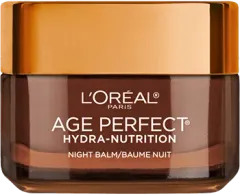
Age Perfect Hydra-Nutrition Moisturizer Honey Night Balm is a luxurious nighttime moisturizer delivering unmatched hydration for mature, very dry, and sensitive skin.
Source: L'Oréal Paris
This product can help improve hydration of the skin with the two types of ingredients.
The first type is called “humectants”:
these ingredients help attract water.
When humectants are on the surface of the skin, they “pull in” the moisture from the outside environment, or from
within deeper layers of the skin. The following ingredients in this product do the job:
glycerin, polyglycerin-3.
This product also contains ingredients called “occlusives”. They help reduce the speed with which our skin loses moisture to the outside environment. These ingredients also help soften the upper layer of the skin, so it feels less tight and nicer to the touch. The following ingredients in this product do the job: butyrospermum parkii butter, caprylic/capric triglyceride.
Helps soften the upper layer of the skin
An emollient made of jojoba oil. Helps soften the skin and support its barrier function
An emollient that helps soften the skin
Helps to attract water to the upper layer of the skin
Forms a protective barrier that holds water and keeps dry skin hydrated. Keeps an emulsion from separating into its oil and liquid components, and increases the thickness of a product. Can be an allergen
A great moisturising ingredient that softens the skin and reduces water loss from its upper layer. It also can be helpful in protecting skin from free radicals
A good mix of fatty acids that forms a protective layer on the skin. Improves the shelf life of products. Derived from coconut and glycerin
Helps soften the upper layer of the skin and might have some anti-oxidant properties
A silicone that helps to reduce water loss from the surface of the skin. Can temporarily "fill in" lines and wrinkles, absorb oil, and create a nice product finish
One of the best moisturizing ingredients. Naturally present in skin. It attracts water to the upper layer of the skin working as a humectant
This oil's cmposition is closest to rapeseed oil. It is a very stable oil and serves as an emoillient
Mimosa flower fax. Helps soften the upper layer of the skin. It adds a nice smell, but could be irritating
A non-drying alcohol that works to soften the skin and stabilize product formulations helping oil and water mix together
Brazilian palm wax. Helps soften the upper layer of the skin
Helps to soften the upper layer of the skin and attract water to it
Helps attract water to the upper layer of the skin
Helps preserve products and creates a nice product texture
Improves the texture of the product and helps soften the skin. Helps oil and water mix together and can be used as a cleansing agent
Used to improve the product consistency and soften the upper layer of the skin
Helps soften the upper layer of the skin while creating a non-greasy feel on the skin. Helps to dissolve other ingredients
An emollient that softens the skin and forms a protective layer on its surface. Helps water and oil mix together
An emollient that helps soften the skin
Pure form of vitamin E. Can help moisturise and protect the skin from free radicals. Often used to help stabilise other ingredients or the formula itself
How honest is this product?
| Promise | Can it deliver? |
|---|---|
| Moisturizing |
Total Promises Fulfilled score: 75/100.
We receive a small commission for purchases made through these links at no cost for you. Thank you for your support! Learn more
Affiliate link · supports WIMJ at no cost to you
Potential irritants
Comedogenic ingredients
User reviews (0)
Averages from community submissions.
No reviews yet for this product.
Be the first to share your experience!
Tried this product?
Help capture what the ingredient list can't—texture, finish, pilling, scent, and more. Answer what you can, skip the rest.
Takes ~30 seconds.
Reviews are shown in aggregate. No personal details.
Key Actives
Pure form of vitamin E. Can help moisturise and protect the skin from free radicals. Often used to help stabilise other ingredients or the formula itself
A great moisturising ingredient that softens the skin and reduces water loss from its upper layer. It also can be helpful in protecting skin from free radicals
This oil's cmposition is closest to rapeseed oil. It is a very stable oil and serves as an emoillient
A silicone that helps to reduce water loss from the surface of the skin. Can temporarily "fill in" lines and wrinkles, absorb oil, and create a nice product finish
Forms a protective barrier that holds water and keeps dry skin hydrated. Keeps an emulsion from separating into its oil and liquid components, and increases the thickness of a product. Can be an allergen
An emollient that helps soften the skin
One of the best moisturizing ingredients. Naturally present in skin. It attracts water to the upper layer of the skin working as a humectant
A good mix of fatty acids that forms a protective layer on the skin. Improves the shelf life of products. Derived from coconut and glycerin
An emollient that helps soften the skin
Used to regulate product's pH, but can be also used as an exfoliator when included in higher concentrations. There is a controversy about whether it can generate free radicals and induce skin cell damage when used in topical products
Helps soften the upper layer of the skin
An emollient made of jojoba oil. Helps soften the skin and support its barrier function
Helps soften the upper layer of the skin and might have some anti-oxidant properties
Helps to attract water to the upper layer of the skin
Potential irritants
Mimosa flower fax. Helps soften the upper layer of the skin. It adds a nice smell, but could be irritating
An essential oil that is used as a fragrance and can be irritating. It might have some anti-oxidant effect in skin
Used as a fragrance. Can be irritating
An essentil oil from orange peel. Potential allergen and can be irritating
A preservative. Can be used to mask unpleasant smell. Can be irritating
A common frangrance that can easily irritate skin, especially if exposed to air, light or heat
An aromatic blend of unspecified and possibly irritating ingredients
A good mix of fatty acids that forms a protective layer on the skin. Improves the shelf life of products. Derived from coconut and glycerin
Forms a protective barrier that holds water and keeps dry skin hydrated. Keeps an emulsion from separating into its oil and liquid components, and increases the thickness of a product. Can be an allergen
Used to thicken the product's consistency
Used to regulate product's pH, but can be also used as an exfoliator when included in higher concentrations. There is a controversy about whether it can generate free radicals and induce skin cell damage when used in topical products
Can work as an exfoliant but is typically used to adjust the product pH
Used to improve stability of the formulation
An emollient made of jojoba oil. Helps soften the skin and support its barrier function
Helps preserve products and creates a nice product texture
Comedogenic ingredients
A great moisturising ingredient that softens the skin and reduces water loss from its upper layer. It also can be helpful in protecting skin from free radicals
Used to thicken the product's consistency
All ingredients
One of the best moisturizing ingredients. Naturally present in skin. It attracts water to the upper layer of the skin working as a humectant
A good mix of fatty acids that forms a protective layer on the skin. Improves the shelf life of products. Derived from coconut and glycerin
Used to improve the product consistency and soften the upper layer of the skin
A great moisturising ingredient that softens the skin and reduces water loss from its upper layer. It also can be helpful in protecting skin from free radicals
A silicone that helps to reduce water loss from the surface of the skin. Can temporarily "fill in" lines and wrinkles, absorb oil, and create a nice product finish
Forms a protective barrier that holds water and keeps dry skin hydrated. Keeps an emulsion from separating into its oil and liquid components, and increases the thickness of a product. Can be an allergen
A non-drying alcohol that works to soften the skin and stabilize product formulations helping oil and water mix together
Used to thicken the product's consistency
An emollient that softens the skin and forms a protective layer on its surface. Helps water and oil mix together
Helps soften the upper layer of the skin while creating a non-greasy feel on the skin. Helps to dissolve other ingredients
Helps oil and water mix togehter and creates a nice product texture
Used to regulate product's pH, but can be also used as an exfoliator when included in higher concentrations. There is a controversy about whether it can generate free radicals and induce skin cell damage when used in topical products
Can work as an exfoliant but is typically used to adjust the product pH
Used to increase stability of product formulations
Used to improve stability of the formulation
Mimosa flower fax. Helps soften the upper layer of the skin. It adds a nice smell, but could be irritating
Brazilian palm wax. Helps soften the upper layer of the skin
An emollient made of jojoba oil. Helps soften the skin and support its barrier function
This oil's cmposition is closest to rapeseed oil. It is a very stable oil and serves as an emoillient
Helps soften the upper layer of the skin and might have some anti-oxidant properties
Helps to absord oil and evenly disperse other ingredients (for example, pigment) in product formulation
Helps water and oil mix together and create gel-like textures
An essential oil that is used as a fragrance and can be irritating. It might have some anti-oxidant effect in skin
Helps preserve products and creates a nice product texture
Used as a fragrance. Can be irritating
An essentil oil from orange peel. Potential allergen and can be irritating
Improves the texture of the product and helps soften the skin. Helps oil and water mix together and can be used as a cleansing agent
Pure form of vitamin E. Can help moisturise and protect the skin from free radicals. Often used to help stabilise other ingredients or the formula itself
A preservative. Can be used to mask unpleasant smell. Can be irritating
A common frangrance that can easily irritate skin, especially if exposed to air, light or heat
A preservative. It helps prevent bacterial growth in cosmetic products
An aromatic blend of unspecified and possibly irritating ingredients
Ingredient list view
Water, Glycerin, Caprylic/capric triglyceride, Isocetyl stearate, Hydrogenated polyisobutene, Butyrospermum parkii butter, Dimethicone, Cera alba, Cetyl alcohol, Zea mays starch, Glyceryl stearate, Dicaprylyl ether, Peg-100 stearate, Mel, Hydroxyethylpiperazine ethane sulfonic acid, Calcium pantetheine sulfonate, Citric acid, Hydroxyacetophenone, Mel extract, Pentaerythrityl tetra-di-t-butyl hydroxyhydrocinnamate, Royal jelly, Trisodium ethylenediamine disuccinate, Acacia decurrens flower cera, Copernicia cerifera cera, Helianthus annuus seed cera, Jojoba esters, Limnanthes alba seed oil, Oryza sativa bran oil, Polyglycerin-3, Prunus armeniaca kernel oil, Boron nitride, Silica silylate, Acrylamide/sodium acryloyldimethyltaurate copolymer, Anthemis nobilis flower oil, Caprylyl glycol, Citrus aurantium amara flower oil, Citrus aurantium dulcis peel oil, Isohexadecane, Origanum majorana leaf oil, Oxidized starch acetate, Polysorbate 80, Sorbitan oleate, Sorbitan tristearate, Tocopherol, Xanthan gum, Benzyl alcohol, Citral, Citronellol, Coumarin, Eugenol, Geraniol, Limonene, Linalool, Ci 15985, Ci 19140, Phenoxyethanol, Parfum
- Glycerol and the skin: holistic approach to its origin and functions
- Final report of the cosmetic ingredient review expert panel on the safety assessment of Polyisobutene and Hydrogenated Polyisobutene as used in cosmetics
- Dimethicone as a protective ingredient in topical medications
- Final Report on the Safety Assessment of Dimethicone Copolyol
- Efficacy of barrier creams in comparison to skin care products in dental laboratory technicians--a controlled trial
- Oxidative DNA damage induced by HEPES (2-[4-(2-hydroxyethyl)-1-piperazinyl]ethanesulfonic acid) buffer in the presence of Au(III)
- Safety Assessment of Pentaerythrityl Tetra-Di-t-Butyl Hydroxyhydrocinnamate as Used in Cosmetics
- Study on the Composition of Rice Bran Oil and Its Higher Free Fatty Acids Value
- Safety Assessment of Boron Nitride as Used in Cosmetics
- Safety Assessment of Anthemis nobilis– Derived Ingredients as Used in Cosmetics
- Biological Activities and Safety of Citrus spp. Essential Oils
- Surfactants and experimental irritant contact dermatitis
- Final report on the safety assessment of sorbitan caprylate, sorbitan cocoate, sorbitan diisostearate, sorbitan dioleate, sorbitan distearate, sorbitan isostearate, sorbitan olivate, sorbitan sesquiisostearate, sorbitan sesquistearate, and sorbitan triisostearate
- Vitamin E in dermatology
- Vitamin E and Skin Health
- Annex I: Clinical evidence regarding sensitisation to individual fragrance chemicals and to natural extracts
- Analysis of Dyes in Cosmetics: Challenges and Recent Developments