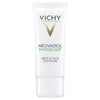
Vichy Neovadiol Phytosculpt Neck and Face Contour Balm
Works for
2 of 2 advertised claims delivered
Anti-agingAdenosine, Butyrospermum parkii butter + 1 moreStrong evidence
“Targeting the visible signs of ageing, it visibly reinforces, tightens and redefines neck and face contours.”
This product can help reduce and prevent fine lines and wrinkles, improve skin elasticity and firmness because it contains adenosine.
Keep in mind that it typically takes at least 6 weeks to notice any results because the changes that are needed to improve fine lines and elasticity happen in the deeper layers of the skin. No topical anti-aging product can “erase” wrinkles or fully reverse signs of aging.
MoisturizingCera alba, Glycerin + 18 moreGood evidence
“Skin feels Instantly hydrated, plumped and more even looking”
This product can help improve hydration of the skin with the two types of ingredients.
The first type is called “humectants”:
these ingredients help attract water.
When humectants are on the surface of the skin, they “pull in” the moisture from the outside environment, or from
within deeper layers of the skin. The following ingredients in this product do the job:
glycerin, sodium hyaluronate.
This product also contains ingredients called “occlusives”. They help reduce the speed with which our skin loses moisture to the outside environment. These ingredients also help soften the upper layer of the skin, so it feels less tight and nicer to the touch. The following ingredients in this product do the job: butyrospermum parkii butter, cera alba.
Can it cause trouble?
Irritancy2 strong irritants: Alcohol denat., ParfumMedium risk
Comedogenic5 ingredients rated 2 or more on the 0–5 pore-clogging scale5 flagged


User reviews
Be the first — your take helps the next person decide.
Ingredients
Filter by role to see what each ingredient is doing.
Water~45–55%
Glycerin~4.4–5.4%
- Irritation risk
- Low
One of the best moisturizing ingredients. Naturally present in skin. It attracts water to the upper layer of the skin working as a humectant
More about GlycerinCyclohexasiloxane~4.2–5.1%
- Irritation risk
- Low
A silicone that serves as an emollient. Helps create a nice non-greasy feels
More about CyclohexasiloxaneDipropylene glycol~2.8–3.5%
- Irritation risk
- Low
Helps to dissolve other ingredients in a formulation. Slows down the rate of product drying
More about Dipropylene glycolDimethicone~2.4–2.9%
- Irritation risk
- Low
A silicone that helps to reduce water loss from the surface of the skin. Can temporarily "fill in" lines and wrinkles, absorb oil, and create a nice product finish
More about DimethiconeHydroxypropyl tetrahydropyrantriol~1.9–2.3%
- Irritation risk
- High
A sugar-derived compound that helps to attract water to the upper layer of the skin and might be able to stimulate synthesis of skin's own moisturizing factors, but solid research is lacking. It could be irritating
More about Hydroxypropyl tetrahydropyrantriolZea mays germ oil~1.6–2%
- Irritation risk
- Low
- Comedogenicity
- 2/5
Elaeis guineensis oil~1.5–1.8%
- Irritation risk
- Low
Helps soften the upper layer of the skin
More about Elaeis guineensis oilAlcohol denat.~1.2–1.4%
- Irritation risk
- High
Produces temporary toning effect. Can help dissolve other ingredients or preserve products
More about Alcohol denat.Butyrospermum parkii butter~1–1.2%
- Irritation risk
- Low
- Comedogenicity
- 3/5
A great moisturising ingredient that softens the skin and reduces water loss from its upper layer. It also can be helpful in protecting skin from free radicals
More about Butyrospermum parkii butterGlyceryl stearate~0.7–1.1%
- Irritation risk
- Low
An emollient that softens the skin and forms a protective layer on its surface. Helps water and oil mix together
More about Glyceryl stearatePropylene glycol~0.55–0.8%
- Irritation risk
- High
Helps oil and water mix together and can enhance the penetration of other ingredients into the skin. It can be irritating
More about Propylene glycolPeg-100 stearate~0.6–0.9%
- Irritation risk
- Low
Helps oil and water mix togehter and creates a nice product texture
More about Peg-100 stearateCetyl alcohol~0.55–0.85%
- Irritation risk
- Low
A non-drying alcohol that works to soften the skin and stabilize product formulations helping oil and water mix together
More about Cetyl alcoholCera alba~0.55–0.8%
- Irritation risk
- Medium
Forms a protective barrier that holds water and keeps dry skin hydrated. Keeps an emulsion from separating into its oil and liquid components, and increases the thickness of a product. Can be an allergen
More about Cera albaMyristyl myristate~0.45–0.7%
- Irritation risk
- Medium
- Comedogenicity
- 3/5
An emollient. Is not recommended for acne-prone skin as it can be comedogenic
More about Myristyl myristatePrunus amygdalus dulcis oil~0.45–0.65%
- Irritation risk
- Low
An emollient that softens the skin
More about Prunus amygdalus dulcis oilHydroxyethylpiperazine ethane sulfonic acid~0.35–0.6%
- Irritation risk
- Medium
Used to regulate product's pH, but can be also used as an exfoliator when included in higher concentrations. There is a controversy about whether it can generate free radicals and induce skin cell damage when used in topical products
More about Hydroxyethylpiperazine ethane sulfonic acidAdenosine~0.3–0.55%
- Irritation risk
- Low
Might help improve cell turnover and reduce inflammation in skin. One study shows that the ingredients might be able to help reduce dynamic wrinkles (for example, in the corners of the eyes or on the forehead)
More about AdenosineMethyldihydrojasmonate~0.3–0.5%
Pentaerythrityl tetra-di-t-butyl hydroxyhydrocinnamate~0.3–0.5%
- Irritation risk
- Low
Used to increase stability of product formulations
More about Pentaerythrityl tetra-di-t-butyl hydroxyhydrocinnamatePhymatosorus grossus leaf extract~0.25–0.45%
- Irritation risk
- Low
Sodium hyaluronate~0.25–0.45%
- Irritation risk
- Low
One of the best moisturizing ingredients. Attracts water into the upper layer of the skin
More about Sodium hyaluronateTrisodium ethylenediamine disuccinate~0.25–0.45%
- Irritation risk
- Medium
Used to improve stability of the formulation
More about Trisodium ethylenediamine disuccinateCetyl palmitate~0.25–0.5%
- Irritation risk
- Low
An emollient that helps soften the skin and is used to improve product texture and stability
More about Cetyl palmitateCitric acid~0.25–0.45%
- Irritation risk
- Medium
Can work as an exfoliant but is typically used to adjust the product pH
More about Citric acidAcrylamide/sodium acryloyldimethyltaurate copolymer~0.25–0.45%
- Irritation risk
- Low
Helps water and oil mix together and create gel-like textures
More about Acrylamide/sodium acryloyldimethyltaurate copolymerAmmonium polyacryloyldimethyl taurate~0.25–0.45%
- Irritation risk
- Low
Used to create a thicker product consistency
More about Ammonium polyacryloyldimethyl taurateCaprylyl glycol~0.25–0.5%
- Irritation risk
- Medium
Helps preserve products and creates a nice product texture
More about Caprylyl glycolIsohexadecane~0.35–0.6%
- Irritation risk
- Low
Improves the texture of the product and helps soften the skin. Helps oil and water mix together and can be used as a cleansing agent
More about IsohexadecaneMyristic acid~0.25–0.5%
- Irritation risk
- Medium
- Comedogenicity
- 3/5
Helps oil and water mix together. Could be comedogenic
More about Myristic acidPalmitic acid~0.25–0.5%
- Irritation risk
- Low
An emollient that is naturally present in skin and helps soften it
More about Palmitic acidPolysorbate 80~0.25–0.45%
Propanediol~0.25–0.45%
- Irritation risk
- Low
Acts as a solvent for other ingredients. Speeds up the absorption of other ingredients into the skin
More about PropanediolSorbitan oleate~0.2–0.4%
- Irritation risk
- Medium
- Comedogenicity
- 2/5
Helps oil and water mix together
More about Sorbitan oleateSorbitan tristearate~0.2–0.35%
- Irritation risk
- Medium
Helps oil and water mix together
More about Sorbitan tristearateStearic acid~0.25–0.5%
- Irritation risk
- Low
Helps oil and water mix together and works as an emollient
More about Stearic acidPolysilicone-11~0.15–0.3%
- Irritation risk
- Low
A silicone that forms a light film on the skin surface helping to bind water and temporarily absorb oils creating a matt and powdery feel
More about Polysilicone-11Ci 15985~0.1–0.2%
Phenoxyethanol~0.15–0.25%
- Irritation risk
- Low
A preservative. It helps prevent bacterial growth in cosmetic products
More about PhenoxyethanolParfum~0.1–0.15%
- Irritation risk
- High
An aromatic blend of unspecified and possibly irritating ingredients
More about ParfumIngredient list view
Water, Glycerin, Cyclohexasiloxane, Dipropylene glycol, Dimethicone, Hydroxypropyl tetrahydropyrantriol, Zea mays germ oil, Elaeis guineensis oil, Alcohol denat., Butyrospermum parkii butter, Glyceryl stearate, Propylene glycol, Peg-100 stearate, Cetyl alcohol, Cera alba, Myristyl myristate, Prunus amygdalus dulcis oil, Hydroxyethylpiperazine ethane sulfonic acid, Adenosine, Methyldihydrojasmonate, Pentaerythrityl tetra-di-t-butyl hydroxyhydrocinnamate, Phymatosorus grossus leaf extract, Sodium hyaluronate, Trisodium ethylenediamine disuccinate, Cetyl palmitate, Citric acid, Acrylamide/sodium acryloyldimethyltaurate copolymer, Ammonium polyacryloyldimethyl taurate, Caprylyl glycol, Isohexadecane, Myristic acid, Palmitic acid, Polysorbate 80, Propanediol, Sorbitan oleate, Sorbitan tristearate, Stearic acid, Polysilicone-11, Ci 15985, Phenoxyethanol, Parfum
Compare prices
Retailers ranked by price — lowest first.

Worth comparing, line by line.
Match % combines shared ingredients, the first five ingredients, shared actives and hero ingredients, irritancy (lower counts in the alternative's favour), texture and body area. Only products in the same routine step are compared.
| VichyNeovadiol Phytosculpt Neck and Face Contour BalmYOUR PRODUCT | L'Oréal ParisRadiance Booster | Kate SomervilleWrinkle Warrior Hydration Gel | Kiehl'sPowerful Wrinkle Reducing Cream | |
|---|---|---|---|---|
| Match | — | 58% | 55% | 55% |
| Price | $3.97 | $12.99+$9.02 | — | $60.00+$56.03 |
| Shared key ingredients | — | 7 of 10 | 5 of 10 | 4 of 10 |
| Key difference | — | Acetyl Tetrapeptide-9 | Gluconolactone | Petrolatum |
| Irritancy | Medium | Medium | Low | Low |
| Drying alcohol | Contains drying alcohol | — | — | — |
| View product | Shop | Shop | Shop |


Sources cited in this review
Every concentration estimate and effectiveness label is anchored to one of these 21 studies and safety reviews.
- 1
- 2
- 3Final Report on the Safety Assessment of Dimethicone Copolyoljournals.sagepub.com
- 4
- 5
- 6

Affiliate links · As an Amazon Associate, WIMJ earns from qualifying purchases.