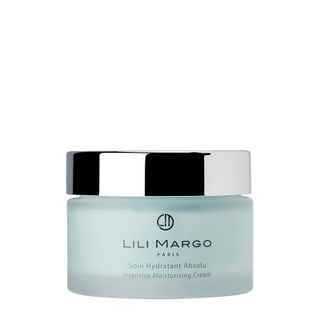
Lili Margo Intensive Moisturising Cream
Works for
1 of 1 advertised claim delivered
MoisturizingXylitylglucoside, Anhydroxylitol + 18 moreGood evidence
“Intensive Moisturising Cream”
This product can help improve hydration of the skin with the two types of ingredients.
The first type is called “humectants”:
these ingredients help attract water.
When humectants are on the surface of the skin, they “pull in” the moisture from the outside environment, or from
within deeper layers of the skin. The following ingredients in this product do the job:
anhydroxylitol, biosaccharide gum-1.
This product also contains ingredients called “occlusives”. They help reduce the speed with which our skin loses moisture to the outside environment. These ingredients also help soften the upper layer of the skin, so it feels less tight and nicer to the touch. The following ingredients in this product do the job: butyrospermum parkii butter, caprylic/capric triglyceride.
Can it cause trouble?
Irritancy1 strong irritant: ParfumMedium risk
Comedogenic1 ingredient rated 2 or more on the 0–5 pore-clogging scale1 flagged


User reviews
Be the first — your take helps the next person decide.
Ingredients
Filter by role to see what each ingredient is doing.
Water~45–55%
Glycerin~4.4–5.4%
- Irritation risk
- Low
One of the best moisturizing ingredients. Naturally present in skin. It attracts water to the upper layer of the skin working as a humectant
More about GlycerinButyrospermum parkii butter~4.2–5.1%
- Irritation risk
- Low
- Comedogenicity
- 3/5
A great moisturising ingredient that softens the skin and reduces water loss from its upper layer. It also can be helpful in protecting skin from free radicals
More about Butyrospermum parkii butterDicaprylyl carbonate~3.1–3.8%
- Irritation risk
- Low
Helps products spread more easily and works as an emollient to soften skin
More about Dicaprylyl carbonateDimethicone~2.4–3%
- Irritation risk
- Low
A silicone that helps to reduce water loss from the surface of the skin. Can temporarily "fill in" lines and wrinkles, absorb oil, and create a nice product finish
More about DimethiconeIsononyl isononanoate~2–2.4%
- Irritation risk
- Low
Forms a protective film on the surface of the skin to prevent moisture loss. Gives a velvety feel to products while reducing tackiness
More about Isononyl isononanoateHydrogenated palm kernel glycerides~1.6–2%
- Irritation risk
- Low
Help soften the upper layer of the skin
More about Hydrogenated palm kernel glyceridesButylene glycol~1.4–1.8%
- Irritation risk
- Low
Used to create a nice product texture and help delivery of other ingredients. Might be somewhat helpful in attracting water to the upper layer of the skin
More about Butylene glycolCaprylic/capric triglyceride~1.3–1.6%
- Irritation risk
- Medium
A good mix of fatty acids that forms a protective layer on the skin. Improves the shelf life of products. Derived from coconut and glycerin
More about Caprylic/capric triglycerideTapioca starch~0.95–1.2%
Cetyl alcohol~0.8–1.2%
- Irritation risk
- Low
A non-drying alcohol that works to soften the skin and stabilize product formulations helping oil and water mix together
More about Cetyl alcoholAnhydroxylitol~0.55–0.85%
- Irritation risk
- Low
Helps attract water to the upper layer of the skin and repair the skin barrir function
More about AnhydroxylitolGlyceryl stearate~0.55–0.85%
- Irritation risk
- Low
An emollient that softens the skin and forms a protective layer on its surface. Helps water and oil mix together
More about Glyceryl stearateXylitylglucoside~0.45–0.7%
- Irritation risk
- Low
Helps attract water to the upper layer of the skin and repair the skin barrier function
More about XylitylglucosideTriethanolamine~0.45–0.7%
- Irritation risk
- Medium
Used to adjust pH of the product and can help improve the product's smell
More about TriethanolaminePropylene glycol~0.4–0.65%
- Irritation risk
- High
Helps oil and water mix together and can enhance the penetration of other ingredients into the skin. It can be irritating
More about Propylene glycolCucumis sativus fruit extract~0.4–0.65%
- Irritation risk
- Medium
Might be somewhat helpful in reducing hyperpigmentation and neutralizing free radicals but its typical concentration in a product is too low for having an effect
More about Cucumis sativus fruit extractXylitol~0.35–0.6%
- Irritation risk
- Low
Helps attract water to the upper layer of the skin and repair the skin barrier function
More about XylitolGluconolactone~0.3–0.55%
- Irritation risk
- Medium
A polyhydroxy acid (PHA) that helps shed the dead cells from the skin surface revealing smoother skin. Is believed to be genter than AHAs. It helps attract water to the upper layer of the skin and can stimulate production of skin's own hyaluronic acid resulting in improved hydration levels. It has been shown to be helpful against acne and clogged pores if used consistently (e.g over a period of 12 weeks) in high enough concentration. It can help reduce fine lines and wrinkles and improve skin tone with long-term application. Can help neutralize free radicals
More about GluconolactonePeg-75 stearate~0.3–0.55%
Carbomer~0.3–0.55%
- Irritation risk
- Low
Helps create a thicker or gel-like product texture. It is not a surfactant but can be used in gentle cleansing formulations
More about CarbomerCeteth-20~0.45–0.65%
Glycosaminoglycans~0.3–0.55%
- Irritation risk
- Low
Long sugars that help attract water to the upper layer of the skin
More about GlycosaminoglycansSteareth-20~0.35–0.6%
Hydrogenated palm glycerides~0.3–0.55%
- Irritation risk
- Low
An emollient that softens the skin
More about Hydrogenated palm glyceridesChlorphenesin~0.16–0.32%
Parfum~0.25–0.4%
- Irritation risk
- High
An aromatic blend of unspecified and possibly irritating ingredients
More about ParfumTocopheryl acetate~0.25–0.45%
- Irritation risk
- Medium
A more stable but less bio-available form of vitamin E compared to Tocopherol. Might help moisturize and protect the skin from free radicals, but mostly used in low concentrations to stabilize other ingredients.
More about Tocopheryl acetateXanthan gum~0.25–0.45%
- Irritation risk
- Low
Used to create a thicker product consistency
More about Xanthan gumSodium benzoate~0.25–0.45%
Hydroxyethyl acrylate/sodium acryloyldimethyl taurate copolymer~0.2–0.4%
- Irritation risk
- Medium
A gelling agent that thickens the product consistency and leaves the skin with a velvety finish
More about Hydroxyethyl acrylate/sodium acryloyldimethyl taurate copolymerTetrasodium edta~0.2–0.4%
Phenoxyethanol~0.2–0.4%
- Irritation risk
- Low
A preservative. It helps prevent bacterial growth in cosmetic products
More about PhenoxyethanolPolymethylsilsesquioxane~0.25–0.45%
- Irritation risk
- Low
A silicone that improves product texture and helps dissolve other ingredients. Can form a non-greasy film on the skin to prevent moisture loss
More about PolymethylsilsesquioxaneBiosaccharide gum-1~0.15–0.3%
- Irritation risk
- Low
Helps attract water to the upper layer of the skin and is claimed to provide a longer-lasting hydration because of its ability to create a water-binding film on the surface of the skin
More about Biosaccharide gum-1Aloe barbadensis leaf juice~0.15–0.3%
- Irritation risk
- Medium
Traditionally used to treat sunburns, dermatitis and inflammation, but evidence for its effectiveness is lacking. The extract can contain humectants that help attract water into the skin
More about Aloe barbadensis leaf juicePotassium sorbate~0.15–0.25%
Calcium gluconate~0.15–0.25%
- Irritation risk
- Low
Helps attract water to the upper layer of the skin and helps to improve appearance of the product
More about Calcium gluconateCitric acid~0.05–0.1%
- Irritation risk
- Medium
Can work as an exfoliant but is typically used to adjust the product pH
More about Citric acidCi 42090~0.05–0.1%
Ingredient list view
Water, Glycerin, Butyrospermum parkii butter, Dicaprylyl carbonate, Dimethicone, Isononyl isononanoate, Hydrogenated palm kernel glycerides, Butylene glycol, Caprylic/capric triglyceride, Tapioca starch, Cetyl alcohol, Anhydroxylitol, Glyceryl stearate, Xylitylglucoside, Triethanolamine, Propylene glycol, Cucumis sativus fruit extract, Xylitol, Gluconolactone, Peg-75 stearate, Carbomer, Ceteth-20, Glycosaminoglycans, Steareth-20, Hydrogenated palm glycerides, Chlorphenesin, Parfum, Tocopheryl acetate, Xanthan gum, Sodium benzoate, Hydroxyethyl acrylate/sodium acryloyldimethyl taurate copolymer, Tetrasodium edta, Phenoxyethanol, Polymethylsilsesquioxane, Biosaccharide gum-1, Aloe barbadensis leaf juice, Potassium sorbate, Calcium gluconate, Citric acid, Ci 42090
Compare prices
Retailers ranked by price — lowest first.
Worth comparing, line by line.
Match % combines shared ingredients, the first five ingredients, shared actives and hero ingredients, irritancy (lower counts in the alternative's favour), texture and body area. Only products in the same routine step are compared.
| Lili MargoIntensive Moisturising CreamYOUR PRODUCT | ThalgoSource Marine Hydrating Melting Cream | cleen beautyLavender Chamomile Night Cream | SVRTopialyse Moisturising Face + Body Cream for Dry, Sensitive + Eczema-Prone Skin of All Ages | |
|---|---|---|---|---|
| Match | — | 57% | 53% | 53% |
| Price | — | $44.77 | — | $22.73 |
| Shared key ingredients | — | 6 of 10 | 5 of 10 | 5 of 10 |
| Key difference | — | Urea | Chondrus Crispus Extract | Camelina Sativa Seed Oil |
| Irritancy | Medium | Medium | Medium | Low |
| Drying alcohol | — | — | — | — |
| View product | Shop | Shop | Shop |


Sources cited in this review
Every concentration estimate and effectiveness label is anchored to one of these 17 studies and safety reviews.
- 1
- 2
- 3Final Report on the Safety Assessment of Dimethicone Copolyoljournals.sagepub.com
- 4Surfactants and experimental irritant contact dermatitisncbi.nlm.nih.gov
- 5Propylene Glycolpubmed.ncbi.nlm.nih.gov
- 6Skin-sensitizing and irritant properties of propylene glycolonlinelibrary.wiley.com

Affiliate links · As an Amazon Associate, WIMJ earns from qualifying purchases.