Works for
1 of 1 advertised claim delivered
MoisturizingGlycine soja oil, Sodium hyaluronate + 13 moreGood evidence
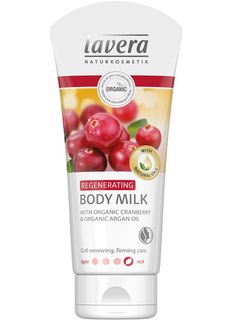
“Regenerating Body Milk”
This product can help improve hydration of the skin with the two types of ingredients.
The first type is called “humectants”:
these ingredients help attract water.
When humectants are on the surface of the skin, they “pull in” the moisture from the outside environment, or from
within deeper layers of the skin. The following ingredients in this product do the job:
glycerin, sodium hyaluronate.
This product also contains ingredients called “occlusives”. They help reduce the speed with which our skin loses moisture to the outside environment. These ingredients also help soften the upper layer of the skin, so it feels less tight and nicer to the touch. The following ingredients in this product do the job: butyrospermum parkii butter, caprylic/capric triglyceride.
Can it cause trouble?
Irritancy10 strong irritants: Alcohol, Parfum + 8 more — patch-test recommendedHigh risk
Comedogenic2 ingredients rated 2 or more on the 0–5 pore-clogging scale2 flagged
User reviews
Be the first — your take helps the next person decide.
Ingredients
Filter by role to see what each ingredient is doing.
Water~40–60%
Helianthus annuus seed oil~5.5–8.3%
- Irritation risk
- Low
A great emollient due to its high linoleic acid content. One of the most effective plant oils in helping skin hydration and repairing skin barrier function
More about Helianthus annuus seed oilGlycerin~3.2–4.9%
- Irritation risk
- Low
One of the best moisturizing ingredients. Naturally present in skin. It attracts water to the upper layer of the skin working as a humectant
More about GlycerinAlcohol~2.6–4%
- Irritation risk
- High
Can be drying and contribute to skin irritation. Used in formulars to dissolve other ingredients, create a thinner product consistency or for its antibacterial properties
More about AlcoholButyrospermum parkii butter~2–3.1%
- Irritation risk
- Low
- Comedogenicity
- 3/5
A great moisturising ingredient that softens the skin and reduces water loss from its upper layer. It also can be helpful in protecting skin from free radicals
More about Butyrospermum parkii butterDicaprylyl ether~1.6–2.4%
- Irritation risk
- Low
Helps soften the upper layer of the skin while creating a non-greasy feel on the skin. Helps to dissolve other ingredients
More about Dicaprylyl etherPotassium cetyl phosphate~1.3–2%
- Irritation risk
- Medium
Helps oil and water mix together
More about Potassium cetyl phosphateCaprylic/capric triglyceride~1.3–1.9%
- Irritation risk
- Medium
A good mix of fatty acids that forms a protective layer on the skin. Improves the shelf life of products. Derived from coconut and glycerin
More about Caprylic/capric triglycerideOctyldodecanol~0.95–1.45%
- Irritation risk
- Low
An emollient that helps to soften the skin and create a pleasant product texture and stabilize the formulation
More about OctyldodecanolHydrogenated palm glycerides~0.6–1.4%
- Irritation risk
- Low
An emollient that softens the skin
More about Hydrogenated palm glyceridesParfum~0.4–1%
- Irritation risk
- High
An aromatic blend of unspecified and possibly irritating ingredients
More about ParfumGlycine soja oil~0.35–0.85%
- Irritation risk
- Medium
- Comedogenicity
- 2/5
A good emollient that helps soften the skin and helps repair its barrier function. It can clog pores if used in high concentrations.
More about Glycine soja oilArgania spinosa kernel oil~0.35–0.8%
- Irritation risk
- Medium
An emollient that helps soften the upper layer of the skin. Might have some weak anti-oxidant properties
More about Argania spinosa kernel oilOlea europaea fruit oil~0.3–0.7%
- Irritation risk
- Medium
An emollient that helps soften the skin but is not effective for restoring its barrier function. Might be helpful to calm down inflammation
More about Olea europaea fruit oilVaccinium macrocarpon fruit extract~0.2–0.7%
- Irritation risk
- High
A berry extract. Might have some anti-oxidant properties
More about Vaccinium macrocarpon fruit extractPrunus amygdalus dulcis oil~0.2–0.75%
- Irritation risk
- Low
An emollient that softens the skin
More about Prunus amygdalus dulcis oilSimmondsia chinensis seed oil~0.2–0.75%
- Irritation risk
- Medium
Softens the upper layer of skin and helps restore the healthy skin barrier. Has shown to help calm down inflammation in skin. It is a stable oil, meaning that it retains its properties even when exposed to air.
More about Simmondsia chinensis seed oilXanthan gum~0.15–0.65%
- Irritation risk
- Low
Used to create a thicker product consistency
More about Xanthan gumCaffeine~0.15–0.55%
- Irritation risk
- Medium
Might be helpful in neutralizing free radicals. Can have a dehydration effect that might somewhat decrease the look of puffy eyes
More about CaffeineSodium stearoyl glutamate~0.15–0.6%
- Irritation risk
- Medium
Helps oil and water mix together
More about Sodium stearoyl glutamateSodium hyaluronate~0.1–0.45%
- Irritation risk
- Low
One of the best moisturizing ingredients. Attracts water into the upper layer of the skin
More about Sodium hyaluronateHydrogenated lecithin~0.1–0.45%
- Irritation risk
- Low
Helps to retain moisture by creating a protective barrier on the skin. Rich in fatty acids. Improves product texture and helps with the penetration of other ingredients.
More about Hydrogenated lecithinBrassica campestris sterols~0.1–0.4%
- Irritation risk
- Low
Help soften the upper layer of the skin
More about Brassica campestris sterolsTocopherol~0.1–0.35%
- Irritation risk
- Low
Pure form of vitamin E. Can help moisturise and protect the skin from free radicals. Often used to help stabilise other ingredients or the formula itself
More about TocopherolHelianthus annuus seed oil~0.1–0.4%
- Irritation risk
- Low
A great emollient due to its high linoleic acid content. One of the most effective plant oils in helping skin hydration and repairing skin barrier function
More about Helianthus annuus seed oilAscorbyl palmitate~0.05–0.3%
- Irritation risk
- Medium
Being a lipid soluble form of vitamin C, it is more stable and can penetrate the skin better than L-Ascorbic acid. It is effective in protecting the skin from free radicals, as well as evening the skin tone, but is less effective in stimulating collagen production compared to L-Ascorbic acid.
More about Ascorbyl palmitateLimonene~0.05–0.25%
- Irritation risk
- High
A common frangrance that can easily irritate skin, especially if exposed to air, light or heat
More about LimoneneLinalool~0.05–0.2%
Geraniol~0.05–0.2%
Citronellol~0.05–0.15%
Citral~0.05–0.2%
Benzyl salicylate~0.05–0.15%
Coumarin~0.01–0.1%
Eugenol~0.01–0.05%
Ingredient list view
Water, Helianthus annuus seed oil, Glycerin, Alcohol, Butyrospermum parkii butter, Dicaprylyl ether, Potassium cetyl phosphate, Caprylic/capric triglyceride, Octyldodecanol, Hydrogenated palm glycerides, Parfum, Glycine soja oil, Argania spinosa kernel oil, Olea europaea fruit oil, Vaccinium macrocarpon fruit extract, Prunus amygdalus dulcis oil, Simmondsia chinensis seed oil, Xanthan gum, Caffeine, Sodium stearoyl glutamate, Sodium hyaluronate, Hydrogenated lecithin, Brassica campestris sterols, Tocopherol, Helianthus annuus seed oil, Ascorbyl palmitate, Limonene, Linalool, Geraniol, Citronellol, Citral, Benzyl salicylate, Coumarin, Eugenol
Compare prices
Retailers ranked by price — lowest first.
Affiliate links · prices updated regularly · As an Amazon Associate, WIMJ earns from qualifying purchases.
Sources cited in this review
Every concentration estimate and effectiveness label is anchored to one of these 13 studies and safety reviews.
- 1
- 2
- 3Effect of topically applied lipids on surfactant-irritated skinonlinelibrary.wiley.com
- 4
- 5
- 6

Affiliate links · As an Amazon Associate, WIMJ earns from qualifying purchases.