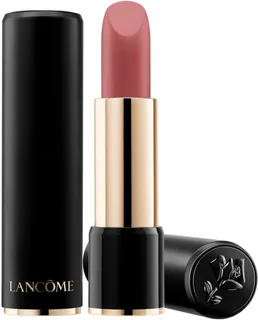
Works for
MoisturizingDimethicone, Bis-diglyceryl polyacyladipate-2 + 11 moreWorks
“Unlike most traditional matte lipsticks, this innovative lipcolor not only provides high color payoff but keeps lips feeling moisturized and comfortable.”
This product can help soften the skin and reduce its moisture loss with emollients and occlusives: bis-diglyceryl polyacyladipate-2, cera microcristallina.
Keep in mind that this product does not contain effective ingredients to attract water to the upper layer of the skin. This is why an additional product with humectants like glycerin or hyaluronic acid can be helpful (apply it before this product for the best results).
Can it cause trouble?
Irritancy5 strong irritants: Geraniol, Hydroxycitronellal + 3 more — patch-test recommendedHigh risk
Comedogenic3 ingredients rated 2 or more on the 0–5 pore-clogging scale3 flagged
User reviews
Be the first — your take helps the next person decide.
Ingredients
Filter by role to see what each ingredient is doing.
Dimethicone~22–33%
- Irritation risk
- Low
A silicone that helps to reduce water loss from the surface of the skin. Can temporarily "fill in" lines and wrinkles, absorb oil, and create a nice product finish
More about DimethiconeBis-diglyceryl polyacyladipate-2~4.5–6.7%
- Irritation risk
- Low
Helps soften the upper layer of the skin and reduce water loss from its surface
More about Bis-diglyceryl polyacyladipate-2Hydrogenated polyisobutene~4.6–6.9%
- Irritation risk
- Low
Used to improve the product consistency and soften the upper layer of the skin
More about Hydrogenated polyisobuteneTalc~3.7–5.6%
Phenyl trimethicone~2.8–4.1%
- Irritation risk
- Low
A type of silicone that can decrease loss of moisture from the skin surface. It helps create a nice product texture
More about Phenyl trimethiconeTridecyl trimellitate~2.1–3.1%
- Irritation risk
- Medium
Used to create a thicker product consistency and soften the upper layer of the skin
More about Tridecyl trimellitateHydrogenated jojoba oil~1.6–2.4%
- Irritation risk
- Low
Helps soften the upper layer of the skin
More about Hydrogenated jojoba oilDimethicone crosspolymer~1.1–1.6%
- Irritation risk
- Low
Used to create a thicker product texture. Helps soften the upper layer of the skin and might be able to prevent moisture loss from its surface
More about Dimethicone crosspolymerParaffin~0.95–1.45%
- Irritation risk
- Low
Prevents water loss from the skin surface and thickens the product consistency
More about ParaffinIsostearyl isostearate~0.55–1.25%
- Irritation risk
- Medium
- Comedogenicity
- 3/5
Helps soften the upper layer of the skin and improve the product texture. It can be comedogenic
More about Isostearyl isostearateCera microcristallina~0.5–1.1%
- Irritation risk
- Low
Helps to soften the upper layer of the skin, reduce water loss from its surface and create a thicker product consistency
More about Cera microcristallinaMicrocrystalline wax~0.35–0.85%
Ptfe~0.3–0.75%
Isohexadecane~0.35–0.8%
- Irritation risk
- Low
Improves the texture of the product and helps soften the skin. Helps oil and water mix together and can be used as a cleansing agent
More about IsohexadecaneVinyl dimethicone/methicone silsesquioxane crosspolymer~0.15–0.55%
- Irritation risk
- Low
A type of silicone that create a smooth product finish and can create an optical soft-focus effect on the skin. Helps to thicken the product consistency
More about Vinyl dimethicone/methicone silsesquioxane crosspolymerNylon-12~0.2–0.7%
Alumina~0.35–0.85%
- Irritation risk
- Low
The same compound that is used safely in dental implants and bone cements. In cosmetics, it is used to improve the consistency of products
More about AluminaPolyethylene~0.35–0.8%
Tin oxide~0.15–0.7%
- Irritation risk
- Low
A colorant that can add a pearl-like appearance to the formulation
More about Tin oxideWater~0.1–0.4%
Calcium aluminum borosilicate~0.1–0.45%
Calcium sodium borosilicate~0.1–0.45%
Silica~0.15–0.6%
Aluminum hydroxide~0.15–0.5%
- Irritation risk
- Low
Is used to add opaque (non-transparent) appearance to formulations. Can be used to coat other ingredients for even dispersion. This is a different ingredient compared to the ones used in antipersperants (aluminium chloride and aluminium chlorohydrate)
More about Aluminum hydroxideMagnesium silicate~0.1–0.5%
- Irritation risk
- Low
Colophonium~0.15–0.7%
- Irritation risk
- Low
Rosin~0.15–0.5%
- Irritation risk
- Low
Helps to create a film on the surface of the skin and create a thicker product texture
More about RosinPropylene glycol~0.1–0.35%
- Irritation risk
- High
Helps oil and water mix together and can enhance the penetration of other ingredients into the skin. It can be irritating
More about Propylene glycolHydroxypropyl tetrahydropyrantriol~0.1–0.4%
- Irritation risk
- Low
Pro-Xylane, a sugar-derived molecule developed by L'Oréal. In lab and skin-model studies it prompts skin cells to make more glycosaminoglycans, the water-holding molecules of the dermis. Evidence in people comes almost only from L'Oréal's own multi-ingredient products.
More about Hydroxypropyl tetrahydropyrantriolSynthetic fluorphlogopite~0.1–0.5%
- Irritation risk
- Low
A mineral that is used as an optical filter (makes the skin looks nicer through light reflection) and to improve the texture of cosmetic products
More about Synthetic fluorphlogopiteSynthetic wax~0.15–0.6%
- Irritation risk
- Low
Used to stabilize product formulations and thicken product consistency
More about Synthetic waxTocopherol~0.15–0.6%
- Irritation risk
- Low
Pure form of vitamin E. Can help moisturise and protect the skin from free radicals. Often used to help stabilise other ingredients or the formula itself
More about TocopherolPentaerythrityl tetra-di-t-butyl hydroxyhydrocinnamate~0.15–0.65%
- Irritation risk
- Low
Used to increase stability of product formulations
More about Pentaerythrityl tetra-di-t-butyl hydroxyhydrocinnamateGeraniol~0.1–0.4%
Hydroxycitronellal~0.1–0.4%
- Irritation risk
- High
A fragrance. A likely allergen and can be irritating
More about HydroxycitronellalCitronellol~0.1–0.4%
Hexyl cinnamal~0.1–0.4%
Benzyl alcohol~0.1–0.35%
- Irritation risk
- High
A preservative. Can be used to mask unpleasant smell. Can be irritating
More about Benzyl alcoholParfum~0.1–0.4%
- Irritation risk
- High
An aromatic blend of unspecified and possibly irritating ingredients
More about ParfumCi 15850~0.1–0.45%
Ci 15985~0.1–0.45%
Ci 19140~0.1–0.45%
Ci 17200~0.1–0.45%
Ci 45380~0.1–0.45%
Ci 45410~0.1–0.4%
Ci 75470~0.15–0.6%
Ci 77120~0.15–0.6%
- Irritation risk
- Low
Barium sulfate~0.15–0.7%
- Irritation risk
- Low
Iron oxides~0.15–0.55%
- Irritation risk
- Low
An umbrella term for the following three colorants: CI 77491, CI 77492, CI 77499. They might be able to offer some protection against visible light, but the degree of the protection is not clear
More about Iron oxidesCi 77742~0.15–0.55%
Ci 77891~0.15–0.5%
- Irritation risk
- Low
Titanium dioxide~0.2–0.75%
- Irritation risk
- Low
Works as a UV filter when used in high concentrations. It is photostable and is effective mostly against the UVB light, with some protection in the UVA range. In small concentrations, used for its ability to improve the color of cosmetic products. Is usually well tolerated by the skin
More about Titanium dioxideMica~0.15–0.55%
- Irritation risk
- Low
Creates an illusion of smoother and more radiant skin tone. Adds shimmer to the skin by reflecting light
More about MicaCi 15850~0.1–0.4%
Ci 19140~0.1–0.35%
Ci 42090~0.05–0.3%
Blue 1 lake~0.05–0.3%
Ingredient list view
Dimethicone, Bis-diglyceryl polyacyladipate-2, Hydrogenated polyisobutene, Talc, Phenyl trimethicone, Tridecyl trimellitate, Hydrogenated jojoba oil, Dimethicone crosspolymer, Paraffin, Isostearyl isostearate, Cera microcristallina, Microcrystalline wax, Ptfe, Isohexadecane, Vinyl dimethicone/methicone silsesquioxane crosspolymer, Nylon-12, Alumina, Polyethylene, Tin oxide, Water, Calcium aluminum borosilicate, Calcium sodium borosilicate, Silica, Aluminum hydroxide, Magnesium silicate, Colophonium, Rosin, Propylene glycol, Hydroxypropyl tetrahydropyrantriol, Synthetic fluorphlogopite, Synthetic wax, Tocopherol, Pentaerythrityl tetra-di-t-butyl hydroxyhydrocinnamate, Geraniol, Hydroxycitronellal, Citronellol, Hexyl cinnamal, Benzyl alcohol, Parfum, Ci 15850, Ci 15985, Ci 19140, Ci 17200, Ci 45380, Ci 45410, Ci 75470, Ci 77120, Barium sulfate, Iron oxides, Ci 77742, Ci 77891, Titanium dioxide, Mica, Ci 15850, Ci 19140, Ci 42090, Blue 1 lake
Compare prices
Retailers ranked by price — lowest first.
Worth comparing, line by line.
Match % combines shared ingredients, the first five ingredients, shared actives and hero ingredients, irritancy (lower counts in the alternative's favour), texture and body area. Only products in the same routine step are compared.
| LancômeL'Absolu Rouge Drama Matte LipcolorYOUR PRODUCT | Armani BeautyExclusive Lip Maestro Intense | Urban DecayMoondust Lip Eclipse | trStiQueMatte Color & Shiny Balm Lip Crayon | |
|---|---|---|---|---|
| Match | — | 38% | 32% | 31% |
| Price | — | $43.95 | — | — |
| Shared key ingredients | — | 4 of 7 | 4 of 7 | 4 of 7 |
| Key difference | — | Kaolin | Palmitoyl Tripeptide-1 | Agran Oil |
| Irritancy | High | Medium | Medium | Medium |
| Drying alcohol | — | — | — | — |
| View product | Shop | Shop | Shop |


More alternatives: Elizabeth Grant Green Power with Hemp Seed Oil Lip BalmClinique All About Lips
Sources cited in this review
Every concentration estimate and effectiveness label is anchored to one of these 22 studies and safety reviews.
- 1
- 2Final Report on the Safety Assessment of Dimethicone Copolyoljournals.sagepub.com
- 3
- 4
- 5Safety Assessment of Fluoropolymers as Used in Cosmeticscir-safety.org
- 6

Affiliate links · As an Amazon Associate, WIMJ earns from qualifying purchases.