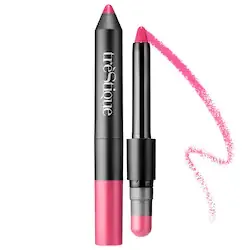
trStiQue Matte Color & Shiny Balm Lip Crayon
Works for
1 of 1 advertised claim delivered
Moisturizing17 ingredients credited for this claimGood support
“A two-in-one, modern lip duo featuring a matte lip crayon and shiny moisturizing lip balm.”
This product can help soften the skin and reduce its moisture loss with emollients and occlusives: bis-diglyceryl polyacyladipate-2, caprylic/capric triglyceride.
Keep in mind that this product does not contain effective ingredients to attract water to the upper layer of the skin. This is why an additional product with humectants like glycerin or hyaluronic acid can be helpful (apply it before this product for the best results).
Can it cause trouble?
Irritancy1 strong irritant: Ethyl vanillinMedium risk
Comedogenic5 ingredients rated 2 or more on the 0–5 pore-clogging scale5 flagged
User reviews
Be the first — your take helps the next person decide.
Ingredients
Filter by role to see what each ingredient is doing.
Isononyl isononanoate~25–30%
- Irritation risk
- Low
Forms a protective film on the surface of the skin to prevent moisture loss. Gives a velvety feel to products while reducing tackiness
More about Isononyl isononanoatePolymethylsilsesquioxane~3.9–4.8%
- Irritation risk
- Low
A silicone that improves product texture and helps dissolve other ingredients. Can form a non-greasy film on the skin to prevent moisture loss
More about PolymethylsilsesquioxaneSqualane~5.3–6.5%
- Irritation risk
- Low
An oil naturally present in skin. Works as an emollient to soften the skin and form a protective layer on its surface without a greasy feeling.
More about SqualaneHydrogenated polyisobutene~4.4–5.4%
- Irritation risk
- Low
Used to improve the product consistency and soften the upper layer of the skin
More about Hydrogenated polyisobutenePolyethylene~3.4–4.2%
Titanium dioxide~2.8–3.4%
- Irritation risk
- Low
Works as a UV filter when used in high concentrations. It is photostable and is effective mostly against the UVB light, with some protection in the UVA range. In small concentrations, used for its ability to improve the color of cosmetic products. Is usually well tolerated by the skin
More about Titanium dioxideSynthetic wax~1.8–2.2%
- Irritation risk
- Low
Used to stabilize product formulations and thicken product consistency
More about Synthetic waxCaprylic/capric triglyceride~1.7–2.1%
- Irritation risk
- Medium
A good mix of fatty acids that forms a protective layer on the skin. Improves the shelf life of products. Derived from coconut and glycerin
More about Caprylic/capric triglycerideC30-45 alkyl dimethicone~1.2–1.5%
- Irritation risk
- Low
Dimethicone/vinyl dimethicone crosspolymer~1.1–1.3%
- Irritation risk
- Low
Used to stabilize product formulations and create a nice product texture
More about Dimethicone/vinyl dimethicone crosspolymerStearalkonium bentonite~0.8–1.2%
- Irritation risk
- Low
Cetyl dimethicone~0.8–1.15%
- Irritation risk
- Low
A type of silicone. Helps soften the upper layer of the skin and creates a nice, light product texture
More about Cetyl dimethiconeDimethicone~0.75–1.1%
- Irritation risk
- Low
A silicone that helps to reduce water loss from the surface of the skin. Can temporarily "fill in" lines and wrinkles, absorb oil, and create a nice product finish
More about DimethiconeHydrogenated coconut oil~0.7–1.05%
- Irritation risk
- Low
- Comedogenicity
- 3/5
Lecithin~0.65–1%
- Irritation risk
- Low
Used mostly for creating emulsions - helping oil and water mix together. Helps soften the upper layer of the skin
More about LecithinPropylene carbonate~0.6–0.9%
- Irritation risk
- Low
Is used to dissolve other ingredients and create nice product texture
More about Propylene carbonateTocopherol~0.55–0.85%
- Irritation risk
- Low
Pure form of vitamin E. Can help moisturise and protect the skin from free radicals. Often used to help stabilise other ingredients or the formula itself
More about TocopherolAscorbyl palmitate~0.5–0.75%
- Irritation risk
- Medium
Being a lipid soluble form of vitamin C, it is more stable and can penetrate the skin better than L-Ascorbic acid. It is effective in protecting the skin from free radicals, as well as evening the skin tone, but is less effective in stimulating collagen production compared to L-Ascorbic acid.
More about Ascorbyl palmitateLaureth-4~0.5–0.75%
- Irritation risk
- Medium
- Comedogenicity
- 2/5
Helps water and oil mix together
More about Laureth-4Citric acid~0.45–0.65%
- Irritation risk
- Medium
Can work as an exfoliant but is typically used to adjust the product pH
More about Citric acidGardenia taitensis flower~0.45–0.65%
- Irritation risk
- Low
Mica~0.45–0.7%
- Irritation risk
- Low
Creates an illusion of smoother and more radiant skin tone. Adds shimmer to the skin by reflecting light
More about MicaTin oxide~0.5–0.75%
- Irritation risk
- Low
A colorant that can add a pearl-like appearance to the formulation
More about Tin oxideCi 19140~0.4–0.6%
Ci 77491~0.4–0.6%
- Irritation risk
- Low
A red colorant made of iron oxide. Typically is not irritating
More about Ci 77491Ci 77492~0.4–0.6%
Ci 77499~0.4–0.6%
Iron oxides~0.35–0.6%
- Irritation risk
- Low
An umbrella term for the following three colorants: CI 77491, CI 77492, CI 77499. They might be able to offer some protection against visible light, but the degree of the protection is not clear
More about Iron oxidesCi 45410~0.4–0.6%
Ci 15850~0.4–0.6%
Ci 42090~0.4–0.6%
Blue 1 lake~0.4–0.6%
Ci 15850~0.4–0.6%
Ci 77742~0.4–0.6%
Octyldodecanol~0.45–0.7%
- Irritation risk
- Low
An emollient that helps to soften the skin and create a pleasant product texture and stabilize the formulation
More about OctyldodecanolBis-diglyceryl polyacyladipate-2~0.5–0.75%
- Irritation risk
- Low
Helps soften the upper layer of the skin and reduce water loss from its surface
More about Bis-diglyceryl polyacyladipate-2Glyceryl isostearate~0.5–0.75%
Polyethylene~0.65–0.95%
Trimethylolpropane triisostearate~0.45–0.7%
- Irritation risk
- Low
Argania spinosa kernel oil~0.5–0.7%
- Irritation risk
- Medium
An emollient that helps soften the upper layer of the skin. Might have some weak anti-oxidant properties
More about Argania spinosa kernel oilSynthetic beeswax~0.4–0.6%
- Irritation risk
- Low
Helps soften the upper layer of the skin
More about Synthetic beeswaxSynthetic wax~0.5–0.7%
- Irritation risk
- Low
Used to stabilize product formulations and thicken product consistency
More about Synthetic waxEthylcellulose~0.55–0.8%
- Irritation risk
- Low
Cera microcristallina~0.5–0.75%
- Irritation risk
- Low
Helps to soften the upper layer of the skin, reduce water loss from its surface and create a thicker product consistency
More about Cera microcristallinaMicrocrystalline wax~0.4–0.65%
Cera microcristallina~0.5–0.75%
- Irritation risk
- Low
Helps to soften the upper layer of the skin, reduce water loss from its surface and create a thicker product consistency
More about Cera microcristallinaDiisostearyl malate~0.5–0.7%
- Irritation risk
- Medium
Helps to soften the upper layer of the skin
More about Diisostearyl malateGlyceryl stearate~0.5–0.75%
- Irritation risk
- Low
An emollient that softens the skin and forms a protective layer on its surface. Helps water and oil mix together
More about Glyceryl stearateStearalkonium hectorite~0.4–0.6%
Propylene carbonate~0.45–0.65%
- Irritation risk
- Low
Is used to dissolve other ingredients and create nice product texture
More about Propylene carbonateEthyl vanillin~0.35–0.6%
Pentaerythrityl tetra-di-t-butyl hydroxyhydrocinnamate~0.4–0.6%
- Irritation risk
- Low
Used to increase stability of product formulations
More about Pentaerythrityl tetra-di-t-butyl hydroxyhydrocinnamateHydrogenated coconut oil~0.5–0.7%
- Irritation risk
- Low
- Comedogenicity
- 3/5
Mica~0.4–0.65%
- Irritation risk
- Low
Creates an illusion of smoother and more radiant skin tone. Adds shimmer to the skin by reflecting light
More about MicaGardenia taitensis flower~0.35–0.65%
- Irritation risk
- Low
Tocopherol~0.3–0.6%
- Irritation risk
- Low
Pure form of vitamin E. Can help moisturise and protect the skin from free radicals. Often used to help stabilise other ingredients or the formula itself
More about TocopherolDicalcium phosphate~0.5–0.8%
- Irritation risk
- Low
Bht~0.3–0.55%
Titanium dioxide~0.45–0.7%
- Irritation risk
- Low
Works as a UV filter when used in high concentrations. It is photostable and is effective mostly against the UVB light, with some protection in the UVA range. In small concentrations, used for its ability to improve the color of cosmetic products. Is usually well tolerated by the skin
More about Titanium dioxideCi 77492~0.25–0.5%
Ci 77499~0.25–0.45%
Iron oxides~0.2–0.35%
- Irritation risk
- Low
An umbrella term for the following three colorants: CI 77491, CI 77492, CI 77499. They might be able to offer some protection against visible light, but the degree of the protection is not clear
More about Iron oxidesCi 15850~0.2–0.35%
Ci 45410~0.2–0.4%
Ci 19140~0.2–0.35%
Ci 42090~0.15–0.25%
Blue 1 lake~0.15–0.25%
Ingredient list view
Isononyl isononanoate, Polymethylsilsesquioxane, Squalane, Hydrogenated polyisobutene, Polyethylene, Titanium dioxide, Synthetic wax, Caprylic/capric triglyceride, C30-45 alkyl dimethicone, Dimethicone/vinyl dimethicone crosspolymer, Stearalkonium bentonite, Cetyl dimethicone, Dimethicone, Hydrogenated coconut oil, Lecithin, Propylene carbonate, Tocopherol, Ascorbyl palmitate, Laureth-4, Citric acid, Gardenia taitensis flower, Mica, Tin oxide, Ci 19140, Ci 77491, Ci 77492, Ci 77499, Iron oxides, Ci 45410, Ci 15850, Ci 42090, Blue 1 lake, Ci 15850, Ci 77742, Octyldodecanol, Bis-diglyceryl polyacyladipate-2, Glyceryl isostearate, Polyethylene, Trimethylolpropane triisostearate, Argania spinosa kernel oil, Synthetic beeswax, Synthetic wax, Ethylcellulose, Cera microcristallina, Microcrystalline wax, Cera microcristallina, Diisostearyl malate, Glyceryl stearate, Stearalkonium hectorite, Propylene carbonate, Ethyl vanillin, Pentaerythrityl tetra-di-t-butyl hydroxyhydrocinnamate, Hydrogenated coconut oil, Mica, Gardenia taitensis flower, Tocopherol, Dicalcium phosphate, Bht, Titanium dioxide, Ci 77492, Ci 77499, Iron oxides, Ci 15850, Ci 45410, Ci 19140, Ci 42090, Blue 1 lake
Compare prices
Retailers ranked by price — lowest first.
Sources cited in this review
Every concentration estimate and effectiveness label is anchored to one of these 12 studies and safety reviews.
- 1
- 2
- 3Final Report on the Safety Assessment of Dimethicone Copolyoljournals.sagepub.com
- 4Vitamin E in dermatologyncbi.nlm.nih.gov
- 5Vitamin E and Skin Healthlpi.oregonstate.edu
- 6Final Report on the Safety Assessment of Laureths 4 and 23journals.sagepub.com

Affiliate links · As an Amazon Associate, WIMJ earns from qualifying purchases.