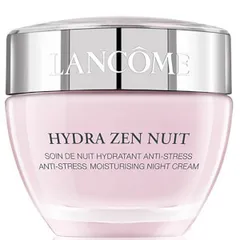
Works for:
based on ingredients and %- Moisturizing
Can it cause trouble?
- Irritation risk: high
- Comedogenic risk ingredients: 4
Key actives


Product Summary
Judging from the ingredient list, "Lancôme - Hydra Zen Neurocalm Night Cream" works well for improving skin hydration As we expect from a proper moisturizer, the formula includes a combo of effective humectants and emollients. These are the two different types of ingredients that are essential for improving the skin hydration and supporting a healthy skin barrier. Glycerin, sodium hyaluronate, butylene glycol and propylene glycol in this product (humectants) attract water molecules to the upper layer of the skin (the water comes from the outside air or from the deeper layers of the skin if the air is dry). Emollients in this formulation (ceramide 3, oryza sativa bran oil, sesamum indicum seed oil, triticum vulgare germ oil and butyrospermum parkii butter) help to reduce the moisture loss from the skin. They also soften the skin surface and relieve the feeling of dryness and tightness.
Ingredient callouts
- As a plus, this moisturizer also contains Ceramides (ceramide 3 0.25% - 0.50%). Ceramides are a type of lipids that our skin produces itself. They are a building block of the skin's barrier. Ceramides used in skincare are synthetic or extracted from plants. They work well for softening the skin surface and "patch holes" in the skin's barrier.
Irritation risk
This moisturizer contains a bunch of common irritants, including ingredients that do not provide any known benefit for the skin. It might not be the best choice if your skin is sensitive. We assess the overall irritancy of this moisturizer to be high. For a detailed overview of all potential irritants: click here
You can see the detailed formula review with the breakdown of all actives in the product and the full ingredient list with estimated concentrations in the tables below.
Price
The product retails for 35.25£ in the United Kingdom.
For a detailed price comparison: click here.
Works for
Moisturizing
What does the product description say?
Hydra Zen Neurocalm Night Cream
Source: From product name
This product can help improve hydration of the skin with the two types of ingredients.
The first type is called “humectants”:
these ingredients help attract water.
When humectants are on the surface of the skin, they “pull in” the moisture from the outside environment, or from
within deeper layers of the skin. The following ingredients in this product do the job:
glycerin, sodium hyaluronate.
This product also contains ingredients called “occlusives”. They help reduce the speed with which our skin loses moisture to the outside environment. These ingredients also help soften the upper layer of the skin, so it feels less tight and nicer to the touch. The following ingredients in this product do the job: butyrospermum parkii butter, dimethicone.
The following ingredients in this product are especially good for supporting the skin barrier and helping with the hydration level: ceramide 3, hydroxypalmitoyl sphinganine
Helps soften the upper layer of the skin and slow down the water loss over time
A silicone that makes products more spreadable and keeps skin smooth. Helps to add gloss to skin and may visually fill in fine lines/wrinkles for short time
A good moisturizing plant oil. Due to the high linoleic acid content, it helps soften the upper layer of the skin, reduce water loss and support skin barrier function
One of the best moisturizing ingredients. Attracts water into the upper layer of the skin
A good moisturizing plant oil. Due to the high linoleic acid content, it helps soften the upper layer of the skin, reduce water loss and support skin barrier function
A good emoillient. Contains vitamin E which can help neutralise free radicals, however the oil is unstable. Avoid if you have gluten or wheat sensitivity (including food allergies).
One of the best moisturizing ingredients. Naturally present in skin. It attracts water to the upper layer of the skin working as a humectant
A type of lipid similar to ceramides naturally present in skin. Helps to soften the upper layer of the skin and supports the skin barrier function to keep it hydrated. Can help to prevent inflammation in skin
A great moisturising ingredient that softens the skin and reduces water loss from its upper layer. It also can be helpful in protecting skin from free radicals
A type of lipid similar to ceramides naturally present in skin. Helps to soften the upper layer of the skin and supports the skin barrier function to keep it hydrated. Can help to prevent inflammation in skin
A silicone that helps to reduce water loss from the surface of the skin. Can temporarily "fill in" lines and wrinkles, absorb oil, and create a nice product finish
Helps soften the upper layer of the skin and might have some anti-oxidant properties
Might help attract water to the upper layer of the skin
Used to create a nice product texture and help delivery of other ingredients. Might be somewhat helpful in attracting water to the upper layer of the skin
Improves the texture of the product and helps soften the skin. Helps oil and water mix together and can be used as a cleansing agent
Used mostly for creating emulsions - helping oil and water mix together. Helps soften the upper layer of the skin
An emollient that helps to soften the skin and create a pleasant product texture and stabilize the formulation
Helps oil and water mix together and can enhance the penetration of other ingredients into the skin. It can be irritating
Is used to dissolve other ingredients and create nice product texture
Plant extract that might have moisturizing properties. Avoid if you suffer from wheat or gluten intolerance
How honest is this product?
| Promise | Can it deliver? |
|---|---|
| Moisturizing |
Total Promises Fulfilled score: 100/100.
We receive a small commission for purchases made through these links at no cost for you. Thank you for your support! Learn more
Affiliate link · supports WIMJ at no cost to you
Potential irritants
Comedogenic ingredients
User reviews (0)
Averages from community submissions.
No reviews yet for this product.
Be the first to share your experience!
Tried this product?
Help capture what the ingredient list can't—texture, finish, pilling, scent, and more. Answer what you can, skip the rest.
Takes ~30 seconds.
Reviews are shown in aggregate. No personal details.
| Product | Similarity | Price | Irritancy |
|---|---|---|---|
 Lancôme Hydra Zen Neurocalm Night Cream | Current | ≈ $47.01 | |
 BIOTHERM Aquasource Rich Cream for Dry Skin | 61% | ≈ $40.25 | |
Dr.G Hydra Intensive Cream | 52% | $41.70 | |
dreveryouth Vitamin C + Hyaluronic Acid Hydrabright Night Moisturiser | 50% | ≈ $21.35 |
Key Actives
A great moisturising ingredient that softens the skin and reduces water loss from its upper layer. It also can be helpful in protecting skin from free radicals
A type of lipid similar to ceramides naturally present in skin. Helps to soften the upper layer of the skin and supports the skin barrier function to keep it hydrated. Can help to prevent inflammation in skin
A type of lipid similar to ceramides naturally present in skin. Helps to soften the upper layer of the skin and supports the skin barrier function to keep it hydrated. Can help to prevent inflammation in skin
A silicone that helps to reduce water loss from the surface of the skin. Can temporarily "fill in" lines and wrinkles, absorb oil, and create a nice product finish
A good moisturizing plant oil. Due to the high linoleic acid content, it helps soften the upper layer of the skin, reduce water loss and support skin barrier function
A good emoillient. Contains vitamin E which can help neutralise free radicals, however the oil is unstable. Avoid if you have gluten or wheat sensitivity (including food allergies).
One of the best moisturizing ingredients. Naturally present in skin. It attracts water to the upper layer of the skin working as a humectant
Helps soften the upper layer of the skin and might have some anti-oxidant properties
One of the best moisturizing ingredients. Attracts water into the upper layer of the skin
A silicone that makes products more spreadable and keeps skin smooth. Helps to add gloss to skin and may visually fill in fine lines/wrinkles for short time
Helps soften the upper layer of the skin and slow down the water loss over time
A good moisturizing plant oil. Due to the high linoleic acid content, it helps soften the upper layer of the skin, reduce water loss and support skin barrier function
Potential irritants
Helps oil and water mix together and can enhance the penetration of other ingredients into the skin. It can be irritating
A common frangrance that can easily irritate skin, especially if exposed to air, light or heat
A preservative. Can be used to mask unpleasant smell. Can be irritating
A fragrance. Potential allergen and can be irritating
An aromatic blend of unspecified and possibly irritating ingredients
A more stable but less bio-available form of vitamin E compared to Tocopherol. Might help moisturize and protect the skin from free radicals, but mostly used in low concentrations to stabilize other ingredients.
Plant extract that might have moisturizing properties. Avoid if you suffer from wheat or gluten intolerance
Maintains the texture of skincare products. Allows the product to spread evenly. Helps oil and water mix together
Comedogenic ingredients
A great moisturising ingredient that softens the skin and reduces water loss from its upper layer. It also can be helpful in protecting skin from free radicals
A good moisturizing plant oil. Due to the high linoleic acid content, it helps soften the upper layer of the skin, reduce water loss and support skin barrier function
A good emoillient. Contains vitamin E which can help neutralise free radicals, however the oil is unstable. Avoid if you have gluten or wheat sensitivity (including food allergies).
Plant extract that might have moisturizing properties. Avoid if you suffer from wheat or gluten intolerance
All ingredients
One of the best moisturizing ingredients. Naturally present in skin. It attracts water to the upper layer of the skin working as a humectant
Helps oil and water mix together and can enhance the penetration of other ingredients into the skin. It can be irritating
A great moisturising ingredient that softens the skin and reduces water loss from its upper layer. It also can be helpful in protecting skin from free radicals
A silicone that helps to reduce water loss from the surface of the skin. Can temporarily "fill in" lines and wrinkles, absorb oil, and create a nice product finish
Helps soften the upper layer of the skin and might have some anti-oxidant properties
A good moisturizing plant oil. Due to the high linoleic acid content, it helps soften the upper layer of the skin, reduce water loss and support skin barrier function
Used mostly for creating emulsions - helping oil and water mix together. Helps soften the upper layer of the skin
A more stable but less bio-available form of vitamin E compared to Tocopherol. Might help moisturize and protect the skin from free radicals, but mostly used in low concentrations to stabilize other ingredients.
One of the best moisturizing ingredients. Attracts water into the upper layer of the skin
A type of lipid similar to ceramides naturally present in skin. Helps to soften the upper layer of the skin and supports the skin barrier function to keep it hydrated. Can help to prevent inflammation in skin
A preservative. It helps prevent bacterial growth in cosmetic products
A good emoillient. Contains vitamin E which can help neutralise free radicals, however the oil is unstable. Avoid if you have gluten or wheat sensitivity (including food allergies).
Plant extract that might have moisturizing properties. Avoid if you suffer from wheat or gluten intolerance
A silicone that makes products more spreadable and keeps skin smooth. Helps to add gloss to skin and may visually fill in fine lines/wrinkles for short time
Used to create a thicker product consistency
A common frangrance that can easily irritate skin, especially if exposed to air, light or heat
A preservative. Can be used to mask unpleasant smell. Can be irritating
Improves the texture of the product and helps soften the skin. Helps oil and water mix together and can be used as a cleansing agent
Is used to dissolve other ingredients and create nice product texture
Helps soften the upper layer of the skin and slow down the water loss over time
A fragrance. Potential allergen and can be irritating
Helps water and oil mix together and create gel-like textures
Maintains the texture of skincare products. Allows the product to spread evenly. Helps oil and water mix together
A type of lipid similar to ceramides naturally present in skin. Helps to soften the upper layer of the skin and supports the skin barrier function to keep it hydrated. Can help to prevent inflammation in skin
Might help attract water to the upper layer of the skin
A good moisturizing plant oil. Due to the high linoleic acid content, it helps soften the upper layer of the skin, reduce water loss and support skin barrier function
An emollient that helps to soften the skin and create a pleasant product texture and stabilize the formulation
Used to create a nice product texture and help delivery of other ingredients. Might be somewhat helpful in attracting water to the upper layer of the skin
An aromatic blend of unspecified and possibly irritating ingredients
Ingredient list view
Water, Glycerin, Propylene glycol, Butyrospermum parkii butter, Dimethicone, Oryza sativa bran oil, Silica, Unknown, Ci 14700, Zea mays oil, Lecithin, Tocopheryl acetate, Sodium hyaluronate, Sodium hydroxide, Hydroxypalmitoyl sphinganine, Phenoxyethanol, Stearalkonium hectorite, Paeonia suffruticosa extract, Paeonia suffruticosa root extract, Eugenol, Triticum vulgare germ oil, Triticum vulgare germ extract, Chlorphenesin, Polysorbate 81, Polycaprolactone, Poloxamer 188, Dimethiconol, Ammonium polyacryloyldimethyl taurate, Limonene, Benzyl alcohol, Isohexadecane, Propylene carbonate, 2-oleamido-1,3-octadecanediol, Alpha-isomethyl ionone, Acrylamide/sodium acryloyldimethyltaurate copolymer, Acrylates/c10-30 alkyl acrylate crosspolymer, Ceramide 3, Moringa pterygosperma seed extract, Sesamum indicum seed oil, Disodium edta, Unknown, Rosa gallica flower extract, Octyldodecanol, Butylene glycol, Citronellol, Parfum, Unknown
- Glycerol and the skin: holistic approach to its origin and functions
- Surfactants and experimental irritant contact dermatitis
- Propylene Glycol
- Skin-sensitizing and irritant properties of propylene glycol
- Dimethicone as a protective ingredient in topical medications
- Final Report on the Safety Assessment of Dimethicone Copolyol
- Study on the Composition of Rice Bran Oil and Its Higher Free Fatty Acids Value
- Content of fatty acids in corn (Zea mays L.) oil from Ecuador
- Hyaluronic acid: A key molecule in skin aging
- Hyaluronan (Hyaluronic Acid): a natural moisturizer for skin care
- Acceptability and Efficacy of an Emollient Containing Ceramide-Precursor Lipids and Moisturizing Factors for Atopic Dermatitis in Pediatric Patients
- Emollient treatment of atopic dermatitis: latest evidence and clinical considerations
- Wheat in skin care
- Safety Assessment of Acryloyldimethyltaurate Polymers as Used in Cosmetics
- Safety Assessment of Ceramides as Used in Cosmetics
- Topically Applied Ceramides Interact with the Stratum Corneum Lipid Matrix in Compromised Ex Vivo Skin
- Protein and oil composition of sesame seeds (Sesamum indicum, L.) grown in the Gizan area of Saudi Arabia
- Triglyceride composition of Sesamum indicum seed oil
- Seed oil content and fatty acid composition in East African sesame (Sesamum indicum L.) accessions evaluated over 3 years