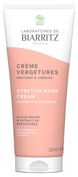
Laboratoires de Biarritz Stretch-Marks Cream Organic
Works for
0 of 1 advertised claim delivered
Evens skin toneNo ingredient credited for this claimNo support
“Laboratoires de Biarritz Stretch-Marks Cream Organic 200ml is a cream that associates two anti-stretch marks extracts Algu-Sendatu®, a patented extract of red algae, and an extract of sapotaceae.It prevents the appearance of stretch-marks by reinforcing the elasticity and firmness of the skin and if necessary, promotes their disappearance by stimulating the tissue restoration.It improves the skin suppleness and avoids the tightness and itching sensations.Hypoallergenic.”
Effective ingredients missing or their concentration is too low
MoisturizingNot advertised by the brand · 13 ingredients credited for this claimGood support
This product can help improve hydration of the skin with the two types of ingredients.
The first type is called “humectants”:
these ingredients help attract water.
When humectants are on the surface of the skin, they “pull in” the moisture from the outside environment, or from
within deeper layers of the skin. The following ingredients in this product do the job:
glycerin.
This product also contains ingredients called “occlusives”. They help reduce the speed with which our skin loses moisture to the outside environment. These ingredients also help soften the upper layer of the skin, so it feels less tight and nicer to the touch. The following ingredients in this product do the job: butyrospermum parkii butter, cocos nucifera oil.
Can it cause trouble?
Irritancy1 strong irritant: Sodium anisateMedium risk
Comedogenic2 ingredients rated 2 or more on the 0–5 pore-clogging scale2 flagged
User reviews
Be the first — your take helps the next person decide.
Ingredients
Filter by role to see what each ingredient is doing.
Water~40–60%
Butyrospermum parkii butter~5.3–8%
- Irritation risk
- Low
- Comedogenicity
- 3/5
A great moisturising ingredient that softens the skin and reduces water loss from its upper layer. It also can be helpful in protecting skin from free radicals
More about Butyrospermum parkii butterCocos nucifera oil~3.7–5.6%
- Irritation risk
- Low
- Comedogenicity
- 3/5
An emollient. Found to be as effective as a moisturizer for dry skin as mineral oil. Could be comedogenic
More about Cocos nucifera oilOlus oil~2.9–4.3%
- Irritation risk
- Low
An oil from a mixture of different vegetables. Helps soften the upper layer of the skin
More about Olus oilC10-18 triglycerides~2.1–3.2%
- Irritation risk
- Low
Helps soften the skin and attract water to its upper layer. Helps create nice product texture
More about C10-18 triglyceridesGlycerin~1.8–2.7%
- Irritation risk
- Low
One of the best moisturizing ingredients. Naturally present in skin. It attracts water to the upper layer of the skin working as a humectant
More about GlycerinGlyceryl stearate citrate~1.5–2.2%
- Irritation risk
- Low
Helps oil and water mix together while softening the upper layer of the skin
More about Glyceryl stearate citratePolyglyceryl-6 distearate~1.2–1.9%
- Irritation risk
- Medium
Helps oil and water mix together while softening the upper layer of the skin
More about Polyglyceryl-6 distearateHydrogenated castor oil~1–1.5%
- Irritation risk
- Medium
A plant oil that can help soften the skin. It might be helpful in calming down inflammation, but solid research is lacking. Is often used in lip products to create the needed product consistency
More about Hydrogenated castor oilCetyl alcohol~0.9–1.35%
- Irritation risk
- Low
A non-drying alcohol that works to soften the skin and stabilize product formulations helping oil and water mix together
More about Cetyl alcoholPropanediol~0.5–1.15%
- Irritation risk
- Low
Acts as a solvent for other ingredients. Speeds up the absorption of other ingredients into the skin
More about PropanediolGelidium sesquipedale extract~0.4–0.95%
- Irritation risk
- Low
Manilkara multinervis leaf extract~0.35–0.8%
- Irritation risk
- Low
Aloe barbadensis leaf juice powder~0.35–0.75%
- Irritation risk
- Medium
Traditionally used to treat sunburns, dermatitis and inflammation, but evidence for its effectiveness is lacking. The extract can contain humectants that help attract water into the skin
More about Aloe barbadensis leaf juice powderBisabolol~0.2–0.75%
- Irritation risk
- Low
An active component of chamomile plant that historically has been used to calm down irritated skin. A recent study shows that bisabolol indeed can have some anti-inflammatory effect on skin, even though conclusive data is lacking. Bisabolol has a sweet floral scent and can be added to products for its aromatic properties
More about BisabololSodium levulinate~0.15–0.7%
Xanthan gum~0.15–0.65%
- Irritation risk
- Low
Used to create a thicker product consistency
More about Xanthan gumJojoba esters~0.15–0.65%
- Irritation risk
- Medium
An emollient made of jojoba oil. Helps soften the skin and support its barrier function
More about Jojoba estersGlyceryl caprate~0.15–0.6%
- Irritation risk
- Low
Sodium anisate~0.1–0.4%
Polyglyceryl-3 beeswax~0.1–0.4%
- Irritation risk
- Medium
Helps water and oil mix together. Could be an allergen (beeswax)
More about Polyglyceryl-3 beeswaxHelianthus annuus seed oil~0.1–0.4%
- Irritation risk
- Low
A great emollient due to its high linoleic acid content. One of the most effective plant oils in helping skin hydration and repairing skin barrier function
More about Helianthus annuus seed oilTocopherol~0.05–0.3%
- Irritation risk
- Low
Pure form of vitamin E. Can help moisturise and protect the skin from free radicals. Often used to help stabilise other ingredients or the formula itself
More about TocopherolMaltodextrin~0.05–0.25%
- Irritation risk
- Low
Used to stabilize the product formulation and can help absorb oil
More about MaltodextrinCitric acid~0.05–0.1%
- Irritation risk
- Medium
Can work as an exfoliant but is typically used to adjust the product pH
More about Citric acidIngredient list view
Water, Butyrospermum parkii butter, Cocos nucifera oil, Olus oil, C10-18 triglycerides, Glycerin, Glyceryl stearate citrate, Polyglyceryl-6 distearate, Hydrogenated castor oil, Cetyl alcohol, Propanediol, Gelidium sesquipedale extract, Manilkara multinervis leaf extract, Aloe barbadensis leaf juice powder, Bisabolol, Sodium levulinate, Xanthan gum, Jojoba esters, Glyceryl caprate, Sodium anisate, Polyglyceryl-3 beeswax, Helianthus annuus seed oil, Tocopherol, Maltodextrin, Citric acid
Compare prices
Retailers ranked by price — lowest first.

Sources cited in this review
Every concentration estimate and effectiveness label is anchored to one of these 12 studies and safety reviews.
- 1
- 2
- 3
- 4
- 5
- 6

Affiliate links · As an Amazon Associate, WIMJ earns from qualifying purchases.