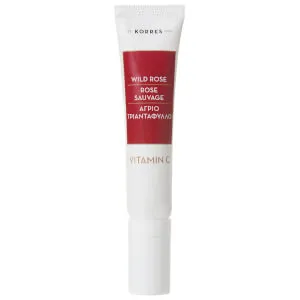
KORRES Apothecary Wild Rose Vitamin C Brightening Eye Cream
Works for
MoisturizingPanthenol, Caprylic/capric triglyceride + 15 moreWorks well
“Designed to hydrate and brighten, the cream works to improve the appearance of signs of premature ageing.”
This product can help improve hydration of the skin with the two types of ingredients.
The first type is called “humectants”:
these ingredients help attract water.
When humectants are on the surface of the skin, they “pull in” the moisture from the outside environment, or from
within deeper layers of the skin. The following ingredients in this product do the job:
betaine, glycerin.
This product also contains ingredients called “occlusives”. They help reduce the speed with which our skin loses moisture to the outside environment. These ingredients also help soften the upper layer of the skin, so it feels less tight and nicer to the touch. The following ingredients in this product do the job: caprylic/capric triglyceride, helianthus annuus seed oil.
The following ingredients in this product are especially good for supporting the skin barrier and helping with the hydration level: panthenol
Anti-agingSodium ascorbyl phosphate, Tocopherol + 1 moreNot delivered
“Designed to hydrate and brighten, the cream works to improve the appearance of signs of premature ageing.”
This product does not contain ingredients that are able to reduce fine lines and wrinkles or help with skin elasticity, but it can improve the look of the skin temporarily through moisturization. Well-moisturized skin might also be able to repair the sun damage better.
Evens skin toneLactic acid ~0.25–0.45%Under-dosed
“Apothecary Wild Rose Vitamin C Brightening Eye Cream”
Effective ingredients missing or their concentration is too low
Can it cause trouble?
Irritancy3 strong irritants: Parfum, Rosa rubiginosa seed oil + 1 more — patch-test recommendedHigh risk
Comedogenic2 ingredients rated 2 or more on the 0–5 pore-clogging scale2 flagged
User reviews
Be the first — your take helps the next person decide.
Ingredients
Filter by role to see what each ingredient is doing.
Water~45–55%
Ethylhexyl methoxycinnamate~5.9–7.2%
- Irritation risk
- High
Octinoxate. When used in higher concentrations, works as a sunscreen protecting the skin from UVB rays. When used in lower concentration, helps to preserve the product formulation. Is shown to be harmful to coral reefs - consider avoiding bathing in coral reef areas when wearing a product with this ingredient. It can be irritating
More about Ethylhexyl methoxycinnamateOctocrylene~4.5–5.5%
- Irritation risk
- Medium
A weak sunscreen that protects against the sun rays that cause sunburn (UVB) and is somewhat effective against the UVA rays. It is quite stable and can help stabilize other, more vulnerable, sunscreen ingredients like Avobenzone. It is an organic, or so called "chemical" sunscreen
More about OctocryleneButyl methoxydibenzoylmethane~3.5–4.3%
- Irritation risk
- Medium
Avobenzone. An organic, or so-called "chemical" UV filter. Protects against both UVA and UVB rays. Needs to be combined with other filters in a formulation to be stable.
More about Butyl methoxydibenzoylmethaneCaprylic/capric triglyceride~2.5–3.1%
- Irritation risk
- Medium
A good mix of fatty acids that forms a protective layer on the skin. Improves the shelf life of products. Derived from coconut and glycerin
More about Caprylic/capric triglycerideTriheptanoin~2–2.4%
- Irritation risk
- Low
A synthetic triglyceride. Helps soften the upper layer of the skin
More about TriheptanoinCetearyl alcohol~1.7–2.1%
- Irritation risk
- Low
- Comedogenicity
- 2/5
A non-drying alcohol. Works as an emollient. Helps water and oil mix together and creates a nice product texture
More about Cetearyl alcoholGlycerin~1.5–1.9%
- Irritation risk
- Low
One of the best moisturizing ingredients. Naturally present in skin. It attracts water to the upper layer of the skin working as a humectant
More about GlycerinBetaine~1.2–1.5%
- Irritation risk
- Low
Helps attract water to the upper layer of the skin and improves the product texture
More about BetaineAmmonium acryloyldimethyltaurate/vp copolymer~1–1.2%
- Irritation risk
- Low
Increases thickness of a product. Texture enhancer for oil-in-water emulsions
More about Ammonium acryloyldimethyltaurate/vp copolymerCoco-glucoside~0.75–1.15%
- Irritation risk
- High
Used as a cleansing agent (surfactant) in cleansers. Helps water and oil mix together in lotions. Can be irritating
More about Coco-glucosideSodium stearoyl glutamate~0.6–0.95%
- Irritation risk
- Medium
Helps oil and water mix together
More about Sodium stearoyl glutamateSucrose distearate~0.55–0.85%
Aesculus hippocastanum seed extract~0.45–0.7%
- Irritation risk
- High
Plant extract. Might have some anti-oxidant properties. Can be irritating
More about Aesculus hippocastanum seed extractButylene glycol~0.45–0.65%
- Irritation risk
- Low
Used to create a nice product texture and help delivery of other ingredients. Might be somewhat helpful in attracting water to the upper layer of the skin
More about Butylene glycolDistarch phosphate~0.45–0.65%
- Irritation risk
- Low
Ethylhexylglycerin~0.4–0.65%
Euphrasia officinalis extract~0.3–0.6%
- Irritation risk
- Low
Glycine soja oil~0.35–0.6%
- Irritation risk
- Medium
- Comedogenicity
- 2/5
A good emollient that helps soften the skin and helps repair its barrier function. It can clog pores if used in high concentrations.
More about Glycine soja oilHelianthus annuus seed oil~0.3–0.6%
- Irritation risk
- Low
A great emollient due to its high linoleic acid content. One of the most effective plant oils in helping skin hydration and repairing skin barrier function
More about Helianthus annuus seed oilHydroxyethylcellulose~0.3–0.55%
- Irritation risk
- Low
Used to thicken product formulations and create gel-like textures
More about HydroxyethylcelluloseLactic acid~0.25–0.45%
- Irritation risk
- Medium
An exfoliating and moisturizing alpha-hydroxy acid (AHA). Typically causes less irritation than other AHAs, for example, glycolic acid. At high concentrations (about 15%), lactic acid can help reduce lines and wrinkles. Recent studies show that lactic acid can support the "good" bacteria living on skin's surface (healthy skin microbiome)
More about Lactic acidLonicera caprifolium flower extract~0.2–0.35%
- Irritation risk
- High
A plant extract that might help neutralize free radicals in skin. Can contain volalite oils and be irritating
More about Lonicera caprifolium flower extractLonicera japonica flower extract~0.2–0.4%
- Irritation risk
- High
A plant extract that might help neutralize free radicals in skin. Can contain volalite oils and be irritating
More about Lonicera japonica flower extractOlea europaea oil unsaponifiables~0.2–0.4%
- Irritation risk
- Low
Help soften the upper layer of the skin
More about Olea europaea oil unsaponifiablesPanthenol~0.25–0.45%
- Irritation risk
- Low
Helps attract water to the upper layer of the skin and can help improve skin barrier function
More about PanthenolParfum~0.2–0.4%
- Irritation risk
- High
An aromatic blend of unspecified and possibly irritating ingredients
More about ParfumPhenoxyethanol~0.25–0.45%
- Irritation risk
- Low
A preservative. It helps prevent bacterial growth in cosmetic products
More about PhenoxyethanolRhodiola rosea root extract~0.25–0.45%
- Irritation risk
- Low
Rosa canina fruit oil~0.25–0.45%
- Irritation risk
- Medium
A great emollient. Contains vitamin E (tocopherol) which may give it some anti-oxidant properties. Can contain volatile compounds and can be irritating
More about Rosa canina fruit oilRosa rubiginosa seed oil~0.25–0.45%
- Irritation risk
- High
Plant oil that due to the high content of linoleic acid can support skin's barrier function and reduce moisture loss
More about Rosa rubiginosa seed oilRosmarinus officinalis leaf extract~0.2–0.35%
- Irritation risk
- High
Can be helpful in reducing inflammation in skin, including inflamed acne. It can be irritating
More about Rosmarinus officinalis leaf extractRuscus aculeatus root extract~0.2–0.35%
- Irritation risk
- Low
Saccharomyces cerevisiae extract~0.2–0.35%
- Irritation risk
- Medium
A moisturizing ingredient that works as a humectant to attract water to the upper layer of the skin.
More about Saccharomyces cerevisiae extractSaccharomyces/xylinum/black tea ferment~0.2–0.35%
- Irritation risk
- Low
A fermented sweet black tea. There is no studies on particular benefits of this ingredient in skin. It can help attract water to the upper layer of the skin, and might have some anti-oxidant effect. It is used in skincare for mostly marketing purposes because of the popularity of kombucha drinks
More about Saccharomyces/xylinum/black tea fermentSimmondsia chinensis seed oil~0.25–0.45%
- Irritation risk
- Medium
Softens the upper layer of skin and helps restore the healthy skin barrier. Has shown to help calm down inflammation in skin. It is a stable oil, meaning that it retains its properties even when exposed to air.
More about Simmondsia chinensis seed oilSodium ascorbyl phosphate~0.2–0.35%
- Irritation risk
- Medium
A stable derivative of vitamin C. It is oil-soluble which means it is more likely to penetrate the skin compared to the pure form of vitamin C (which is water-soluble), but it is less bio-available and is way less effective in stimulating collagen and reducing wrinkles compared to the pure form of vitamin C (L-ascorbic acid) and its other derivatives (for example, magnesium ascorbyl phosphate). At the same time, this vitamin C derivative has been shown in studies to be effective in reducing acne, blemishes and clogged pores. It is less irritating then the pure form of vitamin C
More about Sodium ascorbyl phosphateSodium gluceptate~0.15–0.25%
- Irritation risk
- Low
Tocopherol~0.15–0.25%
- Irritation risk
- Low
Pure form of vitamin E. Can help moisturise and protect the skin from free radicals. Often used to help stabilise other ingredients or the formula itself
More about TocopherolTocopheryl acetate~0.1–0.2%
- Irritation risk
- Medium
A more stable but less bio-available form of vitamin E compared to Tocopherol. Might help moisturize and protect the skin from free radicals, but mostly used in low concentrations to stabilize other ingredients.
More about Tocopheryl acetateXanthan gum~0.1–0.2%
- Irritation risk
- Low
Used to create a thicker product consistency
More about Xanthan gumIngredient list view
Water, Ethylhexyl methoxycinnamate, Octocrylene, Butyl methoxydibenzoylmethane, Caprylic/capric triglyceride, Triheptanoin, Cetearyl alcohol, Glycerin, Betaine, Ammonium acryloyldimethyltaurate/vp copolymer, Coco-glucoside, Sodium stearoyl glutamate, Sucrose distearate, Aesculus hippocastanum seed extract, Butylene glycol, Distarch phosphate, Ethylhexylglycerin, Euphrasia officinalis extract, Glycine soja oil, Helianthus annuus seed oil, Hydroxyethylcellulose, Lactic acid, Lonicera caprifolium flower extract, Lonicera japonica flower extract, Olea europaea oil unsaponifiables, Panthenol, Parfum, Phenoxyethanol, Rhodiola rosea root extract, Rosa canina fruit oil, Rosa rubiginosa seed oil, Rosmarinus officinalis leaf extract, Ruscus aculeatus root extract, Saccharomyces cerevisiae extract, Saccharomyces/xylinum/black tea ferment, Simmondsia chinensis seed oil, Sodium ascorbyl phosphate, Sodium gluceptate, Tocopherol, Tocopheryl acetate, Xanthan gum
Compare prices
Retailers ranked by price — lowest first.


Worth comparing, line by line.
Match % combines shared ingredients, the first five ingredients, shared actives and hero ingredients, irritancy (lower counts in the alternative's favour), texture and body area. Only products in the same routine step are compared.
| KORRESApothecary Wild Rose Vitamin C Brightening Eye CreamYOUR PRODUCT | BABORReVersive Anti-Aging Eye Cream | Image skincareAgeless Total Eye Lift Creme | Tree To TubGinseng Green Tea Anti-Aging Retinol Eye Cream | |
|---|---|---|---|---|
| Match | — | 47% | 47% | 46% |
| Price | — | — | $44.84 | $25.48 |
| Shared key ingredients | — | 6 of 17 | 5 of 17 | 6 of 17 |
| Key difference | — | Biosaccharide Gum-1 | Dipeptide-2 | Retinol |
| Irritancy | High | Medium | Medium | High |
| Drying alcohol | — | — | — | — |
| View product | Shop | Shop | Shop |



More alternatives: SCINIC Snail Matrix Eye CreamBliss Ex-Glow-Sion Eye Cream
Sources cited in this review
Every concentration estimate and effectiveness label is anchored to one of these 26 studies and safety reviews.
- 1
- 2
- 3Allergen of the Year—Alkyl Glucosidepracticeupdate.com
- 4
- 5
- 6

Affiliate links · As an Amazon Associate, WIMJ earns from qualifying purchases.