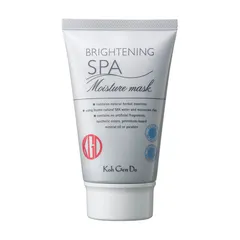
Works for:
based on ingredients and %- Moisturizing
Doesn't work for:
based on ingredients and %- Evens skin tone
Can it cause trouble?
- Irritation risk: high
- Comedogenic risk ingredients: 1
Key actives

Moisturizing
What does the product description say?
Brightening Moisture Mask
Source: From product name
This product can help improve hydration of the skin with the two types of ingredients.
The first type is called “humectants”:
these ingredients help attract water.
When humectants are on the surface of the skin, they “pull in” the moisture from the outside environment, or from
within deeper layers of the skin. The following ingredients in this product do the job:
glycerin, sodium acetylated hyaluronate.
This product also contains ingredients called “occlusives”. They help reduce the speed with which our skin loses moisture to the outside environment. These ingredients also help soften the upper layer of the skin, so it feels less tight and nicer to the touch. The following ingredients in this product do the job: beeswax, simmondsia chinensis seed oil.
Forms a protective barrier that holds water and keeps dry skin hydrated. Keeps an emulsion from separating into its oil and liquid components, and increases the thickness of a product. Can be an allergen
An oil naturally present in skin. Works as an emollient to soften the skin and form a protective layer on its surface without a greasy feeling.
Softens the upper layer of skin and helps restore the healthy skin barrier. Has shown to help calm down inflammation in skin. It is a stable oil, meaning that it retains its properties even when exposed to air.
A type of hyaluronic acid that works as an excellent moisturizer by attracting water into the upper layer of the skin. Is typically feels less sticky on the skin compared to the usual hyaluronic acid
A typically plant-derived compound that is supposed mimic human collagen. Cannot penetrate the skin barrier so is not particularly useful in skincare products beyond attracting water to the upper layer of the skin
One of the best moisturizing ingredients. Naturally present in skin. It attracts water to the upper layer of the skin working as a humectant
Used to stabilize the product formulations and works as an emollient
An emollient that helps soften the skin. Might be somewhat helpful in evening the skin tone.
Helps attract water to the skin and might have some anti-bacterial properties. Can be an allergen
Non-drying alcohol. Used to stabilize other ingredients and is an emollient
Non-drying alcohol that helps water and oil mix together. Also serves as an emollient
Used to create a nice product texture and help delivery of other ingredients. Might be somewhat helpful in attracting water to the upper layer of the skin
Helps soften the upper layer of the skin and create a nice product consistency
Helps water and oil mix together and softens the upper layer of the skin
Helps oil and water mix together and works as an emollient
A salt derived from licorice. Works as an emollient to soften the upper layer of the skin and can help calm down inflammation. Might be helpful for skin lightening
Pure form of vitamin E. Can help moisturise and protect the skin from free radicals. Often used to help stabilise other ingredients or the formula itself
Evens skin tone
What does the product description say?
Its refining properties help to decongest pores whilst diminishing their appearance, and calm redness for a balanced, more even-toned complexion.
Source: SkincareRX
This product contains ingredients (glycine soja seed extract) that could help reduce hyperpigmentation (for example, post-acne marks or age spots) in theory, but there is not enough evidence that they actually work.
An emollient that helps soften the skin. Might be somewhat helpful in evening the skin tone.
A salt derived from licorice. Works as an emollient to soften the upper layer of the skin and can help calm down inflammation. Might be helpful for skin lightening
How honest is this product?
| Promise | Can it deliver? |
|---|---|
| Moisturizing | |
| Evens skin tone |
Total Promises Fulfilled score: 62/100.
We receive a small commission for purchases made through these links at no cost for you. Thank you for your support! Learn more
Potential irritants
Comedogenic ingredients
User reviews (0)
Averages from community submissions.
No reviews yet for this product.
Be the first to share your experience!
Tried this product?
Help capture what the ingredient list can't—texture, finish, pilling, scent, and more. Answer what you can, skip the rest.
Takes ~30 seconds.
Reviews are shown in aggregate. No personal details.
Key Actives
Pure form of vitamin E. Can help moisturise and protect the skin from free radicals. Often used to help stabilise other ingredients or the formula itself
A salt derived from licorice. Works as an emollient to soften the upper layer of the skin and can help calm down inflammation. Might be helpful for skin lightening
Can be helpful in reducing inflammation in skin, including inflamed acne. It can be irritating
One of the best moisturizing ingredients. Naturally present in skin. It attracts water to the upper layer of the skin working as a humectant
Softens the upper layer of skin and helps restore the healthy skin barrier. Has shown to help calm down inflammation in skin. It is a stable oil, meaning that it retains its properties even when exposed to air.
An oil naturally present in skin. Works as an emollient to soften the skin and form a protective layer on its surface without a greasy feeling.
Works as a UV filter when used in high concentrations. It is photostable and is effective mostly against the UVB light, with some protection in the UVA range. In small concentrations, used for its ability to improve the color of cosmetic products. Is usually well tolerated by the skin
Forms a protective barrier that holds water and keeps dry skin hydrated. Keeps an emulsion from separating into its oil and liquid components, and increases the thickness of a product. Can be an allergen
A type of hyaluronic acid that works as an excellent moisturizer by attracting water into the upper layer of the skin. Is typically feels less sticky on the skin compared to the usual hyaluronic acid
A typically plant-derived compound that is supposed mimic human collagen. Cannot penetrate the skin barrier so is not particularly useful in skincare products beyond attracting water to the upper layer of the skin
Potential irritants
Can be drying and contribute to skin irritation. Used in formulars to dissolve other ingredients, create a thinner product consistency or for its antibacterial properties
A plant extract that is added for its fragrance. Can be irritating
Can be helpful in reducing inflammation in skin, including inflamed acne. It can be irritating
A plant extract that might have some anti-oxidant properties. It might be irritating
A plant extract that might help neutralize free radicals in skin. Can be used for its fragrance
Softens the upper layer of skin and helps restore the healthy skin barrier. Has shown to help calm down inflammation in skin. It is a stable oil, meaning that it retains its properties even when exposed to air.
Helps water and oil mix together and softens the upper layer of the skin
An emollient that helps soften the skin. Might be somewhat helpful in evening the skin tone.
Comedogenic ingredients
Used to stabilize the product formulations and works as an emollient
All ingredients
Used to create a nice product texture and help delivery of other ingredients. Might be somewhat helpful in attracting water to the upper layer of the skin
One of the best moisturizing ingredients. Naturally present in skin. It attracts water to the upper layer of the skin working as a humectant
Softens the upper layer of skin and helps restore the healthy skin barrier. Has shown to help calm down inflammation in skin. It is a stable oil, meaning that it retains its properties even when exposed to air.
Non-drying alcohol that helps water and oil mix together. Also serves as an emollient
Helps soften the upper layer of the skin and create a nice product consistency
An oil naturally present in skin. Works as an emollient to soften the skin and form a protective layer on its surface without a greasy feeling.
Used to stabilize the product formulations and works as an emollient
Helps water and oil mix together and softens the upper layer of the skin
Works as a UV filter when used in high concentrations. It is photostable and is effective mostly against the UVB light, with some protection in the UVA range. In small concentrations, used for its ability to improve the color of cosmetic products. Is usually well tolerated by the skin
Non-drying alcohol. Used to stabilize other ingredients and is an emollient
Helps absorb oil (for the time of application) and creates a thicker product consistency
Forms a protective barrier that holds water and keeps dry skin hydrated. Keeps an emulsion from separating into its oil and liquid components, and increases the thickness of a product. Can be an allergen
A preservative. It helps prevent bacterial growth in cosmetic products
An umbrella term for the following three colorants: CI 77491, CI 77492, CI 77499. They might be able to offer some protection against visible light, but the degree of the protection is not clear
Is used to add opaque (non-transparent) appearance to formulations. Can be used to coat other ingredients for even dispersion. This is a different ingredient compared to the ones used in antipersperants (aluminium chloride and aluminium chlorohydrate)
Pure form of vitamin E. Can help moisturise and protect the skin from free radicals. Often used to help stabilise other ingredients or the formula itself
A salt derived from licorice. Works as an emollient to soften the upper layer of the skin and can help calm down inflammation. Might be helpful for skin lightening
Helps attract water to the skin and might have some anti-bacterial properties. Can be an allergen
Can be drying and contribute to skin irritation. Used in formulars to dissolve other ingredients, create a thinner product consistency or for its antibacterial properties
Carrot extract. Might have anti-oxidant properties and be used to add orange color
A plant extract that is added for its fragrance. Can be irritating
A type of hyaluronic acid that works as an excellent moisturizer by attracting water into the upper layer of the skin. Is typically feels less sticky on the skin compared to the usual hyaluronic acid
Can be helpful in reducing inflammation in skin, including inflamed acne. It can be irritating
An emollient that helps soften the skin. Might be somewhat helpful in evening the skin tone.
A typically plant-derived compound that is supposed mimic human collagen. Cannot penetrate the skin barrier so is not particularly useful in skincare products beyond attracting water to the upper layer of the skin
A plant extract that might have some anti-oxidant properties. It might be irritating
A plant extract that might help neutralize free radicals in skin. Can be used for its fragrance
Ingredient list view
Water, Butylene glycol, Glycerin, Bentonite, Stearic acid, Simmondsia chinensis seed oil, Behenyl alcohol, Polyvinyl alcohol, Methyl gluceth-10, Phytosteryl/isostearyl/cetyl/stearyl/behenyl dimer dilinoleate, Squalane, Talc, Glyceryl stearate se, Diatomaceous earth, Polyglyceryl-10 stearate, Titanium dioxide, Batyl alcohol, Lauramide/myristamide dea, Moroccan lava clay, Beeswax, Potassium hydroxide, Phenoxyethanol, Sucrose stearate, Iron oxides, Aluminum hydroxide, Tocopherol, Dipotassium glycyrrhizate, Honey, Betula platyphylla japonica juice, Water, Alcohol, Daucus carota sativa root extract, Melissa officinalis leaf extract, Sodium acetylated hyaluronate, Rosmarinus officinalis leaf extract, Thymus serpyllum extract, Glycine soja seed extract, Soluble collagen, Salvia officinalis leaf extract, Cynara scolymus leaf extract, Lithospermum erythrorhizon root extract
- Glycerol and the skin: holistic approach to its origin and functions
- Safety Assessment of Polyglyceryl Fatty Acid Esters as Used in Cosmetics
- Safety Assessment of Alumina and Aluminum Hydroxide as Used in Cosmetics
- Vitamin E in dermatology
- Vitamin E and Skin Health
- Ameliorating effect of dipotassium glycyrrhizinate on an IL-4- and IL-13-induced atopic dermatitis-like skin-equivalent model
- Final report on the safety assessment of Glycyrrhetinic Acid, Potassium Glycyrrhetinate, Disodium Succinoyl Glycyrrhetinate, Glyceryl Glycyrrhetinate, Glycyrrhetinyl Stearate, Stearyl Glycyrrhetinate, Glycyrrhizic Acid, Ammonium Glycyrrhizate, Dipotassium Glycyrrhizate, Disodium Glycyrrhizate, Trisodium Glycyrrhizate, Methyl Glycyrrhizate, and Potassium Glycyrrhizinate.
- Acetylated Hyaluronic Acid: Enhanced Bioavailability and Biological Studies
- Allergic contact dermatitis induced by rosemary leaf extract in a cleansing gel
- Safety Assessment of Rosmarinus officinalis (Rosemary)-Derived Ingredients as Used in Cosmetics
- Rosmarinus officinalis Extract Suppresses Propionibacterium acnes–Induced Inflammatory Responses
- Allergic contact dermatitis caused by Salvia officinalis extract