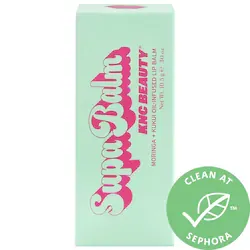
Works for
1 of 1 advertised claim delivered
Moisturizing11 ingredients credited for this claimGood support
“Kokum and Shea Butter: Moisturize and prevent lips from drying.”
This product can help soften the skin and reduce its moisture loss with emollients and occlusives: butyrospermum parkii butter, copernicia cerifera wax.
Keep in mind that this product does not contain effective ingredients to attract water to the upper layer of the skin. This is why an additional product with humectants like glycerin or hyaluronic acid can be helpful (apply it before this product for the best results).
Can it cause trouble?
Irritancy1 strong irritant: Mentha spicata herb oilMedium risk
Comedogenic2 ingredients rated 2 or more on the 0–5 pore-clogging scale2 flagged
User reviews
Be the first — your take helps the next person decide.
Ingredients
Filter by role to see what each ingredient is doing.
Diisostearyl malate~22–34%
- Irritation risk
- Medium
Helps to soften the upper layer of the skin
More about Diisostearyl malateSqualane~5.3–7.9%
- Irritation risk
- Low
An oil naturally present in skin. Works as an emollient to soften the skin and form a protective layer on its surface without a greasy feeling.
More about SqualaneRicinus communis seed oil~4.7–7%
- Irritation risk
- Medium
A plant oil that can help soften the skin. It might be helpful in calming down inflammation, but solid research is lacking. Is often used in lip products to create the needed product consistency
More about Ricinus communis seed oilMicrocrystalline wax~3.7–5.5%
Butyrospermum parkii butter~3–4.5%
- Irritation risk
- Low
- Comedogenicity
- 3/5
A great moisturising ingredient that softens the skin and reduces water loss from its upper layer. It also can be helpful in protecting skin from free radicals
More about Butyrospermum parkii butterEuphorbia cerifera wax~2.4–3.6%
- Irritation risk
- Low
Garcinia indica seed butter~1.6–2.4%
- Irritation risk
- Low
Helps soften the upper layer of the skin. It mostly contains oleic acid which is not the most effective emollient to prevent water loss, but might have an anti-inflammatory effect
More about Garcinia indica seed butterSilica~1.5–2.2%
Copernicia cerifera wax~1.3–2%
- Irritation risk
- Low
Helps to soften the upper layer of the skin and create a nice product consistency
More about Copernicia cerifera waxGlyceryl caprylate~1–1.5%
- Irritation risk
- Low
An emollient that can also help water and oil mix together, as well as prevent bacteria growth in products
More about Glyceryl caprylateMoringa oleifera seed oil~0.85–1.3%
- Irritation risk
- Medium
A plant oil that helps soften the upper layer of the skin. Is unlikely to be helpful in restoring skin barrier function due to the low content of linoleic acid
More about Moringa oleifera seed oilVanillin~0.5–1.15%
- Irritation risk
- Low
Gossypium herbaceum seed oil~0.45–1%
- Irritation risk
- Low
- Comedogenicity
- 3/5
Cottonseed oil. It is used as an emollient and occlusive in products. It is rich palmitic, oleic acid, and linoleic fatty acids.
More about Gossypium herbaceum seed oilAleurites moluccanus seed oil~0.4–0.9%
- Irritation risk
- Low
Helps soften the upper layer of the skin
More about Aleurites moluccanus seed oilMentha spicata herb oil~0.3–0.7%
- Irritation risk
- High
Tocopheryl acetate~0.15–0.55%
- Irritation risk
- Medium
A more stable but less bio-available form of vitamin E compared to Tocopherol. Might help moisturize and protect the skin from free radicals, but mostly used in low concentrations to stabilize other ingredients.
More about Tocopheryl acetateAscorbyl palmitate~0.1–0.4%
- Irritation risk
- Medium
Being a lipid soluble form of vitamin C, it is more stable and can penetrate the skin better than L-Ascorbic acid. It is effective in protecting the skin from free radicals, as well as evening the skin tone, but is less effective in stimulating collagen production compared to L-Ascorbic acid.
More about Ascorbyl palmitateTocopherol~0.1–0.35%
- Irritation risk
- Low
Pure form of vitamin E. Can help moisturise and protect the skin from free radicals. Often used to help stabilise other ingredients or the formula itself
More about TocopherolMica~0.05–0.3%
- Irritation risk
- Low
Creates an illusion of smoother and more radiant skin tone. Adds shimmer to the skin by reflecting light
More about MicaTitanium dioxide~0.1–0.3%
- Irritation risk
- Low
Works as a UV filter when used in high concentrations. It is photostable and is effective mostly against the UVB light, with some protection in the UVA range. In small concentrations, used for its ability to improve the color of cosmetic products. Is usually well tolerated by the skin
More about Titanium dioxideCi 77491~0.05–0.15%
- Irritation risk
- Low
A red colorant made of iron oxide. Typically is not irritating
More about Ci 77491Ingredient list view
Diisostearyl malate, Squalane, Ricinus communis seed oil, Microcrystalline wax, Butyrospermum parkii butter, Euphorbia cerifera wax, Garcinia indica seed butter, Silica, Copernicia cerifera wax, Glyceryl caprylate, Moringa oleifera seed oil, Vanillin, Gossypium herbaceum seed oil, Aleurites moluccanus seed oil, Mentha spicata herb oil, Tocopheryl acetate, Ascorbyl palmitate, Tocopherol, Mica, Titanium dioxide, Ci 77491
Compare prices
Retailers ranked by price — lowest first.

Affiliate links · prices updated regularly
Sources cited in this review
Every concentration estimate and effectiveness label is anchored to one of these 8 studies and safety reviews.
- 1
- 2
- 3
- 4TECHNICAL DATA SHEET KOKUM FAT 2.imimg.com
- 5
- 6

Affiliate links · As an Amazon Associate, WIMJ earns from qualifying purchases.