Works for
1 of 1 advertised claim delivered
Moisturizing9 ingredients credited for this claimStrong support
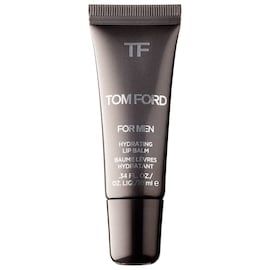
“Hydrating Lip Balm”
This product can help soften the skin and reduce its moisture loss with emollients and occlusives: butyrospermum parkii butter, ricinus communis seed oil.
Keep in mind that this product does not contain effective ingredients to attract water to the upper layer of the skin. This is why an additional product with humectants like glycerin or hyaluronic acid can be helpful (apply it before this product for the best results).
The following ingredients in this product are especially good for supporting the skin barrier and helping with the hydration level: petrolatum
Can it cause trouble?
Irritancy3 flagged ingredientsLow risk
Comedogenic2 ingredients rated 2 or more on the 0–5 pore-clogging scale2 flagged

User reviews
Be the first — your take helps the next person decide.
Ingredients
Filter by role to see what each ingredient is doing.
Petrolatum~22–33%
- Irritation risk
- Low
One of the most effective and the most studied occlusive ingredients that creates a protective layer on top of the skin preventing moisture loss
More about PetrolatumPolybutene~4.2–6.3%
Silica~4.5–6.7%
Polyisobutene~3.9–5.8%
Butyrospermum parkii butter~3–4.5%
- Irritation risk
- Low
- Comedogenicity
- 3/5
A great moisturising ingredient that softens the skin and reduces water loss from its upper layer. It also can be helpful in protecting skin from free radicals
More about Butyrospermum parkii butterPrunus amygdalus dulcis oil~2–3.1%
- Irritation risk
- Low
An emollient that softens the skin
More about Prunus amygdalus dulcis oilRicinus communis seed oil~1.7–2.6%
- Irritation risk
- Medium
A plant oil that can help soften the skin. It might be helpful in calming down inflammation, but solid research is lacking. Is often used in lip products to create the needed product consistency
More about Ricinus communis seed oilTriticum vulgare germ oil~1.3–1.9%
- Irritation risk
- Low
- Comedogenicity
- 3/5
A good emoillient. Contains vitamin E which can help neutralise free radicals, however the oil is unstable. Avoid if you have gluten or wheat sensitivity (including food allergies).
More about Triticum vulgare germ oilPersea gratissima oil~1–1.5%
- Irritation risk
- Medium
An emollient that helps soften the skin and could be helpful in repairing its barrier function
More about Persea gratissima oilTocopherol~0.8–1.25%
- Irritation risk
- Low
Pure form of vitamin E. Can help moisturise and protect the skin from free radicals. Often used to help stabilise other ingredients or the formula itself
More about TocopherolSqualane~0.6–1.35%
- Irritation risk
- Low
An oil naturally present in skin. Works as an emollient to soften the skin and form a protective layer on its surface without a greasy feeling.
More about SqualaneCholesterol~0.5–1.15%
- Irritation risk
- Low
An emollient that is naturally found in skin
More about CholesterolAscorbyl palmitate~0.35–0.8%
- Irritation risk
- Medium
Being a lipid soluble form of vitamin C, it is more stable and can penetrate the skin better than L-Ascorbic acid. It is effective in protecting the skin from free radicals, as well as evening the skin tone, but is less effective in stimulating collagen production compared to L-Ascorbic acid.
More about Ascorbyl palmitatePentaerythrityl tetra-di-t-butyl hydroxyhydrocinnamate~0.2–0.8%
- Irritation risk
- Low
Used to increase stability of product formulations
More about Pentaerythrityl tetra-di-t-butyl hydroxyhydrocinnamateVanillin~0.15–0.6%
- Irritation risk
- Low
Ci 77491~0.1–0.35%
- Irritation risk
- Low
A red colorant made of iron oxide. Typically is not irritating
More about Ci 77491Ci 77499~0.05–0.2%
Ci 77492~0.05–0.15%
Ingredient list view
Petrolatum, Polybutene, Silica, Polyisobutene, Butyrospermum parkii butter, Prunus amygdalus dulcis oil, Ricinus communis seed oil, Triticum vulgare germ oil, Persea gratissima oil, Tocopherol, Squalane, Cholesterol, Ascorbyl palmitate, Unknown, Pentaerythrityl tetra-di-t-butyl hydroxyhydrocinnamate, Vanillin, Unknown, Ci 77491, Ci 77499, Ci 77492
Compare prices
Retailers ranked by price — lowest first.
Affiliate links · prices updated regularly · As an Amazon Associate, WIMJ earns from qualifying purchases.
Worth comparing, line by line.
Match % combines shared ingredients, the first five ingredients, shared actives and hero ingredients, irritancy (lower counts in the alternative's favour), texture and body area. Only products in the same routine step are compared.
| Tom FordHydrating Lip BalmYOUR PRODUCT | CliniqueMoisture Surge Lip Hydro-Plump Treatment | |
|---|---|---|
| Match | — | 52% |
| Price | $29.08 | $16.00−$13.08 |
| Shared key ingredients | — | 3 of 8 |
| Key difference | — | Ceramide Ng |
| Irritancy | Low | Low |
| Drying alcohol | — | — |
| View product | Shop |

Product summary
"Tom Ford - Hydrating Lip Balm" is a well-rounded moisturizing product.
Irritation risk
This lip sunscreen contains some common irritants, including those without a benefit for the skin. We assess the overall irritancy of this lip sunscreen to be medium. For a detailed overview of all potential irritants: click here
You can see the detailed formula review with the breakdown of all actives in the product and the full ingredient list with estimated concentrations in the tables below.
Price
The product retails for 70.63$ in the United States, for 22.00£ in the United Kingdom and for 37.00CA$ in Canada.
For a detailed price comparison: click here.
Sources cited in this review
Every concentration estimate and effectiveness label is anchored to one of these 9 studies and safety reviews.
- 1
- 2
- 3
- 4
- 5
- 6

Affiliate links · As an Amazon Associate, WIMJ earns from qualifying purchases.