Works for:
based on ingredients and %- Moisturizing
- Anti-oxidation
Doesn't work for:
based on ingredients and %- Anti-aging
- Evens skin tone
Can it cause trouble?
- Irritation risk: high
- Comedogenic risk ingredients: 2
Key actives

Anti-oxidation
This product contains antioxidants (malpighia punicifolia fruit extract) that might be able to help neutralize free radicals in skin to lessen the damage it gets from the UV light (sun). There is not enough evidence to confirm their effectiveness in skin though.
A fruit extract that might help neutralize free radicals. The concentrations typically used in cosmetics are too small to have an effect
A plant extract that can help neutralize free radicals in skin. It contains a compound salicin that can theoretically be converted into salicylic acid that, in turn, helps reduce inflammation in skin, but the evidence of effectiveness in skin is lacking and the extract is usually not used in a concentration that would enable an exfoliating effect
A fruit extract that is used to add a fragrance to the product. It might have some antioxidant properties
Pure form of vitamin E. Can help moisturise and protect the skin from free radicals. Often used to help stabilise other ingredients or the formula itself
Moisturizing
What does the product description say?
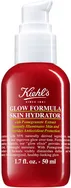
Glow Formula Skin Hydrator
Source: Kiehl's
This product can help improve hydration of the skin with the two types of ingredients.
The first type is called “humectants”:
these ingredients help attract water.
When humectants are on the surface of the skin, they “pull in” the moisture from the outside environment, or from
within deeper layers of the skin. The following ingredients in this product do the job:
glycerin, caprylyl glycol.
This product also contains ingredients called “occlusives”. They help reduce the speed with which our skin loses moisture to the outside environment. These ingredients also help soften the upper layer of the skin, so it feels less tight and nicer to the touch. The following ingredients in this product do the job: caprylic/capric triglyceride, squalane.
A good emollient that helps soften the skin and helps repair its barrier function. It can clog pores if used in high concentrations.
A good mix of fatty acids that forms a protective layer on the skin. Improves the shelf life of products. Derived from coconut and glycerin
One of the best moisturizing ingredients. Naturally present in skin. It attracts water to the upper layer of the skin working as a humectant
An oil naturally present in skin. Works as an emollient to soften the skin and form a protective layer on its surface without a greasy feeling.
A non-drying alcohol. Works as an emollient. Helps water and oil mix together and creates a nice product texture
Used to soften the upper layer of the skin and create a thicker product consistency
An emollient that softens the skin and forms a protective layer on its surface. Helps water and oil mix together
Helps preserve products and creates a nice product texture
An emollient that helps to soften the skin and create a pleasant product texture and stabilize the formulation
Non-drying alcohol that helps water and oil mix together. Also serves as an emollient
Helps products spread more easily and works as an emollient to soften skin
Pure form of vitamin E. Can help moisturise and protect the skin from free radicals. Often used to help stabilise other ingredients or the formula itself
Anti-aging
What does the product description say?
Featuring illuminating minerals to further enhance brightness, Kiehl’s Glow Formula Skin Hydrator is a sophisticated product that works to make the wearer look energetic, youthful and thoroughly refreshed.
Source: SpaceNK
This product does not contain ingredients that are able to reduce fine lines and wrinkles or help with skin elasticity, but it can improve the look of the skin temporarily through moisturization. Well-moisturized skin might also be able to repair the sun damage better.
This ingredient malpighia punicifolia fruit extract might be able to help neutralize free radicals in skin and help it fight off some of the sun damage.
Pure form of vitamin E. Can help moisturise and protect the skin from free radicals. Often used to help stabilise other ingredients or the formula itself
Evens skin tone
What does the product description say?
Helps to condition and even the skin tone
Source: SpaceNK
Effective ingredients missing or their concentration is too low
How honest is this product?
| Promise | Can it deliver? |
|---|---|
| Moisturizing | |
| Anti-aging | |
| Evens skin tone |
Total Promises Fulfilled score: 41/100.
We receive a small commission for purchases made through these links at no cost for you. Thank you for your support! Learn more
Potential irritants
Comedogenic ingredients
User reviews (0)
Averages from community submissions.
No reviews yet for this product.
Be the first to share your experience!
Tried this product?
Help capture what the ingredient list can't—texture, finish, pilling, scent, and more. Answer what you can, skip the rest.
Takes ~30 seconds.
Reviews are shown in aggregate. No personal details.
Key Actives
Pure form of vitamin E. Can help moisturise and protect the skin from free radicals. Often used to help stabilise other ingredients or the formula itself
One of the best moisturizing ingredients. Naturally present in skin. It attracts water to the upper layer of the skin working as a humectant
A good mix of fatty acids that forms a protective layer on the skin. Improves the shelf life of products. Derived from coconut and glycerin
An oil naturally present in skin. Works as an emollient to soften the skin and form a protective layer on its surface without a greasy feeling.
Works as a UV filter when used in high concentrations. It is photostable and is effective mostly against the UVB light, with some protection in the UVA range. In small concentrations, used for its ability to improve the color of cosmetic products. Is usually well tolerated by the skin
A good emollient that helps soften the skin and helps repair its barrier function. It can clog pores if used in high concentrations.
A fruit extract that might help neutralize free radicals. The concentrations typically used in cosmetics are too small to have an effect
Potential irritants
A plant extract that can help neutralize free radicals in skin. It contains a compound salicin that can theoretically be converted into salicylic acid that, in turn, helps reduce inflammation in skin, but the evidence of effectiveness in skin is lacking and the extract is usually not used in a concentration that would enable an exfoliating effect
An aromatic blend of unspecified and possibly irritating ingredients
A common frangrance that can easily irritate skin, especially if exposed to air, light or heat
A fruit extract that is used to add a fragrance to the product. It might have some antioxidant properties
A good mix of fatty acids that forms a protective layer on the skin. Improves the shelf life of products. Derived from coconut and glycerin
Can work as an exfoliant but is typically used to adjust the product pH
Helps preserve products and creates a nice product texture
A good emollient that helps soften the skin and helps repair its barrier function. It can clog pores if used in high concentrations.
An alpha-hydroxy acid (AHA), but is mostly used to stabilize product formulations in cosmetics
Comedogenic ingredients
A non-drying alcohol. Works as an emollient. Helps water and oil mix together and creates a nice product texture
A good emollient that helps soften the skin and helps repair its barrier function. It can clog pores if used in high concentrations.
All ingredients
Helps products spread more easily and works as an emollient to soften skin
An emollient that helps to soften the skin and create a pleasant product texture and stabilize the formulation
One of the best moisturizing ingredients. Naturally present in skin. It attracts water to the upper layer of the skin working as a humectant
A good mix of fatty acids that forms a protective layer on the skin. Improves the shelf life of products. Derived from coconut and glycerin
An oil naturally present in skin. Works as an emollient to soften the skin and form a protective layer on its surface without a greasy feeling.
An emollient that softens the skin and forms a protective layer on its surface. Helps water and oil mix together
Acts as a solvent for other ingredients. Speeds up the absorption of other ingredients into the skin
A plant extract that can help neutralize free radicals in skin. It contains a compound salicin that can theoretically be converted into salicylic acid that, in turn, helps reduce inflammation in skin, but the evidence of effectiveness in skin is lacking and the extract is usually not used in a concentration that would enable an exfoliating effect
Creates an illusion of smoother and more radiant skin tone. Adds shimmer to the skin by reflecting light
Used to soften the upper layer of the skin and create a thicker product consistency
Works as a UV filter when used in high concentrations. It is photostable and is effective mostly against the UVB light, with some protection in the UVA range. In small concentrations, used for its ability to improve the color of cosmetic products. Is usually well tolerated by the skin
A non-drying alcohol. Works as an emollient. Helps water and oil mix together and creates a nice product texture
Pure form of vitamin E. Can help moisturise and protect the skin from free radicals. Often used to help stabilise other ingredients or the formula itself
Non-drying alcohol that helps water and oil mix together. Also serves as an emollient
An aromatic blend of unspecified and possibly irritating ingredients
Can work as an exfoliant but is typically used to adjust the product pH
A common frangrance that can easily irritate skin, especially if exposed to air, light or heat
Helps preserve products and creates a nice product texture
An umbrella term for the following three colorants: CI 77491, CI 77492, CI 77499. They might be able to offer some protection against visible light, but the degree of the protection is not clear
A good emollient that helps soften the skin and helps repair its barrier function. It can clog pores if used in high concentrations.
An alpha-hydroxy acid (AHA), but is mostly used to stabilize product formulations in cosmetics
A fruit extract that is used to add a fragrance to the product. It might have some antioxidant properties
A fruit extract that might help neutralize free radicals. The concentrations typically used in cosmetics are too small to have an effect
Ingredient list view
Water, Dicaprylyl carbonate, Octyldodecanol, Glycerin, Caprylic/capric triglyceride, Squalane, Glyceryl stearate, Propanediol, Salix alba bark extract, Mica, Arachidyl alcohol, Titanium dioxide, Cetearyl alcohol, Tocopherol, Behenyl alcohol, Parfum, Citric acid, Sodium hydroxide, Arachidyl glucoside, Limonene, Caprylyl glycol, Xanthan gum, Iron oxides, Potassium sorbate, Malus domestica fruit cell culture extract, Glycine soja oil, Phytic acid, Citral, Sodium benzoate, Linalool, Punica granatum fruit extract, Malpighia punicifolia fruit extract