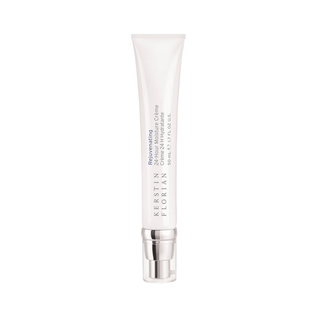
Kerstin Florian Rejuvenating 24-Hour Moisture Creme with Antioxidants
Works for
2 of 2 advertised claims delivered
Anti-agingTocopherol, Butyrospermum parkii butter + 2 moreModerate evidence
“Rich in antioxidants which can help defend against external factors, the moisturiser melts effortlessly into skin, softening and nourishing whilst helping to diminish the appearance of fine lines for a smoother, younger-looking complexion.”
This product contains tocopherol. This ingredient help neutralize free radicals in skin. By doing so, they might be able to prevent early signs of aging (like fine lines and wrinkles), at least to some extent. These ingredients will not be able to "reverse" signs of aging.
MoisturizingCaprylic/capric triglyceride, Dimethicone + 14 moreGood evidence
“Replenish and nourish your skin with Kerstin Florian Rejuvenating 24-Hour Moisture Crème , a deeply hydrating and anti-ageing cream that delivers long-lasting moisture whilst protecting against environmental aggressors.”
This product can help soften the skin and reduce its moisture loss with emollients and occlusives: caprylic/capric triglyceride, dimethicone.
Keep in mind that this product does not contain effective ingredients to attract water to the upper layer of the skin. This is why an additional product with humectants like glycerin or hyaluronic acid can be helpful (apply it before this product for the best results).
Anti-oxidationNot advertised by the brand · Tocopherol, Borago officinalis seed oil + 6 moreStrong evidence
This product contains antioxidants (tocopherol) that can help neutralize free radicals in skin. By doing so, they can lessen the damage the skin gets from the UV light (sun).
Can it cause trouble?
Irritancy6 strong irritants: Parfum, Limonene + 4 more — patch-test recommendedHigh risk
Comedogenic5 ingredients rated 2 or more on the 0–5 pore-clogging scale5 flagged
User reviews
Be the first — your take helps the next person decide.
Ingredients
Filter by role to see what each ingredient is doing.
Water~45–55%
Octyldodecanol~5.2–6.4%
- Irritation risk
- Low
An emollient that helps to soften the skin and create a pleasant product texture and stabilize the formulation
More about OctyldodecanolPentylene glycol~4.1–5%
- Irritation risk
- Medium
Used to preserve products, dissolve other ingredients and create a nice product texture
More about Pentylene glycolCetearyl alcohol~2.5–3%
- Irritation risk
- Low
- Comedogenicity
- 2/5
A non-drying alcohol. Works as an emollient. Helps water and oil mix together and creates a nice product texture
More about Cetearyl alcoholCaprylic/capric triglyceride~2.4–2.9%
- Irritation risk
- Medium
A good mix of fatty acids that forms a protective layer on the skin. Improves the shelf life of products. Derived from coconut and glycerin
More about Caprylic/capric triglycerideGlyceryl stearate~1.9–2.3%
- Irritation risk
- Low
An emollient that softens the skin and forms a protective layer on its surface. Helps water and oil mix together
More about Glyceryl stearateDimethicone~1.7–2%
- Irritation risk
- Low
A silicone that helps to reduce water loss from the surface of the skin. Can temporarily "fill in" lines and wrinkles, absorb oil, and create a nice product finish
More about DimethiconeTocopherol~1.3–1.6%
- Irritation risk
- Low
Pure form of vitamin E. Can help moisturise and protect the skin from free radicals. Often used to help stabilise other ingredients or the formula itself
More about TocopherolPinus sylvestris bark extract~1–1.3%
- Irritation risk
- Low
Borago officinalis seed oil~1–1.2%
- Irritation risk
- Low
A plant oil that is effective in reducing irritation in skin, restore the barrier function and support its hydration
More about Borago officinalis seed oilPrunus armeniaca kernel oil~0.75–1.1%
- Irritation risk
- Medium
An emollient that helps soften the skin
More about Prunus armeniaca kernel oilOenothera biennis oil~0.6–0.95%
- Irritation risk
- Medium
Helps soften the upper layer of the skin and can support skin barrier function
More about Oenothera biennis oilRosa canina fruit oil~0.55–0.85%
- Irritation risk
- Medium
A great emollient. Contains vitamin E (tocopherol) which may give it some anti-oxidant properties. Can contain volatile compounds and can be irritating
More about Rosa canina fruit oilSqualane~0.55–0.8%
- Irritation risk
- Low
An oil naturally present in skin. Works as an emollient to soften the skin and form a protective layer on its surface without a greasy feeling.
More about SqualaneOlea europaea oil unsaponifiables~0.45–0.65%
- Irritation risk
- Low
Help soften the upper layer of the skin
More about Olea europaea oil unsaponifiablesAleurites moluccanus seed oil~0.45–0.65%
- Irritation risk
- Low
Helps soften the upper layer of the skin
More about Aleurites moluccanus seed oilButyrospermum parkii butter~0.5–0.7%
- Irritation risk
- Low
- Comedogenicity
- 3/5
A great moisturising ingredient that softens the skin and reduces water loss from its upper layer. It also can be helpful in protecting skin from free radicals
More about Butyrospermum parkii butterCarbomer~0.4–0.6%
- Irritation risk
- Low
Helps create a thicker or gel-like product texture. It is not a surfactant but can be used in gentle cleansing formulations
More about CarbomerGlycine soja oil unsaponifiables~0.35–0.65%
- Irritation risk
- Low
- Comedogenicity
- 2/5
Triticum vulgare germ oil unsaponifiables~0.3–0.6%
- Irritation risk
- Low
- Comedogenicity
- 2/5
Pollen extract~0.3–0.6%
- Irritation risk
- Low
Ceteareth-20~0.35–0.65%
- Irritation risk
- Medium
- Comedogenicity
- 2/5
Helps oil and water mix together. Has some emollient properties
More about Ceteareth-20Sodium acrylate/sodium acryloyldimethyl taurate copolymer~0.2–0.4%
- Irritation risk
- Low
Used to create a thicker product consistency
More about Sodium acrylate/sodium acryloyldimethyl taurate copolymerDisodium edta~0.25–0.45%
Polysorbate 60~0.25–0.45%
Sodium hydroxide~0.2–0.4%
Peg-8~0.2–0.4%
- Irritation risk
- Medium
Used to create a nice product consistency
More about Peg-8Sorbitan isostearate~0.2–0.4%
- Irritation risk
- Low
Helps oil and water mix together
More about Sorbitan isostearateAscorbyl palmitate~0.15–0.3%
- Irritation risk
- Medium
Being a lipid soluble form of vitamin C, it is more stable and can penetrate the skin better than L-Ascorbic acid. It is effective in protecting the skin from free radicals, as well as evening the skin tone, but is less effective in stimulating collagen production compared to L-Ascorbic acid.
More about Ascorbyl palmitateAscorbic acid~0.15–0.3%
- Irritation risk
- High
The most well-researched antioxidant that works in skin. Helps neutralize free radicals supporting collagen production, helping to even out the skin tone and preventing early signs of aging
More about Ascorbic acidCitric acid~0.15–0.25%
- Irritation risk
- Medium
Can work as an exfoliant but is typically used to adjust the product pH
More about Citric acidParfum~0.1–0.2%
- Irritation risk
- High
An aromatic blend of unspecified and possibly irritating ingredients
More about ParfumLimonene~0.1–0.2%
- Irritation risk
- High
A common frangrance that can easily irritate skin, especially if exposed to air, light or heat
More about LimoneneHexyl cinnamal~0.1–0.15%
Citronellol~0.05–0.1%
Linalool~0.05–0.1%
Butylphenyl methylpropional~0.05%
- Irritation risk
- High
A fragrance. Can trigger allergic reactions and be irritating
More about Butylphenyl methylpropionalIngredient list view
Water, Octyldodecanol, Pentylene glycol, Cetearyl alcohol, Caprylic/capric triglyceride, Glyceryl stearate, Dimethicone, Tocopherol, Pinus sylvestris bark extract, Borago officinalis seed oil, Prunus armeniaca kernel oil, Oenothera biennis oil, Rosa canina fruit oil, Squalane, Olea europaea oil unsaponifiables, Aleurites moluccanus seed oil, Butyrospermum parkii butter, Carbomer, Glycine soja oil unsaponifiables, Triticum vulgare germ oil unsaponifiables, Pollen extract, Ceteareth-20, Sodium acrylate/sodium acryloyldimethyl taurate copolymer, Disodium edta, Polysorbate 60, Sodium hydroxide, Peg-8, Sorbitan isostearate, Ascorbyl palmitate, Ascorbic acid, Citric acid, Parfum, Limonene, Hexyl cinnamal, Citronellol, Linalool, Butylphenyl methylpropional
Compare prices
Retailers ranked by price — lowest first.
Affiliate links · prices updated regularly · As an Amazon Associate, WIMJ earns from qualifying purchases.
Sources cited in this review
Every concentration estimate and effectiveness label is anchored to one of these 6 studies and safety reviews.
- 1
- 2Final Report on the Safety Assessment of Dimethicone Copolyoljournals.sagepub.com
- 3Vitamin E in dermatologyncbi.nlm.nih.gov
- 4Vitamin E and Skin Healthlpi.oregonstate.edu
- 5
- 6

Affiliate links · As an Amazon Associate, WIMJ earns from qualifying purchases.