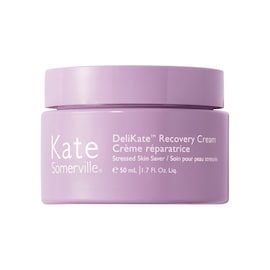
Kate Somerville DeliKate™ Recovery Cream
Works for
1 of 1 advertised claim delivered
Moisturizing28 ingredients credited for this claimStrong support
“extra-nourishing DeliKate® Recovery Cream”
This product can help improve hydration of the skin with the two types of ingredients.
The first type is called “humectants”:
these ingredients help attract water.
When humectants are on the surface of the skin, they “pull in” the moisture from the outside environment, or from
within deeper layers of the skin. The following ingredients in this product do the job:
glycerin, mel.
This product also contains ingredients called “occlusives”. They help reduce the speed with which our skin loses moisture to the outside environment. These ingredients also help soften the upper layer of the skin, so it feels less tight and nicer to the touch. The following ingredients in this product do the job: caprylic/capric triglyceride, dimethicone.
The following ingredients in this product are especially good for supporting the skin barrier and helping with the hydration level: ceramide ap, ceramide eop, ceramide np, phytosphingosine, tetrapeptide-14
Anti-agingNot advertised by the brand · 6 ingredients credited for this claimStrong support
This product can help reduce and prevent fine lines and wrinkles, improve skin elasticity and firmness because it contains adenosine.
These ingredients in the product can also be helpful, even though there is less evidence for their effectiveness: tetrapeptide-14.
Keep in mind that it typically takes at least 6 weeks to notice any results because the changes that are needed to improve fine lines and elasticity happen in the deeper layers of the skin. No topical anti-aging product can “erase” wrinkles or fully reverse signs of aging.
Can it cause trouble?
Irritancy2 strong irritants: Rosmarinus officinalis leaf extract, Zingiber officinale root extractMedium risk
Comedogenic3 ingredients rated 2 or more on the 0–5 pore-clogging scale3 flagged

User reviews
Ingredients
Filter by role to see what each ingredient is doing.
Water~45–55%
Glycerin~4.5–5.5%
- Irritation risk
- Low
One of the best moisturizing ingredients. Naturally present in skin. It attracts water to the upper layer of the skin working as a humectant
More about GlycerinTrimethylolpropane tricaprylate/tricaprate~4.3–5.3%
- Irritation risk
- Low
Pentaerythrityl tetraisostearate~3.1–3.8%
- Irritation risk
- Medium
Used to create a thicker product consistency
More about Pentaerythrityl tetraisostearateCoco-caprylate/caprate~2.7–3.3%
- Irritation risk
- Low
Helps to soften the upper layer of the skin without creating a greasy texture
More about Coco-caprylate/capratePentaerythrityl distearate~2.2–2.7%
Cetearyl alcohol~1.9–2.3%
- Irritation risk
- Low
- Comedogenicity
- 2/5
A non-drying alcohol. Works as an emollient. Helps water and oil mix together and creates a nice product texture
More about Cetearyl alcoholCaprylic/capric triglyceride~1.6–2%
- Irritation risk
- Medium
A good mix of fatty acids that forms a protective layer on the skin. Improves the shelf life of products. Derived from coconut and glycerin
More about Caprylic/capric triglycerideBis-stearyl dimethicone~1.4–1.7%
- Irritation risk
- Low
Propanediol~1.1–1.3%
- Irritation risk
- Low
Acts as a solvent for other ingredients. Speeds up the absorption of other ingredients into the skin
More about PropanediolButyrospermum parkii butter~0.95–1.15%
- Irritation risk
- Low
- Comedogenicity
- 3/5
A great moisturising ingredient that softens the skin and reduces water loss from its upper layer. It also can be helpful in protecting skin from free radicals
More about Butyrospermum parkii butterPentylene glycol~0.8–1.15%
- Irritation risk
- Medium
Used to preserve products, dissolve other ingredients and create a nice product texture
More about Pentylene glycolHexyldecanol~0.7–1.05%
- Irritation risk
- Low
Helps soften the upper layer of the skin
More about HexyldecanolGlyceryl stearate~0.7–1.05%
- Irritation risk
- Low
An emollient that softens the skin and forms a protective layer on its surface. Helps water and oil mix together
More about Glyceryl stearateDimethicone~0.7–1.05%
- Irritation risk
- Low
A silicone that helps to reduce water loss from the surface of the skin. Can temporarily "fill in" lines and wrinkles, absorb oil, and create a nice product finish
More about DimethiconeCeramide np~0.65–1%
- Irritation risk
- Low
A type of lipid similar to ceramides naturally present in skin. Helps to soften the upper layer of the skin and supports the skin barrier function to keep it hydrated. Can help to prevent inflammation in skin
More about Ceramide npMel~0.6–0.9%
- Irritation risk
- Low
Helps to soften the upper layer of the skin and attract water to it
More about MelTetrapeptide-14~0.55–0.8%
Ceramide eop~0.55–0.8%
- Irritation risk
- Low
A type of lipid similar to ceramides naturally present in skin. Helps to soften the upper layer of the skin and supports the skin barrier function to keep it hydrated. Can help to prevent inflammation in skin
More about Ceramide eopBoswellia serrata extract~0.45–0.7%
- Irritation risk
- Low
Phytosphingosine~0.5–0.75%
- Irritation risk
- Low
A type of lipid that is naturally present in skin. It might help in repairing skin barrier function and has anti-bacterial effect
More about PhytosphingosineCeramide ap~0.45–0.65%
- Irritation risk
- Low
A type of lipid similar to ceramides naturally present in skin. Helps to soften the upper layer of the skin and supports the skin barrier function to keep it hydrated. Can help to prevent inflammation in skin
More about Ceramide apCholesterol~0.5–0.75%
- Irritation risk
- Low
An emollient that is naturally found in skin
More about CholesterolCamellia sinensis leaf extract~0.45–0.7%
- Irritation risk
- Low
Can contain potent anti-oxidant compounds (abbreviated ECG, GCG, EGC, and EGCG) that might help protect the skin from free radicals. Can help calm down inflammation and has some anti-bacterial properties. Unfortunately, these antioxidants are unstable and lose their effectiveness very quickly in products. The concentration of the antioxidant compounds in the extract also tends to be low to be effective in topical formulation
More about Camellia sinensis leaf extractGlycine soja seed extract~0.5–0.7%
- Irritation risk
- Medium
An emollient that helps soften the skin. Might be somewhat helpful in evening the skin tone.
More about Glycine soja seed extractOryza sativa bran extract~0.45–0.65%
Ectoin~0.45–0.65%
- Irritation risk
- Low
Softens the upper layer of the skin and can support skin barrier function
More about EctoinCetylhydroxyproline palmitamide~0.45–0.7%
- Irritation risk
- Low
A type of lipid similar to ceramides naturally present in skin. Helps to soften the upper layer of the skin and supports the skin barrier function to keep it hydrated. Can help to prevent inflammation in skin
More about Cetylhydroxyproline palmitamideBisabolol~0.4–0.6%
- Irritation risk
- Low
An active component of chamomile plant that historically has been used to calm down irritated skin. A recent study shows that bisabolol indeed can have some anti-inflammatory effect on skin, even though conclusive data is lacking. Bisabolol has a sweet floral scent and can be added to products for its aromatic properties
More about BisabololCucumis sativus seed oil~0.45–0.7%
- Irritation risk
- Low
Hydroxyectoin~0.45–0.7%
- Irritation risk
- Low
Helianthus annuus seed oil~0.45–0.7%
- Irritation risk
- Low
A great emollient due to its high linoleic acid content. One of the most effective plant oils in helping skin hydration and repairing skin barrier function
More about Helianthus annuus seed oilAdenosine~0.45–0.65%
- Irritation risk
- Low
Might help improve cell turnover and reduce inflammation in skin. One study shows that the ingredients might be able to help reduce dynamic wrinkles (for example, in the corners of the eyes or on the forehead)
More about AdenosineTasmannia lanceolata fruit/leaf extract~0.45–0.65%
- Irritation risk
- High
Sorbitan isostearate~0.45–0.7%
- Irritation risk
- Low
Helps oil and water mix together
More about Sorbitan isostearateStearic acid~0.55–0.8%
- Irritation risk
- Low
Helps oil and water mix together and works as an emollient
More about Stearic acidBrassica campestris sterols~0.45–0.7%
- Irritation risk
- Low
Help soften the upper layer of the skin
More about Brassica campestris sterolsTocopherol~0.45–0.65%
- Irritation risk
- Low
Pure form of vitamin E. Can help moisturise and protect the skin from free radicals. Often used to help stabilise other ingredients or the formula itself
More about TocopherolRosmarinus officinalis leaf extract~0.4–0.6%
- Irritation risk
- High
Can be helpful in reducing inflammation in skin, including inflamed acne. It can be irritating
More about Rosmarinus officinalis leaf extractZingiber officinale root extract~0.35–0.6%
- Irritation risk
- High
A plant extract that can contain an irritating essential oil. Might have some anti-oxidant effect, but evidence is lacking
More about Zingiber officinale root extractAspalathus linearis extract~0.4–0.6%
- Irritation risk
- Low
Aminomethyl propanol~0.4–0.6%
Hydroxyphenyl propamidobenzoic acid~0.4–0.6%
- Irritation risk
- Low
Might help to reduce inflammation in skin, but solid research is lacking
More about Hydroxyphenyl propamidobenzoic acid1,2-hexanediol~0.4–0.6%
Peg-40 stearate~0.4–0.6%
Hydroxyethyl acrylate/sodium acryloyldimethyl taurate copolymer~0.25–0.5%
- Irritation risk
- Medium
A gelling agent that thickens the product consistency and leaves the skin with a velvety finish
More about Hydroxyethyl acrylate/sodium acryloyldimethyl taurate copolymerButylene glycol~0.25–0.5%
- Irritation risk
- Low
Used to create a nice product texture and help delivery of other ingredients. Might be somewhat helpful in attracting water to the upper layer of the skin
More about Butylene glycol4-t-butylcyclohexanol~0.25–0.45%
- Irritation risk
- Low
Isohexadecane~0.35–0.65%
- Irritation risk
- Low
Improves the texture of the product and helps soften the skin. Helps oil and water mix together and can be used as a cleansing agent
More about IsohexadecanePolysilicone-11~0.3–0.5%
- Irritation risk
- Low
A silicone that forms a light film on the skin surface helping to bind water and temporarily absorb oils creating a matt and powdery feel
More about Polysilicone-11Ceteareth-20~0.3–0.6%
- Irritation risk
- Medium
- Comedogenicity
- 2/5
Helps oil and water mix together. Has some emollient properties
More about Ceteareth-20Sodium lauroyl lactylate~0.2–0.4%
- Irritation risk
- Medium
Helps water and oil mix together
More about Sodium lauroyl lactylateCaprylhydroxamic acid~0.2–0.35%
Xanthan gum~0.2–0.4%
- Irritation risk
- Low
Used to create a thicker product consistency
More about Xanthan gumPolysorbate 60~0.2–0.35%
Trisodium ethylenediamine disuccinate~0.15–0.25%
- Irritation risk
- Medium
Used to improve stability of the formulation
More about Trisodium ethylenediamine disuccinateCarbomer~0.15–0.25%
- Irritation risk
- Low
Helps create a thicker or gel-like product texture. It is not a surfactant but can be used in gentle cleansing formulations
More about CarbomerCitric acid~0.15–0.25%
- Irritation risk
- Medium
Can work as an exfoliant but is typically used to adjust the product pH
More about Citric acidPhenoxyethanol~0.15–0.25%
- Irritation risk
- Low
A preservative. It helps prevent bacterial growth in cosmetic products
More about PhenoxyethanolSodium benzoate~0.1–0.2%
Potassium sorbate~0.1–0.2%
Ingredient list view
Water, Glycerin, Trimethylolpropane tricaprylate/tricaprate, Pentaerythrityl tetraisostearate, Coco-caprylate/caprate, Pentaerythrityl distearate, Cetearyl alcohol, Caprylic/capric triglyceride, Bis-stearyl dimethicone, Propanediol, Butyrospermum parkii butter, Pentylene glycol, Hexyldecanol, Glyceryl stearate, Dimethicone, Ceramide np, Mel, Tetrapeptide-14, Ceramide eop, Boswellia serrata extract, Phytosphingosine, Ceramide ap, Cholesterol, Camellia sinensis leaf extract, Glycine soja seed extract, Oryza sativa bran extract, Ectoin, Cetylhydroxyproline palmitamide, Bisabolol, Cucumis sativus seed oil, Hydroxyectoin, Helianthus annuus seed oil, Adenosine, Tasmannia lanceolata fruit/leaf extract, Sorbitan isostearate, Stearic acid, Brassica campestris sterols, Tocopherol, Rosmarinus officinalis leaf extract, Zingiber officinale root extract, Aspalathus linearis extract, Aminomethyl propanol, Hydroxyphenyl propamidobenzoic acid, 1,2-hexanediol, Peg-40 stearate, Hydroxyethyl acrylate/sodium acryloyldimethyl taurate copolymer, Butylene glycol, 4-t-butylcyclohexanol, Isohexadecane, Polysilicone-11, Ceteareth-20, Sodium lauroyl lactylate, Caprylhydroxamic acid, Xanthan gum, Polysorbate 60, Trisodium ethylenediamine disuccinate, Carbomer, Citric acid, Phenoxyethanol, Sodium benzoate, Potassium sorbate
Compare prices
Retailers ranked by price — lowest first.


Worth comparing, line by line.
Match % combines shared ingredients, the first five ingredients, shared actives and hero ingredients, irritancy (lower counts in the alternative's favour), texture and body area. Only products in the same routine step are compared.
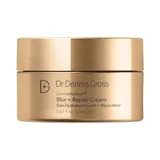
| Kate SomervilleDeliKate™ Recovery CreamYOUR PRODUCT | DR. JETSKE ULTEERepair Cream | Dr Dennis GrossMini DermInfusions Blur + Repair Cream with Hyaluronic Acid and Peptides | LumeneNordic Ageless [AJATON] Radiant Youth Night Cream | |
|---|---|---|---|---|
| Match | — | 55% | 53% | 53% |
| Price | $34.37 | — | $53.54+$19.17 | $56.72+$22.35 |
| Shared key ingredients | — | 10 of 19 | 10 of 19 | 11 of 19 |
| Key difference | — | Ceramide Ns | Linoleic Acid | Copper Heptapeptide-14 Pantothenate |
| Irritancy | Medium | Low | Medium | Medium |
| Drying alcohol | — | — | — | — |
| View product | Shop | Shop | Shop |



Product summary
"Kate Somerville - DeliKate™ Recovery Cream" has a good moisturizing formula. This moisturizer uses a good combo of humectants and emollients. These both types of ingredients are essentials for improving the skin hydration and keeping the skin barrier healthy. Humectants in this product (glycerin, honey extract, mel and butylene glycol) help to increase the water content in the upper layer of the skin. (These ingredients do so by "capturing" water molecules from the outside air or from within the deeper layers of the skin). Ceramide eop, ceramide np, cetylhydroxyproline palmitamide, cholesterol and caprylic/capric triglyceride in this product help decrease the water evoporation from the skin, so that it stays hydrated for longer. These ingredients also soften the skin and take away the feeling of tightness and dryness.
Ingredient callouts
- As a plus, this moisturizer also contains Ceramides (ceramide ap 0.45% - 0.65%, ceramide eop 0.50% - 0.75% and ceramide np 0.65% - 1.00%). Ceramides are a type of lipids that our skin produces itself. They are a building block of the skin's barrier. Ceramides used in skincare are synthetic or extracted from plants. They work well for softening the skin surface and "patch holes" in the skin's barrier.
- We like that this moisturizer contains peptides (tetrapeptide-14 0.50% - 0.75%). There are many different kind of Peptides and they are naturally present in our skin. They all are a combination of aminoacids. Some of them work as natural antibiotics, promote wound-healing and production of collagen. The science is still not settled on how effective Peptides are in skincare, but it is very likely that they have a benefit. Peptides might help restore the skin barrier and fight the signs of aging. At the very least, Peptides work as humectants: they attract water to the upper layer of the skin and improve its hydration.
- Adenosine 0.45% - 0.65%. It is a chemical present inside our skin cells. A clinical trial confirmed that topical application of Adenosine in a low concentration can reduce dynamic wrinkles (these are the wrinkles that appear with age in a places where our mimic is the most active, for example, in the corners of the eyes or on the forehead).
Irritation risk
There are some common irritants in this product, including ingredients that do not have benefits for the skin. We assess the overall irritancy of this moisturizer to be medium. For a detailed overview of all potential irritants: click here
You can see the detailed formula review with the breakdown of all actives in the product and the full ingredient list with estimated concentrations in the tables below.
What our users say
Based on 1 review 100% recommend this productAbout the brand
According to Cruelty-Free Kitty "Kate Somerville" is cruelty free, but its parent company is not.
Price
The product retails from 26.00£ up to 72.00£ in the United Kingdom, for 99.00CA$ in Canada and from 70.00$ up to 84.00$ in the United States.
For a detailed price comparison: click here.
Sources cited in this review
Every concentration estimate and effectiveness label is anchored to one of these 21 studies and safety reviews.
- 1
- 2
- 3Safety Assessment of Alkyl Esters as Used in Cosmeticscir-safety.org
- 4
- 5Final Report on the Safety Assessment of Dimethicone Copolyoljournals.sagepub.com
- 6

Affiliate links · As an Amazon Associate, WIMJ earns from qualifying purchases.