Works for
CleansingSodium cocoyl isethionate, Coco-glucoside + 3 moreCleanses gently
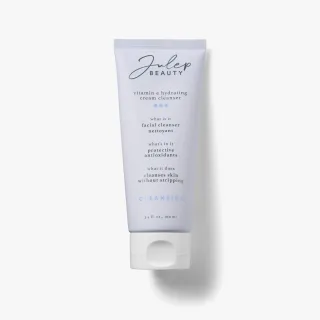
“Vitamin E Hydrating Cream Cleanser”
This product works by removing dirt and oil from the surface of the skin. It uses a combination of mild cleansing agents (coco-glucoside, glyceryl stearate, hydrogenated lecithin, sodium c14-16 olefin sulfonate, sodium cocoyl isethionate) and should be able to cleanse the skin gently. Still keep in mind that any cleansing can disrupt the skin barrier, and most people do not need to cleanse their skin more than once per day.
Even though this formulation is mild, the following cleansing agents could trigger an irritation or allergy for some people: coco-glucoside, sodium c14-16 olefin sulfonate
ExfoliationSide benefit · GluconolactoneWorks well
This product can help exfoliate the skin. In other words, it helps break down the bonds between dead cells on the surface of the skin and speed up the skin turnover. Skin often appears softer and brighter after exfoliation, but overdoing it can result in disrupted skin barrier. The following ingredient is doing the exfoliating job in this product: gluconolactone.
Can it cause trouble?
Irritancy8 strong irritants: Citrus limon peel oil, Pinus sylvestris leaf oil + 6 more — patch-test recommendedHigh risk
ComedogenicClean of flagged comedogenic ingredientsNone flagged

User reviews
Be the first — your take helps the next person decide.
Ingredients
Filter by role to see what each ingredient is doing.
Glycerin~22–34%
- Irritation risk
- Low
One of the best moisturizing ingredients. Naturally present in skin. It attracts water to the upper layer of the skin working as a humectant
More about GlycerinWater~11–17%
Sodium cocoyl isethionate~4.8–7.2%
- Irritation risk
- Medium
Helps water and oil mix together. Can be used as a cleansing agent
More about Sodium cocoyl isethionateCoco-glucoside~4.1–6.1%
- Irritation risk
- High
Used as a cleansing agent (surfactant) in cleansers. Helps water and oil mix together in lotions. Can be irritating
More about Coco-glucosideSodium c14-16 olefin sulfonate~2.6–3.8%
- Irritation risk
- High
Helps oil and water mix together and used as a cleansing agent. Can be irritating and is better avoided for sensitive skin
More about Sodium c14-16 olefin sulfonateHydrated silica~1.9–2.8%
1,2-hexanediol~0.45–1.05%
Tocopheryl acetate~1.2–1.7%
- Irritation risk
- Medium
A more stable but less bio-available form of vitamin E compared to Tocopherol. Might help moisturize and protect the skin from free radicals, but mostly used in low concentrations to stabilize other ingredients.
More about Tocopheryl acetateSodium hyaluronate~1–1.5%
- Irritation risk
- Low
One of the best moisturizing ingredients. Attracts water into the upper layer of the skin
More about Sodium hyaluronateGluconolactone~0.85–1.25%
- Irritation risk
- Medium
A polyhydroxy acid (PHA) that helps shed the dead cells from the skin surface revealing smoother skin. Is believed to be genter than AHAs. It helps attract water to the upper layer of the skin and can stimulate production of skin's own hyaluronic acid resulting in improved hydration levels. It has been shown to be helpful against acne and clogged pores if used consistently (e.g over a period of 12 weeks) in high enough concentration. It can help reduce fine lines and wrinkles and improve skin tone with long-term application. Can help neutralize free radicals
More about GluconolactoneCitrus limon peel oil~0.45–1.1%
Pinus sylvestris leaf oil~0.4–0.95%
- Irritation risk
- High
An essential oil from pine tree. Can be irritating
More about Pinus sylvestris leaf oilLavandula angustifolia oil~0.35–0.85%
- Irritation risk
- High
An essential oil. Potential allergen and can be irritating. It has some anti-bacterial properties
More about Lavandula angustifolia oilButylene glycol~0.35–0.8%
- Irritation risk
- Low
Used to create a nice product texture and help delivery of other ingredients. Might be somewhat helpful in attracting water to the upper layer of the skin
More about Butylene glycolCitrus aurantium dulcis peel oil~0.3–0.75%
- Irritation risk
- High
An essentil oil from orange peel. Potential allergen and can be irritating
More about Citrus aurantium dulcis peel oilGardenia florida fruit extract~0.3–0.75%
- Irritation risk
- High
Used as a fragrance. Can be irritating.
More about Gardenia florida fruit extractEucalyptus globulus leaf oil~0.2–0.75%
- Irritation risk
- High
An essential oil that can be very irritating. Has some anti-bacterial properties
More about Eucalyptus globulus leaf oilPelargonium graveolens flower oil~0.2–0.8%
- Irritation risk
- High
An essential oil. Can be irritating. Can become an allergen with oxidation
More about Pelargonium graveolens flower oilCananga odorata flower oil~0.15–0.65%
Dextrin~0.15–0.7%
- Irritation risk
- Low
A sugar that is used to stabilize the product formulation. Can help attract water to the upper layer of the skin
More about DextrinHydrogenated lecithin~0.15–0.65%
- Irritation risk
- Low
Helps to retain moisture by creating a protective barrier on the skin. Rich in fatty acids. Improves product texture and helps with the penetration of other ingredients.
More about Hydrogenated lecithinFicus carica fruit extract~0.15–0.55%
- Irritation risk
- Medium
A plant extract that can help neutralize free radicals. The concentrations typically used in cosmetics are too small to have an effect
More about Ficus carica fruit extractCentella asiatica extract~0.15–0.65%
- Irritation risk
- Medium
A plant extract that has been shown to be able to reduce inflammation in skin, support restoration of skin barrier function, as well as support collagen production. Contains active compounds called centelloids: asiaticoside, madecasosside, asiatic acid and madecassic acid. Might be helpful in preventing stretch marks. It can be itself be irritating though.
More about Centella asiatica extractPanthenol~0.1–0.45%
- Irritation risk
- Low
Helps attract water to the upper layer of the skin and can help improve skin barrier function
More about PanthenolBeta-glucan~0.1–0.4%
- Irritation risk
- Low
Helps attract water to the upper layer of the skin, calm down inflammation and irritation, restore the barrier function and support wound healing. It can be helpful in reducing fine lines and wrinkles
More about Beta-glucanCeramide np~0.15–0.6%
- Irritation risk
- Low
A type of lipid similar to ceramides naturally present in skin. Helps to soften the upper layer of the skin and supports the skin barrier function to keep it hydrated. Can help to prevent inflammation in skin
More about Ceramide npTocopherol~0.2–0.7%
- Irritation risk
- Low
Pure form of vitamin E. Can help moisturise and protect the skin from free radicals. Often used to help stabilise other ingredients or the formula itself
More about TocopherolOlea europaea fruit oil~0.1–0.5%
- Irritation risk
- Medium
An emollient that helps soften the skin but is not effective for restoring its barrier function. Might be helpful to calm down inflammation
More about Olea europaea fruit oilHelianthus annuus seed oil~0.2–0.75%
- Irritation risk
- Low
A great emollient due to its high linoleic acid content. One of the most effective plant oils in helping skin hydration and repairing skin barrier function
More about Helianthus annuus seed oilVitis vinifera seed oil~0.2–0.75%
- Irritation risk
- Medium
A great emollient that can also have anti-oxidant properties
More about Vitis vinifera seed oilSimmondsia chinensis seed oil~0.3–0.7%
- Irritation risk
- Medium
Softens the upper layer of skin and helps restore the healthy skin barrier. Has shown to help calm down inflammation in skin. It is a stable oil, meaning that it retains its properties even when exposed to air.
More about Simmondsia chinensis seed oilMacadamia integrifolia seed oil~0.2–0.75%
- Irritation risk
- Low
A plant oil that helps soften the upper layer of the skin
More about Macadamia integrifolia seed oilCamellia japonica seed oil~0.2–0.7%
- Irritation risk
- Low
A plant oil that helps to soften the upper layer of the skin and can help restore skin's barrier function. Might have an anti-oxidant effect
More about Camellia japonica seed oilArgania spinosa kernel oil~0.15–0.65%
- Irritation risk
- Medium
An emollient that helps soften the upper layer of the skin. Might have some weak anti-oxidant properties
More about Argania spinosa kernel oilCamellia sinensis seed oil~0.1–0.5%
- Irritation risk
- Low
A plant oil that helps to soften the upper layer of the skin and can help restore the skin barrier. Might have some anti-oxidant effect
More about Camellia sinensis seed oilMonascus extract~0.1–0.3%
- Irritation risk
- Low
A yeast extract that might help to attract water to the upper layer of the skin
More about Monascus extractGlyceryl stearate~0.1–0.4%
- Irritation risk
- Low
An emollient that softens the skin and forms a protective layer on its surface. Helps water and oil mix together
More about Glyceryl stearateHydroxyacetophenone~0.05–0.2%
Acrylates/c10-30 alkyl acrylate crosspolymer~0.1–0.35%
- Irritation risk
- Medium
Maintains the texture of skincare products. Allows the product to spread evenly. Helps oil and water mix together
More about Acrylates/c10-30 alkyl acrylate crosspolymerEthylhexylglycerin~0.05–0.15%
Ingredient list view
Glycerin, Water, Sodium cocoyl isethionate, Coco-glucoside, Sodium c14-16 olefin sulfonate, Hydrated silica, 1,2-hexanediol, Tocopheryl acetate, Sodium hyaluronate, Gluconolactone, Citrus limon peel oil, Pinus sylvestris leaf oil, Lavandula angustifolia oil, Butylene glycol, Citrus aurantium dulcis peel oil, Gardenia florida fruit extract, Eucalyptus globulus leaf oil, Pelargonium graveolens flower oil, Cananga odorata flower oil, Dextrin, Hydrogenated lecithin, Ficus carica fruit extract, Centella asiatica extract, Panthenol, Beta-glucan, Ceramide np, Tocopherol, Olea europaea fruit oil, Helianthus annuus seed oil, Vitis vinifera seed oil, Simmondsia chinensis seed oil, Macadamia integrifolia seed oil, Camellia japonica seed oil, Argania spinosa kernel oil, Camellia sinensis seed oil, Monascus extract, Glyceryl stearate, Hydroxyacetophenone, Acrylates/c10-30 alkyl acrylate crosspolymer, Ethylhexylglycerin
Worth comparing, line by line.
Match % combines shared ingredients, the first five ingredients, shared actives and hero ingredients, irritancy (lower counts in the alternative's favour), texture and body area. Only products in the same routine step are compared.
| JulepVitamin E Hydrating Cream CleanserYOUR PRODUCT | MEDIHEALRose PDRN Derma Cream Pack Cleanser | Youth To The PeopleYouth Stacks Daily Skin Health | NUXEReve de Miel Make-up Removing Gel | |
|---|---|---|---|---|
| Match | — | 57% | 49% | 48% |
| Price | $22.00 | $14.28−$7.72 | $20.00−$2.00 | $13.59−$8.41 |
| Shared key ingredients | — | 4 of 19 | 6 of 19 | 4 of 19 |
| Key difference | — | Hydrolyzed Hyaluronic Acid | Tetrahexyldecyl Ascorbate | Allantoin |
| Irritancy | High | Medium | High | Medium |
| Drying alcohol | — | — | Contains drying alcohol | — |
| View product | Shop | Shop | Shop |


More alternatives: Adaptology Break Free CleanserSVR Physiopure Cleansing Foaming Gel Pure and Mild
Sources cited in this review
Every concentration estimate and effectiveness label is anchored to one of these 51 studies and safety reviews.
- 1
- 2Final Report on the Safety Assessment of Sodium Cocoyl Isethionatejournals.sagepub.com
- 3
- 4Allergen of the Year—Alkyl Glucosidepracticeupdate.com
- 5Final Report On the Safety Assessment of Sodium Alpha-Olefin Sulfonatesjournals.sagepub.com
- 6
