Jetske Ultee Suncover SPF 30
Works for
1 of 1 advertised claim delivered
Sun protectionSPF 30 · 4 UV filtersBroad spectrum
This product offers a good level of protection against both UVB and UVA rays.
This sunscreen uses organic (so-called "chemical") sunscreen filters. Organic, or "chemical" filters usually provide reliable sun protection and rarely leave a white cast. Sunscreens with organic filters can sting eyes.
This product can be considered "reef safe" because it does not contain the UV filters (oxybenzone and octinoxate) that can be harmful to coral reefs when present in the water in high concentrations.
Evens skin toneNot advertised by the brand · 2 ingredients credited for this claimStrong support
This product offers broad spectrum sun protection. It means that it can prevent hyperpigmentation and help keep the skin tone even (sun damage is the main factor causing age spots, darkening of post-acne marks and other discolorations).
Anti-agingNot advertised by the brand · 2 ingredients credited for this claimStrong support
This product can help prevent early signs of skin aging because it offers a good level of broad spectrum sun protection. Sun damage is the main cause of premature skin aging, and protecting your skin from the sun is the best anti-aging strategy.
MoisturizingNot advertised by the brand · 12 ingredients credited for this claimGood support
This product can help improve hydration of the skin with the two types of ingredients.
The first type is called “humectants”:
these ingredients help attract water.
When humectants are on the surface of the skin, they “pull in” the moisture from the outside environment, or from
within deeper layers of the skin. The following ingredients in this product do the job:
anhydroxylitol, glycerin.
This product also contains ingredients called “occlusives”. They help reduce the speed with which our skin loses moisture to the outside environment. These ingredients also help soften the upper layer of the skin, so it feels less tight and nicer to the touch. The following ingredients in this product do the job: squalane, c12-15 alkyl benzoate.
Can it cause trouble?
Irritancy11 flagged ingredientsLow risk
Comedogenic1 ingredient rated 2 or more on the 0–5 pore-clogging scale1 flagged
User reviews
Ingredients
Filter by role to see what each ingredient is doing.
Water~45–55%
C12-15 alkyl benzoate~5.2–6.3%
- Irritation risk
- Low
Enhances the product texture and makes it more spreadable. Helps reduce water loss from the outer layer of skin. Extands the shelf life by preventing bacteria growth
More about C12-15 alkyl benzoatePropylheptyl caprylate~4.2–5.1%
- Irritation risk
- Low
Helps soften the upper layer of the skin
More about Propylheptyl caprylateDiethylamino hydroxybenzoyl hexyl benzoate~3.5–4.3%
- Irritation risk
- Medium
Uvinul A Plus. A new generation broad spectrum sunscreen that offers an effective protection especially in the UVA range. It is stable in formulations. Unfortunately, is not approved by the FDA (US) yet
More about Diethylamino hydroxybenzoyl hexyl benzoateCetearyl alcohol~2.4–2.9%
- Irritation risk
- Low
- Comedogenicity
- 2/5
A non-drying alcohol. Works as an emollient. Helps water and oil mix together and creates a nice product texture
More about Cetearyl alcoholBis-ethylhexyloxyphenol methoxyphenyl triazine~2.5–3.1%
- Irritation risk
- Medium
Tinosorb S. One of the most effective broad spectrum sunscreen ingredients. Protects from both UVA and UVB rays. It is photostable. Unfortunately, not approved by FDA (US) yet.
More about Bis-ethylhexyloxyphenol methoxyphenyl triazinePhenylbenzimidazole sulfonic acid~2.1–2.6%
- Irritation risk
- Medium
Ensulizole. A UV filter that is effective against UVB rays. Does not protect against UVA light. It is photostable and can be used to help stabilize other sunscreen ingredients. It is water-soluble meaning that it can help create lighter sunscreen formulations
More about Phenylbenzimidazole sulfonic acidTris-biphenyl triazine~1.4–1.7%
- Irritation risk
- Medium
Tinosorb A2B. A UV filter. It is effective against both UVA and UVB rays. It is photostable. Soluble in water, which helps to create lighter sunscreen formulations. Unfortunately, not approved by the FDA in the US yet
More about Tris-biphenyl triazineXylityl sesquicaprylate~1.1–1.4%
Lactic acid~0.95–1.15%
- Irritation risk
- Medium
An exfoliating and moisturizing alpha-hydroxy acid (AHA). Typically causes less irritation than other AHAs, for example, glycolic acid. At high concentrations (about 15%), lactic acid can help reduce lines and wrinkles. Recent studies show that lactic acid can support the "good" bacteria living on skin's surface (healthy skin microbiome)
More about Lactic acidPolyglyceryl-2 dipolyhydroxystearate~0.7–1.05%
- Irritation risk
- Low
Helps to soften the upper layer of the skin
More about Polyglyceryl-2 dipolyhydroxystearateHydrogenated dimer dilinoleyl/dimethylcarbonate copolymer~0.6–0.85%
- Irritation risk
- Low
Niacinamide~0.5–0.8%
- Irritation risk
- Low
Is proven to be effective in reducing blemishes, evening out skin tone and helping to improve lines and wrinkles. It helps the skin to repair sun damage, calm down inflammation and keep maintain good levels of moisture. The concentration of about 2% is effective for supporting the skin barrier and evening out the skin tone. Concentration of 4-6% is better for helping with acne and balancing the sebum production
More about NiacinamidePentaerythrityl distearate~0.5–0.75%
Lauryl glucoside~0.55–0.8%
Glycerin~0.45–0.7%
- Irritation risk
- Low
One of the best moisturizing ingredients. Naturally present in skin. It attracts water to the upper layer of the skin working as a humectant
More about GlycerinSodium acrylate/sodium acryloyldimethyl taurate copolymer~0.4–0.6%
- Irritation risk
- Low
Used to create a thicker product consistency
More about Sodium acrylate/sodium acryloyldimethyl taurate copolymerSodium cetearyl sulfate~0.5–0.75%
- Irritation risk
- Medium
Helps water and oil mix together and works as a cleansing agent
More about Sodium cetearyl sulfateCapryloyl glycine~0.45–0.65%
- Irritation risk
- Low
Helps oil and water mix together, preserve cosmetic products, and attract water to the upper layer of the skin
More about Capryloyl glycineHydroxyethyl acrylate/sodium acryloyldimethyl taurate copolymer~0.3–0.55%
- Irritation risk
- Medium
A gelling agent that thickens the product consistency and leaves the skin with a velvety finish
More about Hydroxyethyl acrylate/sodium acryloyldimethyl taurate copolymerIsohexadecane~0.4–0.65%
- Irritation risk
- Low
Improves the texture of the product and helps soften the skin. Helps oil and water mix together and can be used as a cleansing agent
More about IsohexadecaneSqualane~0.3–0.55%
- Irritation risk
- Low
An oil naturally present in skin. Works as an emollient to soften the skin and form a protective layer on its surface without a greasy feeling.
More about SqualaneSodium hydroxide~0.25–0.4%
Decyl glucoside~0.3–0.55%
- Irritation risk
- High
Helps oil and water mix together. Can be irritating
More about Decyl glucosideAnhydroxylitol~0.2–0.4%
- Irritation risk
- Low
Helps attract water to the upper layer of the skin and repair the skin barrir function
More about AnhydroxylitolPolysorbate 80~0.25–0.45%
Sodium bicarbonate~0.3–0.55%
Tetrasodium glutamate diacetate~0.2–0.35%
- Irritation risk
- Low
Helps stabilize the product formulation
More about Tetrasodium glutamate diacetatePolysorbate 60~0.2–0.35%
Citric acid~0.15–0.25%
- Irritation risk
- Medium
Can work as an exfoliant but is typically used to adjust the product pH
More about Citric acidSorbitan isostearate~0.15–0.25%
- Irritation risk
- Low
Helps oil and water mix together
More about Sorbitan isostearateButylene glycol~0.1–0.2%
- Irritation risk
- Low
Used to create a nice product texture and help delivery of other ingredients. Might be somewhat helpful in attracting water to the upper layer of the skin
More about Butylene glycolDisodium phosphate~0.1–0.15%
- Irritation risk
- Low
Helps adjust the product pH and stabilize the formulation
More about Disodium phosphateXanthan gum~0.1–0.15%
- Irritation risk
- Low
Used to create a thicker product consistency
More about Xanthan gumIngredient list view
Water, C12-15 alkyl benzoate, Propylheptyl caprylate, Diethylamino hydroxybenzoyl hexyl benzoate, Cetearyl alcohol, Bis-ethylhexyloxyphenol methoxyphenyl triazine, Phenylbenzimidazole sulfonic acid, Tris-biphenyl triazine, Xylityl sesquicaprylate, Lactic acid, Polyglyceryl-2 dipolyhydroxystearate, Hydrogenated dimer dilinoleyl/dimethylcarbonate copolymer, Niacinamide, Pentaerythrityl distearate, Lauryl glucoside, Glycerin, Sodium acrylate/sodium acryloyldimethyl taurate copolymer, Sodium cetearyl sulfate, Capryloyl glycine, Hydroxyethyl acrylate/sodium acryloyldimethyl taurate copolymer, Isohexadecane, Squalane, Sodium hydroxide, Decyl glucoside, Anhydroxylitol, Polysorbate 80, Sodium bicarbonate, Tetrasodium glutamate diacetate, Polysorbate 60, Citric acid, Sorbitan isostearate, Butylene glycol, Disodium phosphate, Xanthan gum
Compare prices
Retailers ranked by price — lowest first.
Worth comparing, line by line.
Match % combines shared ingredients, the first five ingredients, shared actives and hero ingredients, irritancy (lower counts in the alternative's favour), texture and body area. Only products in the same routine step are compared.
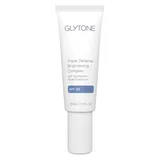
| Jetske UlteeSuncover SPF 30YOUR PRODUCT | HYGGEERelief Sun Moisturizer | GlytoneTriple Defense Brightening SPF30 Complex | BellflowerWatermelon Fresh Sunscreen SPF50+ PA++++ | |
|---|---|---|---|---|
| Match | — | 70% | 65% | 64% |
| Price | — | $20.32 | $85.00 | $8.00 |
| Shared key ingredients | — | 5 of 10 | 2 of 10 | 4 of 10 |
| Key difference | — | Adenosine | Chondrus Crispus Extract | Adenosine |
| Irritancy | Low | Medium | Low | Low |
| SPF | SPF 30 | SPF 50 | SPF 30 | SPF 50 |
| Drying alcohol | — | Contains drying alcohol | — | — |
| View product | Shop | Shop | Shop |



Product summary
The ingredient list suggests that "Jetske Ultee - Suncover SPF 30" can provide reliable sun protection. We love that it can protect from both UVA and UVB rays (not all sunscreens with SPF ratings give UVA protection. UVA rays do not cause sunburn, but still damage our skin and lead to early aging).
Because it includes good moisturizing ingredients, it can also work as a hydrating day cream. Like all broad-spectrum sunscreens, this product has an anti-aging benefit.
Sunscreen filters
This sunscreen uses so-called "chemical", or organic UV filters (organic simply means that their molecules contain atoms of carbon). These filters typically give good sun protection and rarely leave a white cast, but they can be irritating for sensitive skin. The UV filters in this sunscreen are: tinosorb s 2.50% - 3.10%, uvinul a plus 3.50% - 4.30%, ensulizole 2.10% - 2.60% and tinosrob a2b 1.40% - 1.70%.
Irritation risk
There are actives in this product that can be irritating. We assess the overall irritancy of this sunscreen to be low. For a detailed overview of all potential irritants: click here
You can see the detailed formula review with the breakdown of all actives in the product and the full ingredient list with estimated concentrations in the tables below.
Sources cited in this review
Every concentration estimate and effectiveness label is anchored to one of these 8 studies and safety reviews.
- 1
- 2Epidermal and dermal effects of topical lactic acidncbi.nlm.nih.gov
- 3Dual Effects of Alpha-Hydroxy Acids on the Skinpdfs.semanticscholar.org
- 4
- 5
- 6

Affiliate links · As an Amazon Associate, WIMJ earns from qualifying purchases.