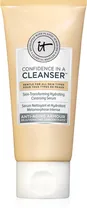
It Cosmetics Confidence in a Cleanser Gentle Face Wash
Works for
CleansingDisodium cocoamphodiacetate, Cocamidopropyl betaine + 25 moreCleanses gently
“Confidence in a Cleanser Gentle Face Wash”
This product works by removing dirt and oil from the surface of the skin. It uses a combination of mild cleansing agents (carbomer, ceteareth-20, cocamidopropyl betaine, coco-betaine, coco-glucoside, coconut acid, disodium cocoamphodiacetate, glyceryl citrate/lactate/linoleate/oleate, glyceryl oleate, glyceryl stearate, glycol distearate, hexylene glycol, palmitic acid, peg-100 stearate, peg-120 methyl glucose dioleate, peg-30 dipolyhydroxystearate, peg-55 propylene glycol oleate, peg-7 glyceryl cocoate, polysorbate 20, potassium cocoyl glycinate, ppg-5-ceteth-20, sodium cocoyl isethionate, sodium methyl cocoyl taurate, steareth-20, trideceth-6, xanthan gum) and should be able to cleanse the skin gently. Still keep in mind that any cleansing can disrupt the skin barrier, and most people do not need to cleanse their skin more than once per day.
Even though this formulation is mild, the following cleansing agents could trigger an irritation or allergy for some people: cocamidopropyl betaine, coco-betaine, coco-glucoside, glyceryl oleate, sodium methyl cocoyl taurate
Can it cause trouble?
Irritancy11 strong irritants: Cymbopogon martini oil, Pelargonium graveolens flower oil + 9 more — patch-test recommendedHigh risk
Comedogenic3 ingredients rated 2 or more on the 0–5 pore-clogging scale3 flagged

User reviews
Be the first — your take helps the next person decide.
Ingredients
Filter by role to see what each ingredient is doing.
Water~45–55%
Disodium cocoamphodiacetate~7.5–9.1%
- Irritation risk
- Medium
Helps oil and water mix together and works as a cleansing agent
More about Disodium cocoamphodiacetateGlycerin~4.1–5%
- Irritation risk
- Low
One of the best moisturizing ingredients. Naturally present in skin. It attracts water to the upper layer of the skin working as a humectant
More about GlycerinAcrylates copolymer~3.2–3.9%
- Irritation risk
- Medium
Used to stabilize product formulation, help create an even product layer over skin (for example, in sunscreen) and create a thicker product consistency
More about Acrylates copolymerSodium chloride~2.3–2.8%
- Irritation risk
- Low
Used to stabilize mixtures of oil and water, and create thicker, gel-like product textures
More about Sodium chloride1,2-hexanediol~0.65–1%
Peg-7 glyceryl cocoate~1.6–2%
- Irritation risk
- Medium
Helps oils and water mix together and works as a cleansing agent
More about Peg-7 glyceryl cocoateArginine cocoate~1.3–1.6%
- Irritation risk
- Low
Cocamidopropyl betaine~1.6–2%
- Irritation risk
- High
Helps water and oil mix together. Used as a cleansing ingredient. Could be an allergen
More about Cocamidopropyl betainePeg-120 methyl glucose dioleate~0.7–1.05%
Styrene/acrylates copolymer~0.55–0.85%
- Irritation risk
- Low
Used to create an even product consistency. Can help boost efficiency of sunscreen filters
More about Styrene/acrylates copolymerPotassium cocoyl glycinate~0.45–0.65%
Coco-glucoside~0.5–0.7%
- Irritation risk
- High
Used as a cleansing agent (surfactant) in cleansers. Helps water and oil mix together in lotions. Can be irritating
More about Coco-glucosideCitric acid~0.3–0.55%
- Irritation risk
- Medium
Can work as an exfoliant but is typically used to adjust the product pH
More about Citric acidHexylene glycol~0.25–0.5%
- Irritation risk
- Medium
Helps create a more spreadable product texture
More about Hexylene glycolPortulaca oleracea extract~0.25–0.45%
- Irritation risk
- Medium
A plant extract that has some anti-oxidant activity, but solid research is lacking. Can help attract water to the upper layer of the skin
More about Portulaca oleracea extractLimnanthes alba seed oil~0.3–0.5%
- Irritation risk
- Low
This oil's cmposition is closest to rapeseed oil. It is a very stable oil and serves as an emoillient
More about Limnanthes alba seed oilAllantoin~0.2–0.35%
- Irritation risk
- Low
Helps calm down inflammation in skin and can help reduce itching. Helps to repair the skin barrier and keep skin hydrated
More about AllantoinXanthan gum~0.2–0.4%
- Irritation risk
- Low
Used to create a thicker product consistency
More about Xanthan gumCymbopogon martini oil~0.15–0.3%
- Irritation risk
- High
Aromatic plant oil used in cosmetics as a fragrance. A likely irritant
More about Cymbopogon martini oilPelargonium graveolens flower oil~0.15–0.3%
- Irritation risk
- High
An essential oil. Can be irritating. Can become an allergen with oxidation
More about Pelargonium graveolens flower oilCitrus paradisi peel oil~0.15–0.25%
Lavandula angustifolia oil~0.1–0.25%
- Irritation risk
- High
An essential oil. Potential allergen and can be irritating. It has some anti-bacterial properties
More about Lavandula angustifolia oilCitrus sinensis peel oil expressed~0.1–0.2%
- Irritation risk
- High
Butylene glycol~0.15–0.25%
- Irritation risk
- Low
Used to create a nice product texture and help delivery of other ingredients. Might be somewhat helpful in attracting water to the upper layer of the skin
More about Butylene glycolHydrolyzed collagen~0.15–0.3%
- Irritation risk
- Low
A typically plant-derived compound that is supposed mimic human collagen. Cannot penetrate the skin barrier so is not particularly useful in skincare products beyond attracting water to the upper layer of the skin
More about Hydrolyzed collagenEthylhexylglycerin~0.15–0.25%
Niacinamide~0.15–0.25%
- Irritation risk
- Low
Is proven to be effective in reducing blemishes, evening out skin tone and helping to improve lines and wrinkles. It helps the skin to repair sun damage, calm down inflammation and keep maintain good levels of moisture. The concentration of about 2% is effective for supporting the skin barrier and evening out the skin tone. Concentration of 4-6% is better for helping with acne and balancing the sebum production
More about NiacinamideCamellia sinensis leaf extract~0.15–0.25%
- Irritation risk
- Low
Can contain potent anti-oxidant compounds (abbreviated ECG, GCG, EGC, and EGCG) that might help protect the skin from free radicals. Can help calm down inflammation and has some anti-bacterial properties. Unfortunately, these antioxidants are unstable and lose their effectiveness very quickly in products. The concentration of the antioxidant compounds in the extract also tends to be low to be effective in topical formulation
More about Camellia sinensis leaf extractTocopheryl acetate~0.15–0.3%
- Irritation risk
- Medium
A more stable but less bio-available form of vitamin E compared to Tocopherol. Might help moisturize and protect the skin from free radicals, but mostly used in low concentrations to stabilize other ingredients.
More about Tocopheryl acetateAscorbyl tetraisopalmitate~0.15–0.3%
- Irritation risk
- Medium
A vitamin C derivative. Studies show that is might be effective in reducing hyperpigmentation, but there are no studies confirming that it is effectively converted into the bioavailable form of Vitamin C in skin. It is not clear how this derivative compares in effectiveness to the topical application of bioavailable form of vitamin C (L-ascorbic acid)
More about Ascorbyl tetraisopalmitateGlycyrrhiza glabra root extract~0.1–0.2%
- Irritation risk
- Medium
A plant extract that can help lighten the skin and calm down inflammation. Might be helpful in neutralizing free radicals
More about Glycyrrhiza glabra root extractChamomilla recutita flower water~0.15–0.25%
- Irritation risk
- Low
Colloidal oatmeal~0.2–0.35%
- Irritation risk
- Low
Helps to restore skin barrier function, soften the upper layer of the skin and calm down inflammation
More about Colloidal oatmealLeuconostoc/radish root ferment filtrate~0.15–0.25%
- Irritation risk
- Medium
A preservative that comes from radishes fermented by a bacteria. New research suggests that the preservation properties in the ingredient come from an ammonium salt that is not present naturally in radish root but used in its cultivation. Is problematic because the exact amount of the preservative agents is difficult to determine
More about Leuconostoc/radish root ferment filtrateAloe barbadensis leaf extract~0.15–0.3%
- Irritation risk
- Medium
Traditionally used to treat sunburns, dermatitis and inflammation, but evidence for its effectiveness is lacking. The extract can contain humectants that help attract water into the skin
More about Aloe barbadensis leaf extractCurcuma longa root extract~0.1–0.2%
- Irritation risk
- High
A plant extract that can contain an active compound curcumin, that may have some anti-inflammatory properties when applied to the skin, but solid research is lacking and the typical concentration used in skincare products is too low. Can be an irritant
More about Curcuma longa root extractMelaleuca alternifolia leaf oil~0.1–0.25%
- Irritation risk
- High
An essential oil that can be irritating. Has some anti-bacterial properties
More about Melaleuca alternifolia leaf oilGlyceryl stearate~0.2–0.35%
- Irritation risk
- Low
An emollient that softens the skin and forms a protective layer on its surface. Helps water and oil mix together
More about Glyceryl stearatePalmitic acid~0.2–0.35%
- Irritation risk
- Low
An emollient that is naturally present in skin and helps soften it
More about Palmitic acidStearic acid~0.25–0.45%
- Irritation risk
- Low
Helps oil and water mix together and works as an emollient
More about Stearic acidPhytosteryl/isostearyl/cetyl/stearyl/behenyl dimer dilinoleate~0.15–0.3%
- Irritation risk
- Low
Helps soften the upper layer of the skin and create a nice product consistency
More about Phytosteryl/isostearyl/cetyl/stearyl/behenyl dimer dilinoleateHydrogenated polydecene~0.15–0.25%
- Irritation risk
- Low
Helps to soften the upper layer of the skin and create a nice product texture
More about Hydrogenated polydeceneCeramide np~0.15–0.3%
- Irritation risk
- Low
A type of lipid similar to ceramides naturally present in skin. Helps to soften the upper layer of the skin and supports the skin barrier function to keep it hydrated. Can help to prevent inflammation in skin
More about Ceramide npButyrospermum parkii butter~0.15–0.3%
- Irritation risk
- Low
- Comedogenicity
- 3/5
A great moisturising ingredient that softens the skin and reduces water loss from its upper layer. It also can be helpful in protecting skin from free radicals
More about Butyrospermum parkii butterCeteareth-20~0.2–0.4%
- Irritation risk
- Medium
- Comedogenicity
- 2/5
Helps oil and water mix together. Has some emollient properties
More about Ceteareth-20Glyceryl citrate/lactate/linoleate/oleate~0.15–0.3%
Hydroxypropyl bispalmitamide mea~0.15–0.3%
Glycosphingolipids~0.15–0.3%
- Irritation risk
- Low
A type of lipids naturally present in skin. They can be converted to ceramides in skin
More about GlycosphingolipidsGlycine soja sterols~0.15–0.3%
- Irritation risk
- Low
An emollient that helps soften the skin
More about Glycine soja sterolsMeadowfoam estolide~0.1–0.25%
- Irritation risk
- Medium
Helps soften the upper layer of the skin and create a more even product formulation
More about Meadowfoam estolideCeramide ap~0.1–0.25%
- Irritation risk
- Low
A type of lipid similar to ceramides naturally present in skin. Helps to soften the upper layer of the skin and supports the skin barrier function to keep it hydrated. Can help to prevent inflammation in skin
More about Ceramide apEthylhexyl isononanoate~0.15–0.3%
- Irritation risk
- Low
Helps soften the upper layer of the skin and improve the product consistency
More about Ethylhexyl isononanoateSqualane~0.2–0.35%
- Irritation risk
- Low
An oil naturally present in skin. Works as an emollient to soften the skin and form a protective layer on its surface without a greasy feeling.
More about SqualaneSodium hyaluronate~0.15–0.25%
- Irritation risk
- Low
One of the best moisturizing ingredients. Attracts water into the upper layer of the skin
More about Sodium hyaluronatePolysorbate 20~0.15–0.3%
Carbomer~0.15–0.25%
- Irritation risk
- Low
Helps create a thicker or gel-like product texture. It is not a surfactant but can be used in gentle cleansing formulations
More about CarbomerPalmitoyl pentapeptide-4~0.1–0.25%
- Irritation risk
- Low
A type of peptide. Peptides are excellent moisturizers and might be able support collagen production reducing fine lines and wrinkles
More about Palmitoyl pentapeptide-4Steareth-20~0.2–0.4%
Chrysin~0.15–0.25%
- Irritation risk
- Medium
Might be helpful in reducing fine lines and wrinkles, as well as lightening the skin, but solid evidence is missing. Could somewhat help in reducing the darkness of the under-eye area. Helps to neutralise free radicals in skin
More about ChrysinPalmitoyl tripeptide-1~0.15–0.3%
- Irritation risk
- Low
A type of peptide. Peptides are excellent moisturizers and might be able support collagen production reducing fine lines and wrinkles
More about Palmitoyl tripeptide-1Palmitoyl tetrapeptide-7~0.15–0.3%
- Irritation risk
- Low
A type of peptide. Peptides are excellent moisturizers and might be able support collagen production reducing fine lines and wrinkles
More about Palmitoyl tetrapeptide-7N-hydroxysuccinimide~0.1–0.25%
- Irritation risk
- High
Is claimed to be able to brighten skin tone by removing some blood-related pigmented compounds in skin (hemoglobin and related elements) but solid research is missing. Can be irritating
More about N-hydroxysuccinimideDisodium edta~0.15–0.25%
Benzoic acid~0.15–0.25%
Phenoxyethanol~0.15–0.25%
- Irritation risk
- Low
A preservative. It helps prevent bacterial growth in cosmetic products
More about PhenoxyethanolPotassium sorbate~0.15–0.25%
Chlorhexidine digluconate~0.15–0.3%
Ci 19140~0.15–0.3%
Water~0.15–0.3%
Glycerin~0.2–0.35%
- Irritation risk
- Low
One of the best moisturizing ingredients. Naturally present in skin. It attracts water to the upper layer of the skin working as a humectant
More about GlycerinSodium methyl cocoyl taurate~0.5–0.7%
- Irritation risk
- High
Helps oil and water mix together. Can be used as cleansing agent
More about Sodium methyl cocoyl taurateCoco-betaine~0.6–0.85%
- Irritation risk
- High
Helps oil and water mix together and works as a cleansing agent. Can be allergenic
More about Coco-betaineSodium cocoyl isethionate~0.25–0.5%
- Irritation risk
- Medium
Helps water and oil mix together. Can be used as a cleansing agent
More about Sodium cocoyl isethionateSodium chloride~0.2–0.35%
- Irritation risk
- Low
Used to stabilize mixtures of oil and water, and create thicker, gel-like product textures
More about Sodium chloridePpg-5-ceteth-20~0.2–0.4%
- Irritation risk
- Medium
A solvent with some emollient properties
More about Ppg-5-ceteth-20Glycol distearate~0.2–0.4%
- Irritation risk
- Medium
Helps water and oil mix together
More about Glycol distearateSodium hydroxide~0.2–0.35%
Acrylates/c10-30 alkyl acrylate crosspolymer~0.2–0.4%
- Irritation risk
- Medium
Maintains the texture of skincare products. Allows the product to spread evenly. Helps oil and water mix together
More about Acrylates/c10-30 alkyl acrylate crosspolymerPhenoxyethanol~0.2–0.35%
- Irritation risk
- Low
A preservative. It helps prevent bacterial growth in cosmetic products
More about PhenoxyethanolGlyceryl stearate~0.25–0.45%
- Irritation risk
- Low
An emollient that softens the skin and forms a protective layer on its surface. Helps water and oil mix together
More about Glyceryl stearateCitric acid~0.2–0.35%
- Irritation risk
- Medium
Can work as an exfoliant but is typically used to adjust the product pH
More about Citric acidPeg-100 stearate~0.25–0.5%
- Irritation risk
- Low
Helps oil and water mix togehter and creates a nice product texture
More about Peg-100 stearateCoconut acid~0.3–0.55%
Coco-glucoside~0.25–0.5%
- Irritation risk
- High
Used as a cleansing agent (surfactant) in cleansers. Helps water and oil mix together in lotions. Can be irritating
More about Coco-glucosideCaprylyl glycol~0.2–0.4%
- Irritation risk
- Medium
Helps preserve products and creates a nice product texture
More about Caprylyl glycolTocopherol~0.2–0.35%
- Irritation risk
- Low
Pure form of vitamin E. Can help moisturise and protect the skin from free radicals. Often used to help stabilise other ingredients or the formula itself
More about TocopherolPeg-55 propylene glycol oleate~0.2–0.35%
Propylene glycol~0.15–0.3%
- Irritation risk
- High
Helps oil and water mix together and can enhance the penetration of other ingredients into the skin. It can be irritating
More about Propylene glycolSqualane~0.25–0.4%
- Irritation risk
- Low
An oil naturally present in skin. Works as an emollient to soften the skin and form a protective layer on its surface without a greasy feeling.
More about SqualaneParfum~0.15–0.3%
- Irritation risk
- High
An aromatic blend of unspecified and possibly irritating ingredients
More about ParfumSalicylic acid~0.15–0.3%
- Irritation risk
- High
Used for skin exfoliation. It has an anti-inflammatory and anti-bacterial effect, helps to unclog pores, prevent blemishes and speed up healing of the existing ones. Sometimes referred to as a BHA (beta-hydroxy acid)
More about Salicylic acidChlorphenesin~0.16–0.32%
Glyceryl oleate~0.2–0.4%
- Irritation risk
- High
Helps oil and water mix together. Can be irritating
More about Glyceryl oleateTrisodium ethylenediamine disuccinate~0.2–0.35%
- Irritation risk
- Medium
Used to improve stability of the formulation
More about Trisodium ethylenediamine disuccinatePolyquaternium-53~0.2–0.35%
- Irritation risk
- Low
Butyrospermum parkii butter~0.2–0.4%
- Irritation risk
- Low
- Comedogenicity
- 3/5
A great moisturising ingredient that softens the skin and reduces water loss from its upper layer. It also can be helpful in protecting skin from free radicals
More about Butyrospermum parkii butterLimonene~0.15–0.3%
- Irritation risk
- High
A common frangrance that can easily irritate skin, especially if exposed to air, light or heat
More about LimonenePeg-30 dipolyhydroxystearate~0.2–0.4%
- Irritation risk
- Medium
Helps oil and water mix together
More about Peg-30 dipolyhydroxystearateTrideceth-6~0.2–0.35%
Adenosine~0.15–0.3%
- Irritation risk
- Low
Might help improve cell turnover and reduce inflammation in skin. One study shows that the ingredients might be able to help reduce dynamic wrinkles (for example, in the corners of the eyes or on the forehead)
More about AdenosineColloidal oatmeal~0.25–0.5%
- Irritation risk
- Low
Helps to restore skin barrier function, soften the upper layer of the skin and calm down inflammation
More about Colloidal oatmealButylene glycol~0.2–0.35%
- Irritation risk
- Low
Used to create a nice product texture and help delivery of other ingredients. Might be somewhat helpful in attracting water to the upper layer of the skin
More about Butylene glycolBenzoic acid~0.2–0.35%
Linalool~0.15–0.3%
Geraniol~0.15–0.3%
Ceramide np~0.2–0.4%
- Irritation risk
- Low
A type of lipid similar to ceramides naturally present in skin. Helps to soften the upper layer of the skin and supports the skin barrier function to keep it hydrated. Can help to prevent inflammation in skin
More about Ceramide npSodium hyaluronate~0.15–0.3%
- Irritation risk
- Low
One of the best moisturizing ingredients. Attracts water into the upper layer of the skin
More about Sodium hyaluronateHydroxypalmitoyl sphinganine~0.15–0.25%
- Irritation risk
- Low
A type of lipid similar to ceramides naturally present in skin. Helps to soften the upper layer of the skin and supports the skin barrier function to keep it hydrated. Can help to prevent inflammation in skin
More about Hydroxypalmitoyl sphinganineCitronellol~0.1–0.2%
Carbomer~0.1–0.2%
- Irritation risk
- Low
Helps create a thicker or gel-like product texture. It is not a surfactant but can be used in gentle cleansing formulations
More about CarbomerSodium lactate~0.1–0.2%
- Irritation risk
- Medium
Helps attract water to the upper layer of the skin. Is often used to adjust the pH level of the product
More about Sodium lactateCi 19140~0.15–0.25%
Polysorbate 20~0.15–0.25%
Palmitoyl tripeptide-1~0.1–0.25%
- Irritation risk
- Low
A type of peptide. Peptides are excellent moisturizers and might be able support collagen production reducing fine lines and wrinkles
More about Palmitoyl tripeptide-1Palmitoyl tetrapeptide-7~0.1–0.25%
- Irritation risk
- Low
A type of peptide. Peptides are excellent moisturizers and might be able support collagen production reducing fine lines and wrinkles
More about Palmitoyl tetrapeptide-7Ingredient list view
Water, Disodium cocoamphodiacetate, Glycerin, Acrylates copolymer, Sodium chloride, 1,2-hexanediol, Peg-7 glyceryl cocoate, Arginine cocoate, Cocamidopropyl betaine, Peg-120 methyl glucose dioleate, Styrene/acrylates copolymer, Potassium cocoyl glycinate, Coco-glucoside, Citric acid, Hexylene glycol, Portulaca oleracea extract, Limnanthes alba seed oil, Allantoin, Xanthan gum, Cymbopogon martini oil, Pelargonium graveolens flower oil, Citrus paradisi peel oil, Lavandula angustifolia oil, Citrus sinensis peel oil expressed, Butylene glycol, Hydrolyzed collagen, Ethylhexylglycerin, Niacinamide, Camellia sinensis leaf extract, Tocopheryl acetate, Ascorbyl tetraisopalmitate, Glycyrrhiza glabra root extract, Chamomilla recutita flower water, Colloidal oatmeal, Leuconostoc/radish root ferment filtrate, Aloe barbadensis leaf extract, Curcuma longa root extract, Melaleuca alternifolia leaf oil, Glyceryl stearate, Palmitic acid, Stearic acid, Phytosteryl/isostearyl/cetyl/stearyl/behenyl dimer dilinoleate, Hydrogenated polydecene, Ceramide np, Butyrospermum parkii butter, Ceteareth-20, Glyceryl citrate/lactate/linoleate/oleate, Hydroxypropyl bispalmitamide mea, Glycosphingolipids, Glycine soja sterols, Meadowfoam estolide, Ceramide ap, Ethylhexyl isononanoate, Squalane, Sodium hyaluronate, Polysorbate 20, Carbomer, Palmitoyl pentapeptide-4, Steareth-20, Chrysin, Palmitoyl tripeptide-1, Palmitoyl tetrapeptide-7, N-hydroxysuccinimide, Disodium edta, Benzoic acid, Phenoxyethanol, Potassium sorbate, Chlorhexidine digluconate, Unknown, Ci 19140, Water, Glycerin, Sodium methyl cocoyl taurate, Coco-betaine, Sodium cocoyl isethionate, Sodium chloride, Ppg-5-ceteth-20, Glycol distearate, Sodium hydroxide, Acrylates/c10-30 alkyl acrylate crosspolymer, Phenoxyethanol, Glyceryl stearate, Citric acid, Peg-100 stearate, Coconut acid, Coco-glucoside, Caprylyl glycol, Tocopherol, Peg-55 propylene glycol oleate, Propylene glycol, Squalane, Parfum, Salicylic acid, Chlorphenesin, Glyceryl oleate, Trisodium ethylenediamine disuccinate, Polyquaternium-53, Butyrospermum parkii butter, Limonene, Peg-30 dipolyhydroxystearate, Trideceth-6, Adenosine, Colloidal oatmeal, Butylene glycol, Benzoic acid, Linalool, Geraniol, Ceramide np, Sodium hyaluronate, Hydroxypalmitoyl sphinganine, Citronellol, Carbomer, Sodium lactate, Ci 19140, Polysorbate 20, Palmitoyl tripeptide-1, Palmitoyl tetrapeptide-7
Compare prices
Retailers ranked by price — lowest first.

Worth comparing, line by line.
Match % combines shared ingredients, the first five ingredients, shared actives and hero ingredients, irritancy (lower counts in the alternative's favour), texture and body area. Only products in the same routine step are compared.
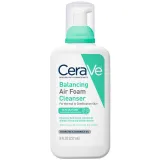
| It CosmeticsConfidence in a Cleanser Gentle Face WashYOUR PRODUCT | CeraVeBalancing Air Foam Facial Cleanser | MixaAnti-Imperfection Comfort Cleanser | Kmart2 in 1 Deep Gel Cleanser and Makeup Eraser - Salicylic Acid & Vitamin B3 | |
|---|---|---|---|---|
| Match | — | 68% | 67% | 66% |
| Price | $35.00 | $12.39−$22.61 | $7.25−$27.75 | — |
| Shared key ingredients | — | 11 of 51 | 5 of 51 | 4 of 51 |
| Key difference | — | Ceramide Eop | Polyglyceryl-4 Caprate | Glycosyl Trehalose |
| Irritancy | High | Low | Low | Medium |
| Drying alcohol | — | — | — | — |
| View product | Shop | Shop | Shop |


More alternatives: Merci Handy Facial Cleansing GelFace facts Ceramide Blemish Foaming Cleanser
Sources cited in this review
Every concentration estimate and effectiveness label is anchored to one of these 44 studies and safety reviews.
- 1
- 2
- 3
- 4
- 5
- 6

Affiliate links · As an Amazon Associate, WIMJ earns from qualifying purchases.