Works for
1 of 1 advertised claim delivered
Moisturizing12 ingredients credited for this claimStrong support
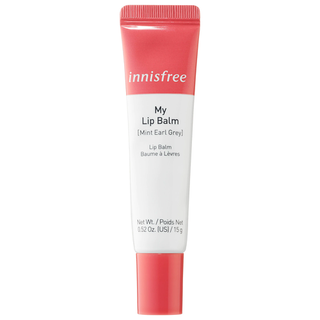
“A lightweight lip balm formulated with moisture-boosting plant oils that wrap your lips in a natural-looking tint without any stickiness.”
This product can help improve hydration of the skin with the two types of ingredients.
The first type is called “humectants”:
these ingredients help attract water.
When humectants are on the surface of the skin, they “pull in” the moisture from the outside environment, or from
within deeper layers of the skin. The following ingredients in this product do the job:
glycerin, butylene glycol.
This product also contains ingredients called “occlusives”. They help reduce the speed with which our skin loses moisture to the outside environment. These ingredients also help soften the upper layer of the skin, so it feels less tight and nicer to the touch. The following ingredients in this product do the job: beeswax, helianthus annuus seed oil.
The following ingredients in this product are especially good for supporting the skin barrier and helping with the hydration level: petrolatum
Can it cause trouble?
Irritancy4 strong irritants: Citrus aurantium bergamia fruit oil, Mentha piperita oil + 2 more — patch-test recommendedHigh risk
Comedogenic1 ingredient rated 2 or more on the 0–5 pore-clogging scale1 flagged


User reviews
Be the first — your take helps the next person decide.
Ingredients
Filter by role to see what each ingredient is doing.
Petrolatum~23–34%
- Irritation risk
- Low
One of the most effective and the most studied occlusive ingredients that creates a protective layer on top of the skin preventing moisture loss
More about PetrolatumHydrogenated castor oil dimer dilinoleate~5.3–7.9%
- Irritation risk
- Low
Microcrystalline wax~4.6–6.9%
Beeswax~3.9–5.8%
- Irritation risk
- Low
Forms a protective barrier that holds water and keeps dry skin hydrated. Keeps an emulsion from separating into its oil and liquid components, and increases the thickness of a product. Can be an allergen
More about BeeswaxSimmondsia chinensis seed oil~3–4.5%
- Irritation risk
- Medium
Softens the upper layer of skin and helps restore the healthy skin barrier. Has shown to help calm down inflammation in skin. It is a stable oil, meaning that it retains its properties even when exposed to air.
More about Simmondsia chinensis seed oilHelianthus annuus seed oil~2.2–3.3%
- Irritation risk
- Low
A great emollient due to its high linoleic acid content. One of the most effective plant oils in helping skin hydration and repairing skin barrier function
More about Helianthus annuus seed oilTheobroma grandiflorum seed butter~1.5–2.3%
- Irritation risk
- Medium
Helps soften the upper layer of the skin and might as well help to attract moisture to its upper layer
More about Theobroma grandiflorum seed butterSilica silylate~1.4–2.1%
Citrus aurantium bergamia fruit oil~1–1.5%
- Irritation risk
- High
A plant oil with a high content of volatile compounds that can irritate the skin and lead to allergic reactions. Can lead to photosensitivity
More about Citrus aurantium bergamia fruit oilCaprylic/capric triglyceride~0.9–1.35%
- Irritation risk
- Medium
A good mix of fatty acids that forms a protective layer on the skin. Improves the shelf life of products. Derived from coconut and glycerin
More about Caprylic/capric triglycerideIsostearic acid~0.55–1.25%
- Irritation risk
- Low
Used to create a nice product texture
More about Isostearic acidDimer dilinoleyl dimer dilinoleate~0.45–1.05%
- Irritation risk
- Low
Helps create a nice product texture and soften the upper layer of the skin
More about Dimer dilinoleyl dimer dilinoleateDiisostearyl malate~0.4–0.95%
- Irritation risk
- Medium
Helps to soften the upper layer of the skin
More about Diisostearyl malateTocopheryl acetate~0.35–0.8%
- Irritation risk
- Medium
A more stable but less bio-available form of vitamin E compared to Tocopherol. Might help moisturize and protect the skin from free radicals, but mostly used in low concentrations to stabilize other ingredients.
More about Tocopheryl acetateDehydroacetic acid~0.3–0.6%
Iron oxides~0.2–0.75%
- Irritation risk
- Low
An umbrella term for the following three colorants: CI 77491, CI 77492, CI 77499. They might be able to offer some protection against visible light, but the degree of the protection is not clear
More about Iron oxidesCi 77491~0.2–0.75%
- Irritation risk
- Low
A red colorant made of iron oxide. Typically is not irritating
More about Ci 77491Ci 15850~0.2–0.7%
Ci 45410~0.15–0.65%
Citric acid~0.15–0.6%
- Irritation risk
- Medium
Can work as an exfoliant but is typically used to adjust the product pH
More about Citric acidTitanium dioxide~0.2–0.75%
- Irritation risk
- Low
Works as a UV filter when used in high concentrations. It is photostable and is effective mostly against the UVB light, with some protection in the UVA range. In small concentrations, used for its ability to improve the color of cosmetic products. Is usually well tolerated by the skin
More about Titanium dioxideCi 77891~0.15–0.5%
- Irritation risk
- Low
Mentha piperita oil~0.1–0.4%
Ci 19140~0.15–0.5%
Ci 15985~0.1–0.5%
Sodium saccharin~0.15–0.5%
- Irritation risk
- Low
Ci 15850~0.1–0.5%
Iron oxides~0.1–0.45%
- Irritation risk
- Low
An umbrella term for the following three colorants: CI 77491, CI 77492, CI 77499. They might be able to offer some protection against visible light, but the degree of the protection is not clear
More about Iron oxidesCi 77492~0.1–0.45%
Tocopherol~0.1–0.45%
- Irritation risk
- Low
Pure form of vitamin E. Can help moisturise and protect the skin from free radicals. Often used to help stabilise other ingredients or the formula itself
More about TocopherolWater~0.1–0.45%
Glycerin~0.15–0.5%
- Irritation risk
- Low
One of the best moisturizing ingredients. Naturally present in skin. It attracts water to the upper layer of the skin working as a humectant
More about GlycerinButylene glycol~0.1–0.4%
- Irritation risk
- Low
Used to create a nice product texture and help delivery of other ingredients. Might be somewhat helpful in attracting water to the upper layer of the skin
More about Butylene glycolCamellia sinensis leaf extract~0.1–0.4%
- Irritation risk
- Low
Can contain potent anti-oxidant compounds (abbreviated ECG, GCG, EGC, and EGCG) that might help protect the skin from free radicals. Can help calm down inflammation and has some anti-bacterial properties. Unfortunately, these antioxidants are unstable and lose their effectiveness very quickly in products. The concentration of the antioxidant compounds in the extract also tends to be low to be effective in topical formulation
More about Camellia sinensis leaf extractCitrus unshiu peel extract~0.1–0.3%
- Irritation risk
- High
Opuntia coccinellifera fruit extract~0.1–0.3%
- Irritation risk
- High
A plant extract that might help neutralize free radicals in skin
More about Opuntia coccinellifera fruit extractOrchid extract~0.05–0.25%
Camellia japonica leaf extract~0.05–0.2%
- Irritation risk
- Medium
A plant extract that might help neutralize free radicals in skin
More about Camellia japonica leaf extractCitrus sudachi fruit extract~0.05–0.15%
- Irritation risk
- High
1,2-hexanediol~0.05–0.15%
Ingredient list view
Petrolatum, Hydrogenated castor oil dimer dilinoleate, Microcrystalline wax, Beeswax, Simmondsia chinensis seed oil, Helianthus annuus seed oil, Theobroma grandiflorum seed butter, Silica silylate, Citrus aurantium bergamia fruit oil, Caprylic/capric triglyceride, Isostearic acid, Dimer dilinoleyl dimer dilinoleate, Diisostearyl malate, Tocopheryl acetate, Dehydroacetic acid, Iron oxides, Ci 77491, Ci 15850, Ci 45410, Citric acid, Titanium dioxide, Ci 77891, Mentha piperita oil, Ci 19140, Ci 15985, Sodium saccharin, Ci 15850, Iron oxides, Ci 77492, Tocopherol, Water, Glycerin, Butylene glycol, Camellia sinensis leaf extract, Citrus unshiu peel extract, Opuntia coccinellifera fruit extract, Orchid extract, Camellia japonica leaf extract, Citrus sudachi fruit extract, 1,2-hexanediol
Compare prices
Retailers ranked by price — lowest first.
Affiliate links · prices updated regularly · As an Amazon Associate, WIMJ earns from qualifying purchases.
Worth comparing, line by line.
Match % combines shared ingredients, the first five ingredients, shared actives and hero ingredients, irritancy (lower counts in the alternative's favour), texture and body area. Only products in the same routine step are compared.
| innisfreeMy Lip BalmYOUR PRODUCT | Apa BeautyApa Lush Lip Balm | BlistexComplete Moisture Lip Moisturizer | Jack BlackIntense Therapy Lip Balm Lemon & Shea Butter | |
|---|---|---|---|---|
| Match | — | 53% | 51% | 50% |
| Price | $10.00 | $39.66+$29.66 | $2.99−$7.01 | $10.00 |
| Shared key ingredients | — | 3 of 9 | 3 of 9 | 3 of 9 |
| Key difference | — | Cera Microcristallina | Panthenol | Lanolin |
| Irritancy | High | High | Medium | Medium |
| Drying alcohol | — | — | — | — |
| View product | Shop | Shop | Shop |


Product summary
"innisfree - My Lip Balm" is a well-rounded moisturizing product. This moisturizer uses a good combo of humectants and emollients. These both types of ingredients are essentials for improving the skin hydration and keeping the skin barrier healthy. Humectants in this product (glycerin and butylene glycol) help to increase the water content in the upper layer of the skin. (These ingredients do so by "capturing" water molecules from the outside air or from within the deeper layers of the skin). Emollients in this formulation (petrolatum, beeswax, helianthus annuus seed oil, simmondsia chinensis seed oil and diisostearyl malate) help to reduce the moisture loss from the skin. They also soften the skin surface and relieve the feeling of dryness and tightness.
Irritation risk
There are quite a few common irritants in this product, including ingredients without particular skin benefits. We would not recommend it for sensitive skin. We assess the overall irritancy of it to be high. For a detailed overview of all potential irritants: click here
You can see the detailed formula review with the breakdown of all actives in the product and the full ingredient list with estimated concentrations in the tables below.
Sources cited in this review
Every concentration estimate and effectiveness label is anchored to one of these 16 studies and safety reviews.
- 1
- 2
- 3Effect of topically applied lipids on surfactant-irritated skinonlinelibrary.wiley.com
- 4
- 5Advanced Skin Care – A Novel Ingredientncbi.nlm.nih.gov
- 6

Affiliate links · As an Amazon Associate, WIMJ earns from qualifying purchases.