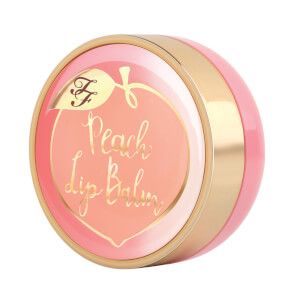
Works for
1 of 1 advertised claim delivered
Moisturizing14 ingredients credited for this claimStrong evidence
“Peaches & Cream Lip Balm”
This product can help improve hydration of the skin with the two types of ingredients.
The first type is called “humectants”:
these ingredients help attract water.
When humectants are on the surface of the skin, they “pull in” the moisture from the outside environment, or from
within deeper layers of the skin. The following ingredients in this product do the job:
glycerin.
This product also contains ingredients called “occlusives”. They help reduce the speed with which our skin loses moisture to the outside environment. These ingredients also help soften the upper layer of the skin, so it feels less tight and nicer to the touch. The following ingredients in this product do the job: bis-diglyceryl polyacyladipate-2, cera microcristallina.
The following ingredients in this product are especially good for supporting the skin barrier and helping with the hydration level: petrolatum, phytosphingosine
Anti-oxidationNot advertised by the brand · 3 ingredients credited for this claimModerate evidence
This product contains antioxidants (ficus carica fruit extract) that might be able to help neutralize free radicals in skin to lessen the damage it gets from the UV light (sun). There is not enough evidence to confirm their effectiveness in skin though.
Can it cause trouble?
Irritancy2 strong irritants: Parfum, AromaMedium risk
Comedogenic2 ingredients rated 2 or more on the 0–5 pore-clogging scale2 flagged

User reviews
Be the first — your take helps the next person decide.
Ingredients
Filter by role to see what each ingredient is doing.
Petrolatum~22–33%
- Irritation risk
- Low
One of the most effective and the most studied occlusive ingredients that creates a protective layer on top of the skin preventing moisture loss
More about PetrolatumOctyldodecanol~5–7.5%
- Irritation risk
- Low
An emollient that helps to soften the skin and create a pleasant product texture and stabilize the formulation
More about OctyldodecanolMicrocrystalline wax~4.7–7%
Cera microcristallina~3.9–5.8%
- Irritation risk
- Low
Helps to soften the upper layer of the skin, reduce water loss from its surface and create a thicker product consistency
More about Cera microcristallinaOctyldodecyl stearoyl stearate~2.9–4.3%
- Irritation risk
- Low
Bis-diglyceryl polyacyladipate-2~2.2–3.4%
- Irritation risk
- Low
Helps soften the upper layer of the skin and reduce water loss from its surface
More about Bis-diglyceryl polyacyladipate-2Polyglyceryl-10 pentaoleate~1.6–2.3%
Phenyl trimethicone~1.5–2.2%
- Irritation risk
- Low
A type of silicone that can decrease loss of moisture from the skin surface. It helps create a nice product texture
More about Phenyl trimethiconeLecithin~1.1–1.7%
- Irritation risk
- Low
Used mostly for creating emulsions - helping oil and water mix together. Helps soften the upper layer of the skin
More about LecithinParfum~0.85–1.25%
- Irritation risk
- High
An aromatic blend of unspecified and possibly irritating ingredients
More about ParfumAroma~0.55–1.25%
Tocopheryl acetate~0.45–1.05%
- Irritation risk
- Medium
A more stable but less bio-available form of vitamin E compared to Tocopherol. Might help moisturize and protect the skin from free radicals, but mostly used in low concentrations to stabilize other ingredients.
More about Tocopheryl acetatePolybutene~0.4–1%
Glycine soja oil~0.45–1%
- Irritation risk
- Medium
- Comedogenicity
- 2/5
A good emollient that helps soften the skin and helps repair its barrier function. It can clog pores if used in high concentrations.
More about Glycine soja oilGlyceryl distearate~0.4–1%
- Irritation risk
- Low
Cholesterol~0.45–1%
- Irritation risk
- Low
An emollient that is naturally found in skin
More about CholesterolSodium saccharin~0.35–0.85%
- Irritation risk
- Low
Glycerin~0.35–0.8%
- Irritation risk
- Low
One of the best moisturizing ingredients. Naturally present in skin. It attracts water to the upper layer of the skin working as a humectant
More about GlycerinOleic acid~0.35–0.85%
- Irritation risk
- Medium
Helps soften the upper layer of the skin. At the same time, it can weaken the skin's barrier enhancing penetration of other ingredients and increasing the risk of skin dryness
More about Oleic acidPalmitic acid~0.35–0.8%
- Irritation risk
- Low
An emollient that is naturally present in skin and helps soften it
More about Palmitic acidMenthyl pca~0.15–0.7%
- Irritation risk
- Low
Ricinus communis seed oil~0.3–0.7%
- Irritation risk
- Medium
A plant oil that can help soften the skin. It might be helpful in calming down inflammation, but solid research is lacking. Is often used in lip products to create the needed product consistency
More about Ricinus communis seed oilPhytosphingosine~0.2–0.8%
- Irritation risk
- Low
A type of lipid that is naturally present in skin. It might help in repairing skin barrier function and has anti-bacterial effect
More about PhytosphingosineBht~0.15–0.6%
Aloe barbadensis leaf extract~0.3–0.7%
- Irritation risk
- Medium
Traditionally used to treat sunburns, dermatitis and inflammation, but evidence for its effectiveness is lacking. The extract can contain humectants that help attract water into the skin
More about Aloe barbadensis leaf extractWater~0.15–0.55%
Prunus persica fruit extract~0.2–0.8%
- Irritation risk
- High
A fruit extact. Might have some anti-oxidant properties
More about Prunus persica fruit extractPropylene glycol dicaprylate/dicaprate~0.15–0.65%
- Irritation risk
- Low
Ficus carica fruit extract~0.1–0.4%
- Irritation risk
- Medium
A plant extract that can help neutralize free radicals. The concentrations typically used in cosmetics are too small to have an effect
More about Ficus carica fruit extractPhenoxyethanol~0.1–0.35%
- Irritation risk
- Low
A preservative. It helps prevent bacterial growth in cosmetic products
More about PhenoxyethanolXanthan gum~0.1–0.35%
- Irritation risk
- Low
Used to create a thicker product consistency
More about Xanthan gumPotassium sorbate~0.05–0.3%
Ci 45410~0.05–0.2%
Ci 15850~0.05–0.15%
Ci 19140~0.05–0.15%
Ingredient list view
Petrolatum, Octyldodecanol, Microcrystalline wax, Cera microcristallina, Octyldodecyl stearoyl stearate, Bis-diglyceryl polyacyladipate-2, Polyglyceryl-10 pentaoleate, Phenyl trimethicone, Lecithin, Parfum, Aroma, Tocopheryl acetate, Polybutene, Glycine soja oil, Glyceryl distearate, Cholesterol, Sodium saccharin, Glycerin, Oleic acid, Palmitic acid, Menthyl pca, Ricinus communis seed oil, Phytosphingosine, Bht, Aloe barbadensis leaf extract, Water, Prunus persica fruit extract, Propylene glycol dicaprylate/dicaprate, Ficus carica fruit extract, Phenoxyethanol, Xanthan gum, Potassium sorbate, Ci 45410, Ci 15850, Ci 19140
Compare prices
Retailers ranked by price — lowest first.
Affiliate links · prices updated regularly · As an Amazon Associate, WIMJ earns from qualifying purchases.
Worth comparing, line by line.
Match % combines shared ingredients, the first five ingredients, shared actives and hero ingredients, irritancy (lower counts in the alternative's favour), texture and body area. Only products in the same routine step are compared.
| Too FacedPeaches & Cream Lip BalmYOUR PRODUCT | Crème de la MerThe Lip Balm | DermaticaRestoring Ceramide Skin Balm | CliniqueRepairwear™ Intensive Lip Treatment | |
|---|---|---|---|---|
| Match | — | 56% | 53% | 51% |
| Price | $14.95 | $51.42+$36.47 | $7.95−$7.00 | $25.00+$10.05 |
| Shared key ingredients | — | 9 of 10 | 4 of 10 | 5 of 10 |
| Key difference | — | Chondrus Crispus Extract | Ceramide Np | Linoleic Acid |
| Irritancy | Medium | High | Low | Medium |
| Drying alcohol | — | — | — | — |
| View product | Shop | Shop | Shop |


Product summary
Based on the ingredient list, "Too Faced - Peaches & Cream Lip Balm" can work well for skin moisturization. This moisturizer uses a good combo of humectants and emollients. These both types of ingredients are essentials for improving the skin hydration and keeping the skin barrier healthy. Humectants in this product (glycerin) help to increase the water content in the upper layer of the skin. (These ingredients do so by "capturing" water molecules from the outside air or from within the deeper layers of the skin). Emollients in this formulation (phytosphingosine, petrolatum, cholesterol, glycine soja oil and bis-diglyceryl polyacyladipate-2) help to reduce the moisture loss from the skin. They also soften the skin surface and relieve the feeling of dryness and tightness.
Ingredient callouts
- As a plus, this moisturizer also contains ceramides (phytosphingosine 0.20% - 0.80%). Ceramides are a type of lipids that our skin produces itself. They are a building block of the skin's barrier. Ceramides used in skincare are synthetic or extracted from plants. They work well for softening the skin surface and "patch holes" in the skin's barrier.
Irritation risk
There are quite a few common irritants in this product, including ingredients without particular skin benefits. We would not recommend it for sensitive skin. We assess the overall irritancy of this lip product to be medium. For a detailed overview of all potential irritants: click here
You can see the detailed formula review with the breakdown of all actives in the product and the full ingredient list with estimated concentrations in the tables below.
About the brand
According to Cruelty-Free Kitty "Too Faced" is cruelty free, but its parent company is not.
Sources cited in this review
Every concentration estimate and effectiveness label is anchored to one of these 10 studies and safety reviews.
- 1
- 2
- 3
- 4
- 5https://www.sciencedirect.com/science/article/pii/0168365995000887sciencedirect.com
- 6

Affiliate links · As an Amazon Associate, WIMJ earns from qualifying purchases.