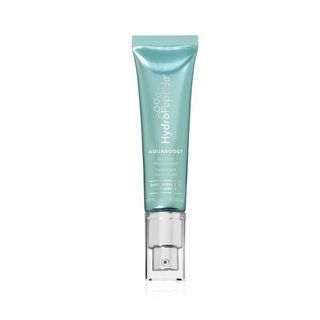
HydroPeptide AquaBoost Oil Free Moisturiser
Works for
4 of 4 advertised claims delivered
Moisturizing28 ingredients credited for this claimStrong evidence
“AquaBoost Oil Free Moisturiser”
This product can help improve hydration of the skin with the two types of ingredients.
The first type is called “humectants”:
these ingredients help attract water.
When humectants are on the surface of the skin, they “pull in” the moisture from the outside environment, or from
within deeper layers of the skin. The following ingredients in this product do the job:
glycerin, sodium hyaluronate.
This product also contains ingredients called “occlusives”. They help reduce the speed with which our skin loses moisture to the outside environment. These ingredients also help soften the upper layer of the skin, so it feels less tight and nicer to the touch. The following ingredients in this product do the job: squalane, cocos nucifera fruit extract.
The following ingredients in this product are especially good for supporting the skin barrier and helping with the hydration level: niacinamide, palmitoyl tripeptide-5
Evens skin tone4 ingredients credited for this claimStrong evidence
“Containing a blend of six powerful peptides, including a Clearing Peptide, Retinoic-Like Peptide, Radiance Peptide, Anti-Redness Peptide, Protective Peptide and Preservative Peptide, this product offers superior hormonal ageing benefits to reveal a clearer, more even and youthful looking complexion.”
This product can help reduce hypepigmentation and even out the skin tone because it contains the following effective ingredients: niacinamide
Keep in mind that you would need to apply any topical skincare targetted at hypigmentation consistently for a couple of months to get a result. No topical skincare product can help get rid of hyperpigmentation (including post-acne marks and age spots) instantly.
Anti-aging7 ingredients credited for this claimStrong evidence
“Containing a blend of six powerful peptides, including a Clearing Peptide, Retinoic-Like Peptide, Radiance Peptide, Anti-Redness Peptide, Protective Peptide and Preservative Peptide, this product offers superior hormonal ageing benefits to reveal a clearer, more even and youthful looking complexion.”
This product can help reduce and prevent fine lines and wrinkles, improve skin elasticity and firmness because it contains niacinamide.
These ingredients in the product can also be helpful, even though there is less evidence for their effectiveness: palmitoyl tripeptide-5.
Keep in mind that it typically takes at least 6 weeks to notice any results because the changes that are needed to improve fine lines and elasticity happen in the deeper layers of the skin. No topical anti-aging product can “erase” wrinkles or fully reverse signs of aging.
Anti-blemish4 ingredients credited for this claimGood evidence
“Impurities are cleared, excess oil absorbed and bacteria to reduce acne-induced imbalances in the skin.”
This product might be able to help reduce blemishes and clogged pores because it contains niacinamide.
Can it cause trouble?
Irritancy11 strong irritants: Citrus limon peel extract, Cinnamomum cassia bark extract + 9 more — patch-test recommendedHigh risk
Comedogenic3 ingredients rated 2 or more on the 0–5 pore-clogging scale3 flagged

User reviews
Be the first — your take helps the next person decide.
Ingredients
Filter by role to see what each ingredient is doing.
Water~45–55%
Glycerin~5.3–6.5%
- Irritation risk
- Low
One of the best moisturizing ingredients. Naturally present in skin. It attracts water to the upper layer of the skin working as a humectant
More about GlycerinC13-15 alkane~4.5–5.5%
Diethylhexyl carbonate~3.2–3.9%
- Irritation risk
- Low
Helps soften the upper layer of the skin
More about Diethylhexyl carbonateThermus thermophillus ferment~2.4–2.9%
- Irritation risk
- Medium
Might be helpful in neutralising free radicals in skin and have some hydration properties
More about Thermus thermophillus fermentButylene glycol~2–2.4%
- Irritation risk
- Low
Used to create a nice product texture and help delivery of other ingredients. Might be somewhat helpful in attracting water to the upper layer of the skin
More about Butylene glycolPentylene glycol~1.7–2%
- Irritation risk
- Medium
Used to preserve products, dissolve other ingredients and create a nice product texture
More about Pentylene glycolNiacinamide~1.5–1.8%
- Irritation risk
- Low
Is proven to be effective in reducing blemishes, evening out skin tone and helping to improve lines and wrinkles. It helps the skin to repair sun damage, calm down inflammation and keep maintain good levels of moisture. The concentration of about 2% is effective for supporting the skin barrier and evening out the skin tone. Concentration of 4-6% is better for helping with acne and balancing the sebum production
More about NiacinamideCetearyl alcohol~1.3–1.6%
- Irritation risk
- Low
- Comedogenicity
- 2/5
A non-drying alcohol. Works as an emollient. Helps water and oil mix together and creates a nice product texture
More about Cetearyl alcoholGlyceryl stearate~1–1.2%
- Irritation risk
- Low
An emollient that softens the skin and forms a protective layer on its surface. Helps water and oil mix together
More about Glyceryl stearatePotassium olivoyl hydrolyzed oat protein~0.75–1.1%
Cetyl alcohol~0.65–1%
- Irritation risk
- Low
A non-drying alcohol that works to soften the skin and stabilize product formulations helping oil and water mix together
More about Cetyl alcoholOlea europaea fruit unsaponifiables~0.55–0.8%
- Irritation risk
- Low
Maltodextrin~0.45–0.7%
- Irritation risk
- Low
Used to stabilize the product formulation and can help absorb oil
More about MaltodextrinAloe barbadensis leaf juice~0.45–0.7%
- Irritation risk
- Medium
Traditionally used to treat sunburns, dermatitis and inflammation, but evidence for its effectiveness is lacking. The extract can contain humectants that help attract water into the skin
More about Aloe barbadensis leaf juiceHydroxyacetophenone~0.45–0.65%
Laminaria saccharina extract~0.45–0.65%
- Irritation risk
- Low
- Comedogenicity
- 3/5
A seaweed extract that contains sugars and can be helpful in attracting water to the upper layers of the skin if used in high enough concentrations
More about Laminaria saccharina extractBenzyl alcohol~0.3–0.6%
- Irritation risk
- High
A preservative. Can be used to mask unpleasant smell. Can be irritating
More about Benzyl alcoholCitrullus lanatus fruit extract~0.3–0.6%
- Irritation risk
- Medium
A plant extract that can contain an antioxidant compound
More about Citrullus lanatus fruit extractGlyceryl oleate~0.35–0.6%
- Irritation risk
- High
Helps oil and water mix together. Can be irritating
More about Glyceryl oleateLens esculenta fruit extract~0.3–0.5%
- Irritation risk
- Medium
A plant extract containing sugars that might help attract water to the upper layer of the skin. Is claimed by the manufacturer to help reduce pore size but evidence is lacking
More about Lens esculenta fruit extractSqualane~0.35–0.6%
- Irritation risk
- Low
An oil naturally present in skin. Works as an emollient to soften the skin and form a protective layer on its surface without a greasy feeling.
More about SqualaneSalicylic acid~0.25–0.45%
- Irritation risk
- High
Used for skin exfoliation. It has an anti-inflammatory and anti-bacterial effect, helps to unclog pores, prevent blemishes and speed up healing of the existing ones. Sometimes referred to as a BHA (beta-hydroxy acid)
More about Salicylic acidXanthan gum~0.25–0.5%
- Irritation risk
- Low
Used to create a thicker product consistency
More about Xanthan gumPyrus malus fruit extract~0.25–0.45%
- Irritation risk
- Medium
Can have some moisturizing properties due to its sugar content
More about Pyrus malus fruit extractAcrylates/c10-30 alkyl acrylate crosspolymer~0.3–0.55%
- Irritation risk
- Medium
Maintains the texture of skincare products. Allows the product to spread evenly. Helps oil and water mix together
More about Acrylates/c10-30 alkyl acrylate crosspolymerSyringa vulgaris leaf cell culture extract~0.25–0.45%
- Irritation risk
- Low
Caprylic/capric triglyceride~0.3–0.6%
- Irritation risk
- Medium
A good mix of fatty acids that forms a protective layer on the skin. Improves the shelf life of products. Derived from coconut and glycerin
More about Caprylic/capric triglycerideSodium lactate~0.25–0.5%
- Irritation risk
- Medium
Helps attract water to the upper layer of the skin. Is often used to adjust the pH level of the product
More about Sodium lactatePanthenol~0.25–0.5%
- Irritation risk
- Low
Helps attract water to the upper layer of the skin and can help improve skin barrier function
More about PanthenolSodium hyaluronate~0.25–0.5%
- Irritation risk
- Low
One of the best moisturizing ingredients. Attracts water into the upper layer of the skin
More about Sodium hyaluronateSodium phytate~0.25–0.5%
Citrus limon peel extract~0.25–0.45%
Sodium pca~0.25–0.5%
- Irritation risk
- Low
Naturally present in skin and helps to attract water to its upper layer
More about Sodium pcaCinnamomum cassia bark extract~0.3–0.55%
Sanguisorba officinalis root extract~0.3–0.55%
- Irritation risk
- Low
Zingiber officinale root extract~0.2–0.4%
- Irritation risk
- High
A plant extract that can contain an irritating essential oil. Might have some anti-oxidant effect, but evidence is lacking
More about Zingiber officinale root extractCitrus paradisi fruit extract~0.25–0.45%
- Irritation risk
- High
Caprylyl glycol~0.3–0.55%
- Irritation risk
- Medium
Helps preserve products and creates a nice product texture
More about Caprylyl glycolCitrus aurantium dulcis peel extract~0.25–0.4%
Palmitoyl tripeptide-5~0.25–0.45%
- Irritation risk
- Low
A type of peptide. Peptides are excellent moisturizers and might be able support collagen production reducing fine lines and wrinkles
More about Palmitoyl tripeptide-5Camellia sinensis leaf extract~0.25–0.5%
- Irritation risk
- Low
Can contain potent anti-oxidant compounds (abbreviated ECG, GCG, EGC, and EGCG) that might help protect the skin from free radicals. Can help calm down inflammation and has some anti-bacterial properties. Unfortunately, these antioxidants are unstable and lose their effectiveness very quickly in products. The concentration of the antioxidant compounds in the extract also tends to be low to be effective in topical formulation
More about Camellia sinensis leaf extractCitrus aurantifolia peel extract~0.25–0.5%
- Irritation risk
- High
Citrus aurantium bergamia fruit extract~0.25–0.45%
- Irritation risk
- High
Citrus nobilis fruit extract~0.25–0.45%
- Irritation risk
- High
Citrus tangerina peel extract~0.25–0.5%
- Irritation risk
- High
Acetyl dipeptide-3 aminohexanoate~0.25–0.45%
- Irritation risk
- Low
Acetyl tetrapeptide-40~0.25–0.45%
- Irritation risk
- Low
Barosma betulina leaf extract~0.25–0.4%
- Irritation risk
- Low
Vanilla planifolia fruit extract~0.25–0.45%
- Irritation risk
- High
A plant extract used as a fragrance. Can be irritating
More about Vanilla planifolia fruit extractVitis vinifera fruit extract~0.25–0.5%
- Irritation risk
- Medium
A plant extract that helps attract water to the upper layer of the skin. It might be helpful in neutralizing free radicals in skin, but is less potent than the extract from the seeds
More about Vitis vinifera fruit extractCitrus aurantium dulcis fruit extract~0.3–0.5%
- Irritation risk
- High
A plant extract that is used as a fragrance. Can be irritating and lead to photosensitivity
More about Citrus aurantium dulcis fruit extractJuniperus virginiana wood extract~0.25–0.45%
- Irritation risk
- Low
Musa sapientum fruit extract~0.25–0.5%
- Irritation risk
- Low
Prunus armeniaca fruit extract~0.25–0.5%
- Irritation risk
- Medium
A fruit extract that might have some antioxidant properties and might help attract water to the skin, but evidence of effectiveness is lacking
More about Prunus armeniaca fruit extractAnanas sativus fruit extract~0.25–0.5%
- Irritation risk
- Medium
A fruit extract that might help to attract water to the upper layer of the skin, but there is no evidence for any other benefits to the skin
More about Ananas sativus fruit extractButter extract~0.3–0.55%
- Irritation risk
- Low
Cocos nucifera fruit extract~0.3–0.55%
- Irritation risk
- Low
- Comedogenicity
- 3/5
An emollient. Found to be as effective as a moisturizer for dry skin as mineral oil. Could be comedogenic
More about Cocos nucifera fruit extractCoffea arabica leaf/seed extract~0.25–0.45%
- Irritation risk
- Low
Cucumis melo fruit extract~0.2–0.4%
- Irritation risk
- Medium
A fruit extract that might have some anti-oxidant properties
More about Cucumis melo fruit extractFragaria chiloensis fruit extract~0.2–0.35%
- Irritation risk
- Medium
Honey extract~0.2–0.35%
- Irritation risk
- Medium
Helps attract water to the upper layer of the skin
More about Honey extractPrunus amygdalus dulcis fruit extract~0.2–0.35%
- Irritation risk
- Low
Rubus idaeus fruit extract~0.15–0.25%
- Irritation risk
- Medium
A fruit extract that might have some anti-oxidant properties but evidence of effectiveness in skin is lacking
More about Rubus idaeus fruit extractLactic acid~0.15–0.25%
- Irritation risk
- Medium
An exfoliating and moisturizing alpha-hydroxy acid (AHA). Typically causes less irritation than other AHAs, for example, glycolic acid. At high concentrations (about 15%), lactic acid can help reduce lines and wrinkles. Recent studies show that lactic acid can support the "good" bacteria living on skin's surface (healthy skin microbiome)
More about Lactic acidIngredient list view
Water, Glycerin, C13-15 alkane, Diethylhexyl carbonate, Thermus thermophillus ferment, Butylene glycol, Pentylene glycol, Niacinamide, Cetearyl alcohol, Glyceryl stearate, Potassium olivoyl hydrolyzed oat protein, Cetyl alcohol, Olea europaea fruit unsaponifiables, Maltodextrin, Aloe barbadensis leaf juice, Hydroxyacetophenone, Laminaria saccharina extract, Benzyl alcohol, Citrullus lanatus fruit extract, Glyceryl oleate, Lens esculenta fruit extract, Squalane, Salicylic acid, Xanthan gum, Pyrus malus fruit extract, Acrylates/c10-30 alkyl acrylate crosspolymer, Syringa vulgaris leaf cell culture extract, Caprylic/capric triglyceride, Sodium lactate, Panthenol, Sodium hyaluronate, Sodium phytate, Citrus limon peel extract, Sodium pca, Cinnamomum cassia bark extract, Sanguisorba officinalis root extract, Zingiber officinale root extract, Citrus paradisi fruit extract, Caprylyl glycol, Citrus aurantium dulcis peel extract, Palmitoyl tripeptide-5, Camellia sinensis leaf extract, Citrus aurantifolia peel extract, Citrus aurantium bergamia fruit extract, Citrus nobilis fruit extract, Citrus tangerina peel extract, Acetyl dipeptide-3 aminohexanoate, Acetyl tetrapeptide-40, Barosma betulina leaf extract, Vanilla planifolia fruit extract, Vitis vinifera fruit extract, Citrus aurantium dulcis fruit extract, Juniperus virginiana wood extract, Musa sapientum fruit extract, Prunus armeniaca fruit extract, Ananas sativus fruit extract, Butter extract, Cocos nucifera fruit extract, Coffea arabica leaf/seed extract, Cucumis melo fruit extract, Fragaria chiloensis fruit extract, Honey extract, Prunus amygdalus dulcis fruit extract, Rubus idaeus fruit extract, Lactic acid
Compare prices
Retailers ranked by price — lowest first.

Affiliate links · prices updated regularly
Worth comparing, line by line.
Match % combines shared ingredients, the first five ingredients, shared actives and hero ingredients, irritancy (lower counts in the alternative's favour), texture and body area. Only products in the same routine step are compared.
| HydroPeptideAquaBoost Oil Free MoisturiserYOUR PRODUCT | MedicubeZero Pore One Day Cream Mini | OodeeNova Illuminating Moisturiser | ColorescienceTotal Eye Firm Repair Cream | |
|---|---|---|---|---|
| Match | — | 81% | 81% | 76% |
| Price | $72.71 | $6.54−$66.17 | $73.71+$1.00 | $98.00+$25.29 |
| Shared key ingredients | — | 7 of 14 | 5 of 14 | 7 of 14 |
| Key difference | — | Adenosine | Gluconolactone | Retinol |
| Irritancy | High | High | Medium | Medium |
| Drying alcohol | — | — | — | — |
| View product | Shop | Shop | Shop |


Product summary
"HydroPeptide - AquaBoost Oil Free Moisturiser" has a good moisturizing formula. The formulation is based on a combination of good humectants and emollients. Both are needed to increase the skin hydration level. Glycerin, sodium hyaluronate, sodium lactate, sodium pca and thermus thermophillus ferment in this product (humectants) attract water molecules to the upper layer of the skin (the water comes from the outside air or from the deeper layers of the skin if the air is dry). Cocos nucifera fruit extract, squalane, cetearyl alcohol, cetyl alcohol and diethylhexyl carbonate in this product help decrease the water evoporation from the skin, so that it stays hydrated for longer. These ingredients also soften the skin and take away the feeling of tightness and dryness.
Ingredient callouts
- This moistruizer also contains peptides (palmitoyl tripeptide-5 0.25% - 0.45%). Peptides is a very big group of ingredients. They all consist of a different combination of amino-acids. Our skin produces peptides naturally. Some of them work as natural anti-biotics, promote wound-healing and production of collagen. The scientists are still studying how effective the topical application of peptides is, but it is very likely that peptides in skincare are helpful. They might be able to support skin barrier restoration and even have an anti-aging benefit. At the very least, they certainly help attract water to the skin and support the hydration in this way.
Irritation risk
This moisturizer contains a bunch of common irritants, including ingredients that do not provide any known benefit for the skin. It might not be the best choice if your skin is sensitive. We assess the overall irritancy of this moisturizer to be high. For a detailed overview of all potential irritants: click here
You can see the detailed formula review with the breakdown of all actives in the product and the full ingredient list with estimated concentrations in the tables below.
Price
The product retails for 55.00£ in the United Kingdom.
For a detailed price comparison: click here.
Sources cited in this review
Every concentration estimate and effectiveness label is anchored to one of these 23 studies and safety reviews.
- 1
- 2
- 3
- 4
- 5
- 6Analyzing Lycopene Content in Fruitssciencedirect.com

Affiliate links · As an Amazon Associate, WIMJ earns from qualifying purchases.