Works for
1 of 2 advertised claims delivered
Moisturizing20 ingredients credited for this claimStrong support
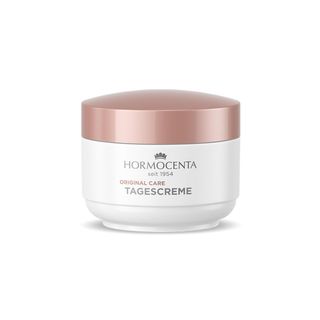
“Hormocenta Tagscreme is an intensely moisturizing and protective day cream, specifically developed for the needs of mature skin.”
This product can help improve hydration of the skin with the two types of ingredients.
The first type is called “humectants”:
these ingredients help attract water.
When humectants are on the surface of the skin, they “pull in” the moisture from the outside environment, or from
within deeper layers of the skin. The following ingredients in this product do the job:
glycerin, peg-8.
This product also contains ingredients called “occlusives”. They help reduce the speed with which our skin loses moisture to the outside environment. These ingredients also help soften the upper layer of the skin, so it feels less tight and nicer to the touch. The following ingredients in this product do the job: beeswax, butyrospermum parkii butter.
The following ingredients in this product are especially good for supporting the skin barrier and helping with the hydration level: panthenol, paraffinum liquidum
Anti-aging6 ingredients credited for this claimLimited support
“The rich formulation noticeably smooths skin and protects it from premature signs of aging due to light-induced stress”
This product does not contain ingredients that are able to reduce fine lines and wrinkles or help with skin elasticity, but it can improve the look of the skin temporarily through moisturization. Well-moisturized skin might also be able to repair the sun damage better.This ingredient - butyrospermum parkii butter - could be helpful for preventing or repairing signs of aging in theory, but there is no evidence that it actually works.
Can it cause trouble?
Irritancy12 strong irritants: Parfum, Retinyl palmitate + 10 more — patch-test recommendedHigh risk
Comedogenic1 ingredient rated 2 or more on the 0–5 pore-clogging scale1 flagged
User reviews
Be the first — your take helps the next person decide.
Ingredients
Filter by role to see what each ingredient is doing.
Water~45–55%
Dicaprylyl ether~5.7–6.9%
- Irritation risk
- Low
Helps soften the upper layer of the skin while creating a non-greasy feel on the skin. Helps to dissolve other ingredients
More about Dicaprylyl etherBeeswax~4.5–5.5%
- Irritation risk
- Low
Forms a protective barrier that holds water and keeps dry skin hydrated. Keeps an emulsion from separating into its oil and liquid components, and increases the thickness of a product. Can be an allergen
More about BeeswaxCera alba~3.2–3.9%
- Irritation risk
- Medium
Forms a protective barrier that holds water and keeps dry skin hydrated. Keeps an emulsion from separating into its oil and liquid components, and increases the thickness of a product. Can be an allergen
More about Cera albaGlycerin~2.5–3.1%
- Irritation risk
- Low
One of the best moisturizing ingredients. Naturally present in skin. It attracts water to the upper layer of the skin working as a humectant
More about GlycerinButyrospermum parkii butter~2.2–2.6%
- Irritation risk
- Low
- Comedogenicity
- 3/5
A great moisturising ingredient that softens the skin and reduces water loss from its upper layer. It also can be helpful in protecting skin from free radicals
More about Butyrospermum parkii butterPropylene glycol~1.7–2.1%
- Irritation risk
- High
Helps oil and water mix together and can enhance the penetration of other ingredients into the skin. It can be irritating
More about Propylene glycolMethyl glucose dioleate~1.5–1.8%
- Irritation risk
- Low
Macadamia ternifolia seed oil~1.3–1.5%
- Irritation risk
- Medium
Plant oil from nuts that helps soften the upper layer of the skin. Contains a high concentration of oleic acid that can weaken skin's barrier function and increase water-loss while enhancing penetration of other ingredients
More about Macadamia ternifolia seed oilOctyldodecanol~1–1.2%
- Irritation risk
- Low
An emollient that helps to soften the skin and create a pleasant product texture and stabilize the formulation
More about OctyldodecanolParaffinum liquidum~0.75–1.1%
- Irritation risk
- Low
Mineral oil. One of the most effective and well studied occlusive and emollient moisturizing ingredients. Helps reduce moisture loss in skin and repair skin barrier function
More about Paraffinum liquidumHexyldecanol~0.6–0.95%
- Irritation risk
- Low
Helps soften the upper layer of the skin
More about HexyldecanolHexyldecyl laurate~0.6–0.85%
- Irritation risk
- Low
Helps soften the upper layer of the skin
More about Hexyldecyl lauratePeg-45/dodecyl glycol copolymer~0.5–0.8%
- Irritation risk
- Low
Caprylic/capric triglyceride~0.55–0.8%
- Irritation risk
- Medium
A good mix of fatty acids that forms a protective layer on the skin. Improves the shelf life of products. Derived from coconut and glycerin
More about Caprylic/capric triglycerideSorbitan isostearate~0.5–0.75%
- Irritation risk
- Low
Helps oil and water mix together
More about Sorbitan isostearatePeg-2 hydrogenated castor oil~0.5–0.7%
Polyethylene~0.55–0.85%
Tocopheryl acetate~0.4–0.6%
- Irritation risk
- Medium
A more stable but less bio-available form of vitamin E compared to Tocopherol. Might help moisturize and protect the skin from free radicals, but mostly used in low concentrations to stabilize other ingredients.
More about Tocopheryl acetateOzokerite~0.35–0.65%
Magnesium sulfate~0.35–0.65%
Panthenol~0.3–0.55%
- Irritation risk
- Low
Helps attract water to the upper layer of the skin and can help improve skin barrier function
More about PanthenolPhenoxyethanol~0.3–0.55%
- Irritation risk
- Low
A preservative. It helps prevent bacterial growth in cosmetic products
More about PhenoxyethanolHydrogenated castor oil~0.3–0.6%
- Irritation risk
- Medium
A plant oil that can help soften the skin. It might be helpful in calming down inflammation, but solid research is lacking. Is often used in lip products to create the needed product consistency
More about Hydrogenated castor oilParfum~0.25–0.5%
- Irritation risk
- High
An aromatic blend of unspecified and possibly irritating ingredients
More about ParfumMethylparaben~0.15–0.3%
Allantoin~0.25–0.45%
- Irritation risk
- Low
Helps calm down inflammation in skin and can help reduce itching. Helps to repair the skin barrier and keep skin hydrated
More about AllantoinBenzyl alcohol~0.25–0.5%
- Irritation risk
- High
A preservative. Can be used to mask unpleasant smell. Can be irritating
More about Benzyl alcoholLanolin alcohol~0.35–0.6%
- Irritation risk
- Medium
Helps oil and water mix together. Can be irritating
More about Lanolin alcoholPeg-8~0.3–0.55%
- Irritation risk
- Medium
Used to create a nice product consistency
More about Peg-8Retinyl palmitate~0.25–0.5%
- Irritation risk
- High
Three steps removed from the active form of vitamin A - retinoic acid. To have an effect in the skin, it first needs to be converted twice to become the retinoic acid. This means it is less potent than retinol, but could also be less irritating. Once converted to the retinoic acid in the skin, it helps against all signs of aging, improves skin cell turnover and helps fight blemishes and clogged pores. However, in many cosmetic formulations, it is used in a concentration that is too low to have the full effect
More about Retinyl palmitateDipotassium glycyrrhizate~0.25–0.5%
- Irritation risk
- Low
A salt derived from licorice. Works as an emollient to soften the upper layer of the skin and can help calm down inflammation. Might be helpful for skin lightening
More about Dipotassium glycyrrhizateLactic acid~0.25–0.5%
- Irritation risk
- Medium
An exfoliating and moisturizing alpha-hydroxy acid (AHA). Typically causes less irritation than other AHAs, for example, glycolic acid. At high concentrations (about 15%), lactic acid can help reduce lines and wrinkles. Recent studies show that lactic acid can support the "good" bacteria living on skin's surface (healthy skin microbiome)
More about Lactic acidHelianthus annuus seed oil~0.3–0.6%
- Irritation risk
- Low
A great emollient due to its high linoleic acid content. One of the most effective plant oils in helping skin hydration and repairing skin barrier function
More about Helianthus annuus seed oilDehydroacetic acid~0.3–0.5%
Sorbic acid~0.3–0.55%
Benzoic acid~0.25–0.5%
Tocopherol~0.3–0.55%
- Irritation risk
- Low
Pure form of vitamin E. Can help moisturise and protect the skin from free radicals. Often used to help stabilise other ingredients or the formula itself
More about TocopherolLimonene~0.25–0.5%
- Irritation risk
- High
A common frangrance that can easily irritate skin, especially if exposed to air, light or heat
More about LimoneneMethylsilanol mannuronate~0.25–0.5%
- Irritation risk
- Low
Hexyl cinnamal~0.25–0.5%
Citronellol~0.25–0.45%
Benzyl salicylate~0.25–0.45%
Linalool~0.25–0.45%
Citric acid~0.25–0.5%
- Irritation risk
- Medium
Can work as an exfoliant but is typically used to adjust the product pH
More about Citric acidSodium hydroxide~0.25–0.5%
Alpha-isomethyl ionone~0.2–0.4%
- Irritation risk
- High
A fragrance. Potential allergen and can be irritating
More about Alpha-isomethyl iononeButylphenyl methylpropional~0.2–0.4%
- Irritation risk
- High
A fragrance. Can trigger allergic reactions and be irritating
More about Butylphenyl methylpropionalAscorbyl palmitate~0.2–0.4%
- Irritation risk
- Medium
Being a lipid soluble form of vitamin C, it is more stable and can penetrate the skin better than L-Ascorbic acid. It is effective in protecting the skin from free radicals, as well as evening the skin tone, but is less effective in stimulating collagen production compared to L-Ascorbic acid.
More about Ascorbyl palmitateCitral~0.2–0.35%
Eugenol~0.15–0.25%
Sodium propylparaben~0.15–0.25%
- Irritation risk
- Low
Benzyl benzoate~0.15–0.3%
- Irritation risk
- High
Fragrance with sweet balsamic smell. Help to preserve products and dissolve other ingredients. Could trigger allergic reactions and be irritating
More about Benzyl benzoateAscorbic acid~0.15–0.3%
- Irritation risk
- High
The most well-researched antioxidant that works in skin. Helps neutralize free radicals supporting collagen production, helping to even out the skin tone and preventing early signs of aging
More about Ascorbic acidBht~0.1–0.15%
Propylparaben~0.15–0.25%
Ingredient list view
Water, Dicaprylyl ether, Beeswax, Cera alba, Glycerin, Butyrospermum parkii butter, Propylene glycol, Methyl glucose dioleate, Macadamia ternifolia seed oil, Octyldodecanol, Paraffinum liquidum, Hexyldecanol, Hexyldecyl laurate, Peg-45/dodecyl glycol copolymer, Caprylic/capric triglyceride, Sorbitan isostearate, Peg-2 hydrogenated castor oil, Polyethylene, Tocopheryl acetate, Ozokerite, Magnesium sulfate, Panthenol, Phenoxyethanol, Hydrogenated castor oil, Parfum, Methylparaben, Allantoin, Benzyl alcohol, Lanolin alcohol, Peg-8, Retinyl palmitate, Dipotassium glycyrrhizate, Lactic acid, Helianthus annuus seed oil, Dehydroacetic acid, Sorbic acid, Benzoic acid, Tocopherol, Limonene, Methylsilanol mannuronate, Hexyl cinnamal, Citronellol, Benzyl salicylate, Linalool, Citric acid, Sodium hydroxide, Alpha-isomethyl ionone, Butylphenyl methylpropional, Ascorbyl palmitate, Citral, Eugenol, Sodium propylparaben, Benzyl benzoate, Ascorbic acid, Bht, Propylparaben
Compare prices
Retailers ranked by price — lowest first.
.png)
Product summary
"Hormocenta - Tagescreme" has a good moisturizing formula. This moisturizer uses a good combo of humectants and emollients. These both types of ingredients are essentials for improving the skin hydration and keeping the skin barrier healthy. Humectants in this product (panthenol, glycerin and peg-8) help to increase the water content in the upper layer of the skin. (These ingredients do so by "capturing" water molecules from the outside air or from within the deeper layers of the skin). Emollients in this formulation (paraffinum liquidum, beeswax, butyrospermum parkii butter, cera alba and helianthus annuus seed oil) help to reduce the moisture loss from the skin. They also soften the skin surface and relieve the feeling of dryness and tightness.
Ingredient callouts
- This product also contains vitamin C (Ascorbic Acid). It can be an effective active for anti-aging and evening out the skin tone, but in this moisturizer it is used for stabilizing other ingredients in the formulation. In this concentration (0.15% - 0.30%) it cannot have a noticeable benefit for the skin.
- This moisturizer includes a form of retinoids (vitamin A) - retinyl palmitate 0.25% - 0.50%, but this type of vitamin A is not very effective. It could in theory help with fine lines and wrinkles, but the effect is most likely minimal.
Irritation risk
This moisturizer contains a bunch of common irritants, including ingredients that do not provide any known benefit for the skin. It might not be the best choice if your skin is sensitive. We assess the overall irritancy of this moisturizer to be high. For a detailed overview of all potential irritants: click here
You can see the detailed formula review with the breakdown of all actives in the product and the full ingredient list with estimated concentrations in the tables below.
Price
The product retails for 29.95$ in the United States.
For a detailed price comparison: click here.
Sources cited in this review
Every concentration estimate and effectiveness label is anchored to one of these 26 studies and safety reviews.
- 1
- 2
- 3Surfactants and experimental irritant contact dermatitisncbi.nlm.nih.gov
- 4Propylene Glycolpubmed.ncbi.nlm.nih.gov
- 5Skin-sensitizing and irritant properties of propylene glycolonlinelibrary.wiley.com
- 6

Affiliate links · As an Amazon Associate, WIMJ earns from qualifying purchases.