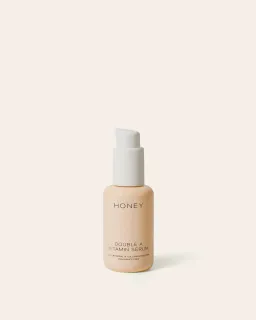
HONEY Double A Vitamin Serum - Cell renewal & collagen booster

HONEY Double A Vitamin Serum - Cell renewal & collagen booster

Efficacy91/100IrritancyMedium

Works for

Anti-aging
Hydroxypinacolone retinoate, Prunus amygdalus dulcis oil + 3 more
Works well
What the product description says
“Double A Vitamin Serum - Cell renewal & collagen booster”
Source: HONEY

This product can help reduce and prevent fine lines and wrinkles, improve skin elasticity and firmness because it contains hydroxypinacolone retinoate.

Keep in mind that it typically takes at least 6 weeks to notice any results because the changes that are needed to improve fine lines and elasticity happen in the deeper layers of the skin. No topical anti-aging product can “erase” wrinkles or fully reverse signs of aging.

Hydroxypinacolone retinoateHeroEffect: HighA derivative of the most potent form of vitamin A, retinoic acid. The ingredient can be sold under name Granactive Retinoid. Note that if a skincare brand discloses the concentration of Granactive Retinoid in a product, the concentration refers to a diluted form of Hydroxypinacolone Retinoate: 1% of Granactive Retinoid corresponds to 0.1% of Hydroxypinacolone Retinoate. Hydroxypinacolone Retinoate (HPR) is a unique derivative of retinoic acid because it can directly work in the skin and does not require additional conversion steps. According to studies done by the manufacturer on models of human skin (not real people), this derivative is more effective than other cosmetic versions of retinoids (such as retinol, retinaldehyde, and retinyl palmitate), and, at the same time, causes less irritation. It has been also demonstrated to be more stable than retinol which makes formulating with easier and increases the chances that a product with it will maintain its effectiveness after opening. The packaging should still ideally be air-tight. HPR is available over the counter in the EU, UK, Asia, Australia and New Zealand, but is only with a prescription in Canada.~0.05–0.2%
Prunus amygdalus dulcis oilEffect: LowAn emollient that softens the skin~4.4–6.6%
Butyrospermum parkii oilEffect: Low~1.4–2%
TocopherolEffect: Low, below effective dosePure form of vitamin E. Can help moisturise and protect the skin from free radicals. Often used to help stabilise other ingredients or the formula itself~0.1–0.3%
Retinyl palmitateUnder-dosedThree steps removed from the active form of vitamin A - retinoic acid. To have an effect in the skin, it first needs to be converted twice to become the retinoic acid. This means it is less potent than retinol, but could also be less irritating. Once converted to the retinoic acid in the skin, it helps against all signs of aging, improves skin cell turnover and helps fight blemishes and clogged pores. However, in many cosmetic formulations, it is used in a concentration that is too low to have the full effect~0.1–0.4%
Evens skin tone
Hydroxypinacolone retinoate, Retinyl palmitate
Works well
What the product description says
“This lightweight serum is the ultimate problem solver, brightening dark spots, reducing pores, and evening out skin tone for a healthy, radiant complexion.”
Source: HONEY

This product can help reduce hypepigmentation and even out the skin tone because it contains the following effective ingredients: hydroxypinacolone retinoate.

Keep in mind that you would need to apply any topical skincare targetted at hypigmentation consistently for a couple of months to get a result. No topical skincare product can help get rid of hyperpigmentation (including post-acne marks and age spots) instantly.

Hydroxypinacolone retinoateHeroEffect: HighA derivative of the most potent form of vitamin A, retinoic acid. The ingredient can be sold under name Granactive Retinoid. Note that if a skincare brand discloses the concentration of Granactive Retinoid in a product, the concentration refers to a diluted form of Hydroxypinacolone Retinoate: 1% of Granactive Retinoid corresponds to 0.1% of Hydroxypinacolone Retinoate. Hydroxypinacolone Retinoate (HPR) is a unique derivative of retinoic acid because it can directly work in the skin and does not require additional conversion steps. According to studies done by the manufacturer on models of human skin (not real people), this derivative is more effective than other cosmetic versions of retinoids (such as retinol, retinaldehyde, and retinyl palmitate), and, at the same time, causes less irritation. It has been also demonstrated to be more stable than retinol which makes formulating with easier and increases the chances that a product with it will maintain its effectiveness after opening. The packaging should still ideally be air-tight. HPR is available over the counter in the EU, UK, Asia, Australia and New Zealand, but is only with a prescription in Canada.~0.05–0.2%
Retinyl palmitateUnder-dosedThree steps removed from the active form of vitamin A - retinoic acid. To have an effect in the skin, it first needs to be converted twice to become the retinoic acid. This means it is less potent than retinol, but could also be less irritating. Once converted to the retinoic acid in the skin, it helps against all signs of aging, improves skin cell turnover and helps fight blemishes and clogged pores. However, in many cosmetic formulations, it is used in a concentration that is too low to have the full effect~0.1–0.4%
Moisturizing
Prunus amygdalus dulcis oil, Glycerin + 10 more
Works
What the product description says
“This next-generation vitamin A duo, featuring G ranactive Retinoid and R etinyl Palmitate , combines powerful antioxidants and hydrating hyaluronic acid to accelerate collagen production, enhance plumpness and elasticity, and smooth fine lines.”
Source: HONEY

This product can help improve hydration of the skin with the two types of ingredients.

The first type is called “humectants”:
these ingredients help attract water. When humectants are on the surface of the skin, they “pull in” the moisture from the outside environment, or from within deeper layers of the skin. The following ingredients in this product do the job: glycerin, sodium hyaluronate.

This product also contains ingredients called “occlusives”. They help reduce the speed with which our skin loses moisture to the outside environment. These ingredients also help soften the upper layer of the skin, so it feels less tight and nicer to the touch. The following ingredients in this product do the job: helianthus annuus seed oil, squalane.

Prunus amygdalus dulcis oilKey active· EmollientEffect: MediumAn emollient that softens the skin~4.4–6.6%
GlycerinKey active· HumectantEffect: HighOne of the best moisturizing ingredients. Naturally present in skin. It attracts water to the upper layer of the skin working as a humectant~2.9–4.4%
Hydrogenated ethylhexyl olivateKey active· EmollientEffect: MediumHelps soften the upper layer of the skin~1.8–2.7%
Butyrospermum parkii oilKey active· EmollientEffect: High~1.4–2%
SqualaneKey active· Emollient, OcclusiveEffect: HighAn oil naturally present in skin. Works as an emollient to soften the skin and form a protective layer on its surface without a greasy feeling.~1.2–1.8%
Hydrogenated olive oil unsaponifiablesKey active· EmollientEffect: MediumHelp soften the upper layer of the skin~0.5–1.15%
Sodium hyaluronateKey active· HumectantEffect: HighOne of the best moisturizing ingredients. Attracts water into the upper layer of the skin~0.15–0.5%
Helianthus annuus seed oilKey active· Emollient, OcclusiveEffect: HighA great emollient due to its high linoleic acid content. One of the most effective plant oils in helping skin hydration and repairing skin barrier function~0.1–0.3%
Aloe barbadensis leaf extract· Humectant, EmollientEffect: LowTraditionally used to treat sunburns, dermatitis and inflammation, but evidence for its effectiveness is lacking. The extract can contain humectants that help attract water into the skin~5.1–7.7%
Caprylyl glycol· Humectant, EmollientEffect: LowHelps preserve products and creates a nice product texture~0.4–0.9%
AlginEffect: LowUsed to thicken product formulation. Can help attract water to the upper layer of the skin~0.1–0.35%
TocopherolEffect: Low, below effective dosePure form of vitamin E. Can help moisturise and protect the skin from free radicals. Often used to help stabilise other ingredients or the formula itself~0.1–0.3%
Anti-blemish
Side benefit · Hydroxypinacolone retinoate, Retinyl palmitate
Works well

This product can help reduce breakouts and clogged pores because it contains the following ingredient: hydroxypinacolone retinoate. This ingredient is used for treating acne and can have a noticeable effect.

Hydroxypinacolone retinoateHeroEffect: HighA derivative of the most potent form of vitamin A, retinoic acid. The ingredient can be sold under name Granactive Retinoid. Note that if a skincare brand discloses the concentration of Granactive Retinoid in a product, the concentration refers to a diluted form of Hydroxypinacolone Retinoate: 1% of Granactive Retinoid corresponds to 0.1% of Hydroxypinacolone Retinoate. Hydroxypinacolone Retinoate (HPR) is a unique derivative of retinoic acid because it can directly work in the skin and does not require additional conversion steps. According to studies done by the manufacturer on models of human skin (not real people), this derivative is more effective than other cosmetic versions of retinoids (such as retinol, retinaldehyde, and retinyl palmitate), and, at the same time, causes less irritation. It has been also demonstrated to be more stable than retinol which makes formulating with easier and increases the chances that a product with it will maintain its effectiveness after opening. The packaging should still ideally be air-tight. HPR is available over the counter in the EU, UK, Asia, Australia and New Zealand, but is only with a prescription in Canada.~0.05–0.2%
Retinyl palmitateUnder-dosedThree steps removed from the active form of vitamin A - retinoic acid. To have an effect in the skin, it first needs to be converted twice to become the retinoic acid. This means it is less potent than retinol, but could also be less irritating. Once converted to the retinoic acid in the skin, it helps against all signs of aging, improves skin cell turnover and helps fight blemishes and clogged pores. However, in many cosmetic formulations, it is used in a concentration that is too low to have the full effect~0.1–0.4%

Can it cause trouble?

Irritancy
2 strong irritants: Hydroxypinacolone retinoate, Retinyl palmitate
Medium risk
We flagged 8 ingredients with irritancy potential. Severity depends on your sensitivity threshold; the table lists the worst offenders first.
IngredientFunctionIrritationEst. amount
Hydroxypinacolone retinoateA derivative of the most potent form of vitamin A, retinoic acid. The ingredient can be sold under name Granactive Retinoid. Note that if a skincare brand discloses the concentration of Granactive Retinoid in a product, the concentration refers to a diluted form of Hydroxypinacolone Retinoate: 1% of Granactive Retinoid corresponds to 0.1% of Hydroxypinacolone Retinoate. Hydroxypinacolone Retinoate (HPR) is a unique derivative of retinoic acid because it can directly work in the skin and does not require additional conversion steps. According to studies done by the manufacturer on models of human skin (not real people), this derivative is more effective than other cosmetic versions of retinoids (such as retinol, retinaldehyde, and retinyl palmitate), and, at the same time, causes less irritation. It has been also demonstrated to be more stable than retinol which makes formulating with easier and increases the chances that a product with it will maintain its effectiveness after opening. The packaging should still ideally be air-tight. HPR is available over the counter in the EU, UK, Asia, Australia and New Zealand, but is only with a prescription in Canada.High~0.05–0.2%est.
Retinyl palmitateThree steps removed from the active form of vitamin A - retinoic acid. To have an effect in the skin, it first needs to be converted twice to become the retinoic acid. This means it is less potent than retinol, but could also be less irritating. Once converted to the retinoic acid in the skin, it helps against all signs of aging, improves skin cell turnover and helps fight blemishes and clogged pores. However, in many cosmetic formulations, it is used in a concentration that is too low to have the full effectHigh~0.1–0.4%est.
Aloe barbadensis leaf extractTraditionally used to treat sunburns, dermatitis and inflammation, but evidence for its effectiveness is lacking. The extract can contain humectants that help attract water into the skinMedium~5.1–7.7%est.
Sodium stearoyl lactylateHelps oil and water mix togetherMedium~1.5–2.2%est.
Citric acidCan work as an exfoliant but is typically used to adjust the product pHMedium~0.55–1.25%est.
Rosa canina fruit extractA plant extract that might have some anti-oxidant properties, but evidence is lackingMedium~0.4–0.9%est.
Caprylyl glycolHelps preserve products and creates a nice product textureMedium~0.4–0.9%est.
Tapioca starchUsed to create a thicker product consistencyMedium~0.15–0.7%est.
Comedogenic
2 ingredients rated 2 or more on the 0–5 pore-clogging scale
2 flagged
These ingredients have a comedogenic rating of 2 or more on a 0–5 scale; the table shows each one's rating. In leave-on products they can clog pores in acne-prone skin.
IngredientFunctionRatingEst. amount
Butyrospermum parkii oil—3/5~1.4–2%est.
AlginUsed to thicken product formulation. Can help attract water to the upper layer of the skin3/5~0.1–0.35%est.
Did this help you decide?

User reviews

Would you recommend?
No community reviews yet.

Be the first — your take helps the next person decide.

Ingredients

Filter by role to see what each ingredient is doing.

Water~40–60%
Formula
Irritation risk
Low

Plain old water

More about Water
Aloe barbadensis leaf extract~5.1–7.7%
Irritant · medium
Irritation risk
Medium
Works for
Moisturizing

Traditionally used to treat sunburns, dermatitis and inflammation, but evidence for its effectiveness is lacking. The extract can contain humectants that help attract water into the skin

More about Aloe barbadensis leaf extract
Prunus amygdalus dulcis oil~4.4–6.6%
Key active
Irritation risk
Low
Works for
MoisturizingAnti-oxidationAnti-aging

An emollient that softens the skin

More about Prunus amygdalus dulcis oil
Glycerin~2.9–4.4%
Key active
Irritation risk
Low
Works for
Moisturizing

One of the best moisturizing ingredients. Naturally present in skin. It attracts water to the upper layer of the skin working as a humectant

More about Glycerin
Xanthan gum~2.1–3.2%
Formula
Irritation risk
Low
Works for
Cleansing

Used to create a thicker product consistency

More about Xanthan gum
Hydrogenated ethylhexyl olivate~1.8–2.7%
Key active
Irritation risk
Low
Works for
Moisturizing

Helps soften the upper layer of the skin

More about Hydrogenated ethylhexyl olivate
Sodium stearoyl lactylate~1.5–2.2%
Irritant · medium
Irritation risk
Medium
Works for
Cleansing

Helps oil and water mix together

More about Sodium stearoyl lactylate
Butyrospermum parkii oil~1.4–2%
Key activeComedogenic 3/5
Irritation risk
Low
Comedogenicity
3/5
Works for
MoisturizingAnti-oxidationAnti-aging
More about Butyrospermum parkii oil
Squalane~1.2–1.8%
Key active
Irritation risk
Low
Works for
Moisturizing

An oil naturally present in skin. Works as an emollient to soften the skin and form a protective layer on its surface without a greasy feeling.

More about Squalane
Dimethyl isosorbide~0.9–1.3%
Formula
Irritation risk
Low

Used to dissolve other ingredients in a product and can enhance their ability to penetrate the skin

More about Dimethyl isosorbide
Citric acid~0.55–1.25%
Irritant · medium
Irritation risk
Medium

Can work as an exfoliant but is typically used to adjust the product pH

More about Citric acid
Hydrogenated olive oil unsaponifiables~0.5–1.15%
Key active
Irritation risk
Low
Works for
Moisturizing

Help soften the upper layer of the skin

More about Hydrogenated olive oil unsaponifiables
Rosa canina fruit extract~0.4–0.9%
Irritant · medium
Irritation risk
Medium
Works for
Anti-oxidation

A plant extract that might have some anti-oxidant properties, but evidence is lacking

More about Rosa canina fruit extract
Caprylyl glycol~0.4–0.9%
Irritant · medium
Irritation risk
Medium
Works for
Moisturizing

Helps preserve products and creates a nice product texture

More about Caprylyl glycol
Glyceryl caprylate/caprate~0.35–0.8%
Formula
Irritation risk
Low
Works for
Cleansing
More about Glyceryl caprylate/caprate
Tapioca starch~0.15–0.7%
Irritant · medium
Irritation risk
Medium

Used to create a thicker product consistency

More about Tapioca starch
Hydroxypinacolone retinoate~0.05–0.2%
Hero · Anti-aging, Evens skin tone, Anti-blemishIrritant · high
Irritation risk
High
Works for
Anti-blemishEvens skin toneAnti-agingExfoliation

A derivative of the most potent form of vitamin A, retinoic acid. The ingredient can be sold under name Granactive Retinoid. Note that if a skincare brand discloses the concentration of Granactive Retinoid in a product, the concentration refers to a diluted form of Hydroxypinacolone Retinoate: 1% of Granactive Retinoid corresponds to 0.1% of Hydroxypinacolone Retinoate. Hydroxypinacolone Retinoate (HPR) is a unique derivative of retinoic acid because it can directly work in the skin and does not require additional conversion steps. According to studies done by the manufacturer on models of human skin (not real people), this derivative is more effective than other cosmetic versions of retinoids (such as retinol, retinaldehyde, and retinyl palmitate), and, at the same time, causes less irritation. It has been also demonstrated to be more stable than retinol which makes formulating with easier and increases the chances that a product with it will maintain its effectiveness after opening. The packaging should still ideally be air-tight. HPR is available over the counter in the EU, UK, Asia, Australia and New Zealand, but is only with a prescription in Canada.

More about Hydroxypinacolone retinoate
Sodium hyaluronate~0.15–0.5%
Key active
Irritation risk
Low
Works for
Moisturizing

One of the best moisturizing ingredients. Attracts water into the upper layer of the skin

More about Sodium hyaluronate
Retinyl palmitate~0.1–0.4%
Under-dosedIrritant · high
Irritation risk
High
Works for
Evens skin toneAnti-blemishAnti-agingExfoliation

Three steps removed from the active form of vitamin A - retinoic acid. To have an effect in the skin, it first needs to be converted twice to become the retinoic acid. This means it is less potent than retinol, but could also be less irritating. Once converted to the retinoic acid in the skin, it helps against all signs of aging, improves skin cell turnover and helps fight blemishes and clogged pores. However, in many cosmetic formulations, it is used in a concentration that is too low to have the full effect

More about Retinyl palmitate
Algin~0.1–0.35%
Comedogenic 3/5
Irritation risk
Low
Comedogenicity
3/5
Works for
Moisturizing

Used to thicken product formulation. Can help attract water to the upper layer of the skin

More about Algin
Tocopherol~0.1–0.3%
Formula
Irritation risk
Low
Works for
Anti-oxidationAnti-agingAnti-inflammatoryMoisturizing

Pure form of vitamin E. Can help moisturise and protect the skin from free radicals. Often used to help stabilise other ingredients or the formula itself

More about Tocopherol
Helianthus annuus seed oil~0.1–0.3%
Key active
Irritation risk
Low
Works for
Moisturizing

A great emollient due to its high linoleic acid content. One of the most effective plant oils in helping skin hydration and repairing skin barrier function

More about Helianthus annuus seed oil
Ingredient list view

Water, Aloe barbadensis leaf extract, Prunus amygdalus dulcis oil, Glycerin, Xanthan gum, Hydrogenated ethylhexyl olivate, Sodium stearoyl lactylate, Butyrospermum parkii oil, Squalane, Dimethyl isosorbide, Citric acid, Hydrogenated olive oil unsaponifiables, Rosa canina fruit extract, Caprylyl glycol, Glyceryl caprylate/caprate, Tapioca starch, Hydroxypinacolone retinoate, Sodium hyaluronate, Retinyl palmitate, Algin, Tocopherol, Helianthus annuus seed oil

Compare prices

Retailers ranked by price — lowest first.

No pricing data available yet for this product.

Worth comparing, line by line.

Match % combines shared ingredients, the first five ingredients, shared actives and hero ingredients, irritancy (lower counts in the alternative's favour), texture and body area. Only products in the same routine step are compared.

Side-by-side comparison of this product against its closest alternatives
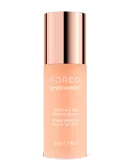
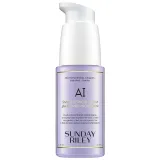
HONEYDouble A Vitamin Serum - Cell renewal & collagen boosterYOUR PRODUCTFOREOSUPERCHARGED Triple-Action Firming SerumCliniqueSmart Clinical Repair Wrinkle Correcting SerumSUNDAY RILEYAI Smart Retinoid for Blemish Prone Skin
Match—87%86%86%
Price—$45.81$54.11$85.00
Shared key ingredients—4 of 74 of 74 of 7
Key difference—AdenosineAscorbyl GlucosideAcetyl Hexapeptide-1
Irritancy Medium Medium Medium Medium
Drying alcohol————
View product Shop Shop Shop

More alternatives: Beauty Pie Super Retinal Rejuvenating SerumDr.Reju-All Advanced Retino-Mela Serum

Cheaper alternatives? Browse formulas in the same category.
We compare ingredient profiles across our catalog — pick the closest match for your budget.
Open dupe finder

Product summary

"HONEY - Double A Vitamin Serum - Cell renewal & collagen booster" is effective for: Anti-aging, Evens skin tone and Anti-blemish

This product could be helpful for: Moisturizing, but its actives are not the most effective or are not well-studied.

Ingredient callouts

  • this product contains an effective form of Retinoids (vitamin A): hydroxypinacolone retinoate 0.05% - 0.20%. Retinoids are potent multitasking actives. They work to improve and prevent early signs of aging, reduce hyperpigmentation (age spots and post-acne marks), and prevent inflamed blemishes and clogged pores. The downside of Retinoids is that they can be irritating. If you are not already using a Retinoid in your routine, it is best to start slowly and apply the Retinoid product only a few times per week. If your skin tolerates it well, you can gradually increase the frequency to daily.
  • Humectants (sodium hyaluronate 0.10% - 0.45% and glycerin 2.90% - 4.40%). These ingredients help attract water to the upper layer of the skin and improve the skin hydration.

HONEY Double A Vitamin Serum - Cell renewal & collagen booster
HONEYDouble A Vitamin Serum - Cell renewal & collagen booster

Affiliate links · As an Amazon Associate, WIMJ earns from qualifying purchases.

As an Amazon Associate, WIMJ earns from qualifying purchases.