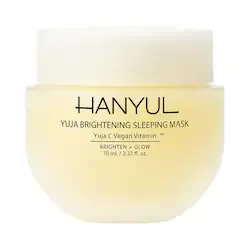
HANYUL Korean Yuja Brightening Sleeping Mask & Moisturizer with Vitamin C and Niacinamide
Works for
MoisturizingNiacinamide, Panthenol + 16 moreWorks well
“Korean Yuja Brightening Sleeping Mask & Moisturizer with Vitamin C and Niacinamide”
This product can help improve hydration of the skin with the two types of ingredients.
The first type is called “humectants”:
these ingredients help attract water.
When humectants are on the surface of the skin, they “pull in” the moisture from the outside environment, or from
within deeper layers of the skin. The following ingredients in this product do the job:
betaine, glycerin.
This product also contains ingredients called “occlusives”. They help reduce the speed with which our skin loses moisture to the outside environment. These ingredients also help soften the upper layer of the skin, so it feels less tight and nicer to the touch. The following ingredients in this product do the job: helianthus annuus seed oil, jojoba esters.
The following ingredients in this product are especially good for supporting the skin barrier and helping with the hydration level: niacinamide, panthenol
Evens skin toneNiacinamide, Ascorbic acid + 1 moreWorks well
“What it is: A leave-on jelly mask with melting capsules, infused with Korean yuja, vitamin C, and niacinamide, to help visibly brighten and even your skin tone.”
This product can help reduce hypepigmentation and even out the skin tone because it contains the following effective ingredients: niacinamide
Keep in mind that you would need to apply any topical skincare targetted at hypigmentation consistently for a couple of months to get a result. No topical skincare product can help get rid of hyperpigmentation (including post-acne marks and age spots) instantly.
Anti-agingSide benefit · Niacinamide, Adenosine + 5 moreWorks well
This product can help reduce and prevent fine lines and wrinkles, improve skin elasticity and firmness because it contains adenosine, niacinamide.
Keep in mind that it typically takes at least 6 weeks to notice any results because the changes that are needed to improve fine lines and elasticity happen in the deeper layers of the skin. No topical anti-aging product can “erase” wrinkles or fully reverse signs of aging.
Anti-blemishSide benefit · NiacinamideWorks well
This product can help reduce breakouts and clogged pores because it contains the following ingredient: niacinamide. This ingredient is used for treating acne and can have a noticeable effect.
Anti-oxidationSide benefit · Melatonin, Lactobacillus ferment + 5 moreMay help
This product contains antioxidants (melatonin) that can help neutralize free radicals in skin to lessen the damage it gets from the UV light (sun). There is some human evidence for this effect in skin, though it is smaller or less consistent than the evidence for the best antioxidants.
Can it cause trouble?
Irritancy11 strong irritants: Citrus junos fruit water, Alcohol denat. + 9 more — patch-test recommendedHigh risk
ComedogenicClean of flagged comedogenic ingredientsNone flagged


User reviews
Be the first — your take helps the next person decide.
Ingredients
Filter by role to see what each ingredient is doing.
Water~45–55%
Butylene glycol~5.9–7.2%
- Irritation risk
- Low
Used to create a nice product texture and help delivery of other ingredients. Might be somewhat helpful in attracting water to the upper layer of the skin
More about Butylene glycolGlycerin~4–4.9%
- Irritation risk
- Low
One of the best moisturizing ingredients. Naturally present in skin. It attracts water to the upper layer of the skin working as a humectant
More about GlycerinMethyl trimethicone~3–3.7%
- Irritation risk
- Low
A type of silicone that helps create a silky product finish and dissolve other ingredients
More about Methyl trimethiconePentaerythrityl tetraethylhexanoate~2.3–2.8%
- Irritation risk
- Low
Used to create a nice product consistency while softening the upper layer of the skin
More about Pentaerythrityl tetraethylhexanoateCitrus junos fruit water~1.7–2%
- Irritation risk
- High
Betaine~1.4–1.7%
- Irritation risk
- Low
Helps attract water to the upper layer of the skin and improves the product texture
More about BetaineNiacinamide~1.2–1.5%
- Irritation risk
- Low
Is proven to be effective in reducing blemishes, evening out skin tone and helping to improve lines and wrinkles. It helps the skin to repair sun damage, calm down inflammation and keep maintain good levels of moisture. The concentration of about 2% is effective for supporting the skin barrier and evening out the skin tone. Concentration of 4-6% is better for helping with acne and balancing the sebum production
More about NiacinamideAlcohol denat.~0.95–1.2%
- Irritation risk
- High
Produces temporary toning effect. Can help dissolve other ingredients or preserve products
More about Alcohol denat.1,2-hexanediol~0.55–0.8%
Vinyl dimethicone/methicone silsesquioxane crosspolymer~0.5–0.8%
- Irritation risk
- Low
A type of silicone that create a smooth product finish and can create an optical soft-focus effect on the skin. Helps to thicken the product consistency
More about Vinyl dimethicone/methicone silsesquioxane crosspolymerBehenyl alcohol~0.5–0.8%
- Irritation risk
- Low
Non-drying alcohol that helps water and oil mix together. Also serves as an emollient
More about Behenyl alcoholPanthenol~0.35–0.65%
- Irritation risk
- Low
Helps attract water to the upper layer of the skin and can help improve skin barrier function
More about PanthenolJojoba esters~0.35–0.65%
- Irritation risk
- Medium
An emollient made of jojoba oil. Helps soften the skin and support its barrier function
More about Jojoba estersHydroxyethyl acrylate/sodium acryloyldimethyl taurate copolymer~0.3–0.55%
- Irritation risk
- Medium
A gelling agent that thickens the product consistency and leaves the skin with a velvety finish
More about Hydroxyethyl acrylate/sodium acryloyldimethyl taurate copolymerAmmonium acryloyldimethyltaurate/vp copolymer~0.3–0.5%
- Irritation risk
- Low
Increases thickness of a product. Texture enhancer for oil-in-water emulsions
More about Ammonium acryloyldimethyltaurate/vp copolymerAcrylates/c10-30 alkyl acrylate crosspolymer~0.3–0.55%
- Irritation risk
- Medium
Maintains the texture of skincare products. Allows the product to spread evenly. Helps oil and water mix together
More about Acrylates/c10-30 alkyl acrylate crosspolymerHelianthus annuus seed oil~0.3–0.5%
- Irritation risk
- Low
A great emollient due to its high linoleic acid content. One of the most effective plant oils in helping skin hydration and repairing skin barrier function
More about Helianthus annuus seed oilLimonene~0.2–0.4%
- Irritation risk
- High
A common frangrance that can easily irritate skin, especially if exposed to air, light or heat
More about LimoneneCitrus junos seed oil~0.25–0.45%
- Irritation risk
- High
Maltodextrin~0.2–0.4%
- Irritation risk
- Low
Used to stabilize the product formulation and can help absorb oil
More about MaltodextrinTromethamine~0.2–0.35%
Citrus junos peel oil~0.2–0.35%
- Irritation risk
- High
Xanthan gum~0.2–0.4%
- Irritation risk
- Low
Used to create a thicker product consistency
More about Xanthan gumGlyceryl caprylate~0.25–0.45%
- Irritation risk
- Low
An emollient that can also help water and oil mix together, as well as prevent bacteria growth in products
More about Glyceryl caprylateDaucus carota sativa root extract~0.2–0.35%
- Irritation risk
- Low
Carrot extract. Might have anti-oxidant properties and be used to add orange color
More about Daucus carota sativa root extractEthylhexylglycerin~0.2–0.4%
Sodium metaphosphate~0.2–0.35%
Geraniol~0.2–0.35%
Adenosine~0.2–0.35%
- Irritation risk
- Low
Might help improve cell turnover and reduce inflammation in skin. One study shows that the ingredients might be able to help reduce dynamic wrinkles (for example, in the corners of the eyes or on the forehead)
More about AdenosineSorbitan isostearate~0.2–0.4%
- Irritation risk
- Low
Helps oil and water mix together
More about Sorbitan isostearateCitrus junos fruit extract~0.2–0.35%
- Irritation risk
- High
Contains essential oil. Can be irritating and lead to photosensitivity
More about Citrus junos fruit extractBioflavonoids~0.15–0.3%
- Irritation risk
- Low
Linalool~0.2–0.35%
Ascorbic acid~0.2–0.35%
- Irritation risk
- High
The most well-researched antioxidant that works in skin. Helps neutralize free radicals supporting collagen production, helping to even out the skin tone and preventing early signs of aging
More about Ascorbic acidThymol trimethoxycinnamate~0.2–0.4%
- Irritation risk
- Low
3-o-ethyl ascorbic acid~0.2–0.35%
- Irritation risk
- High
A vitamin C derivative that is more stable but less potent than pure form of vitamin C. Can help neutralize free radicals and help reduce hyperpigmentation, but the required concentration is likely to be much higher than for the pure form of vitamin C, limiting the ingredient's effectiveness in products
More about 3-o-ethyl ascorbic acidLactobacillus ferment~0.2–0.4%
- Irritation risk
- Low
A fermentation product created by bacteria Lactobacillus. The fermented product has anti-bacterial properties and might be helpful in calming down inflammation, but studies are lacking. Helps attract water to the upper layer of the skin. Can be used as a preservative
More about Lactobacillus fermentPoncirus trifoliata fruit extract~0.2–0.35%
- Irritation risk
- Low
Beta-carotene~0.2–0.35%
Farnesol~0.2–0.35%
Cymbopogon martini oil~0.15–0.3%
- Irritation risk
- High
Aromatic plant oil used in cosmetics as a fragrance. A likely irritant
More about Cymbopogon martini oilTocopherol~0.2–0.35%
- Irritation risk
- Low
Pure form of vitamin E. Can help moisturise and protect the skin from free radicals. Often used to help stabilise other ingredients or the formula itself
More about TocopherolPropanediol~0.2–0.4%
- Irritation risk
- Low
Acts as a solvent for other ingredients. Speeds up the absorption of other ingredients into the skin
More about PropanediolMelatonin~0.2–0.35%
- Irritation risk
- Low
A compound that can regulate sleep cycles in humans and animals. When used in cosmetics, comes from plant sources. It can work as anti-oxidant in skin when applied topically in skincare
More about MelatoninCitrus junos peel extract~0.15–0.25%
- Irritation risk
- High
Sodium hyaluronate~0.15–0.25%
- Irritation risk
- Low
One of the best moisturizing ingredients. Attracts water into the upper layer of the skin
More about Sodium hyaluronateHydrolyzed hyaluronic acid~0.15–0.25%
- Irritation risk
- Low
One of the best moisturizing ingredients. Attracts water into the upper layer of the skin. A version of it is naturally present in skin
More about Hydrolyzed hyaluronic acidSodium hyaluronate crosspolymer~0.1–0.25%
- Irritation risk
- Medium
Attracts water into the upper layer of the skin
More about Sodium hyaluronate crosspolymerHyaluronic acid~0.05–0.15%
- Irritation risk
- Low
One of the best moisturizing ingredients. Attracts water into the upper layer of the skin. Naturally present in skin. Typically has large molecule size unless advertised otherwise on the product label. Helps support skin's barrier function and may help to reduce inflammation
More about Hyaluronic acidSodium acetylated hyaluronate~0.05–0.15%
- Irritation risk
- Low
A type of hyaluronic acid that works as an excellent moisturizer by attracting water into the upper layer of the skin. Is typically feels less sticky on the skin compared to the usual hyaluronic acid
More about Sodium acetylated hyaluronateIngredient list view
Water, Butylene glycol, Glycerin, Methyl trimethicone, Pentaerythrityl tetraethylhexanoate, Citrus junos fruit water, Betaine, Niacinamide, Alcohol denat., 1,2-hexanediol, Vinyl dimethicone/methicone silsesquioxane crosspolymer, Behenyl alcohol, Panthenol, Jojoba esters, Hydroxyethyl acrylate/sodium acryloyldimethyl taurate copolymer, Ammonium acryloyldimethyltaurate/vp copolymer, Acrylates/c10-30 alkyl acrylate crosspolymer, Helianthus annuus seed oil, Limonene, Citrus junos seed oil, Maltodextrin, Tromethamine, Citrus junos peel oil, Xanthan gum, Glyceryl caprylate, Daucus carota sativa root extract, Ethylhexylglycerin, Sodium metaphosphate, Geraniol, Adenosine, Sorbitan isostearate, Citrus junos fruit extract, Bioflavonoids, Linalool, Ascorbic acid, Thymol trimethoxycinnamate, 3-o-ethyl ascorbic acid, Lactobacillus ferment, Poncirus trifoliata fruit extract, Beta-carotene, Farnesol, Cymbopogon martini oil, Tocopherol, Propanediol, Melatonin, Citrus junos peel extract, Sodium hyaluronate, Hydrolyzed hyaluronic acid, Sodium hyaluronate crosspolymer, Hyaluronic acid, Sodium acetylated hyaluronate
Compare prices
Retailers ranked by price — lowest first.

Worth comparing, line by line.
Match % combines shared ingredients, the first five ingredients, shared actives and hero ingredients, irritancy (lower counts in the alternative's favour), texture and body area. Only products in the same routine step are compared.
| HANYULKorean Yuja Brightening Sleeping Mask & Moisturizer with Vitamin C and NiacinamideYOUR PRODUCT | the Torriden StoreCellmazing Brightening Mask | TROIAREUKEAcsen SOS Sleeping Mask | GlowiestDream Glow Calming Mask | |
|---|---|---|---|---|
| Match | — | 87% | 87% | 83% |
| Price | $30.00 | $3.23−$26.77 | $45.92+$15.92 | $24.99−$5.01 |
| Shared key ingredients | — | 10 of 16 | 11 of 16 | 10 of 16 |
| Key difference | — | Tripeptide-1 | Madecassoside | Salicylic Acid |
| Irritancy | High | Medium | Medium | Medium |
| Drying alcohol | Contains drying alcohol | — | — | — |
| View product | Shop | Shop | Shop |

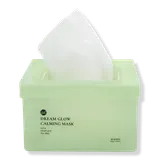
More alternatives: K-SECRET Collagen Boosting Secret Sleeping MaskArencia Holy Hyssop Sheet Mask
Sources cited in this review
Every concentration estimate and effectiveness label is anchored to one of these 28 studies and safety reviews.
- 1
- 2Safety Assessment of Pentaerythrityl Tetraesters as Used in Cosmeticsjournals.sagepub.com
- 3
- 4
- 5
- 6Skin moisturizing effects of panthenol-based formulationspdfs.semanticscholar.org

Affiliate links · As an Amazon Associate, WIMJ earns from qualifying purchases.