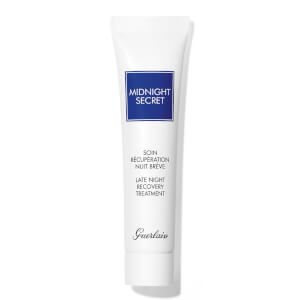
GUERLAIN Midnight Secret Late Night Recovery Treatment

GUERLAIN Midnight Secret Late Night Recovery Treatment

Efficacy75/100IrritancyHigh
Edit

Works for

3 of 3 advertised claims delivered

Anti-aging
Threonine, Tocopherol + 1 more
Moderate evidence
What the product description says
“Late Night Recovery Treatment provides care for tired skin”
Source: Allbeauty

This product contains threonine. This ingredient might be able to help reduce and prevent fine lines and wrinkles, improve skin elasticity and firmness, but there is not enough evidence that it actually works.

ThreonineKey activeEffect: MediumAn amino-acid that helps to attract water to the upper layer of the skin. In combination with other amino-acids, might help to reduce fine lines and wrinkles~0.15–0.3%
TocopherolEffect: Low, below effective dosePure form of vitamin E. Can help moisturise and protect the skin from free radicals. Often used to help stabilise other ingredients or the formula itself~0.1–0.2%
Ascorbyl palmitateEffect: Low, below effective doseBeing a lipid soluble form of vitamin C, it is more stable and can penetrate the skin better than L-Ascorbic acid. It is effective in protecting the skin from free radicals, as well as evening the skin tone, but is less effective in stimulating collagen production compared to L-Ascorbic acid.~0.1–0.15%
Moisturizing
Glycoproteins, Sodium lactate + 16 more
Good evidence
What the product description says
“herstellen van slaaptekort”
Source: Guerlain

This product can help improve hydration of the skin with the two types of ingredients.

The first type is called “humectants”:
these ingredients help attract water. When humectants are on the surface of the skin, they “pull in” the moisture from the outside environment, or from within deeper layers of the skin. The following ingredients in this product do the job: glutamic acid, sodium hyaluronate.

This product also contains ingredients called “occlusives”. They help reduce the speed with which our skin loses moisture to the outside environment. These ingredients also help soften the upper layer of the skin, so it feels less tight and nicer to the touch. The following ingredients in this product do the job: dimethicone, myristyl myristate.

GlycoproteinsKey activeEffect: High~0.25–0.45%
Sodium lactateKey active· HumectantEffect: HighHelps attract water to the upper layer of the skin. Is often used to adjust the pH level of the product~0.45–0.65%
Myristyl myristateKey active· Emollient, OcclusiveEffect: HighAn emollient. Is not recommended for acne-prone skin as it can be comedogenic~2.5–3%
Sodium hyaluronateKey active· HumectantEffect: HighOne of the best moisturizing ingredients. Attracts water into the upper layer of the skin~0.25–0.5%
DimethiconeKey active· Emollient, OcclusiveEffect: HighA silicone that helps to reduce water loss from the surface of the skin. Can temporarily "fill in" lines and wrinkles, absorb oil, and create a nice product finish~0.5–0.8%
Glutamic acidKey active· HumectantEffect: HighAn amino-acid that helps attract water to the upper layer of the skin~0.25–0.45%
ThreonineKey activeEffect: HighAn amino-acid that helps to attract water to the upper layer of the skin. In combination with other amino-acids, might help to reduce fine lines and wrinkles~0.15–0.3%
Cetyl palmitateKey active· EmollientEffect: MediumAn emollient that helps soften the skin and is used to improve product texture and stability~1.5–1.8%
Butylene glycol· HumectantEffect: LowUsed to create a nice product texture and help delivery of other ingredients. Might be somewhat helpful in attracting water to the upper layer of the skin~3.1–3.8%
Pentylene glycol· EmollientEffect: LowUsed to preserve products, dissolve other ingredients and create a nice product texture~1.7–2.1%
Propylene glycol· HumectantEffect: LowHelps oil and water mix together and can enhance the penetration of other ingredients into the skin. It can be irritating~1.2–1.4%
Ethylhexyl stearate· EmollientEffect: LowHelps soften the upper layer of the skin~4.4–5.4%
Palmitic acid· EmollientEffect: LowAn emollient that is naturally present in skin and helps soften it~0.75–1.15%
Cetearyl ethylhexanoate· EmollientEffect: LowAn emollient that helps soften the skin~5–6.1%
Isohexadecane· EmollientEffect: LowImproves the texture of the product and helps soften the skin. Helps oil and water mix together and can be used as a cleansing agent~2.1–2.6%
Stearic acidEffect: Low, below effective doseHelps oil and water mix together and works as an emollient~0.7–1.05%
LecithinEffect: Low, below effective doseUsed mostly for creating emulsions - helping oil and water mix together. Helps soften the upper layer of the skin~0.3–0.55%
TocopherolEffect: Low, below effective dosePure form of vitamin E. Can help moisturise and protect the skin from free radicals. Often used to help stabilise other ingredients or the formula itself~0.1–0.2%
Evens skin tone
Glycyrrhetinic acid
Moderate evidence
What the product description says
“gerevitaliseerde teint”
Source: Guerlain

The following ingredient (ingredients) in this product might be helpful, but there is no evidence to confirm that it actually works: glycyrrhetinic acid.

Glycyrrhetinic acidKey activeEffect: MediumActive compound of licorice root. Works to calm down inflammation, as an anti-oxidant, and might be helpful in lightening the skin and reducing hyperpigmentation~0.25–0.45%
Anti-oxidation
Not advertised by the brand · Glycyrrhetinic acid, Ginkgo biloba leaf extract + 5 more
Strong evidence

This product contains antioxidants (glycyrrhetinic acid) that can help neutralize free radicals in skin. By doing so, they can lessen the damage the skin gets from the UV light (sun).

The following ingredients - ginkgo biloba leaf extract, tocopheryl linoleate also can have an antioxidant effect, but there is less evidence to confirm their effectiveness in skin.

Glycyrrhetinic acidKey activeEffect: HighActive compound of licorice root. Works to calm down inflammation, as an anti-oxidant, and might be helpful in lightening the skin and reducing hyperpigmentation~0.25–0.45%
Ginkgo biloba leaf extractKey activeEffect: MediumA plant extract that might help neutralize free radicals and reduce inflammation in skin. It can be irritating~0.25–0.5%
Tocopheryl linoleateKey activeEffect: MediumA relative of vitamin E (Tocopherol). It can have an anti-oxidant effect in skin and/or to stabilize the product fromulation. It could be irritating but most of the reported allergy and irritation cases appeared in one geographic location (Switzerland) in 1992, and might be due to the quality issues in manufacturing of a particular batch of the ingredient~0.3–0.5%
OryzanolEffect: LowAn anti-oxidant that helps stabilize product formulations. Might help neutralise free radicals in skin~0.45–0.65%
TocopherolUnder-dosedEffect: HighPure form of vitamin E. Can help moisturise and protect the skin from free radicals. Often used to help stabilise other ingredients or the formula itself~0.1–0.2%
Tocopheryl acetateEffect: Low, below effective doseA more stable but less bio-available form of vitamin E compared to Tocopherol. Might help moisturize and protect the skin from free radicals, but mostly used in low concentrations to stabilize other ingredients.~0.35–0.6%
Ascorbyl palmitateEffect: Low, below effective doseBeing a lipid soluble form of vitamin C, it is more stable and can penetrate the skin better than L-Ascorbic acid. It is effective in protecting the skin from free radicals, as well as evening the skin tone, but is less effective in stimulating collagen production compared to L-Ascorbic acid.~0.1–0.15%

Can it cause trouble?

Irritancy
6 strong irritants: Parfum, Linalool + 4 more — patch-test recommended
High risk
We flagged 20 ingredients with irritancy potential. Severity depends on your sensitivity threshold; the table lists the worst offenders first.
IngredientFunctionIrritationEst. amount
Propylene glycolHelps oil and water mix together and can enhance the penetration of other ingredients into the skin. It can be irritatingHigh~1.2–1.4%est.
ParfumAn aromatic blend of unspecified and possibly irritating ingredientsHigh~0.3–0.55%est.
Ginkgo biloba leaf extractA plant extract that might help neutralize free radicals and reduce inflammation in skin. It can be irritatingHigh~0.25–0.5%est.
LinaloolA fragrance. Can be irritatingHigh~0.25–0.45%est.
CoumarinA fragrance. Is a likely skin allergen and can be irritatingHigh~0.2–0.4%est.
Alpha-isomethyl iononeA fragrance. Potential allergen and can be irritatingHigh~0.2–0.4%est.
LimoneneA common frangrance that can easily irritate skin, especially if exposed to air, light or heatHigh~0.2–0.35%est.
GeraniolA fragrance. Can be irritatingHigh~0.2–0.35%est.
Myristyl myristateAn emollient. Is not recommended for acne-prone skin as it can be comedogenicMedium~2.5–3%est.
Pentylene glycolUsed to preserve products, dissolve other ingredients and create a nice product textureMedium~1.7–2.1%est.
Sodium lactateHelps attract water to the upper layer of the skin. Is often used to adjust the pH level of the productMedium~0.45–0.65%est.
Steareth-21Helps oil and water mix togetherMedium~0.5–0.75%est.
Tocopheryl acetateA more stable but less bio-available form of vitamin E compared to Tocopherol. Might help moisturize and protect the skin from free radicals, but mostly used in low concentrations to stabilize other ingredients.Medium~0.35–0.6%est.
Tocopheryl linoleateA relative of vitamin E (Tocopherol). It can have an anti-oxidant effect in skin and/or to stabilize the product fromulation. It could be irritating but most of the reported allergy and irritation cases appeared in one geographic location (Switzerland) in 1992, and might be due to the quality issues in manufacturing of a particular batch of the ingredientMedium~0.3–0.5%est.
Tetrasodium edtaHelps to stabilize the product formulationMedium~0.25–0.5%est.
Glycyrrhetinic acidActive compound of licorice root. Works to calm down inflammation, as an anti-oxidant, and might be helpful in lightening the skin and reducing hyperpigmentationMedium~0.25–0.45%est.
BhtA preservativeMedium~0.25–0.45%est.
EthylhexylglycerinA preservativeMedium~0.2–0.4%est.
Sodium metabisulfiteA preservativeMedium~0.1–0.2%est.
Ascorbyl palmitateBeing a lipid soluble form of vitamin C, it is more stable and can penetrate the skin better than L-Ascorbic acid. It is effective in protecting the skin from free radicals, as well as evening the skin tone, but is less effective in stimulating collagen production compared to L-Ascorbic acid.Medium~0.1–0.15%est.
Comedogenic
1 ingredient rated 2 or more on the 0–5 pore-clogging scale
1 flagged
These ingredients have a comedogenic rating of 2 or more on a 0–5 scale; the table shows each one's rating. In leave-on products they can clog pores in acne-prone skin.
IngredientFunctionRatingEst. amount
Myristyl myristateAn emollient. Is not recommended for acne-prone skin as it can be comedogenic3/5~2.5–3%est.
Edit

User reviews

Would you recommend?
No community reviews yet.

Be the first — your take helps the next person decide.

Write a review · ~30s

Ingredients

Filter by role to see what each ingredient is doing.

Water~45–55%
Formula
Irritation risk
Low

Plain old water

More about Water
Cetearyl ethylhexanoate~5–6.1%
Formula
Irritation risk
Low
Works for
Moisturizing

An emollient that helps soften the skin

More about Cetearyl ethylhexanoate
Ethylhexyl stearate~4.4–5.4%
Formula
Irritation risk
Low
Works for
Moisturizing

Helps soften the upper layer of the skin

More about Ethylhexyl stearate
Butylene glycol~3.1–3.8%
Formula
Irritation risk
Low
Works for
Moisturizing

Used to create a nice product texture and help delivery of other ingredients. Might be somewhat helpful in attracting water to the upper layer of the skin

More about Butylene glycol
Myristyl myristate~2.5–3%
Key activeComedogenic 3/5Irritant · medium
Irritation risk
Medium
Comedogenicity
3/5
Works for
Moisturizing

An emollient. Is not recommended for acne-prone skin as it can be comedogenic

More about Myristyl myristate
Isohexadecane~2.1–2.6%
Formula
Irritation risk
Low
Works for
CleansingMoisturizing

Improves the texture of the product and helps soften the skin. Helps oil and water mix together and can be used as a cleansing agent

More about Isohexadecane
Pentylene glycol~1.7–2.1%
Irritant · medium
Irritation risk
Medium
Works for
Moisturizing

Used to preserve products, dissolve other ingredients and create a nice product texture

More about Pentylene glycol
Cetyl palmitate~1.5–1.8%
Key active
Irritation risk
Low
Works for
Moisturizing

An emollient that helps soften the skin and is used to improve product texture and stability

More about Cetyl palmitate
Propylene glycol~1.2–1.4%
Irritant · high
Irritation risk
High
Works for
Moisturizing

Helps oil and water mix together and can enhance the penetration of other ingredients into the skin. It can be irritating

More about Propylene glycol
Stearyl alcohol~1.1–1.3%
Formula
Irritation risk
Low
Works for
Cleansing

An emollient that helps soften the skin

More about Stearyl alcohol
Palmitic acid~0.75–1.15%
Formula
Irritation risk
Low
Works for
CleansingMoisturizing

An emollient that is naturally present in skin and helps soften it

More about Palmitic acid
Stearic acid~0.7–1.05%
Formula
Irritation risk
Low
Works for
CleansingMoisturizing

Helps oil and water mix together and works as an emollient

More about Stearic acid
Phenoxyethanol~0.5–0.8%
Formula
Irritation risk
Low

A preservative. It helps prevent bacterial growth in cosmetic products

More about Phenoxyethanol
Tromethamine~0.5–0.75%
Formula
Irritation risk
Low

Helps adjust pH in products

More about Tromethamine
Dimethicone~0.5–0.8%
Key active
Irritation risk
Low
Works for
MoisturizingMattifying

A silicone that helps to reduce water loss from the surface of the skin. Can temporarily "fill in" lines and wrinkles, absorb oil, and create a nice product finish

More about Dimethicone
Oryzanol~0.45–0.65%
Formula
Irritation risk
Low
Works for
Anti-oxidation

An anti-oxidant that helps stabilize product formulations. Might help neutralise free radicals in skin

More about Oryzanol
Sodium lactate~0.45–0.65%
Key activeIrritant · medium
Irritation risk
Medium
Works for
Moisturizing

Helps attract water to the upper layer of the skin. Is often used to adjust the pH level of the product

More about Sodium lactate
Steareth-21~0.5–0.75%
Irritant · medium
Irritation risk
Medium
Works for
Cleansing

Helps oil and water mix together

More about Steareth-21
Tocopheryl acetate~0.35–0.6%
Irritant · medium
Irritation risk
Medium
Works for
Anti-oxidation

A more stable but less bio-available form of vitamin E compared to Tocopherol. Might help moisturize and protect the skin from free radicals, but mostly used in low concentrations to stabilize other ingredients.

More about Tocopheryl acetate
Parfum~0.3–0.55%
Irritant · high
Irritation risk
High

An aromatic blend of unspecified and possibly irritating ingredients

More about Parfum
Carbomer~0.3–0.55%
Formula
Irritation risk
Low
Works for
Cleansing

Helps create a thicker or gel-like product texture. It is not a surfactant but can be used in gentle cleansing formulations

More about Carbomer
Tocopheryl linoleate~0.3–0.5%
Key activeIrritant · medium
Irritation risk
Medium
Works for
Anti-oxidation

A relative of vitamin E (Tocopherol). It can have an anti-oxidant effect in skin and/or to stabilize the product fromulation. It could be irritating but most of the reported allergy and irritation cases appeared in one geographic location (Switzerland) in 1992, and might be due to the quality issues in manufacturing of a particular batch of the ingredient

More about Tocopheryl linoleate
Ginkgo biloba leaf extract~0.25–0.5%
Key activeIrritant · high
Irritation risk
High
Works for
Anti-oxidationAnti-inflammatoryAntibacterialAnti-blemish

A plant extract that might help neutralize free radicals and reduce inflammation in skin. It can be irritating

More about Ginkgo biloba leaf extract
Lecithin~0.3–0.55%
Formula
Irritation risk
Low
Works for
CleansingMoisturizing

Used mostly for creating emulsions - helping oil and water mix together. Helps soften the upper layer of the skin

More about Lecithin
Methyl trimethicone~0.25–0.5%
Formula
Irritation risk
Low

A type of silicone that helps create a silky product finish and dissolve other ingredients

More about Methyl trimethicone
Tetrasodium edta~0.25–0.5%
Irritant · medium
Irritation risk
Medium

Helps to stabilize the product formulation

More about Tetrasodium edta
Glycyrrhetinic acid~0.25–0.45%
Key activeIrritant · medium
Irritation risk
Medium
Works for
Anti-oxidationAnti-inflammatoryEvens skin tone

Active compound of licorice root. Works to calm down inflammation, as an anti-oxidant, and might be helpful in lightening the skin and reducing hyperpigmentation

More about Glycyrrhetinic acid
Linalool~0.25–0.45%
Irritant · high
Irritation risk
High

A fragrance. Can be irritating

More about Linalool
Sodium hyaluronate~0.25–0.5%
Key active
Irritation risk
Low
Works for
Moisturizing

One of the best moisturizing ingredients. Attracts water into the upper layer of the skin

More about Sodium hyaluronate
Glycoproteins~0.25–0.45%
Key active
Irritation risk
Low
Works for
Moisturizing
More about Glycoproteins
Bht~0.25–0.45%
Irritant · medium
Irritation risk
Medium

A preservative

More about Bht
Coumarin~0.2–0.4%
Irritant · high
Irritation risk
High

A fragrance. Is a likely skin allergen and can be irritating

More about Coumarin
Glutamic acid~0.25–0.45%
Key active
Irritation risk
Low
Works for
Moisturizing

An amino-acid that helps attract water to the upper layer of the skin

More about Glutamic acid
Caprylic/capric/succinic triglyceride~0.3–0.55%
Formula
Irritation risk
Low
Works for
Cleansing
More about Caprylic/capric/succinic triglyceride
Alpha-isomethyl ionone~0.2–0.4%
Irritant · high
Irritation risk
High

A fragrance. Potential allergen and can be irritating

More about Alpha-isomethyl ionone
Ethylhexylglycerin~0.2–0.4%
Irritant · medium
Irritation risk
Medium

A preservative

More about Ethylhexylglycerin
Limonene~0.2–0.35%
Irritant · high
Irritation risk
High

A common frangrance that can easily irritate skin, especially if exposed to air, light or heat

More about Limonene
Geraniol~0.2–0.35%
Irritant · high
Irritation risk
High

A fragrance. Can be irritating

More about Geraniol
Skeletonema costatum extract~0.2–0.35%
Formula
Threonine~0.15–0.3%
Key active
Irritation risk
Low
Works for
MoisturizingAnti-aging

An amino-acid that helps to attract water to the upper layer of the skin. In combination with other amino-acids, might help to reduce fine lines and wrinkles

More about Threonine
Valine~0.15–0.3%
Formula
Irritation risk
Low
More about Valine
Sodium metabisulfite~0.1–0.2%
Irritant · medium
Irritation risk
Medium

A preservative

More about Sodium metabisulfite
Tocopherol~0.1–0.2%
Under-dosed
Irritation risk
Low
Works for
Anti-oxidationAnti-agingMoisturizingAnti-inflammatory

Pure form of vitamin E. Can help moisturise and protect the skin from free radicals. Often used to help stabilise other ingredients or the formula itself

More about Tocopherol
Ascorbyl palmitate~0.1–0.15%
Irritant · medium
Irritation risk
Medium
Works for
Anti-oxidationAnti-aging

Being a lipid soluble form of vitamin C, it is more stable and can penetrate the skin better than L-Ascorbic acid. It is effective in protecting the skin from free radicals, as well as evening the skin tone, but is less effective in stimulating collagen production compared to L-Ascorbic acid.

More about Ascorbyl palmitate
Ingredient list view

Water, Cetearyl ethylhexanoate, Ethylhexyl stearate, Butylene glycol, Myristyl myristate, Isohexadecane, Pentylene glycol, Cetyl palmitate, Propylene glycol, Stearyl alcohol, Palmitic acid, Stearic acid, Phenoxyethanol, Tromethamine, Dimethicone, Oryzanol, Sodium lactate, Steareth-21, Tocopheryl acetate, Parfum, Carbomer, Tocopheryl linoleate, Ginkgo biloba leaf extract, Lecithin, Methyl trimethicone, Tetrasodium edta, Glycyrrhetinic acid, Linalool, Sodium hyaluronate, Glycoproteins, Bht, Coumarin, Glutamic acid, Caprylic/capric/succinic triglyceride, Alpha-isomethyl ionone, Ethylhexylglycerin, Limonene, Geraniol, Skeletonema costatum extract, Threonine, Valine, Sodium metabisulfite, Tocopherol, Ascorbyl palmitate

Compare prices

Retailers ranked by price — lowest first.

Amazon US
Price unavailable
Check

Affiliate links · prices updated regularly · As an Amazon Associate, WIMJ earns from qualifying purchases.

Cheaper alternatives? See how this stacks up against similar formulas.
We compare ingredient profiles across our catalog — pick the closest match for your budget.
Open dupe finder

Product summary

"GUERLAIN - Midnight Secret Late Night Recovery Treatment" could be helpful for: Anti-aging, Evens skin tone and Moisturizing, but its actives are not the most effective or are not well-studied.

Ingredient callouts

  • Humectants (glutamic acid 0.25% - 0.45%, sodium hyaluronate 0.25% - 0.50% and sodium lactate 0.45% - 0.65%). These ingredients help attract water to the upper layer of the skin and improve the skin hydration.

Price

The product retails from 20.05£ up to 209.00£ in the United Kingdom, for 69.00CA$ in Canada and for 54.41A$ in Australia.

For a detailed price comparison: click here.

Sources cited in this review

Every concentration estimate and effectiveness label is anchored to one of these 22 studies and safety reviews.

  1. 1
  2. 2
    Propylene Glycolpubmed.ncbi.nlm.nih.gov
  3. 3
  4. 4
  5. 5
  6. 6
GUERLAIN Midnight Secret Late Night Recovery Treatment
GUERLAINMidnight Secret Late Night Recovery Treatment

Affiliate links · As an Amazon Associate, WIMJ earns from qualifying purchases.

As an Amazon Associate, WIMJ earns from qualifying purchases.