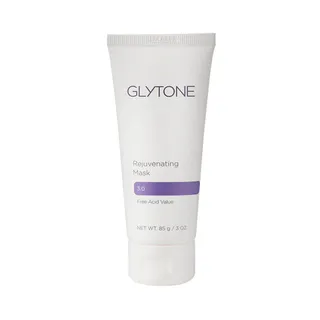
Works for
ExfoliationGlycolic acid, Lactic acidWorks well
“A 3% concentration of glycolic acid exfoliates to reduce acne while lactic acid diminishes hyperpigmentation.”
This product can help exfoliate the skin. In other words, it helps break down the bonds between dead cells on the surface of the skin and speed up the skin turnover. Skin often appears softer and brighter after exfoliation, but overdoing it can result in disrupted skin barrier. The following ingredient is doing the exfoliating job in this product: glycolic acid.
Evens skin toneGlycolic acid, Lactic acid + 1 moreWorks well
“A 3% concentration of glycolic acid exfoliates to reduce acne while lactic acid diminishes hyperpigmentation.”
This product can help reduce hypepigmentation and even out the skin tone because it contains the following effective ingredients: glycolic acid
Keep in mind that you would need to apply any topical skincare targetted at hypigmentation consistently for a couple of months to get a result. No topical skincare product can help get rid of hyperpigmentation (including post-acne marks and age spots) instantly.
Anti-blemishGlycolic acid, Kaolin + 1 moreNot delivered
“A 3% concentration of glycolic acid exfoliates to reduce acne while lactic acid diminishes hyperpigmentation.”
This product contains ingredients (glycolic acid) that could help reduce blemishes and clogged pores in theory, but there is not enough evidence that they actually work.
Anti-agingSide benefit · Glycolic acid, Lactic acid + 1 moreWorks well
This product can help reduce and prevent fine lines and wrinkles, improve skin elasticity and firmness because it contains glycolic acid.
Keep in mind that it typically takes at least 6 weeks to notice any results because the changes that are needed to improve fine lines and elasticity happen in the deeper layers of the skin. No topical anti-aging product can “erase” wrinkles or fully reverse signs of aging.
MoisturizingSide benefit · Glycerin, Soluble collagen + 1 moreWorks
This product contains good ingredients to attract water to the upper layer of the skin. These ingredients are called "humectants": glycerin, soluble collagen.
When humectants are on the surface of the skin, they “pull in” the moisture from the outside environment, or from within deeper layers of the skin. If the air is dry, humectants can speed up the moisture loss from the skin. This is why it is a good idea to use another product on top of this one to help "seal in" the moisture (look for ingredients like dimethicone, squalane, oils and butters).
Can it cause trouble?
Irritancy1 strong irritant: MentholMedium risk
Comedogenic1 ingredient rated 2 or more on the 0–5 pore-clogging scale1 flagged


User reviews
Be the first — your take helps the next person decide.
Ingredients
Filter by role to see what each ingredient is doing.
Water~40–60%
Kaolin~5.3–8%
- Irritation risk
- Low
A type of clay that consists mainly of aluminum silicate. Helps absorb oil and creates a thicker product consistency. Can be used to add a white color
More about KaolinBentonite~3.8–5.6%
Zinc oxide~3.3–5%
- Irritation risk
- Low
A broad spectrum sunblock (protects from both UVA and UVB rays). Is suitable for most sensitive skins. In small concentrations, can be used as a colorant
More about Zinc oxideGlycolic acid~2–3%
- Irritation risk
- High
An alpha-hydroxy acid (AHA) that helps to remove the dead skin cells on the surface of the skin reveling a more even, smoother complexation. It is also able to stimulate collagen production with long-term use. Could help to reduce pore congestion. It can be irritating to the skin. Apply sunscreen daily if using products with glycolic acid
More about Glycolic acidIsopropyl alcohol~1.4–2.2%
- Irritation risk
- High
A drying alcohol. Can increase skin's sensitivity and cause dryness and irritation
More about Isopropyl alcoholGlycerin~1.3–1.9%
- Irritation risk
- Low
One of the best moisturizing ingredients. Naturally present in skin. It attracts water to the upper layer of the skin working as a humectant
More about GlycerinSoluble collagen~1.1–1.6%
- Irritation risk
- Low
A typically plant-derived compound that is supposed mimic human collagen. Cannot penetrate the skin barrier so is not particularly useful in skincare products beyond attracting water to the upper layer of the skin
More about Soluble collagenLactic acid~0.55–1.3%
- Irritation risk
- Medium
An exfoliating and moisturizing alpha-hydroxy acid (AHA). Typically causes less irritation than other AHAs, for example, glycolic acid. At high concentrations (about 15%), lactic acid can help reduce lines and wrinkles. Recent studies show that lactic acid can support the "good" bacteria living on skin's surface (healthy skin microbiome)
More about Lactic acidAscorbic acid~0.5–1.15%
- Irritation risk
- High
The most well-researched antioxidant that works in skin. Helps neutralize free radicals supporting collagen production, helping to even out the skin tone and preventing early signs of aging
More about Ascorbic acidBht~0.4–0.95%
Disodium edta~0.2–0.75%
Menthol~0.1–0.45%
- Irritation risk
- High
Methylparaben~0.15–0.3%
Propyl gallate~0.05–0.25%
- Irritation risk
- Medium
Helps preserve product formulations and can mask the smell of other ingredients in a product
More about Propyl gallateSodium lauryl sulfate~0.3–0.75%
- Irritation risk
- High
- Comedogenicity
- 3/5
A cleansing agent (SLS). It can be irritating
More about Sodium lauryl sulfateIngredient list view
Water, Kaolin, Bentonite, Zinc oxide, Glycolic acid, Isopropyl alcohol, Glycerin, Soluble collagen, Lactic acid, Ascorbic acid, Bht, Disodium edta, Menthol, Methylparaben, Propyl gallate, Sodium lauryl sulfate
Compare prices
Retailers ranked by price — lowest first.

Worth comparing, line by line.
Match % combines shared ingredients, the first five ingredients, shared actives and hero ingredients, irritancy (lower counts in the alternative's favour), texture and body area. Only products in the same routine step are compared.
| GlytoneRejuvenating MaskYOUR PRODUCT | Dr Dennis GrossVitamin C Lactic Acid Firming Serum | Dr. Dennis Gross | SkinCeuticalsC+AHA | Herbal EssentialsRescue Revive Sheet Mask With 10% Moisture Complex and Chamomile Extract - Single Sachet | |
|---|---|---|---|---|
| Match | — | 76% | 76% | 66% |
| Price | $58.00 | $20.00−$38.00 | $138.00+$80.00 | — |
| Shared key ingredients | — | 4 of 7 | 4 of 7 | 2 of 7 |
| Key difference | — | Ferulic Acid | Sodium Hyaluronate | Panthenol |
| Irritancy | Medium | Low | Low | Low |
| Drying alcohol | Contains drying alcohol | — | — | — |
| View product | Shop | Shop | Shop |


More alternatives: Optimum Vitamin C MaskMAGICSTRIPES Lifting Collagen Mask
Sources cited in this review
Every concentration estimate and effectiveness label is anchored to one of these 11 studies and safety reviews.
- 1A review of inorganic UV filters zinc oxide and titanium dioxideonlinelibrary.wiley.com
- 2
- 3
- 4
- 5
- 6

Affiliate links · As an Amazon Associate, WIMJ earns from qualifying purchases.