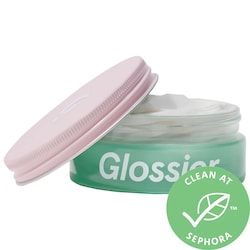
Glossier After Baume Moisture Barrier Recovery Cream

Glossier After Baume Moisture Barrier Recovery Cream

Efficacy75/100IrritancyLow
Edit

Works for

1 of 1 advertised claim delivered

Moisturizing
12 ingredients credited for this claim
Good support
What the product description says
“After Baume Moisture Barrier Recovery Cream”
From product name

This product can help improve hydration of the skin with the two types of ingredients.

The first type is called “humectants”:
these ingredients help attract water. When humectants are on the surface of the skin, they “pull in” the moisture from the outside environment, or from within deeper layers of the skin. The following ingredients in this product do the job: arginine, glycerin.

This product also contains ingredients called “occlusives”. They help reduce the speed with which our skin loses moisture to the outside environment. These ingredients also help soften the upper layer of the skin, so it feels less tight and nicer to the touch. The following ingredients in this product do the job: arginine, dimethicone.

Theobroma grandiflorum seed butterKey activeEffect: HighHelps soften the upper layer of the skin and might as well help to attract moisture to its upper layer~1.6–2.5%
ArginineKey active· Humectant, OcclusiveEffect: HighAn amino acid that is naturally present in skin and helps keep it hydrated. When used together with AHAs, it can reduce their irritating effect on the skin~0.1–0.45%
Orbignya oleifera seed oilKey active· EmollientEffect: HighA plant oil that can help soften the upper layer of the skin. Might be helpful in calming down inflammation in skin~3.5–5.3%
DimethiconeKey active· Emollient, OcclusiveEffect: HighA silicone that helps to reduce water loss from the surface of the skin. Can temporarily "fill in" lines and wrinkles, absorb oil, and create a nice product finish~0.05–0.3%
Ethyl linoleateKey active· EmollientEffect: HighHelps reduce acne and blemishes. Helps to soften the upper layer of the skin and reduce inflammation. Might be helpful in reducing hyperpigmentation and evening out the skin tone, but evidence of effectiveness in skin are lacking~0.4–0.9%
GlycerinKey active· HumectantEffect: HighOne of the best moisturizing ingredients. Naturally present in skin. It attracts water to the upper layer of the skin working as a humectant~2.6–3.9%
Cetearyl alcoholKey active· EmollientEffect: MediumA non-drying alcohol. Works as an emollient. Helps water and oil mix together and creates a nice product texture~1.1–1.6%
Chlorella vulgaris extractKey activeEffect: MediumA plant extract that can help to attract water to the upper layer of the skin and might have some anti-oxidant and anti-inflammatory properties~0.3–0.75%
Glyceryl stearate· EmollientEffect: LowAn emollient that softens the skin and forms a protective layer on its surface. Helps water and oil mix together~1.3–1.9%
Phytosteryl/isostearyl/cetyl/stearyl/behenyl dimer dilinoleate· EmollientEffect: LowHelps soften the upper layer of the skin and create a nice product consistency~4.2–6.4%
Lactic acidUnder-dosedEffect: HighAn exfoliating and moisturizing alpha-hydroxy acid (AHA). Typically causes less irritation than other AHAs, for example, glycolic acid. At high concentrations (about 15%), lactic acid can help reduce lines and wrinkles. Recent studies show that lactic acid can support the "good" bacteria living on skin's surface (healthy skin microbiome)~0.05–0.2%
TocopherolEffect: Low, below effective dosePure form of vitamin E. Can help moisturise and protect the skin from free radicals. Often used to help stabilise other ingredients or the formula itself~0.15–0.6%
Anti-blemish
Not advertised by the brand · 1 ingredient credited for this claim
Good support

This product might be able to help reduce blemishes and clogged pores because it contains ethyl linoleate.

Ethyl linoleateKey activeEffect: HighHelps reduce acne and blemishes. Helps to soften the upper layer of the skin and reduce inflammation. Might be helpful in reducing hyperpigmentation and evening out the skin tone, but evidence of effectiveness in skin are lacking~0.4–0.9%

Can it cause trouble?

Irritancy
8 flagged ingredients
Low risk
We flag 8 ingredients with irritancy potential; the product's overall irritancy is low. The table lists each ingredient's own rating.
IngredientFunctionIrritationEst. amount
Theobroma grandiflorum seed butterHelps soften the upper layer of the skin and might as well help to attract moisture to its upper layerMedium~1.6–2.5%est.
1,2-hexanediolA preservativeMedium~0.5–1.2%est.
Ethyl linoleateHelps reduce acne and blemishes. Helps to soften the upper layer of the skin and reduce inflammation. Might be helpful in reducing hyperpigmentation and evening out the skin tone, but evidence of effectiveness in skin are lackingMedium~0.4–0.9%est.
Chlorella vulgaris extractA plant extract that can help to attract water to the upper layer of the skin and might have some anti-oxidant and anti-inflammatory propertiesMedium~0.3–0.75%est.
Leuconostoc/radish root ferment filtrateA preservative that comes from radishes fermented by a bacteria. New research suggests that the preservation properties in the ingredient come from an ammonium salt that is not present naturally in radish root but used in its cultivation. Is problematic because the exact amount of the preservative agents is difficult to determineMedium~0.15–0.7%est.
Lactic acidAn exfoliating and moisturizing alpha-hydroxy acid (AHA). Typically causes less irritation than other AHAs, for example, glycolic acid. At high concentrations (about 15%), lactic acid can help reduce lines and wrinkles. Recent studies show that lactic acid can support the "good" bacteria living on skin's surface (healthy skin microbiome)Medium~0.05–0.2%est.
Hydroxyethyl acrylate/sodium acryloyldimethyl taurate copolymerA gelling agent that thickens the product consistency and leaves the skin with a velvety finishMedium~0.05–0.1%est.
HydroxyacetophenoneUsed to increase effectiveness of preservativesMedium~0.01–0.05%est.
Comedogenic
2 ingredients rated 2 or more on the 0–5 pore-clogging scale
2 flagged
These ingredients have a comedogenic rating of 2 or more on a 0–5 scale; the table shows each one's rating. In leave-on products they can clog pores in acne-prone skin.
IngredientFunctionRatingEst. amount
Chlorella vulgaris extractA plant extract that can help to attract water to the upper layer of the skin and might have some anti-oxidant and anti-inflammatory properties3/5~0.3–0.75%est.
Cetearyl alcoholA non-drying alcohol. Works as an emollient. Helps water and oil mix together and creates a nice product texture2/5~1.1–1.6%est.
Edit
Cheaper Alternatives
Similar formulations, better price
No cheaper similar product found.

User reviews

Would you recommend?
No community reviews yet.

Be the first — your take helps the next person decide.

Write a review · ~30s

Ingredients

Filter by role to see what each ingredient is doing.

Water~40–60%
Formula
Irritation risk
Low

Plain old water

More about Water
Phytosteryl/isostearyl/cetyl/stearyl/behenyl dimer dilinoleate~4.2–6.4%
Formula
Irritation risk
Low
Works for
Moisturizing

Helps soften the upper layer of the skin and create a nice product consistency

More about Phytosteryl/isostearyl/cetyl/stearyl/behenyl dimer dilinoleate
Orbignya oleifera seed oil~3.5–5.3%
Key active
Irritation risk
Low
Works for
MoisturizingAnti-inflammatory

A plant oil that can help soften the upper layer of the skin. Might be helpful in calming down inflammation in skin

More about Orbignya oleifera seed oil
Glycerin~2.6–3.9%
Key active
Irritation risk
Low
Works for
Moisturizing

One of the best moisturizing ingredients. Naturally present in skin. It attracts water to the upper layer of the skin working as a humectant

More about Glycerin
Phytosteryl/behenyl/octyldodecyl lauroyl glutamate~2–3%
Formula
Theobroma grandiflorum seed butter~1.6–2.5%
Key activeIrritant · medium
Irritation risk
Medium
Works for
Moisturizing

Helps soften the upper layer of the skin and might as well help to attract moisture to its upper layer

More about Theobroma grandiflorum seed butter
Cetearyl olivate~1.4–2.1%
Formula
Irritation risk
Low
Works for
Cleansing

Helps oil and water mix together

More about Cetearyl olivate
Glyceryl stearate~1.3–1.9%
Formula
Irritation risk
Low
Works for
CleansingMoisturizing

An emollient that softens the skin and forms a protective layer on its surface. Helps water and oil mix together

More about Glyceryl stearate
Cetearyl alcohol~1.1–1.6%
Key activeComedogenic 2/5
Irritation risk
Low
Comedogenicity
2/5
Works for
CleansingMoisturizing

A non-drying alcohol. Works as an emollient. Helps water and oil mix together and creates a nice product texture

More about Cetearyl alcohol
1,2-hexanediol~0.5–1.2%
Irritant · medium
Irritation risk
Medium

A preservative

More about 1,2-hexanediol
Lactobacillus ferment lysate filtrate~0.5–1.15%
Formula
Sorbitan olivate~0.4–1%
Formula
Irritation risk
Low
Works for
Cleansing

Helps oil and water mix together

More about Sorbitan olivate
Ethyl linoleate~0.4–0.9%
Key activeIrritant · medium
Irritation risk
Medium
Works for
MoisturizingAnti-blemishEvens skin toneAnti-inflammatory

Helps reduce acne and blemishes. Helps to soften the upper layer of the skin and reduce inflammation. Might be helpful in reducing hyperpigmentation and evening out the skin tone, but evidence of effectiveness in skin are lacking

More about Ethyl linoleate
Inulin lauryl carbamate~0.35–0.8%
Formula
Irritation risk
Low
Works for
Cleansing
More about Inulin lauryl carbamate
Chlorella vulgaris extract~0.3–0.75%
Key activeComedogenic 3/5Irritant · medium
Irritation risk
Medium
Comedogenicity
3/5
Works for
MoisturizingAnti-inflammatoryAnti-oxidation

A plant extract that can help to attract water to the upper layer of the skin and might have some anti-oxidant and anti-inflammatory properties

More about Chlorella vulgaris extract
Leuconostoc/radish root ferment filtrate~0.15–0.7%
Irritant · medium
Irritation risk
Medium

A preservative that comes from radishes fermented by a bacteria. New research suggests that the preservation properties in the ingredient come from an ammonium salt that is not present naturally in radish root but used in its cultivation. Is problematic because the exact amount of the preservative agents is difficult to determine

More about Leuconostoc/radish root ferment filtrate
Tocopherol~0.15–0.6%
Formula
Irritation risk
Low
Works for
Anti-oxidationAnti-agingAnti-inflammatoryMoisturizing

Pure form of vitamin E. Can help moisturise and protect the skin from free radicals. Often used to help stabilise other ingredients or the formula itself

More about Tocopherol
Arginine~0.1–0.45%
Key active
Irritation risk
Low
Works for
Moisturizing

An amino acid that is naturally present in skin and helps keep it hydrated. When used together with AHAs, it can reduce their irritating effect on the skin

More about Arginine
Sclerotium gum~0.1–0.4%
Formula
Irritation risk
Low

Used to create gel-like formulas and stabilize emulsions

More about Sclerotium gum
Propanediol~0.1–0.4%
Formula
Irritation risk
Low

Acts as a solvent for other ingredients. Speeds up the absorption of other ingredients into the skin

More about Propanediol
Sorbitan isostearate~0.05–0.3%
Formula
Irritation risk
Low
Works for
Cleansing

Helps oil and water mix together

More about Sorbitan isostearate
Lactic acid~0.05–0.2%
Under-dosedIrritant · medium
Irritation risk
Medium
Works for
ExfoliationEvens skin toneMoisturizingAnti-aging

An exfoliating and moisturizing alpha-hydroxy acid (AHA). Typically causes less irritation than other AHAs, for example, glycolic acid. At high concentrations (about 15%), lactic acid can help reduce lines and wrinkles. Recent studies show that lactic acid can support the "good" bacteria living on skin's surface (healthy skin microbiome)

More about Lactic acid
Dimethicone~0.05–0.3%
Key active
Irritation risk
Low
Works for
MoisturizingMattifying

A silicone that helps to reduce water loss from the surface of the skin. Can temporarily "fill in" lines and wrinkles, absorb oil, and create a nice product finish

More about Dimethicone
Hydroxyethyl acrylate/sodium acryloyldimethyl taurate copolymer~0.05–0.1%
Irritant · medium
Irritation risk
Medium

A gelling agent that thickens the product consistency and leaves the skin with a velvety finish

More about Hydroxyethyl acrylate/sodium acryloyldimethyl taurate copolymer
Hydroxyacetophenone~0.01–0.05%
Irritant · medium
Irritation risk
Medium

Used to increase effectiveness of preservatives

More about Hydroxyacetophenone
Ingredient list view

Water, Phytosteryl/isostearyl/cetyl/stearyl/behenyl dimer dilinoleate, Orbignya oleifera seed oil, Glycerin, Phytosteryl/behenyl/octyldodecyl lauroyl glutamate, Theobroma grandiflorum seed butter, Cetearyl olivate, Glyceryl stearate, Cetearyl alcohol, 1,2-hexanediol, Lactobacillus ferment lysate filtrate, Sorbitan olivate, Ethyl linoleate, Inulin lauryl carbamate, Chlorella vulgaris extract, Leuconostoc/radish root ferment filtrate, Tocopherol, Arginine, Sclerotium gum, Propanediol, Sorbitan isostearate, Lactic acid, Dimethicone, Hydroxyethyl acrylate/sodium acryloyldimethyl taurate copolymer, Hydroxyacetophenone

Compare prices

Retailers ranked by price — lowest first.

Amazon USPrice as of 10/16/2026 00:19 GMT
$34.00
Buy

Affiliate links · prices updated regularly · As an Amazon Associate, WIMJ earns from qualifying purchases.

Cheaper alternatives? See how this stacks up against similar formulas.
We compare ingredient profiles across our catalog — pick the closest match for your budget.
Open dupe finder
Glossier After Baume Moisture Barrier Recovery Cream
GlossierAfter Baume Moisture Barrier Recovery Cream

Affiliate links · As an Amazon Associate, WIMJ earns from qualifying purchases.

As an Amazon Associate, WIMJ earns from qualifying purchases.