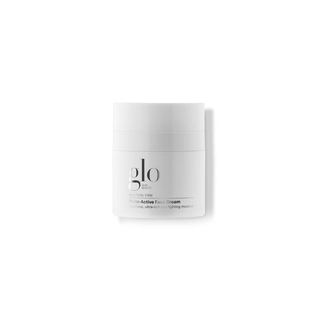
Glo Skin Beauty Phyto-Active Face Cream
Works for
2 of 2 advertised claims delivered
MoisturizingPalmitoyl dipeptide-5 diaminobutyroyl hydroxythreonine, Saccharomyces/xylinum/black tea ferment + 25 moreStrong evidence
“Phyto-Active Face Cream”
This product can help improve hydration of the skin with the two types of ingredients.
The first type is called “humectants”:
these ingredients help attract water.
When humectants are on the surface of the skin, they “pull in” the moisture from the outside environment, or from
within deeper layers of the skin. The following ingredients in this product do the job:
carnosine, glucosamine hcl.
This product also contains ingredients called “occlusives”. They help reduce the speed with which our skin loses moisture to the outside environment. These ingredients also help soften the upper layer of the skin, so it feels less tight and nicer to the touch. The following ingredients in this product do the job: butyrospermum parkii butter, caprylic/capric triglyceride.
The following ingredients in this product are especially good for supporting the skin barrier and helping with the hydration level: palmitoyl dipeptide-5 diaminobutyroyl hydroxythreonine
Anti-agingPalmitoyl dipeptide-5 diaminobutyroyl hydroxythreonine, Carnosine + 5 moreModerate evidence
“Phyto Active face cream is perfect for mature skins that suffer with dryness, this face cream will make skin more radiant, youthful and smoother with continued use.”
This product contains carnosine, palmitoyl dipeptide-5 diaminobutyroyl hydroxythreonine. These ingredients might be able to help reduce and prevent fine lines and wrinkles, improve skin elasticity and firmness, but there is not enough evidence that it actually works.
Anti-oxidationNot advertised by the brand · Carnosine, Carthamus tinctorius seed oil + 14 moreStrong evidence
This product contains antioxidants (carnosine) that can help neutralize free radicals in skin. By doing so, they can lessen the damage the skin gets from the UV light (sun).
Evens skin toneNot advertised by the brand · Glucosamine hcl, Phyllanthus emblica fruit extract + 3 moreModerate evidence
The following ingredient (ingredients) in this product might be helpful, but there is no evidence to confirm that it actually works: glucosamine hcl.
Can it cause trouble?
Irritancy6 strong irritants: Retinyl palmitate, Rosa damascena flower oil + 4 more — patch-test recommendedHigh risk
Comedogenic4 ingredients rated 2 or more on the 0–5 pore-clogging scale4 flagged

User reviews
Be the first — your take helps the next person decide.
Ingredients
Filter by role to see what each ingredient is doing.
Water~45–55%
Butyrospermum parkii butter~5.3–6.5%
- Irritation risk
- Low
- Comedogenicity
- 3/5
A great moisturising ingredient that softens the skin and reduces water loss from its upper layer. It also can be helpful in protecting skin from free radicals
More about Butyrospermum parkii butterDodecane~4.1–5%
- Irritation risk
- Low
Squalane~3.3–4%
- Irritation risk
- Low
An oil naturally present in skin. Works as an emollient to soften the skin and form a protective layer on its surface without a greasy feeling.
More about SqualaneCaprylic/capric triglyceride~2.5–3%
- Irritation risk
- Medium
A good mix of fatty acids that forms a protective layer on the skin. Improves the shelf life of products. Derived from coconut and glycerin
More about Caprylic/capric triglycerideGlycerin~2–2.5%
- Irritation risk
- Low
One of the best moisturizing ingredients. Naturally present in skin. It attracts water to the upper layer of the skin working as a humectant
More about GlycerinStearic acid~1.7–2.1%
- Irritation risk
- Low
Helps oil and water mix together and works as an emollient
More about Stearic acidGlyceryl stearate~1.4–1.7%
- Irritation risk
- Low
An emollient that softens the skin and forms a protective layer on its surface. Helps water and oil mix together
More about Glyceryl stearateSaccharomyces/xylinum/black tea ferment~1.1–1.3%
- Irritation risk
- Low
A fermented sweet black tea. There is no studies on particular benefits of this ingredient in skin. It can help attract water to the upper layer of the skin, and might have some anti-oxidant effect. It is used in skincare for mostly marketing purposes because of the popularity of kombucha drinks
More about Saccharomyces/xylinum/black tea fermentCetearyl alcohol~0.95–1.15%
- Irritation risk
- Low
- Comedogenicity
- 2/5
A non-drying alcohol. Works as an emollient. Helps water and oil mix together and creates a nice product texture
More about Cetearyl alcoholPolysorbate 60~0.6–0.9%
Carthamus tinctorius seed oil~0.55–0.8%
- Irritation risk
- Low
An emollient that helps soften the skin and might help calm down inflammation
More about Carthamus tinctorius seed oilSesamum indicum seed oil~0.45–0.7%
- Irritation risk
- Low
A good moisturizing plant oil. Due to the high linoleic acid content, it helps soften the upper layer of the skin, reduce water loss and support skin barrier function
More about Sesamum indicum seed oilRubus chamaemorus seed oil~0.3–0.6%
- Irritation risk
- High
A berry extract that can have some anti-oxidant properties. It helps to preserve product formulations and improve their smell. It can be irritating
More about Rubus chamaemorus seed oilStyrene/acrylates copolymer~0.3–0.55%
- Irritation risk
- Low
Used to create an even product consistency. Can help boost efficiency of sunscreen filters
More about Styrene/acrylates copolymerIsodecyl neopentanoate~0.35–0.6%
- Irritation risk
- Low
An emollient that helps soften the skin. It also forms a protective on its surface to reduce water loss.
More about Isodecyl neopentanoatePalmitoyl dipeptide-5 diaminobutyroyl hydroxythreonine~0.3–0.5%
- Irritation risk
- Low
Palmitoyl dipeptide-5 diaminohydroxybutyrate~0.25–0.45%
- Irritation risk
- Low
Bambusa vulgaris leaf/stem extract~0.25–0.5%
- Irritation risk
- Medium
The extract can contain up to 70% of silica. In cosmetics, silica helps absorb oil and creates a thicker product texture
More about Bambusa vulgaris leaf/stem extractGlucosamine hcl~0.2–0.4%
- Irritation risk
- Low
Might be able to stimulate production of skin's natural moisturizing compounds such as hyaluronic acid. Could be helpful for evening the skin tone.
More about Glucosamine hclPisum sativum extract~0.2–0.35%
- Irritation risk
- Medium
Might be helpful in protecting skin collagen and elastin from breaking down but solid research is lacking
More about Pisum sativum extractPhenyl t-butylnitrone~0.25–0.45%
- Irritation risk
- Low
Tocopheryl acetate~0.2–0.35%
- Irritation risk
- Medium
A more stable but less bio-available form of vitamin E compared to Tocopherol. Might help moisturize and protect the skin from free radicals, but mostly used in low concentrations to stabilize other ingredients.
More about Tocopheryl acetateOlea europaea fruit oil~0.2–0.35%
- Irritation risk
- Medium
An emollient that helps soften the skin but is not effective for restoring its barrier function. Might be helpful to calm down inflammation
More about Olea europaea fruit oilPanthenol~0.2–0.35%
- Irritation risk
- Low
Helps attract water to the upper layer of the skin and can help improve skin barrier function
More about PanthenolPrunus amygdalus dulcis seed~0.15–0.3%
- Irritation risk
- Low
Helps soften the upper layer of the skin
More about Prunus amygdalus dulcis seedLonicera caprifolium flower extract~0.15–0.3%
- Irritation risk
- High
A plant extract that might help neutralize free radicals in skin. Can contain volalite oils and be irritating
More about Lonicera caprifolium flower extractMacrocystis pyrifera extract~0.15–0.3%
- Irritation risk
- Low
- Comedogenicity
- 3/5
Lotus japonicus symbiosome extract~0.15–0.3%
- Irritation risk
- Low
Lonicera japonica flower extract~0.15–0.3%
- Irritation risk
- High
A plant extract that might help neutralize free radicals in skin. Can contain volalite oils and be irritating
More about Lonicera japonica flower extractBuddleja davidii meristem cell culture~0.15–0.3%
- Irritation risk
- Low
Retinyl palmitate~0.15–0.3%
- Irritation risk
- High
Three steps removed from the active form of vitamin A - retinoic acid. To have an effect in the skin, it first needs to be converted twice to become the retinoic acid. This means it is less potent than retinol, but could also be less irritating. Once converted to the retinoic acid in the skin, it helps against all signs of aging, improves skin cell turnover and helps fight blemishes and clogged pores. However, in many cosmetic formulations, it is used in a concentration that is too low to have the full effect
More about Retinyl palmitateRosa damascena flower oil~0.15–0.3%
- Irritation risk
- High
Used as a fragrance. Can be irritating
More about Rosa damascena flower oilSodium hyaluronate~0.2–0.35%
- Irritation risk
- Low
One of the best moisturizing ingredients. Attracts water into the upper layer of the skin
More about Sodium hyaluronateHelianthus annuus seed oil~0.2–0.4%
- Irritation risk
- Low
A great emollient due to its high linoleic acid content. One of the most effective plant oils in helping skin hydration and repairing skin barrier function
More about Helianthus annuus seed oilGlycine soja oil~0.2–0.35%
- Irritation risk
- Medium
- Comedogenicity
- 2/5
A good emollient that helps soften the skin and helps repair its barrier function. It can clog pores if used in high concentrations.
More about Glycine soja oilLavandula angustifolia oil~0.2–0.35%
- Irritation risk
- High
An essential oil. Potential allergen and can be irritating. It has some anti-bacterial properties
More about Lavandula angustifolia oilJasminum officinale oil~0.1–0.25%
- Irritation risk
- Low
Aloe barbadensis leaf juice powder~0.15–0.3%
- Irritation risk
- Medium
Traditionally used to treat sunburns, dermatitis and inflammation, but evidence for its effectiveness is lacking. The extract can contain humectants that help attract water into the skin
More about Aloe barbadensis leaf juice powderMichelia alba flower oil~0.2–0.35%
- Irritation risk
- High
A plant essential oil. Used as a fragrance. Can be irritating
More about Michelia alba flower oilNiacinamide~0.2–0.35%
- Irritation risk
- Low
Is proven to be effective in reducing blemishes, evening out skin tone and helping to improve lines and wrinkles. It helps the skin to repair sun damage, calm down inflammation and keep maintain good levels of moisture. The concentration of about 2% is effective for supporting the skin barrier and evening out the skin tone. Concentration of 4-6% is better for helping with acne and balancing the sebum production
More about NiacinamideBeta-carotene~0.15–0.3%
Melia azadirachta flower extract~0.15–0.3%
- Irritation risk
- Medium
A plant extract that might be helpful to neutralize free radicals in skin
More about Melia azadirachta flower extractMelia azadirachta leaf extract~0.15–0.3%
- Irritation risk
- High
A plant extract that has anti-bacterial properties. Can be used to preserve the product. Can be irritating
More about Melia azadirachta leaf extractAmino esters-1~0.15–0.3%
- Irritation risk
- Low
Coccinia indica fruit extract~0.15–0.3%
- Irritation risk
- Medium
A plant extract that might have some anti-oxidant effect helping neutralize free radicals in skin
More about Coccinia indica fruit extractSolanum melongena fruit extract~0.15–0.3%
- Irritation risk
- Medium
Eggplant fruit extract. Might have some anti-oxidant effect
More about Solanum melongena fruit extractAloe barbadensis flower extract~0.2–0.4%
- Irritation risk
- High
A plant extract that might have some anti-oxidant effect
More about Aloe barbadensis flower extractLawsonia inermis extract~0.2–0.35%
- Irritation risk
- Low
Carnosine~0.15–0.3%
- Irritation risk
- Low
A type of peptide. It attracts water to the upper layer of the skin. It can help neutralize free radicals in skin combatting the sun damage
More about CarnosinePhyllanthus emblica fruit extract~0.2–0.35%
- Irritation risk
- Medium
A plant extract that might be helpful in neutralizing free radicals and have a skin lightening effect if used in high enough concentrations
More about Phyllanthus emblica fruit extractCurcuma longa root extract~0.15–0.3%
- Irritation risk
- High
A plant extract that can contain an active compound curcumin, that may have some anti-inflammatory properties when applied to the skin, but solid research is lacking and the typical concentration used in skincare products is too low. Can be an irritant
More about Curcuma longa root extractOcimum sanctum leaf extract~0.2–0.35%
- Irritation risk
- High
A plant extract that is rich in a fragrance compound eugenol that is a frequent allergen and can be irritating. It might also contain anti-oxidants to help neutralize free radicals
More about Ocimum sanctum leaf extractPearl powder~0.2–0.35%
- Irritation risk
- Low
Consists of 95% calcium carbonate that does not have any effect on the skin. The remaining 5% can include compounds that can help neutralize free radicals and support skin barrier function
More about Pearl powderPolysilicone-11~0.2–0.4%
- Irritation risk
- Low
A silicone that forms a light film on the skin surface helping to bind water and temporarily absorb oils creating a matt and powdery feel
More about Polysilicone-11Alcohol denat.~0.2–0.35%
- Irritation risk
- High
Produces temporary toning effect. Can help dissolve other ingredients or preserve products
More about Alcohol denat.Cetyl alcohol~0.25–0.45%
- Irritation risk
- Low
A non-drying alcohol that works to soften the skin and stabilize product formulations helping oil and water mix together
More about Cetyl alcoholXanthan gum~0.2–0.35%
- Irritation risk
- Low
Used to create a thicker product consistency
More about Xanthan gumHydroxyethylcellulose~0.2–0.35%
- Irritation risk
- Low
Used to thicken product formulations and create gel-like textures
More about HydroxyethylcelluloseCaprylyl glycol~0.2–0.35%
- Irritation risk
- Medium
Helps preserve products and creates a nice product texture
More about Caprylyl glycolPhytic acid~0.15–0.25%
- Irritation risk
- Medium
An alpha-hydroxy acid (AHA), but is mostly used to stabilize product formulations in cosmetics
More about Phytic acidCitric acid~0.15–0.25%
- Irritation risk
- Medium
Can work as an exfoliant but is typically used to adjust the product pH
More about Citric acidPhenethyl alcohol~0.15–0.25%
Benzyl alcohol~0.1–0.15%
- Irritation risk
- High
A preservative. Can be used to mask unpleasant smell. Can be irritating
More about Benzyl alcoholPotassium sorbate~0.1–0.2%
Ingredient list view
Water, Butyrospermum parkii butter, Dodecane, Squalane, Caprylic/capric triglyceride, Glycerin, Stearic acid, Glyceryl stearate, Saccharomyces/xylinum/black tea ferment, Cetearyl alcohol, Polysorbate 60, Carthamus tinctorius seed oil, Sesamum indicum seed oil, Rubus chamaemorus seed oil, Styrene/acrylates copolymer, Isodecyl neopentanoate, Palmitoyl dipeptide-5 diaminobutyroyl hydroxythreonine, Palmitoyl dipeptide-5 diaminohydroxybutyrate, Bambusa vulgaris leaf/stem extract, Glucosamine hcl, Pisum sativum extract, Phenyl t-butylnitrone, Tocopheryl acetate, Olea europaea fruit oil, Panthenol, Prunus amygdalus dulcis seed, Lonicera caprifolium flower extract, Macrocystis pyrifera extract, Lotus japonicus symbiosome extract, Lonicera japonica flower extract, Buddleja davidii meristem cell culture, Retinyl palmitate, Rosa damascena flower oil, Sodium hyaluronate, Helianthus annuus seed oil, Glycine soja oil, Lavandula angustifolia oil, Jasminum officinale oil, Aloe barbadensis leaf juice powder, Michelia alba flower oil, Niacinamide, Beta-carotene, Melia azadirachta flower extract, Melia azadirachta leaf extract, Amino esters-1, Coccinia indica fruit extract, Solanum melongena fruit extract, Aloe barbadensis flower extract, Lawsonia inermis extract, Carnosine, Phyllanthus emblica fruit extract, Curcuma longa root extract, Ocimum sanctum leaf extract, Pearl powder, Polysilicone-11, Alcohol denat., Cetyl alcohol, Xanthan gum, Hydroxyethylcellulose, Caprylyl glycol, Phytic acid, Citric acid, Phenethyl alcohol, Benzyl alcohol, Potassium sorbate
Compare prices
Retailers ranked by price — lowest first.
Affiliate links · prices updated regularly · As an Amazon Associate, WIMJ earns from qualifying purchases.
Worth comparing, line by line.
Match % combines shared ingredients, the first five ingredients, shared actives and hero ingredients, irritancy (lower counts in the alternative's favour), texture and body area. Only products in the same routine step are compared.
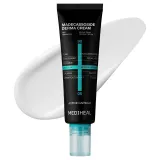
| Glo Skin BeautyPhyto-Active Face CreamYOUR PRODUCT | VitabridWrinkle Cream: Anti-Aging Face Brightening | Vitabrid US | MEDIHEALMadecassoside Derma Cream Blemish Repair | BonjourGreen Tea Water Bomb Cream | |
|---|---|---|---|---|
| Match | — | 82% | 81% | 81% |
| Price | — | $70.00 | $19.63 | $15.50 |
| Shared key ingredients | — | 7 of 20 | 6 of 20 | 6 of 20 |
| Key difference | — | Copper Tripeptide-1 | Madecassoside | Sh-Octapeptide-4 |
| Irritancy | High | Medium | Medium | Low |
| Drying alcohol | Contains drying alcohol | — | — | — |
| View product | Shop | Shop | Shop |


Product summary
Based on the ingredients included, "Glo Skin Beauty - Phyto-Active Face Cream" works well for moisturizing the skin. This moisturizer uses a good combo of humectants and emollients. These both types of ingredients are essentials for improving the skin hydration and keeping the skin barrier healthy. Carnosine, glucosamine hcl, glycerin, sodium hyaluronate and caprylyl glycol in this product (humectants) attract water molecules to the upper layer of the skin (the water comes from the outside air or from the deeper layers of the skin if the air is dry). Emollients in this formulation (carthamus tinctorius seed oil, glycine soja oil, sesamum indicum seed oil, butyrospermum parkii butter and caprylic/capric triglyceride) help to reduce the moisture loss from the skin. They also soften the skin surface and relieve the feeling of dryness and tightness.
Ingredient callouts
- this moisturizer includes a form of retinoids (vitamin A) - retinyl palmitate 0.15% - 0.30%, but this type of vitamin A is not very effective. It could in theory help with fine lines and wrinkles, but the effect is most likely minimal.
- This moistruizer also contains peptides (palmitoyl dipeptide-5 diaminobutyroyl hydroxythreonine 0.30% - 0.50%). Peptides is a very big group of ingredients. They all consist of a different combination of amino-acids. Our skin produces peptides naturally. Some of them work as natural anti-biotics, promote wound-healing and production of collagen. The scientists are still studying how effective the topical application of peptides is, but it is very likely that peptides in skincare are helpful. They might be able to support skin barrier restoration and even have an anti-aging benefit. At the very least, they certainly help attract water to the skin and support the hydration in this way.
Irritation risk
This moisturizer contains a bunch of common irritants, including ingredients that do not provide any known benefit for the skin. It might not be the best choice if your skin is sensitive. We assess the overall irritancy of this moisturizer to be high. For a detailed overview of all potential irritants: click here
You can see the detailed formula review with the breakdown of all actives in the product and the full ingredient list with estimated concentrations in the tables below.
About the brand
According to Cruelty-Free Kitty "Glo Skin Beauty" is cruelty free and so is its parent company.
Price
The product retails for 175.00$ in the United States.
For a detailed price comparison: click here.
Sources cited in this review
Every concentration estimate and effectiveness label is anchored to one of these 32 studies and safety reviews.
- 1
- 2
- 3Triglyceride composition of Sesamum indicum seed oilonlinelibrary.wiley.com
- 4
- 5
- 6Glucosamine: an ingredient with skin and other benefitsncbi.nlm.nih.gov

Affiliate links · As an Amazon Associate, WIMJ earns from qualifying purchases.