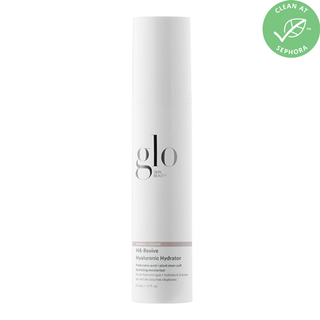
Glo Skin Beauty HA-Revive Hyaluronic Hydrator
Works for
1 of 2 advertised claims delivered
MoisturizingCaprylic/capric triglyceride, Sodium hyaluronate + 11 moreGood evidence
“Delivering hyper-hydration deep within thanks to its micro-molecule hyaluronic acid infusion, it restores skin's suppleness and plumpness.”
This product can help improve hydration of the skin with the two types of ingredients.
The first type is called “humectants”:
these ingredients help attract water.
When humectants are on the surface of the skin, they “pull in” the moisture from the outside environment, or from
within deeper layers of the skin. The following ingredients in this product do the job:
glycerin, sodium hyaluronate.
This product also contains ingredients called “occlusives”. They help reduce the speed with which our skin loses moisture to the outside environment. These ingredients also help soften the upper layer of the skin, so it feels less tight and nicer to the touch. The following ingredients in this product do the job: caprylic/capric triglyceride, dimethicone.
Anti-agingTocopherolWeak evidence
“Soothing while anti-aging, phyto-retinol reduces the appearance of fine lines and wrinkles, while plant stem cell antioxidants protect and restore skin's natural radiance.”
Effective ingredients missing or their concentration is too low.
Can it cause trouble?
Irritancy5 strong irritants: Hydrolyzed viola tricolor extract, Lavandula angustifolia oil + 3 more — patch-test recommendedHigh risk
Comedogenic1 ingredient rated 2 or more on the 0–5 pore-clogging scale1 flagged
User reviews
Be the first — your take helps the next person decide.
Ingredients
Filter by role to see what each ingredient is doing.
Water~45–55%
Glycerin~4.3–5.3%
- Irritation risk
- Low
One of the best moisturizing ingredients. Naturally present in skin. It attracts water to the upper layer of the skin working as a humectant
More about GlycerinCaprylic/capric triglyceride~4.1–5%
- Irritation risk
- Medium
A good mix of fatty acids that forms a protective layer on the skin. Improves the shelf life of products. Derived from coconut and glycerin
More about Caprylic/capric triglycerideCocos nucifera (coconut) liquid endosperm~2.9–3.6%
- Irritation risk
- Low
Cetyl alcohol~2.3–2.8%
- Irritation risk
- Low
A non-drying alcohol that works to soften the skin and stabilize product formulations helping oil and water mix together
More about Cetyl alcoholPeg-20 methyl glucose sesquistearate~1.9–2.3%
- Irritation risk
- Medium
Helps oil and water mix together
More about Peg-20 methyl glucose sesquistearateSqualane~1.6–2%
- Irritation risk
- Low
An oil naturally present in skin. Works as an emollient to soften the skin and form a protective layer on its surface without a greasy feeling.
More about SqualaneDimethicone~1.5–1.8%
- Irritation risk
- Low
A silicone that helps to reduce water loss from the surface of the skin. Can temporarily "fill in" lines and wrinkles, absorb oil, and create a nice product finish
More about DimethiconeCaprylyl glycol~1.2–1.4%
- Irritation risk
- Medium
Helps preserve products and creates a nice product texture
More about Caprylyl glycolMethyl glucose sesquistearate~0.95–1.2%
- Irritation risk
- Medium
Helps water and oil mix together
More about Methyl glucose sesquistearatePhenoxyethanol~0.7–1%
- Irritation risk
- Low
A preservative. It helps prevent bacterial growth in cosmetic products
More about PhenoxyethanolCarbomer~0.55–0.85%
- Irritation risk
- Low
Helps create a thicker or gel-like product texture. It is not a surfactant but can be used in gentle cleansing formulations
More about CarbomerElaeis guineensis oil~0.6–0.9%
- Irritation risk
- Low
Helps soften the upper layer of the skin
More about Elaeis guineensis oilGossypium herbaceum seed oil~0.45–0.65%
- Irritation risk
- Low
- Comedogenicity
- 3/5
Cottonseed oil. It is used as an emollient and occlusive in products. It is rich palmitic, oleic acid, and linoleic fatty acids.
More about Gossypium herbaceum seed oilDimethyl isosorbide~0.45–0.7%
- Irritation risk
- Low
Used to dissolve other ingredients in a product and can enhance their ability to penetrate the skin
More about Dimethyl isosorbideTocopheryl acetate~0.5–0.7%
- Irritation risk
- Medium
A more stable but less bio-available form of vitamin E compared to Tocopherol. Might help moisturize and protect the skin from free radicals, but mostly used in low concentrations to stabilize other ingredients.
More about Tocopheryl acetateBidens pilosa extract~0.3–0.6%
- Irritation risk
- Low
Linum usitatissimum seed oil~0.3–0.5%
Sodium hydroxide~0.35–0.65%
Sodium gluconate~0.25–0.45%
Ethylhexylglycerin~0.35–0.6%
Mica~0.35–0.65%
- Irritation risk
- Low
Creates an illusion of smoother and more radiant skin tone. Adds shimmer to the skin by reflecting light
More about MicaCocos nucifera fruit juice~0.3–0.5%
- Irritation risk
- Low
Sesamum indicum seed extract~0.2–0.4%
- Irritation risk
- Low
Plant oil that due to its high content of linoleic acid can help support skin's barrier function improving its hydration
More about Sesamum indicum seed extractOpuntia ficus-indica leaf cell extract~0.3–0.5%
- Irritation risk
- Low
Hydrolyzed viola tricolor extract~0.25–0.45%
- Irritation risk
- High
Might have some moisturizing and anti-inflammatory properties. Can be added to products to create a nice smell.
More about Hydrolyzed viola tricolor extractLavandula angustifolia oil~0.25–0.45%
- Irritation risk
- High
An essential oil. Potential allergen and can be irritating. It has some anti-bacterial properties
More about Lavandula angustifolia oilSodium hyaluronate~0.25–0.45%
- Irritation risk
- Low
One of the best moisturizing ingredients. Attracts water into the upper layer of the skin
More about Sodium hyaluronateCi 77891~0.2–0.4%
- Irritation risk
- Low
Tocopherol~0.25–0.45%
- Irritation risk
- Low
Pure form of vitamin E. Can help moisturise and protect the skin from free radicals. Often used to help stabilise other ingredients or the formula itself
More about TocopherolCitrus aurantium dulcis peel oil~0.15–0.25%
- Irritation risk
- High
An essentil oil from orange peel. Potential allergen and can be irritating
More about Citrus aurantium dulcis peel oilHamamelis virginiana water~0.1–0.2%
- Irritation risk
- High
A plant extract that can help calm down inflammation in skin. Can, however, itself be irritating
More about Hamamelis virginiana waterCitric acid~0.05–0.1%
- Irritation risk
- Medium
Can work as an exfoliant but is typically used to adjust the product pH
More about Citric acidAlcohol~0.01–0.05%
- Irritation risk
- High
Can be drying and contribute to skin irritation. Used in formulars to dissolve other ingredients, create a thinner product consistency or for its antibacterial properties
More about AlcoholIngredient list view
Water, Glycerin, Caprylic/capric triglyceride, Cocos nucifera (coconut) liquid endosperm, Cetyl alcohol, Peg-20 methyl glucose sesquistearate, Squalane, Dimethicone, Caprylyl glycol, Methyl glucose sesquistearate, Phenoxyethanol, Carbomer, Elaeis guineensis oil, Gossypium herbaceum seed oil, Dimethyl isosorbide, Tocopheryl acetate, Bidens pilosa extract, Linum usitatissimum seed oil, Sodium hydroxide, Sodium gluconate, Ethylhexylglycerin, Mica, Cocos nucifera fruit juice, Sesamum indicum seed extract, Opuntia ficus-indica leaf cell extract, Hydrolyzed viola tricolor extract, Lavandula angustifolia oil, Sodium hyaluronate, Ci 77891, Tocopherol, Citrus aurantium dulcis peel oil, Hamamelis virginiana water, Citric acid, Alcohol
Compare prices
Retailers ranked by price — lowest first.

Sources cited in this review
Every concentration estimate and effectiveness label is anchored to one of these 11 studies and safety reviews.
- 1
- 2
- 3Final Report on the Safety Assessment of Dimethicone Copolyoljournals.sagepub.com
- 4
- 5
- 6

Affiliate links · As an Amazon Associate, WIMJ earns from qualifying purchases.