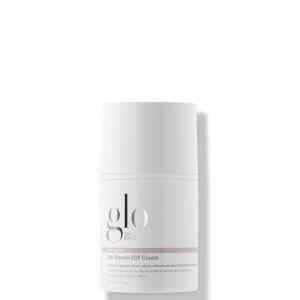
Glo Skin Beauty Bio-Renew EGF Cream
Works for
2 of 2 advertised claims delivered
Moisturizing24 ingredients credited for this claimStrong support
“Strengthening skin's moisture barrier and locking in hydration, phyto-retinol complex, a plant-based alternative to retinol, smooths and firms the appearance of fine lines and wrinkles, for perfectly plumped, hydrated skin and rejuvenated radiance.”
This product can help improve hydration of the skin with the two types of ingredients.
The first type is called “humectants”:
these ingredients help attract water.
When humectants are on the surface of the skin, they “pull in” the moisture from the outside environment, or from
within deeper layers of the skin. The following ingredients in this product do the job:
arginine, glycerin.
This product also contains ingredients called “occlusives”. They help reduce the speed with which our skin loses moisture to the outside environment. These ingredients also help soften the upper layer of the skin, so it feels less tight and nicer to the touch. The following ingredients in this product do the job: arginine, butyrospermum parkii oil.
The following ingredients in this product are especially good for supporting the skin barrier and helping with the hydration level: acetyl hexapeptide-49, linoleic acid, sh-oligopeptide-1
Anti-aging8 ingredients credited for this claimStrong support
“Formulated in partnership with leading board-certified dermatologist Dr. Dendy Engelman, this new-generation treatment moisturizer is clinically proven to reduce fine lines and wrinkles for a more youthful appearance, hydrating, smoothing, and firming skin in 30 days or less.”
This product can help reduce and prevent fine lines and wrinkles, improve skin elasticity and firmness because it contains bakuchiol.
These ingredients in the product can also be helpful, even though there is less evidence for their effectiveness: acetyl hexapeptide-49, sh-oligopeptide-1.
Keep in mind that it typically takes at least 6 weeks to notice any results because the changes that are needed to improve fine lines and elasticity happen in the deeper layers of the skin. No topical anti-aging product can “erase” wrinkles or fully reverse signs of aging.
Anti-oxidationNot advertised by the brand · 9 ingredients credited for this claimStrong support
This product contains antioxidants (bakuchiol) that can help neutralize free radicals in skin. By doing so, they can lessen the damage the skin gets from the UV light (sun).
Evens skin toneNot advertised by the brand · 1 ingredient credited for this claimStrong support
This product can help reduce hypepigmentation and even out the skin tone because it contains the following effective ingredients: bakuchiol
Keep in mind that you would need to apply any topical skincare targetted at hypigmentation consistently for a couple of months to get a result. No topical skincare product can help get rid of hyperpigmentation (including post-acne marks and age spots) instantly.
Anti-blemishNot advertised by the brand · 2 ingredients credited for this claimGood support
This product might be able to help reduce blemishes and clogged pores because it contains bakuchiol.
The following ingredient (ingredients) in this product might be helpful, but there is no evidence to confirm that it actually works: linoleic acid
Can it cause trouble?
Irritancy1 strong irritant: Kalanchoe pinnata leaf extractMedium risk
Comedogenic6 ingredients rated 2 or more on the 0–5 pore-clogging scale6 flagged


User reviews
Be the first — your take helps the next person decide.
Ingredients
Filter by role to see what each ingredient is doing.
Water~40–60%
Glycerin~3.8–5.8%
- Irritation risk
- Low
One of the best moisturizing ingredients. Naturally present in skin. It attracts water to the upper layer of the skin working as a humectant
More about GlycerinCetearyl alcohol~3–4.5%
- Irritation risk
- Low
- Comedogenicity
- 2/5
A non-drying alcohol. Works as an emollient. Helps water and oil mix together and creates a nice product texture
More about Cetearyl alcoholCetyl alcohol~2.2–3.3%
- Irritation risk
- Low
A non-drying alcohol that works to soften the skin and stabilize product formulations helping oil and water mix together
More about Cetyl alcoholGlyceryl stearate~2–3.1%
- Irritation risk
- Low
An emollient that softens the skin and forms a protective layer on its surface. Helps water and oil mix together
More about Glyceryl stearateShea butter ethyl esters~1.7–2.6%
- Irritation risk
- Low
Helps soften the upper layer of the skin
More about Shea butter ethyl estersCystoseira amentacea/caespitosa/branchycarpa extract~1.4–2.1%
- Irritation risk
- Low
Vaccinium macrocarpon fruit extract~1.3–1.9%
- Irritation risk
- High
A berry extract. Might have some anti-oxidant properties
More about Vaccinium macrocarpon fruit extractAcacia senegal gum~1.1–1.6%
- Irritation risk
- Medium
Helps mask the small of other ingredients and improve the product texture
More about Acacia senegal gumLinoleic acid~0.95–1.4%
- Irritation risk
- Low
An excellent emollient. Helps soften the skin, restore its barrier function, and can help to calm down inflammation. It can be helpful to prevent blemishes and clogged pores
More about Linoleic acidSodium acrylates copolymer~0.5–1.2%
- Irritation risk
- Medium
Used to create a thicker product consistency
More about Sodium acrylates copolymerBixa orellana seed extract~0.4–0.95%
- Irritation risk
- Low
Butyrospermum parkii butter~0.4–0.95%
- Irritation risk
- Low
- Comedogenicity
- 3/5
A great moisturising ingredient that softens the skin and reduces water loss from its upper layer. It also can be helpful in protecting skin from free radicals
More about Butyrospermum parkii butterKalanchoe pinnata leaf extract~0.35–0.75%
- Irritation risk
- High
Is claimed to improve skin's ability to produce its natural moisturizers, but solid research is lacking
More about Kalanchoe pinnata leaf extractMangifera indica seed butter~0.3–0.7%
- Irritation risk
- Low
Helps to soften the upper layer of the skin and might have some anti-oxidant effect
More about Mangifera indica seed butterBakuchiol~0.3–0.75%
- Irritation risk
- Medium
A plant extract that is, though different in chemical structure, acts similar to retinoids. First studies show that it can help reduce fine lines and wrinkles, improve skin tone, reduce clogged pores and blemishes, and reduce inflammation. There is no conclusive evidence that bakuchiol is as effective as retinol however. The study that directly compared retinol with bakuchiol used bakuchiol applied twice daily compared to once per day for the retinol. According to this study, bakuchiol is less irritating than retinol. Bakuchiol is extracted from seeds of Babchi plant. Other parts of the plant contain coumarins that could cause allergic and irritant reactions. These compounds should be removed in the extraction process when bakuchiol is produced, but it is a good idea to be cautious and stay away from products that include the Babchi plant extracts other than purified bakuchiol to avoid irritation
More about BakuchiolLecithin~0.35–0.75%
- Irritation risk
- Low
Used mostly for creating emulsions - helping oil and water mix together. Helps soften the upper layer of the skin
More about LecithinLinolenic acid~0.35–0.75%
- Irritation risk
- Medium
An emollient that helps soften the skin and calm down inflammation
More about Linolenic acidLaminaria saccharina extract~0.15–0.65%
- Irritation risk
- Low
- Comedogenicity
- 3/5
A seaweed extract that contains sugars and can be helpful in attracting water to the upper layers of the skin if used in high enough concentrations
More about Laminaria saccharina extractButyrospermum parkii oil~0.15–0.65%
- Irritation risk
- Low
- Comedogenicity
- 3/5
Kappaphycus alvarezii extract~0.15–0.55%
- Irritation risk
- Low
A red algae extract that can help attract water to the upper layer of the skin and might have some antioxidant properties
More about Kappaphycus alvarezii extractGigartina stellata extract~0.15–0.55%
- Irritation risk
- Low
Phospholipids~0.15–0.55%
- Irritation risk
- Low
Emollients that are naturaly present in skin. In addition, they help water and oil mix together in the product
More about PhospholipidsPadina pavonica thallus extract~0.15–0.5%
- Irritation risk
- Low
- Comedogenicity
- 3/5
Might help to soften the upper layer of the skin. Is claimed to have anti-oxidant properties, but evidence in missing
More about Padina pavonica thallus extractLipase~0.1–0.5%
- Irritation risk
- High
An enzyme that breaks down and helps remove oil (sebum or other oils). It could damage the skin barrier in the same way that surfactants do
More about LipaseButylene glycol~0.15–0.5%
- Irritation risk
- Low
Used to create a nice product texture and help delivery of other ingredients. Might be somewhat helpful in attracting water to the upper layer of the skin
More about Butylene glycolDisodium edta~0.1–0.45%
Olea europaea fruit oil~0.15–0.5%
- Irritation risk
- Medium
An emollient that helps soften the skin but is not effective for restoring its barrier function. Might be helpful to calm down inflammation
More about Olea europaea fruit oilPropanediol~0.15–0.55%
- Irritation risk
- Low
Acts as a solvent for other ingredients. Speeds up the absorption of other ingredients into the skin
More about PropanediolCorallina officinalis extract~0.1–0.5%
- Irritation risk
- Low
- Comedogenicity
- 3/5
Red algae extract that helps attract water to the upper layer of the skin and might contain antioxidants
More about Corallina officinalis extractProtease~0.1–0.5%
- Irritation risk
- Low
Arginine~0.1–0.4%
- Irritation risk
- Low
An amino acid that is naturally present in skin and helps keep it hydrated. When used together with AHAs, it can reduce their irritating effect on the skin
More about ArginineCitric acid~0.1–0.4%
- Irritation risk
- Medium
Can work as an exfoliant but is typically used to adjust the product pH
More about Citric acidTocopherol~0.1–0.4%
- Irritation risk
- Low
Pure form of vitamin E. Can help moisturise and protect the skin from free radicals. Often used to help stabilise other ingredients or the formula itself
More about TocopherolCrocus chrysanthus bulb extract~0.1–0.35%
- Irritation risk
- Low
Hyaluronic acid~0.05–0.3%
- Irritation risk
- Low
One of the best moisturizing ingredients. Attracts water into the upper layer of the skin. Naturally present in skin. Typically has large molecule size unless advertised otherwise on the product label. Helps support skin's barrier function and may help to reduce inflammation
More about Hyaluronic acidSilanetriol~0.05–0.25%
- Irritation risk
- Low
Sh-oligopeptide-1~0.05–0.2%
- Irritation risk
- Low
A type of peptide. Peptides are excellent moisturizers and might be able support collagen production reducing fine lines and wrinkles
More about Sh-oligopeptide-1Acetyl hexapeptide-49~0.05–0.15%
Ingredient list view
Water, Glycerin, Cetearyl alcohol, Cetyl alcohol, Glyceryl stearate, Shea butter ethyl esters, Cystoseira amentacea/caespitosa/branchycarpa extract, Vaccinium macrocarpon fruit extract, Acacia senegal gum, Linoleic acid, Sodium acrylates copolymer, Bixa orellana seed extract, Butyrospermum parkii butter, Kalanchoe pinnata leaf extract, Mangifera indica seed butter, Bakuchiol, Lecithin, Linolenic acid, Laminaria saccharina extract, Butyrospermum parkii oil, Kappaphycus alvarezii extract, Gigartina stellata extract, Phospholipids, Padina pavonica thallus extract, Lipase, Butylene glycol, Disodium edta, Olea europaea fruit oil, Propanediol, Corallina officinalis extract, Protease, Arginine, Citric acid, Tocopherol, Crocus chrysanthus bulb extract, Hyaluronic acid, Silanetriol, Sh-oligopeptide-1, Acetyl hexapeptide-49
Compare prices
Retailers ranked by price — lowest first.


Worth comparing, line by line.
Match % combines shared ingredients, the first five ingredients, shared actives and hero ingredients, irritancy (lower counts in the alternative's favour), texture and body area. Only products in the same routine step are compared.
| Glo Skin BeautyBio-Renew EGF CreamYOUR PRODUCT | NaturiumRetinol Cream 2.5% | AcadermaBetter With Age - Rejuvenating Rich Cream | EighthDayThe Night Cream Treatment | |
|---|---|---|---|---|
| Match | — | 71% | 71% | 71% |
| Price | $140.00 | $15.99−$124.01 | $80.00−$60.00 | $450.00+$310.00 |
| Shared key ingredients | — | 4 of 13 | 4 of 13 | 4 of 13 |
| Key difference | — | Retinol | Acetyl Tetrapeptide-9 | Sh-Polypeptide-9 |
| Irritancy | Medium | Medium | Medium | Medium |
| Drying alcohol | — | — | — | — |
| View product | Shop | Shop | Shop |

Product summary
Judging from the ingredient list, "Glo Skin Beauty - Bio-Renew EGF Cream" works well for improving skin hydration The formulation is based on a combination of good humectants and emollients. Both are needed to increase the skin hydration level. Humectants in this product (arginine, glycerin and butylene glycol) help to increase the water content in the upper layer of the skin. (These ingredients do so by "capturing" water molecules from the outside air or from within the deeper layers of the skin). Linoleic acid, butyrospermum parkii oil, linolenic acid, arginine and cetearyl alcohol in this product help decrease the water evoporation from the skin, so that it stays hydrated for longer. These ingredients also soften the skin and take away the feeling of tightness and dryness.
Ingredient callouts
- We like that this moisturizer contains peptides (acetyl hexapeptide-49 0.05% - 0.15% and sh-oligopeptide-1 0.05% - 0.20%). There are many different kind of peptides and they are naturally present in our skin. They all are a combination of amino-acids. Some of them work as natural anti-biotics, promote wound-healing and production of collagen. The science is still not settled on how effective peptides in skincare are, but it is very likely that they have a benefit. Peptides might help restore the skin barrier and fight the signs of aging. At the very least, peptides work as humectants: they attract water to the upper layer of the skin and improve its hydration.
- Another helpful ingredient in this moisturizer is Linoleic Acid. It is one of the fatty acids naturally present in skin. It is part of the skin barrier. Preliminary research shows that it might be able to reduce clogged pores.
- This moisturizer contains Bakuchiol (0.30% - 0.75%). It is a plant extract that is has a similar effect to that of retinoids but with less irritation. Bakuchiol can help reduce fine lines and wrinkles, improve skin tone, reduce clogged pores and blemishes, and reduce inflammation.
Irritation risk
This formulation includes some common irritants, including ingredients that do not provide a benefit for the skin. We assess the overall irritancy of this moisturizer to be medium. For a detailed overview of all potential irritants: click here
You can see the detailed formula review with the breakdown of all actives in the product and the full ingredient list with estimated concentrations in the tables below.
About the brand
According to Cruelty-Free Kitty "Glo Skin Beauty" is cruelty free and so is its parent company.
Price
The product retails from 140.00$ up to 175.00$ in the United States.
For a detailed price comparison: click here.
Sources cited in this review
Every concentration estimate and effectiveness label is anchored to one of these 17 studies and safety reviews.
- 1
- 2
- 3
- 4
- 5Extraction and Characteristics of Seed Kernel Oil from Mangopdfs.semanticscholar.org
- 6

Affiliate links · As an Amazon Associate, WIMJ earns from qualifying purchases.