Works for
2 of 3 advertised claims delivered
Anti-aging4 ingredients credited for this claimStrong support
“Wrinkles and fine lines fade, while density and firmness are restored.”
This product can help reduce and prevent fine lines and wrinkles, improve skin elasticity and firmness because it contains adenosine.
Keep in mind that it typically takes at least 6 weeks to notice any results because the changes that are needed to improve fine lines and elasticity happen in the deeper layers of the skin. No topical anti-aging product can “erase” wrinkles or fully reverse signs of aging.
Moisturizing23 ingredients credited for this claimGood support
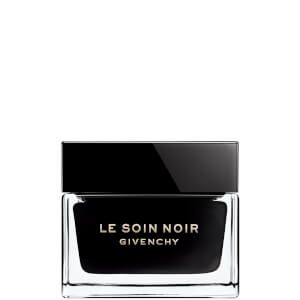
“Le Soin Noir Cream”
This product can help improve hydration of the skin with the two types of ingredients.
The first type is called “humectants”:
these ingredients help attract water.
When humectants are on the surface of the skin, they “pull in” the moisture from the outside environment, or from
within deeper layers of the skin. The following ingredients in this product do the job:
diglycerin, glycerin.
This product also contains ingredients called “occlusives”. They help reduce the speed with which our skin loses moisture to the outside environment. These ingredients also help soften the upper layer of the skin, so it feels less tight and nicer to the touch. The following ingredients in this product do the job: beeswax, cera alba.
Evens skin tone1 ingredient credited for this claimWeak support
“The skin's texture is refined and more even, visibly younger and more beautiful.”
Effective ingredients missing or their concentration is too low
Can it cause trouble?
Irritancy1 strong irritant: ParfumMedium risk
Comedogenic1 ingredient rated 2 or more on the 0–5 pore-clogging scale1 flagged
User reviews
Be the first — your take helps the next person decide.
Ingredients
Filter by role to see what each ingredient is doing.
Water~45–55%
Glycerin~4.3–5.3%
- Irritation risk
- Low
One of the best moisturizing ingredients. Naturally present in skin. It attracts water to the upper layer of the skin working as a humectant
More about GlycerinPropanediol~3.9–4.8%
- Irritation risk
- Low
Acts as a solvent for other ingredients. Speeds up the absorption of other ingredients into the skin
More about PropanediolSqualane~3.1–3.8%
- Irritation risk
- Low
An oil naturally present in skin. Works as an emollient to soften the skin and form a protective layer on its surface without a greasy feeling.
More about SqualaneCoco-caprylate/caprate~2.3–2.8%
- Irritation risk
- Low
Helps to soften the upper layer of the skin without creating a greasy texture
More about Coco-caprylate/caprateNeopentyl glycol dicaprylate/dicaprate~1.9–2.3%
- Irritation risk
- Low
Cetearyl alcohol~1.6–1.9%
- Irritation risk
- Low
- Comedogenicity
- 2/5
A non-drying alcohol. Works as an emollient. Helps water and oil mix together and creates a nice product texture
More about Cetearyl alcoholLauroyl lysine~1.3–1.6%
- Irritation risk
- Low
Helps soften the upper layer of the skin and creates a nice product texture
More about Lauroyl lysinePolyglycerin-3~1.1–1.4%
- Irritation risk
- Low
Helps to attract water to the upper layer of the skin
More about Polyglycerin-3Glyceryl stearate~0.95–1.15%
- Irritation risk
- Low
An emollient that softens the skin and forms a protective layer on its surface. Helps water and oil mix together
More about Glyceryl stearateCellulose~0.75–1.15%
- Irritation risk
- Low
Can be used to help absorb oil as well as add volume and imporve texture of products.
More about CelluloseHydrogenated coco-glycerides~0.55–0.85%
- Irritation risk
- Medium
Helps oil and water mix together while creating a nice finish on the skin
More about Hydrogenated coco-glyceridesJojoba esters~0.5–0.75%
- Irritation risk
- Medium
An emollient made of jojoba oil. Helps soften the skin and support its barrier function
More about Jojoba estersDiglycerin~0.45–0.65%
- Irritation risk
- Low
Helps attract water to the upper layer of the skin
More about DiglycerinSodium stearoyl glutamate~0.45–0.7%
- Irritation risk
- Medium
Helps oil and water mix together
More about Sodium stearoyl glutamateDimethicone~0.45–0.7%
- Irritation risk
- Low
A silicone that helps to reduce water loss from the surface of the skin. Can temporarily "fill in" lines and wrinkles, absorb oil, and create a nice product finish
More about DimethiconeCetearyl glucoside~0.4–0.6%
- Irritation risk
- Medium
Helps water and oil in the product mix well together and improves product texture
More about Cetearyl glucosideAvena sativa kernel extract~0.35–0.6%
- Irritation risk
- Low
An effective moisturizing and skin barrier repair ingredient. Helps calm down inflammation and has some anti-oxidant properties
More about Avena sativa kernel extractPentylene glycol~0.35–0.6%
- Irritation risk
- Medium
Used to preserve products, dissolve other ingredients and create a nice product texture
More about Pentylene glycolChlorphenesin~0.16–0.32%
Acrylates/c10-30 alkyl acrylate crosspolymer~0.3–0.55%
- Irritation risk
- Medium
Maintains the texture of skincare products. Allows the product to spread evenly. Helps oil and water mix together
More about Acrylates/c10-30 alkyl acrylate crosspolymerCetyl palmitate~0.3–0.55%
- Irritation risk
- Low
An emollient that helps soften the skin and is used to improve product texture and stability
More about Cetyl palmitateCocoglycerides~0.3–0.55%
- Irritation risk
- High
Help soften the upper layer of the skin and make it easier for oil and water mix together. Recently, a rising number of allergic reactions to cocoglycerides and other coconut-derived surfactants has been reported. As there is a significant overlap between frequent irritants and allergens, we flag this ingredient for attention of those with very sensitive, reactive skin
More about CocoglyceridesCera alba~0.35–0.65%
- Irritation risk
- Medium
Forms a protective barrier that holds water and keeps dry skin hydrated. Keeps an emulsion from separating into its oil and liquid components, and increases the thickness of a product. Can be an allergen
More about Cera albaBeeswax~0.3–0.55%
- Irritation risk
- Low
Forms a protective barrier that holds water and keeps dry skin hydrated. Keeps an emulsion from separating into its oil and liquid components, and increases the thickness of a product. Can be an allergen
More about BeeswaxParfum~0.25–0.4%
- Irritation risk
- High
An aromatic blend of unspecified and possibly irritating ingredients
More about ParfumTocopheryl acetate~0.25–0.45%
- Irritation risk
- Medium
A more stable but less bio-available form of vitamin E compared to Tocopherol. Might help moisturize and protect the skin from free radicals, but mostly used in low concentrations to stabilize other ingredients.
More about Tocopheryl acetateSynthetic fluorphlogopite~0.25–0.5%
- Irritation risk
- Low
A mineral that is used as an optical filter (makes the skin looks nicer through light reflection) and to improve the texture of cosmetic products
More about Synthetic fluorphlogopite1,2-hexanediol~0.25–0.45%
Caprylyl glycol~0.25–0.5%
- Irritation risk
- Medium
Helps preserve products and creates a nice product texture
More about Caprylyl glycolCi 77891~0.2–0.4%
- Irritation risk
- Low
Titanium dioxide~0.35–0.65%
- Irritation risk
- Low
Works as a UV filter when used in high concentrations. It is photostable and is effective mostly against the UVB light, with some protection in the UVA range. In small concentrations, used for its ability to improve the color of cosmetic products. Is usually well tolerated by the skin
More about Titanium dioxideAscorbyl glucoside~0.25–0.45%
- Irritation risk
- Medium
A vitamin C derivative that is more stable but less potent than pure form of vitamin C. Has a potential to boost collagen production, nutralise free radicals and reduce hyperpigmentation, but the required concentration is likely to be much higher than for the pure form of vitamin C, limiting the ingredient's effectiveness in products
More about Ascorbyl glucosideSodium hyaluronate~0.25–0.45%
- Irritation risk
- Low
One of the best moisturizing ingredients. Attracts water into the upper layer of the skin
More about Sodium hyaluronateXanthan gum~0.25–0.45%
- Irritation risk
- Low
Used to create a thicker product consistency
More about Xanthan gumHydrolyzed soy flour~0.25–0.45%
- Irritation risk
- Low
Ammonium acryloyldimethyltaurate/beheneth-25 methacrylate crosspolymer~0.25–0.45%
- Irritation risk
- Medium
Used to stabilize product formulations
More about Ammonium acryloyldimethyltaurate/beheneth-25 methacrylate crosspolymerCitric acid~0.25–0.45%
- Irritation risk
- Medium
Can work as an exfoliant but is typically used to adjust the product pH
More about Citric acidAdenosine~0.25–0.4%
- Irritation risk
- Low
Might help improve cell turnover and reduce inflammation in skin. One study shows that the ingredients might be able to help reduce dynamic wrinkles (for example, in the corners of the eyes or on the forehead)
More about AdenosineSodium benzoate~0.2–0.4%
Glucose~0.2–0.4%
- Irritation risk
- Low
Helps attract water to the upper layer of the skin. Could be helpful in restoring the skin barrier function
More about GlucoseTocopherol~0.2–0.4%
- Irritation risk
- Low
Pure form of vitamin E. Can help moisturise and protect the skin from free radicals. Often used to help stabilise other ingredients or the formula itself
More about TocopherolBacillus ferment~0.2–0.35%
- Irritation risk
- Low
A product of bacterial fermentation. Can help attract water to the upper layer of the skin
More about Bacillus fermentCaprylic/capric/succinic triglyceride~0.25–0.45%
T-butyl alcohol~0.15–0.25%
- Irritation risk
- Medium
Used to dissolve other ingredients and to improve smell of products. It could be irritating
More about T-butyl alcoholTin oxide~0.25–0.45%
- Irritation risk
- Low
A colorant that can add a pearl-like appearance to the formulation
More about Tin oxideSodium hydroxide~0.15–0.25%
Skeletonema costatum extract~0.1–0.2%
- Irritation risk
- Low
Ascorbyl palmitate~0.05–0.1%
- Irritation risk
- Medium
Being a lipid soluble form of vitamin C, it is more stable and can penetrate the skin better than L-Ascorbic acid. It is effective in protecting the skin from free radicals, as well as evening the skin tone, but is less effective in stimulating collagen production compared to L-Ascorbic acid.
More about Ascorbyl palmitateLecithin~0.1–0.2%
- Irritation risk
- Low
Used mostly for creating emulsions - helping oil and water mix together. Helps soften the upper layer of the skin
More about LecithinIngredient list view
Water, Glycerin, Propanediol, Squalane, Coco-caprylate/caprate, Neopentyl glycol dicaprylate/dicaprate, Cetearyl alcohol, Lauroyl lysine, Polyglycerin-3, Glyceryl stearate, Cellulose, Hydrogenated coco-glycerides, Jojoba esters, Diglycerin, Sodium stearoyl glutamate, Dimethicone, Cetearyl glucoside, Avena sativa kernel extract, Pentylene glycol, Chlorphenesin, Acrylates/c10-30 alkyl acrylate crosspolymer, Cetyl palmitate, Cocoglycerides, Cera alba, Beeswax, Parfum, Tocopheryl acetate, Synthetic fluorphlogopite, 1,2-hexanediol, Caprylyl glycol, Ci 77891, Titanium dioxide, Ascorbyl glucoside, Sodium hyaluronate, Xanthan gum, Hydrolyzed soy flour, Ammonium acryloyldimethyltaurate/beheneth-25 methacrylate crosspolymer, Citric acid, Adenosine, Sodium benzoate, Glucose, Tocopherol, Bacillus ferment, Caprylic/capric/succinic triglyceride, T-butyl alcohol, Tin oxide, Sodium hydroxide, Skeletonema costatum extract, Ascorbyl palmitate, Lecithin
Compare prices
Retailers ranked by price — lowest first.

Affiliate links · prices updated regularly
Worth comparing, line by line.
Match % combines shared ingredients, the first five ingredients, shared actives and hero ingredients, irritancy (lower counts in the alternative's favour), texture and body area. Only products in the same routine step are compared.
| GivenchyLe Soin Noir CreamYOUR PRODUCT | GUERLAINOrchide Impriale - The Cream | |
|---|---|---|
| Match | — | 55% |
| Price | $356.95 | $780.00+$423.05 |
| Shared key ingredients | — | 11 of 14 |
| Key difference | — | Caprylic/Capric Triglyceride |
| Irritancy | Medium | Medium |
| Drying alcohol | — | — |
| View product | Shop |

Sources cited in this review
Every concentration estimate and effectiveness label is anchored to one of these 17 studies and safety reviews.
- 1
- 2Safety Assessment of Alkyl Esters as Used in Cosmeticscir-safety.org
- 3
- 4Final Report on the Safety Assessment of Dimethicone Copolyoljournals.sagepub.com
- 5
- 6

Affiliate links · As an Amazon Associate, WIMJ earns from qualifying purchases.